Tree Removal Honolulu | Licensed, Insured, On-Time
A mature monkeypod six feet from your roofline and a dead ornamental in the side yard are not the same job. Our arborists assess the tree, plan the rigging, and remove it cleanly, whether it's a single residential tree or a full commercial lot, backed by a free written estimate before any cutting begins.
Call to schedule a removal, or if a tree just came down, see Emergency Tree Removal Honolulu.
Prefer to write it out? Request a free estimateEvery removal starts with an in-person evaluation from an arborist, not a phone quote.
Rope rigging or crane assistance, matched to the tree's size, lean, and surroundings.
Lawns, driveways, fences, and structures are protected throughout the job.
Limbs, trunk sections, and wood debris are cleared before the crew leaves.
Written, no-obligation estimates after every on-site assessment.
Why Honolulu homeowners hire a professional crew
A tree's weight doesn't behave the way people expect once the first cut is made. Limbs under tension, trunks with hidden decay, and root systems loosened by Oʻahu's rain all change how a tree comes down, and a mistake on any of them can mean real damage to a roof, a fence, or a person standing in the wrong spot.
Our crews carry the training, insurance, and rigging equipment to remove a tree of any size without guessing. That means a proper risk assessment before a single cut, a rigging plan built around your property, and a job that's finished with the yard cleared, not left half-done.
- Certified arborists evaluate lean, trunk condition, and structural risk before removal
- Fully licensed and insured crews protect your property and your liability
- Rigging and crane equipment sized to the tree, not improvised on site
- A written estimate before any work begins, no surprise costs
If a tree has already come down or is actively hazardous, response times matter more than planning does. See Emergency Tree Removal Honolulu for how we handle active hazards.
When tree removal is the right call
Most trees are pruned, cabled, or left alone. Removal is reserved for trees that have crossed a line an arborist can spot quickly, and our estimate visit tells you exactly which side of that line your tree is on.
Dead or declining canopy
More than half the canopy is dead, thinning, or dropping leaves out of season, a sign the tree isn't recovering.
Trunk decay or cavities
Cracks, cavities, or fungal growth near the base often point to internal decay that pruning can't fix.
Root damage
Roots cut, paved over, or damaged by nearby construction weaken a tree's anchoring over time.
Poor placement
Growing into a foundation, lifting a driveway, or crowding a power line, some trees can't stay where they are.
Residential, commercial & large tree removal
The fundamentals stay the same on every job. What changes is the access, the scale, and how much of the property is involved.
Residential Tree Removal
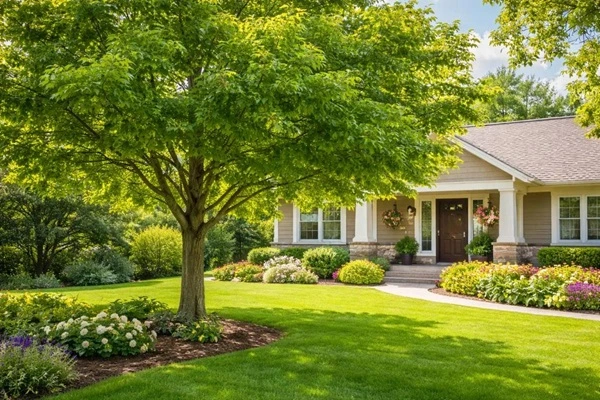
Tight yards, fences, pools, and neighboring properties call for careful planning. We protect what's around the tree as carefully as we remove the tree itself.
Get a Free Estimate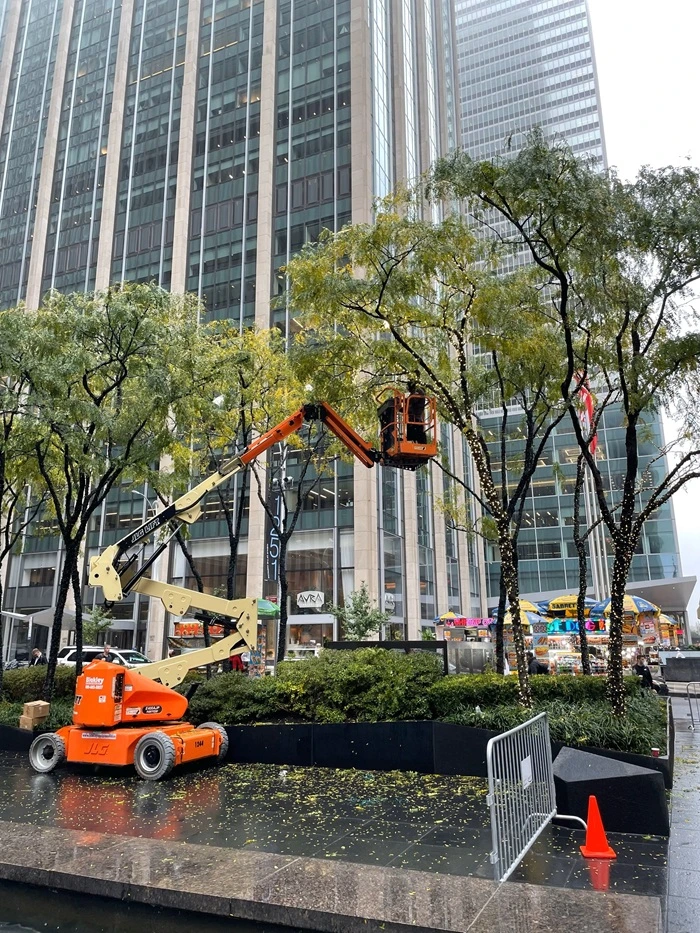
Commercial Tree Removal
HOAs, property managers, and businesses rely on us to coordinate access, minimize disruption to tenants or parking, and manage liability across a full site.
Schedule a Site VisitLarge Tree Removal
Mature monkeypod, banyan, and other large hardwoods often mean sectional rigging or crane assistance. We size the equipment to the tree, not the other way around.
Get a Free EstimateEmergency tree removal situations
Some tree problems are on a schedule you set. Others aren't. If any of these apply, treat it as an active hazard rather than a routine removal.
A Tree Has Already Fallen
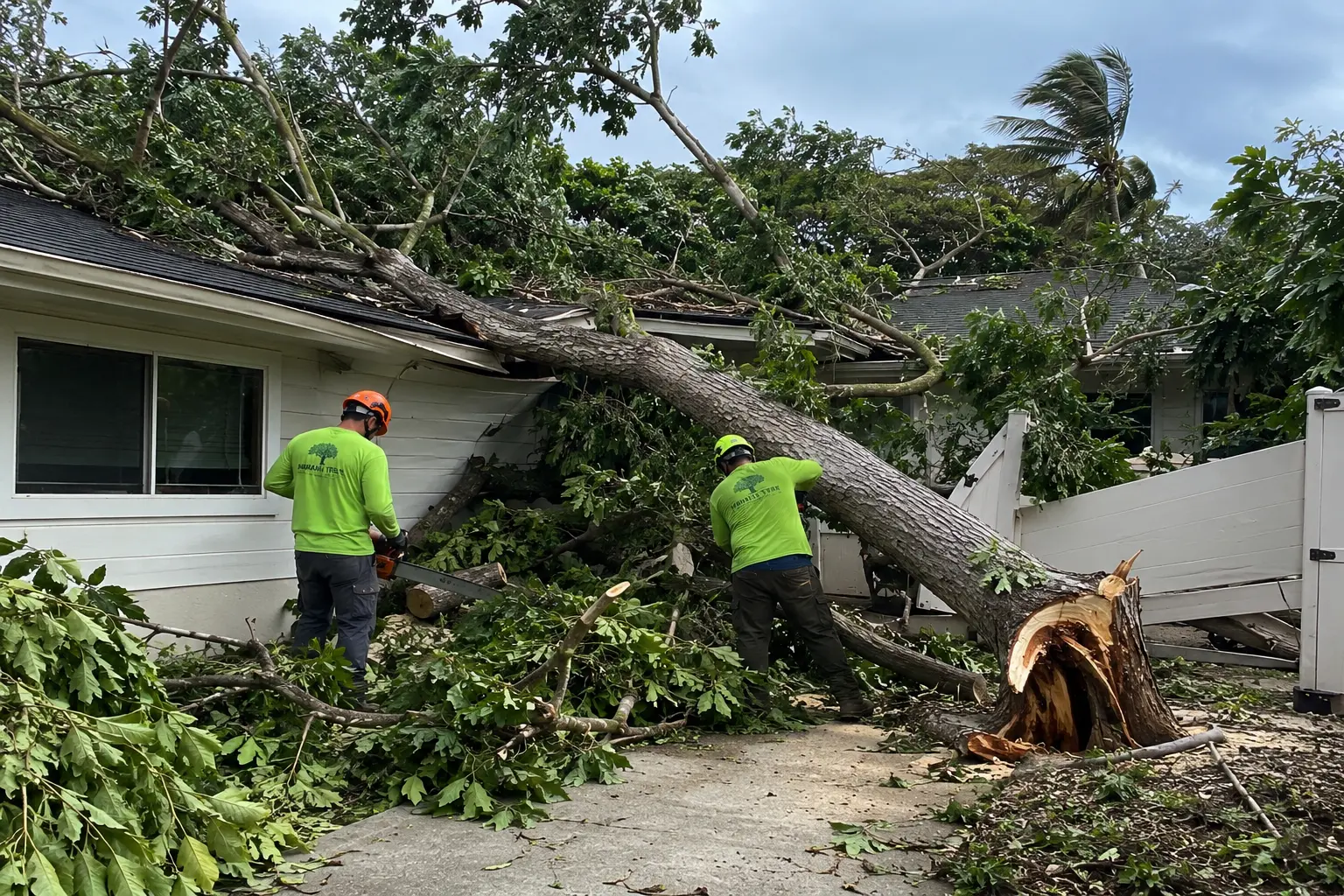
Fallen trees can still be under tension from whatever they landed on. Our crews identify the load before cutting a single section.
See Fallen Tree Removal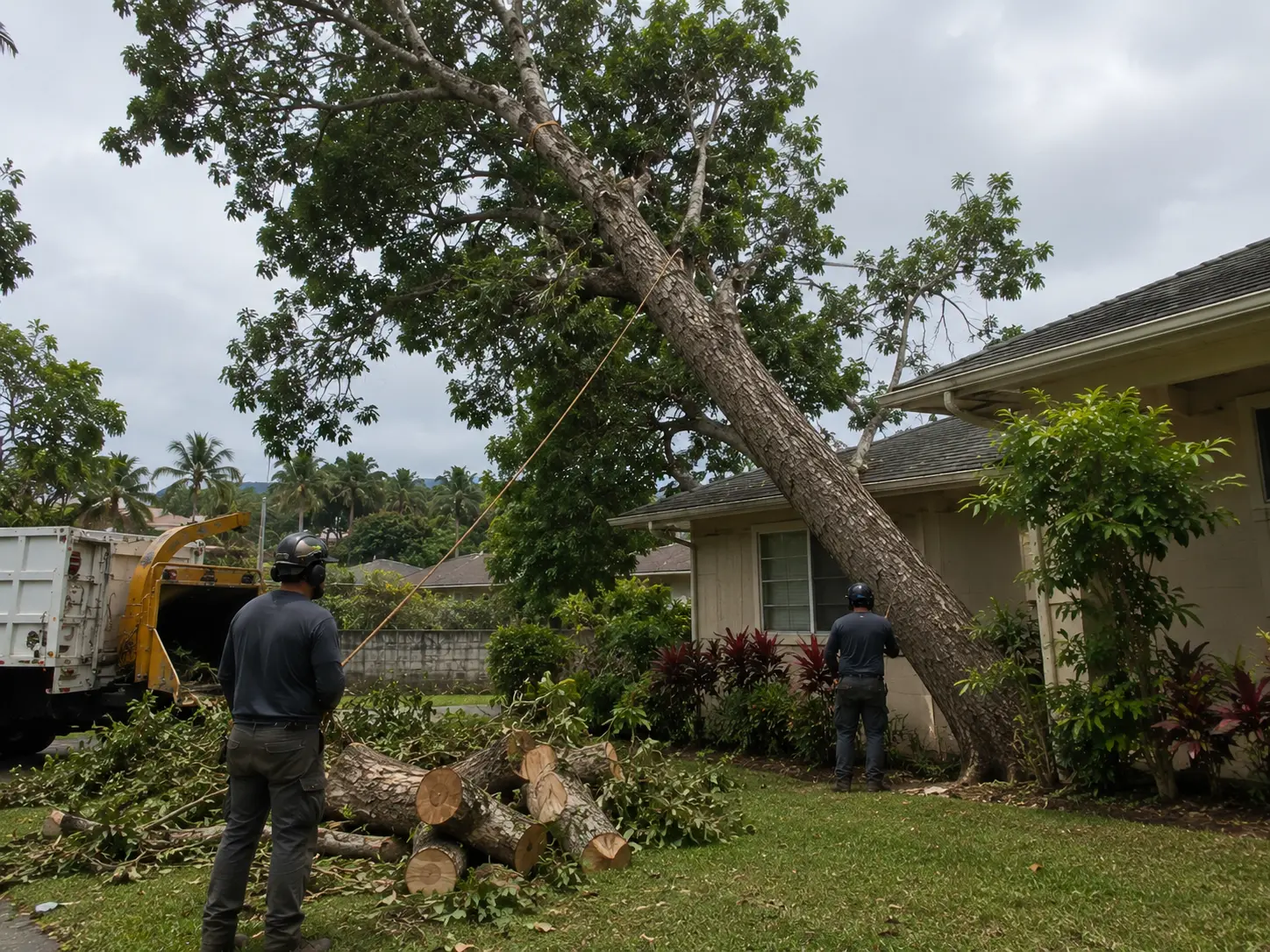
A Tree Is Leaning
A worsening lean signals root or trunk failure already underway. We remove leaning trees in a controlled direction, fast.
See Leaning Tree Removal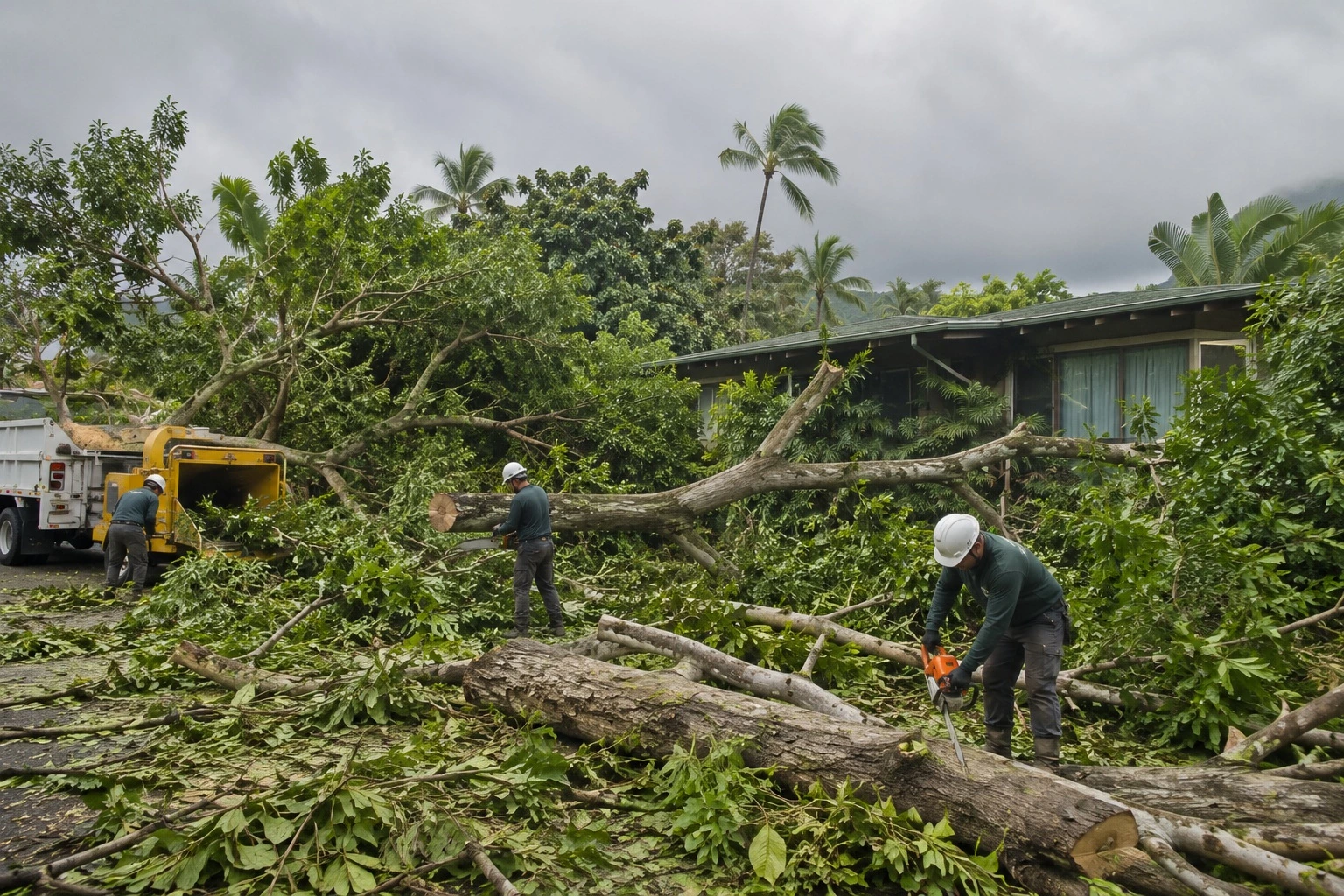
Storm Damage on the Property
Oʻahu storms rarely damage just one tree. A single visit assesses and clears every hazard across the yard.
See Storm Tree Removal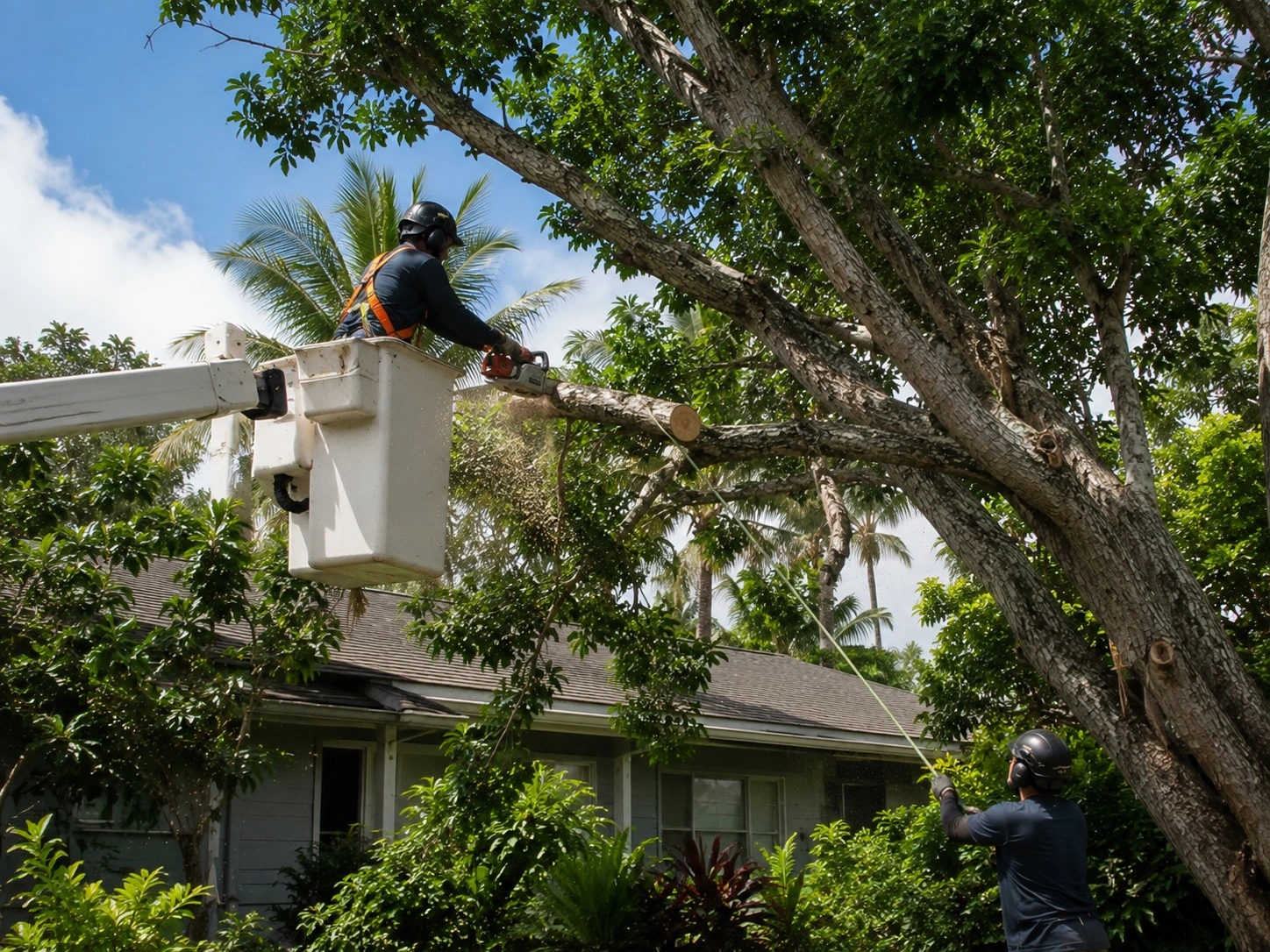
A Limb Is Hanging Overhead
A widowmaker can hold for days before releasing without warning. Rope and rigging bring it down safely, not gravity.
See Tree Limb RemovalFor any active hazard, our Emergency Tree Removal Honolulu line is the fastest way to get a crew evaluating the situation.
Tree removal near homes & power lines
Proximity is what separates a routine removal from a demanding one. Here's how we handle the two situations that come up most.
Removal Near Homes
A tree six feet from a roofline can't be dropped in one piece. We take it down in smaller, controlled sections, with every cut planned around what's underneath it, then protect the roof, gutters, and siding throughout the job with ground mats and rigging.
Removal Near Power Lines
Trees growing into or near power lines are never handled without coordinating with the utility company first. Contact with an energized line is fatal, which is why this work goes to a trained crew with the right clearance and equipment, not left to chance.
Rigging, sectional removal & crane service
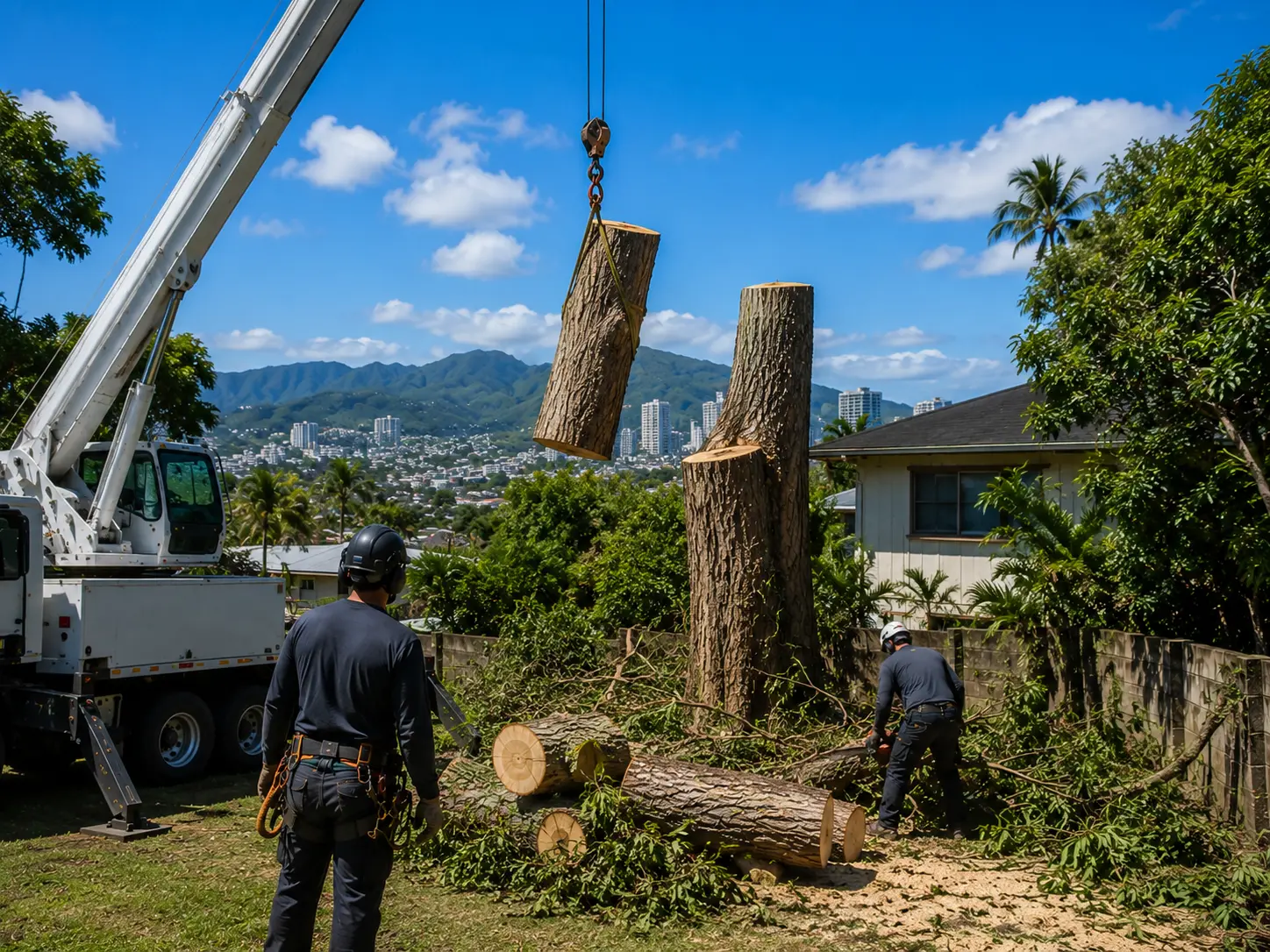
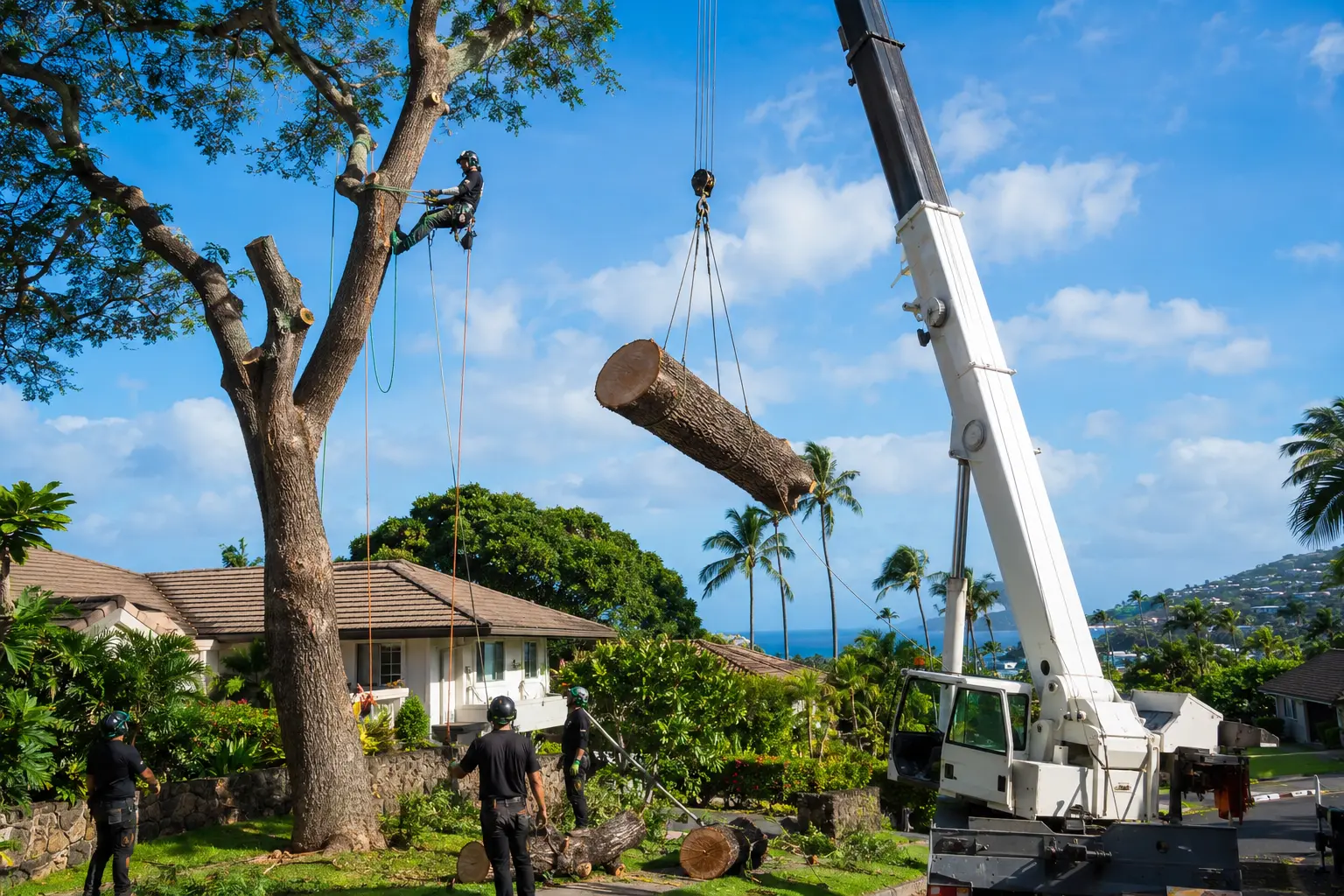
Once a tree is near a structure, a fence, or a neighboring property, it comes down in sections, not in one piece. A climber removes smaller sections first, opening space before the heavier pieces come down, while ground crew guide each piece to a clear landing zone with rope and rigging blocks.
A crane comes in when a tree is too large, too tall, or too enclosed for rope rigging alone, lifting entire sections out and over obstacles instead of lowering them through a tight space. Same standard of control, different equipment for the job.
- Sectional rigging for trees near structures, fences, or power lines
- Crane assistance for very large trees or extremely limited access
- Ground protection mats to prevent damage from falling sections
- A climbing or bucket approach chosen based on the tree's structure
Limbs and branches that need to come down without a full removal are handled the same way under tree limb removal.
We know how Honolulu's trees fail
Oʻahu's canopy is a mix of hardwoods and palms, and knowing how each one fails is what separates an experienced crew from a general contractor with a chainsaw.
Monkeypod & Banyan
Broad-canopy hardwoods with extensive branching that gives us multiple points to rig from, but their spread and weight demand a careful sectional plan.
Albizia
Fast-growing and notoriously weak-wooded, one of the most common reasons a healthy-looking tree is flagged for removal before it fails on its own.
Palms & Coconut Palms
No branches to rig from and a fibrous root system change the whole technique. See palm tree removal for how we handle them.
Mango & African Tulip
Heavy fruit-bearing limbs and weak branch unions mean extra rigging considerations most crews miss until it's too late.
Permits, protected trees & insurance
We help you navigate both before the first cut, so there are no surprises after.
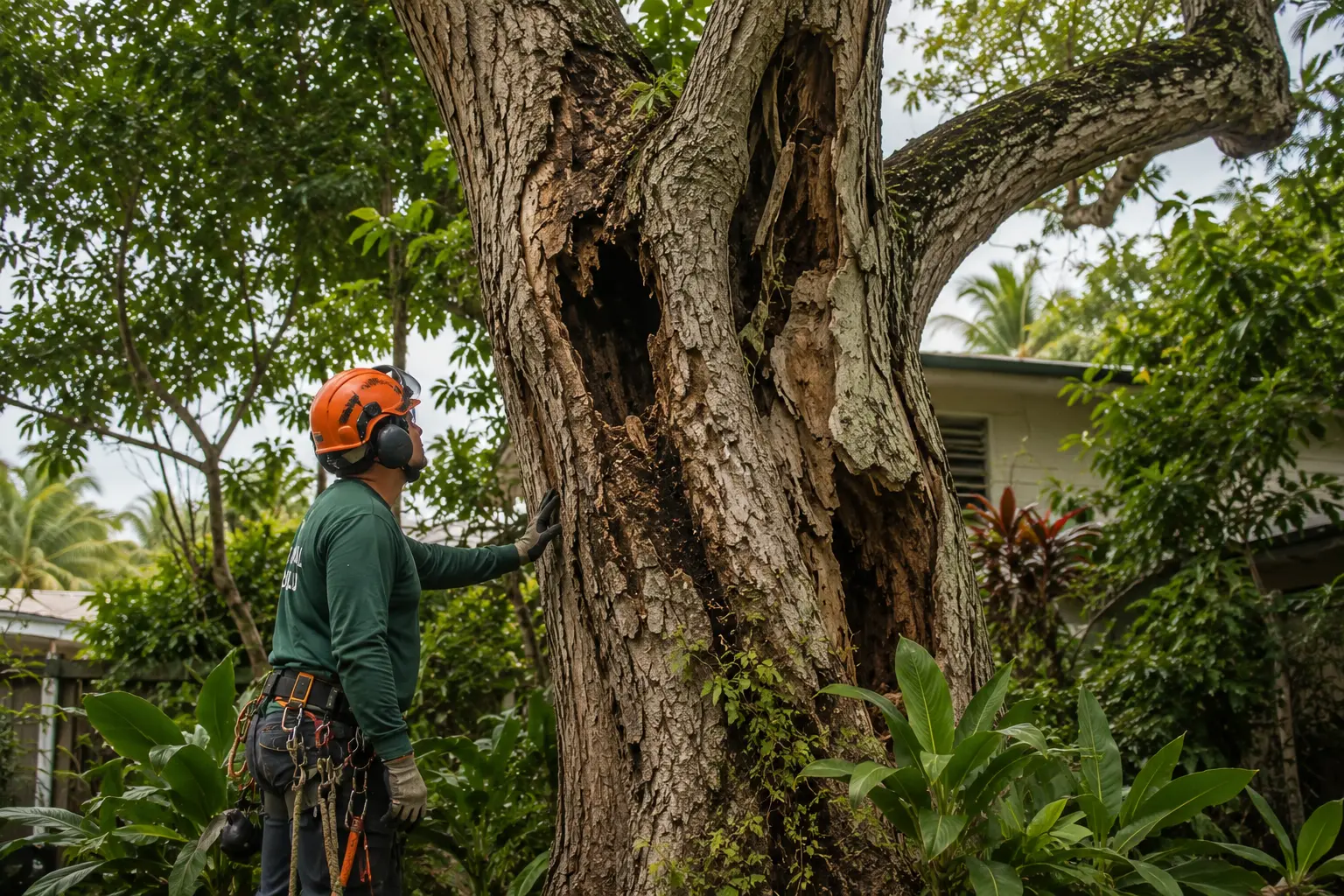
We confirm permit requirements for you
The City and County of Honolulu regulates removal of certain protected and exceptional trees, even on private property. Requirements vary by species, trunk diameter, and location, and a large, mature monkeypod or banyan is far more likely to fall under these rules than a young ornamental. We check this during your estimate so it's never a surprise mid-job.
Insurance coverage depends on your policy and the cause of removal. A tree that fell or was damaged during a storm often qualifies for a claim; see storm tree removal and fallen tree removal for how documentation works in those cases.
Our tree removal process
The same process applies to a single backyard tree and a full commercial removal, just scaled to the size of the job.
Call or Request
Describe the tree, its location, and why it needs to come down, by phone or through the estimate form.
On-Site Assessment
An arborist evaluates the tree's size, condition, and surroundings in person.
Written Estimate
A clear, itemized estimate is provided based on that assessment before any work begins.
Removal
The tree is taken down using rigging, sectional cutting, or crane assistance as needed.
Cleanup & Grinding
Debris is cleared and stump grinding is completed if requested.
Cleanup & stump grinding
A removal isn't finished when the last section hits the ground.
Included Debris Cleanup
Limbs, trunk sections, and wood debris are cleared from the property as part of every job, not billed as a separate line item. Brush and leaf litter are cleared from the lawn or driveway so the property is usable again the moment the crew leaves.
Optional Stump Grinding
We grind the stump below grade so the area can be replanted or leveled. Wood chips can be spread as mulch or hauled away, whichever you'd prefer. Tell us during your estimate if you're planning to plant in the same spot.
Honolulu's tree removal company homeowners trust
The same crew handles routine removals and active emergencies, so you get one standard of care no matter why you're calling.
Every crew member is trained, and every job is backed by full insurance coverage.
Crews who know Oʻahu's species, soil, and storm patterns, not a mainland franchise.
A written estimate after an on-site visit, with no hidden fees added later.
The same team behind Emergency Tree Removal Honolulu handles every planned job too.
Tree removal across Oʻahu
Residential and commercial tree removal available throughout Honolulu and the surrounding communities. View all service areas →
Tree removal questions before you call
How much does tree removal cost in Honolulu?
Tree removal cost in Honolulu depends on the tree's height, trunk diameter, condition, and how close it is to structures, fences, or power lines. A written estimate after an on-site assessment is the only reliable way to know the cost for a specific tree.
Do I need a permit to remove a tree in Honolulu?
The City and County of Honolulu regulates removal of certain protected and exceptional trees, even on private property. Requirements vary by species, trunk diameter, and location, so it's worth confirming with the local permitting office or an arborist before removal.
Is stump grinding included with tree removal?
Stump grinding is typically offered as an add-on rather than an automatic part of every removal. It can be added to the same visit if you'd like the job finished completely.
How long does a tree removal take?
A small tree in an open yard can often be removed within a few hours. Larger trees, trees close to structures, or removals requiring a crane take longer, since sections have to be lowered carefully rather than dropped.
What's the difference between tree removal and tree trimming?
Tree removal takes the entire tree down, roots and all if requested, while trimming shapes the canopy and removes specific limbs while keeping the tree alive.
Can a large tree be removed without a crane?
Many large trees can be removed with rope and rigging alone. A crane becomes necessary when a tree is too large, too close to a structure, or too difficult to access safely for sectional rigging to be practical.
Is it safe to remove a tree myself?
Removing a tree without the right training and equipment carries real risk, especially for large trees, trees near structures or power lines, or any tree that's leaning or decayed.
Do you remove trees for commercial properties?
Yes. Commercial tree removal covers HOAs, property management companies, and businesses. Reach out through the contact page to schedule a site visit.
What happens to the wood and debris after removal?
Limbs, trunk sections, and wood debris are cleared from the property as part of the job, not billed separately or left for the property owner to manage.
Is tree removal covered by homeowners insurance?
Coverage depends on your specific policy and the reason for removal. Trees that fall during a storm and damage a covered structure are often eligible for a claim, while routine removal of a healthy tree typically is not.
Request a free tree removal estimate
Tell us about the tree, its size, its location, and why it needs to come down, and a crew will follow up to arrange an on-site assessment and written estimate. If the situation is urgent, call our Emergency Tree Removal Honolulu line instead.