Understanding Emergency Tree Removal in Honolulu
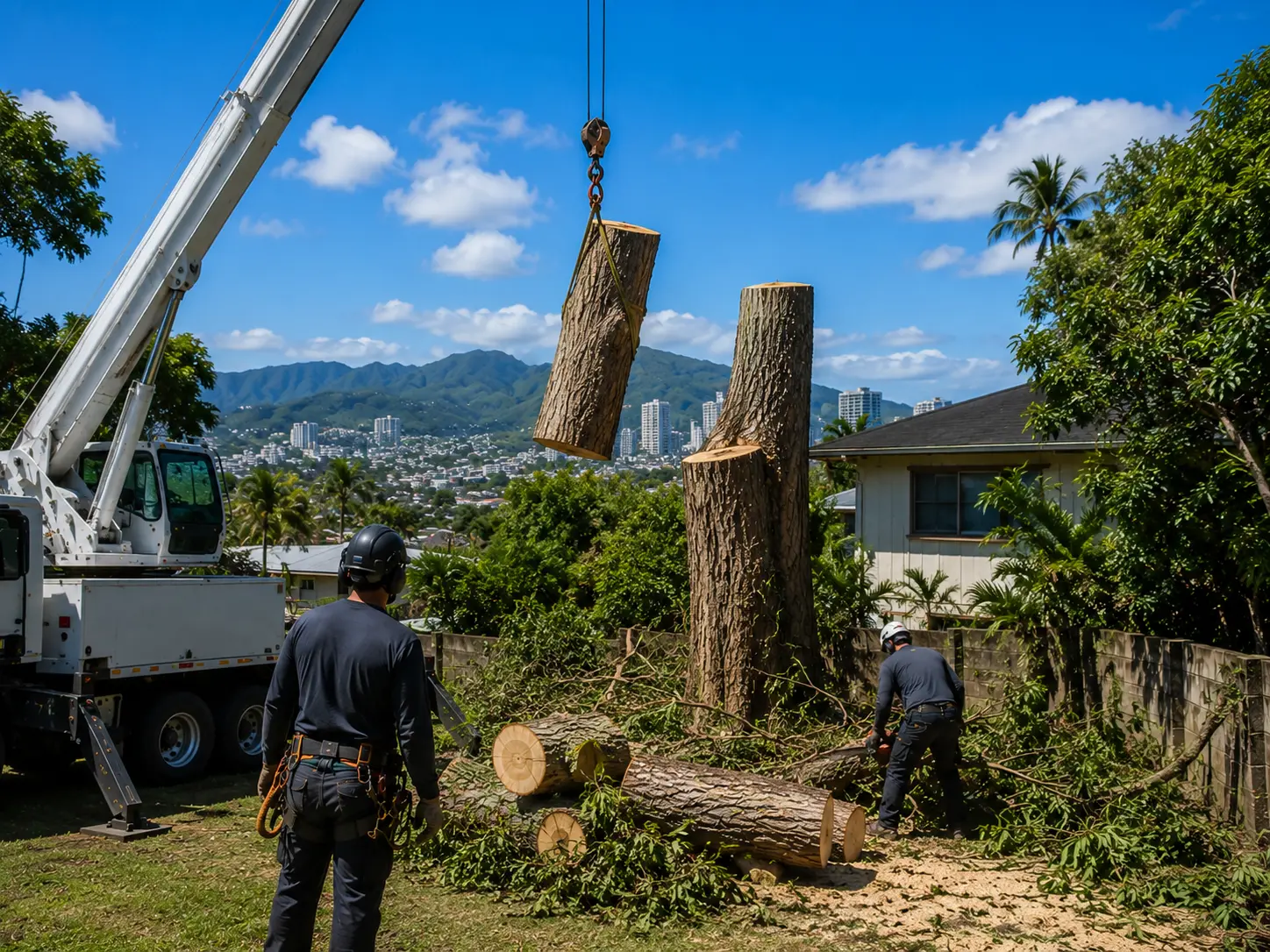
This website exists to help Honolulu property owners understand emergency tree removal: what qualifies as an emergency, how storm damage and hazardous trees are assessed, and what to expect from the process, whether a tree has already come down or is showing early warning signs.
Call to ask about a specific tree situation, or browse the service pages to learn more first.
Prefer to write it out? Contact usMost people only think about this during a stressful moment
A tree emergency rarely gives advance notice. A trunk splits during a storm, a limb lets go overhead, or a tree that's leaned for years suddenly looks like it won't hold much longer, and most property owners are trying to figure out what's actually happening while it's happening.
In that moment, a lot of basic questions go unanswered. What actually counts as an emergency, versus something that can wait for a scheduled visit? Is a tree that's cracked but still standing something to worry about right now, or something to keep an eye on? What should happen immediately after a storm, before anyone starts cutting or hauling debris? And what's actually different about emergency tree work compared to routine trimming or a planned removal?
This site is built around answering those questions directly, organized by the situation a property owner is actually facing. That includes emergency tree removal broadly, along with more specific pages on fallen tree removal, hazardous tree removal, leaning tree removal, tree limb removal, and palm tree removal, each covering the specific risks, decisions, and process involved.
The goal is straightforward: help a property owner understand what's in front of them well enough to make an informed decision, and know what information is worth having ready before requesting help.
Information built around safety, not urgency for its own sake
The content on this site is organized around a few consistent priorities: public safety first, then protecting structures and utilities, then minimizing any additional damage to the property beyond what's already happened. Not every situation described here is equally urgent, and part of what this site tries to explain is how to tell the difference.
A downed tree, a hazardous tree that hasn't fallen yet, a leaning tree, and a hanging limb all carry different levels of risk and call for different responses. Treating all of them identically doesn't serve anyone well, which is why each situation gets its own dedicated explanation rather than being folded into one generic page.
Honolulu and the rest of Oʻahu also come with conditions that shape how these situations play out. Tropical storms and heavy, sudden rainfall can saturate soil quickly. Steady trade winds put ongoing stress on large canopies. Coastal exposure affects trees differently than hillside neighborhoods do, and the island's mature tropical species, banyan, monkeypod, albizia, and various palms among them, each fail in their own particular way.
- Public safety and clear distance from active hazards come first
- Protecting structures and utility lines shapes how a situation is approached
- Minimizing additional property damage matters as much as addressing the tree itself
- Local conditions, storms, wind, rainfall, and terrain, change how a hazard develops
Organized by situation, not just by service name
Each page below focuses on a specific kind of tree emergency: what causes it, how it's typically assessed, and what the process generally looks like.
Emergency Tree Removal
An overview of what qualifies as a tree emergency in Honolulu, from fallen trees to active hazards, and how response is generally prioritized.
Read MoreFallen Tree Removal
What's actually happening when a tree comes down on a house, a car, a fence, or a road, and why it isn't necessarily done moving.
Read MoreHazardous Tree Removal
How dead wood, trunk cavities, decay, and root damage are assessed, and why removal isn't always the only outcome.
Read MoreLeaning Tree Removal
Why a lean signals a failure already underway, how to tell a new lean from a stable one, and what direction removal typically follows.
Read MoreTree Limb Removal
What a hanging or cracked limb involves, including widowmaker hazards, and why they're often more dangerous than they look.
Read MorePalm Tree Removal
How palms fail differently than hardwood trees, and what's specific to coconut and other palms common across Oʻahu.
Read More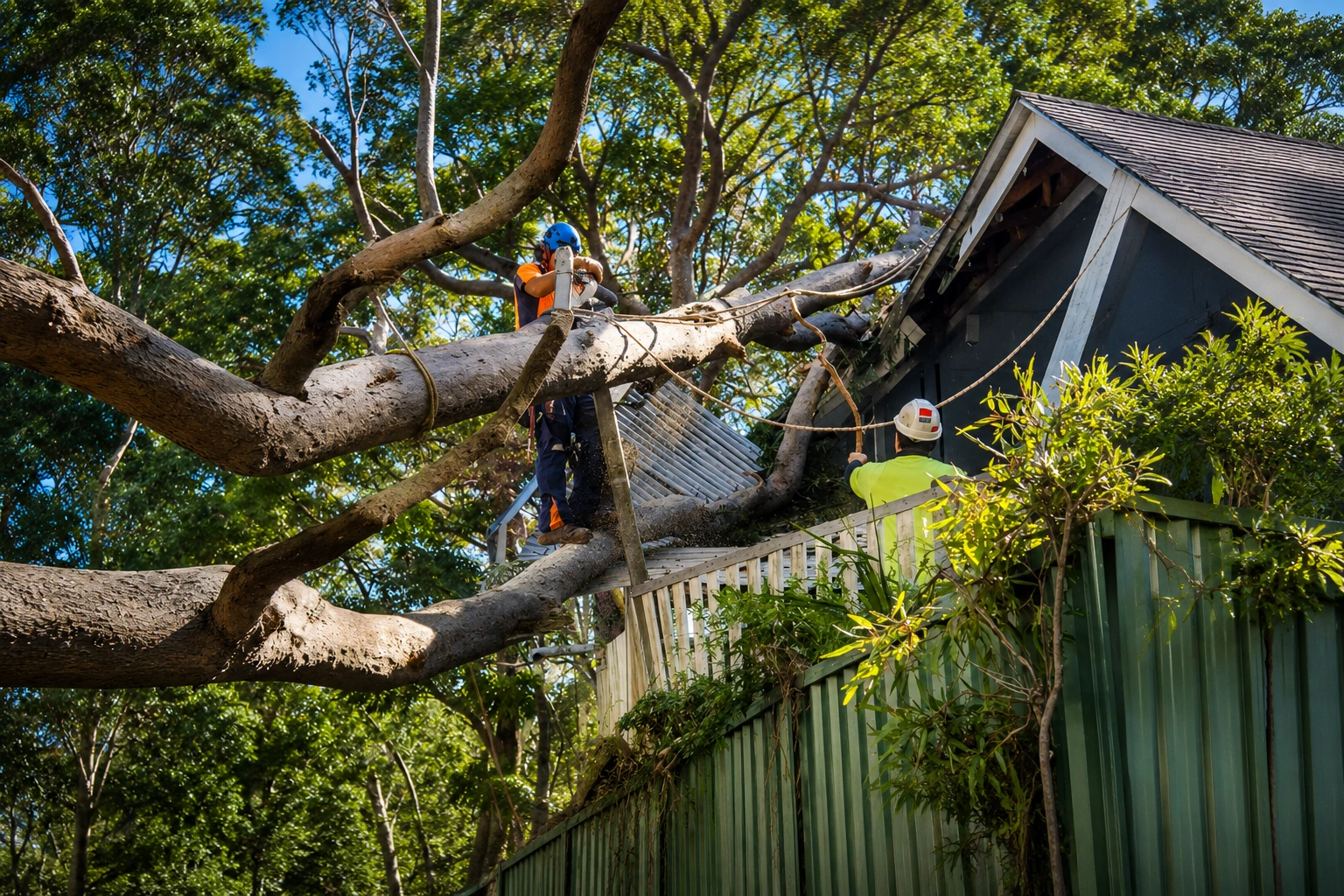
Service Areas
Tree emergencies don't look the same everywhere on Oʻahu. Coastal salt exposure, hillside soil, and central valley wind all shape how situations develop differently from one neighborhood to the next. The Service Areas section breaks this down by location, from Honolulu Metro to Kailua, Kaneohe, Waikiki, and beyond.
Information focused on Honolulu and Oʻahu specifically
The content throughout this site is written with Honolulu and the rest of Oʻahu in mind, not adapted from a generic template built for a different climate or terrain.
Property types across the island vary widely, and that variety changes what a tree emergency actually looks like. A single-family residential lot, a commercial property, an HOA-managed community, and a multi-unit apartment building all come with different access constraints, different decision-makers, and different liability considerations when a tree fails.
Location matters just as much. A coastal neighborhood dealing with salt-laden wind and sandy, shallow-rooted soil faces different risks than a hillside property with terraced yards and saturated clay after heavy rain. Central valley corridors that funnel wind between the island's mountain ranges see different storm exposure than sheltered pockets closer to town.
The Service Areas section goes into these differences neighborhood by neighborhood, covering local terrain, common tree species, and the situations that tend to come up most in each part of Oʻahu.
A few things worth knowing beforehand
Whether a tree has already come down or you're watching one you're worried about, a few basic precautions and a bit of information can make the process smoother.
Stay Clear of Damaged Trees
A tree that's fallen, cracked, or leaning can still shift or drop material without warning. Keep a safe distance, and keep others away from the area beneath it, until it's been properly assessed.
Watch for Downed Power Lines
If a tree has come into contact with a power line, treat the line as energized and stay well away. This is a situation for the utility company and trained professionals, not something to approach directly.
Document the Damage
If it's safe to do so, photograph the tree and anything it's damaged from a few angles before cleanup begins. This is worth doing regardless of whether you plan to file an insurance claim.
Don't Climb on a Damaged Tree
A fallen or partially attached tree can carry stored tension in ways that aren't obvious from the outside. Climbing on or under it to get a closer look adds real risk for very little benefit.
Avoid DIY Chainsaw Work
Cutting into a tree under tension or decay without understanding the load involved is one of the more common ways a bad situation turns into an injury. This kind of work benefits from experience reading the tree first.
Know What Information Helps
Having a general idea of the tree's size, what it's resting on or leaning toward, and whether anything nearby is at risk helps whoever you contact understand the situation faster, whether it's an emergency call or a scheduled visit.
Need information about emergency tree removal?
Browse the service pages for a closer look at a specific situation, or reach out directly with a question.