Emergency Tree Removal Honolulu Metro | Local, Fast, On Call
From the high-rises around Ala Moana to the narrow, tree-lined streets of Makiki and Pauoa Valley, Honolulu's urban core has its own mix of mature canopy, tight lots, and shared access that changes how a tree emergency needs to be handled. We work this part of the island regularly and plan every job around it.
Tell us your neighborhood and what's happening, and we'll advise on next steps and timing.
Prefer to write it out? Request a free estimateFrom downtown high-rises to the residential streets of Makiki, Nuuanu, and Kalihi.
Crews used to narrow side yards, shared driveways, and close-set older homes.
Trees near power lines are coordinated with the utility company before any work begins.
Limbs, trunk sections, and green waste cleared before the crew leaves.
Written, no-obligation estimates after every on-site assessment.
Why tree work in Honolulu Metro isn't like a suburban removal
Honolulu's urban core grew up around its trees rather than the other way around. Streets in Makiki, Pauoa Valley, and Nuuanu were laid out decades before some of today's monkeypod and banyan trees reached their current size, which means a lot of mature canopy now sits directly over rooflines, carports, and property lines that were never planned with a sixty-foot tree in mind.
Add in the density of the metro core, narrow lots, shared driveways, retaining walls, and buildings close enough to share a fence line, and even a routine removal can require more planning than the same job would in a spread-out neighborhood. Access for equipment is often limited to a single narrow driveway or a street with no shoulder to work from, so sequencing matters as much as the cut itself.
- Mature trees planted before modern setback and property line standards existed
- Narrow side yards and shared driveways limiting equipment access
- Retaining walls and close-set neighboring structures on tight residential lots
- Landscaped trees around condo and commercial properties with limited soil volume
If a tree is actively down or hazardous anywhere in the metro core right now, see Emergency Tree Removal Honolulu for our fastest response option.
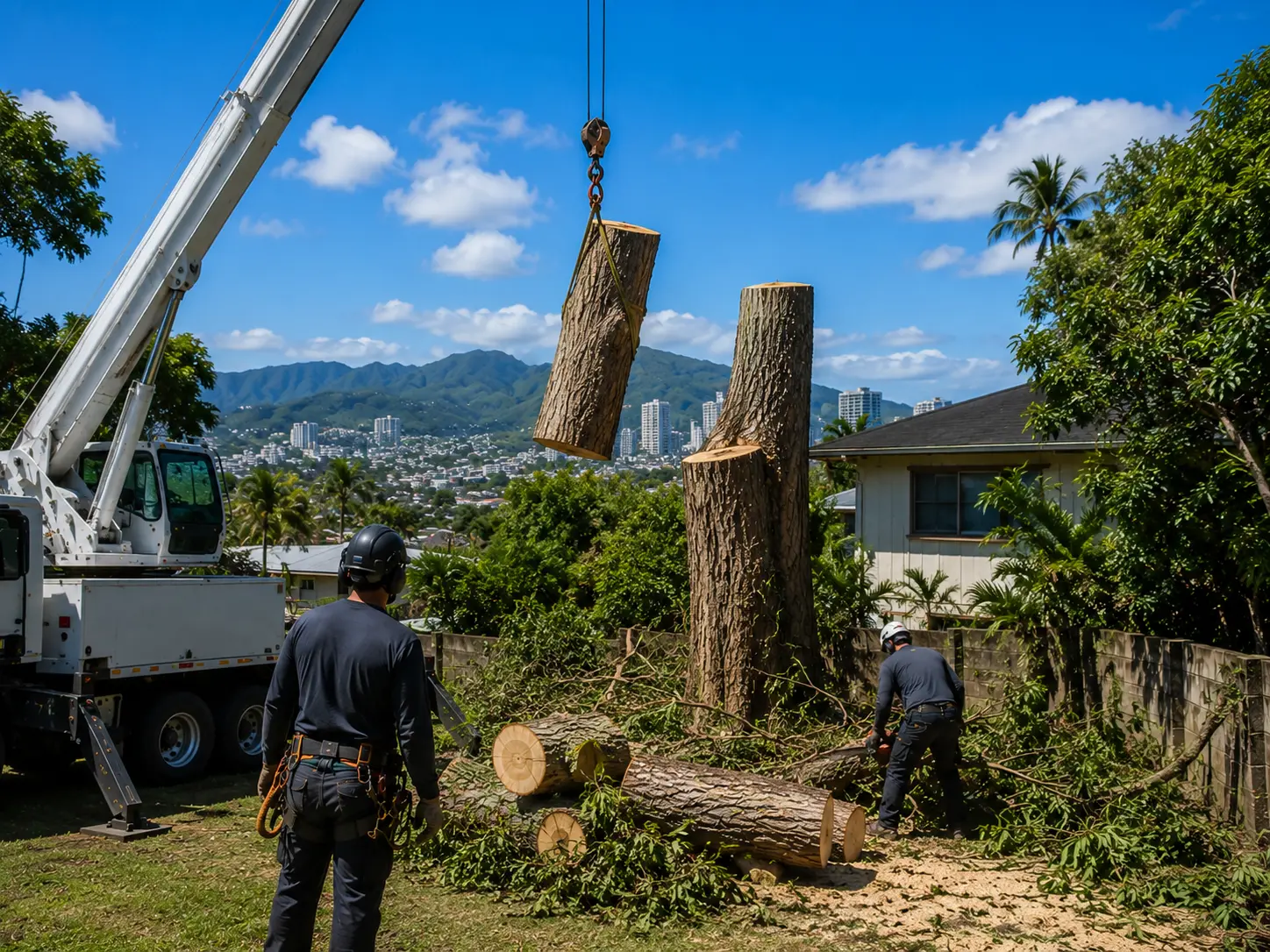
A canopy that changes block by block
Honolulu Metro isn't one uniform area. Each neighborhood has its own lot sizes, tree ages, and access challenges, and our crews plan accordingly.
Downtown & Kakaako
High-rise residential and commercial density with landscaped street trees, planted median trees, and courtyard specimens that require close coordination with building management and, often, street or sidewalk closures.
Makiki & Punchbowl
Hillside streets with older single-family homes, mature monkeypod and banyan canopy, and driveways steep or narrow enough that equipment placement takes real planning before the first cut.
Nuuanu & Pauoa Valley
A wetter, greener stretch of the metro core where rain-saturated slopes and mature valley-floor trees are common, and root and drainage conditions differ noticeably from the drier coastal neighborhoods.
Kalihi
A mix of older plantation-era homes and industrial-adjacent lots, often with large, long-established trees that have outgrown small yards and now sit close to fences, carports, and neighboring rooflines.
McCully & Moiliili
Dense residential streets near the university with a mix of single-family homes and multi-unit properties, where shared walls, narrow setbacks, and street parking all factor into how a removal is staged.
Ala Moana
Landscaped palms and shade trees around residential towers and shopping centers, frequently planted in raised beds or planters that call for a different removal approach than a tree rooted directly in open ground.
Common tree emergencies across the metro core
Density changes what "urgent" looks like. A tree down here rarely affects just one property.
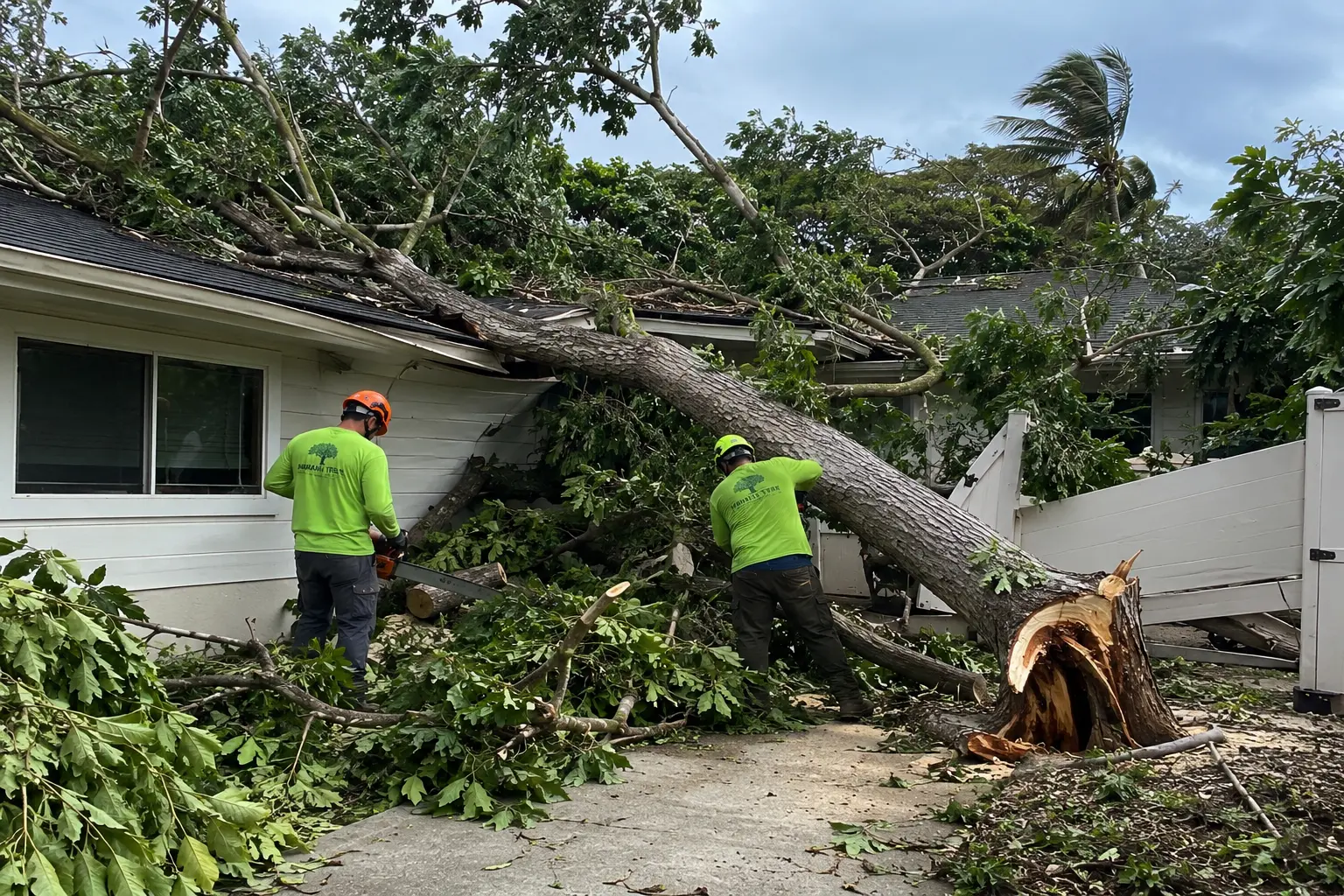
Trees Down on Homes & Carports
Older homes set close together mean a single large limb or trunk failure can affect a carport, a neighboring fence, or a shared wall all at once. See Fallen Tree Removal for how we sequence that kind of job.
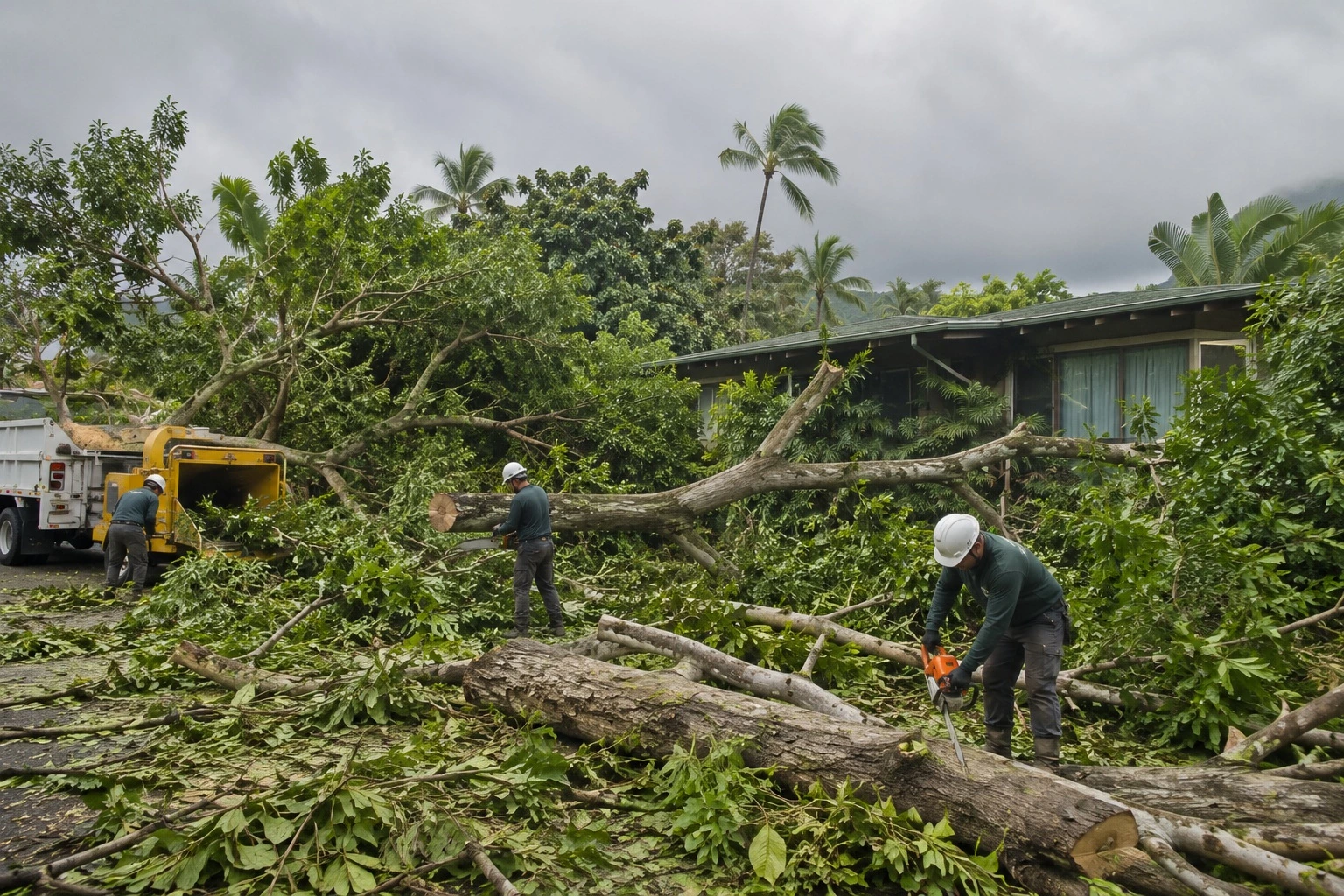
Storm-Damaged Street Trees
Trade wind gusts and Kona storms move through the metro corridor and can affect multiple properties on a single block at once, especially where mature canopy lines both sides of a narrow street.
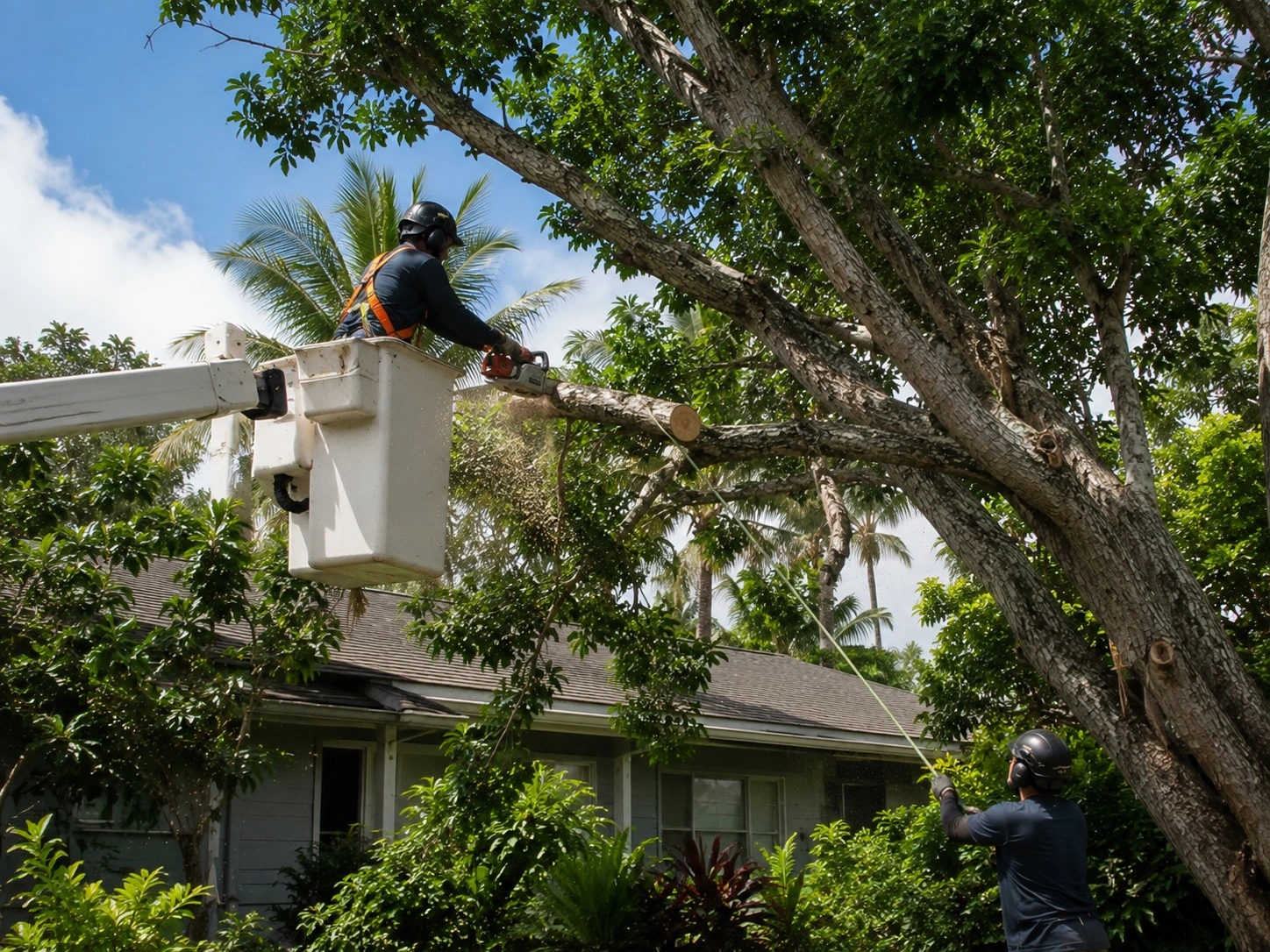
Hanging Limbs Over Shared Driveways
A widowmaker over a shared driveway or narrow access lane affects more than one household's ability to get in or out. See Tree Limb Removal for how these are prioritized.
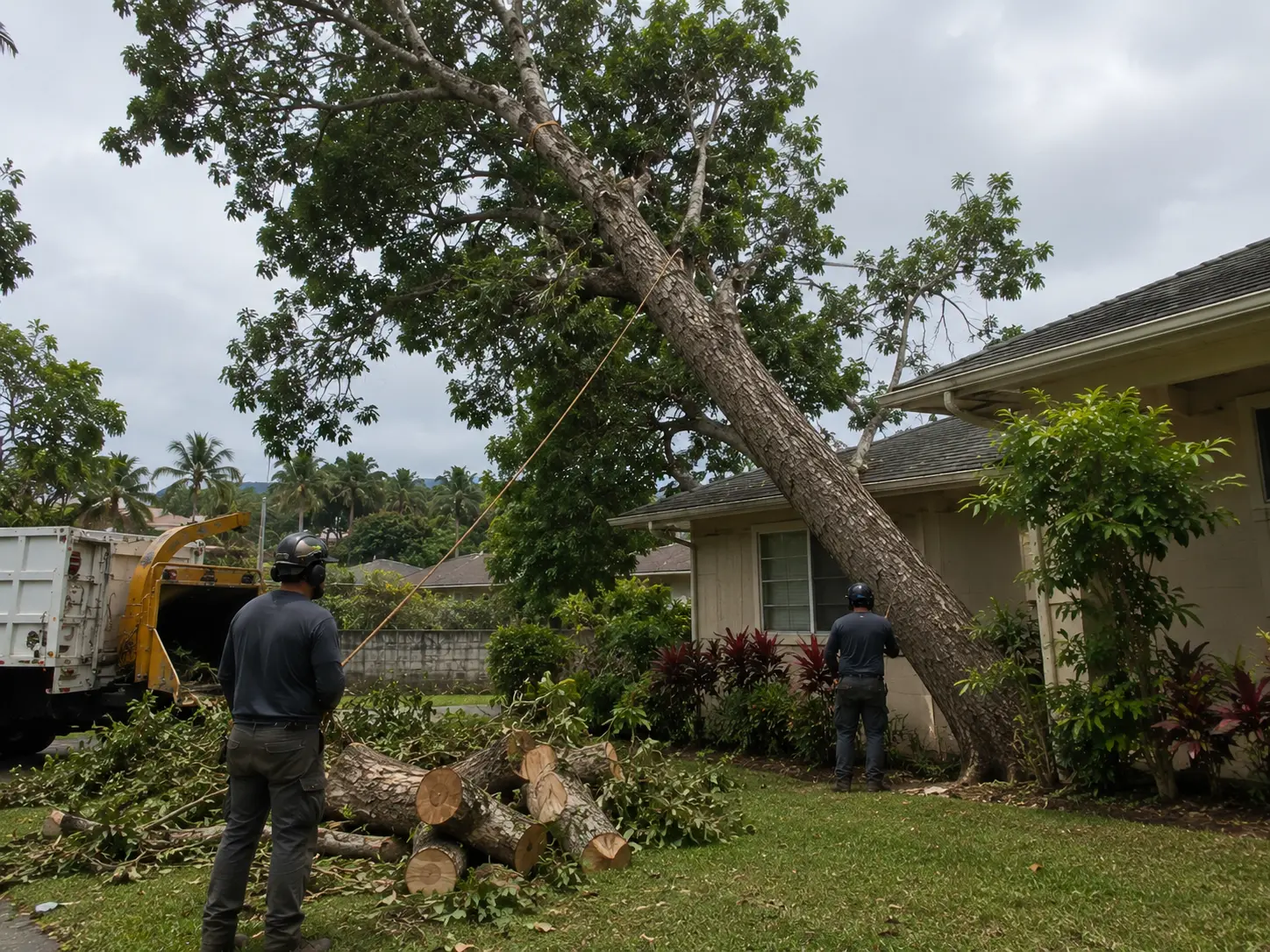
Leaning Trees on Hillside Streets
Saturated slopes in neighborhoods like Makiki and Nuuanu can loosen root systems after heavy rain, and a lean on a hillside lot carries different risk than one on flat ground. See Leaning Tree Removal.
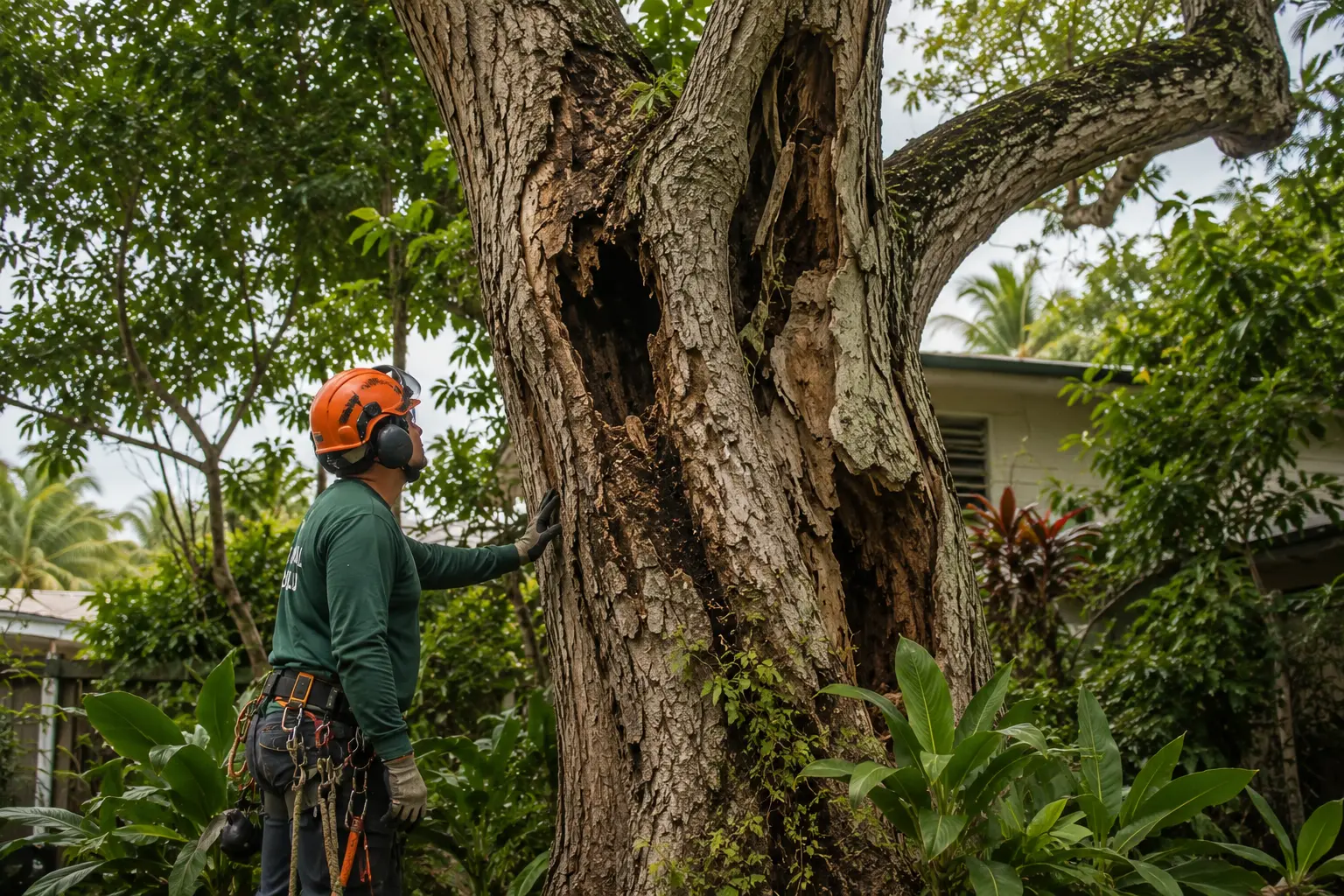
Aging Trees Near Sidewalks
Decades-old trees along metro sidewalks and property lines sometimes show trunk decay or root heaving that lifts pavement. See Hazardous Tree Removal for how we assess these.
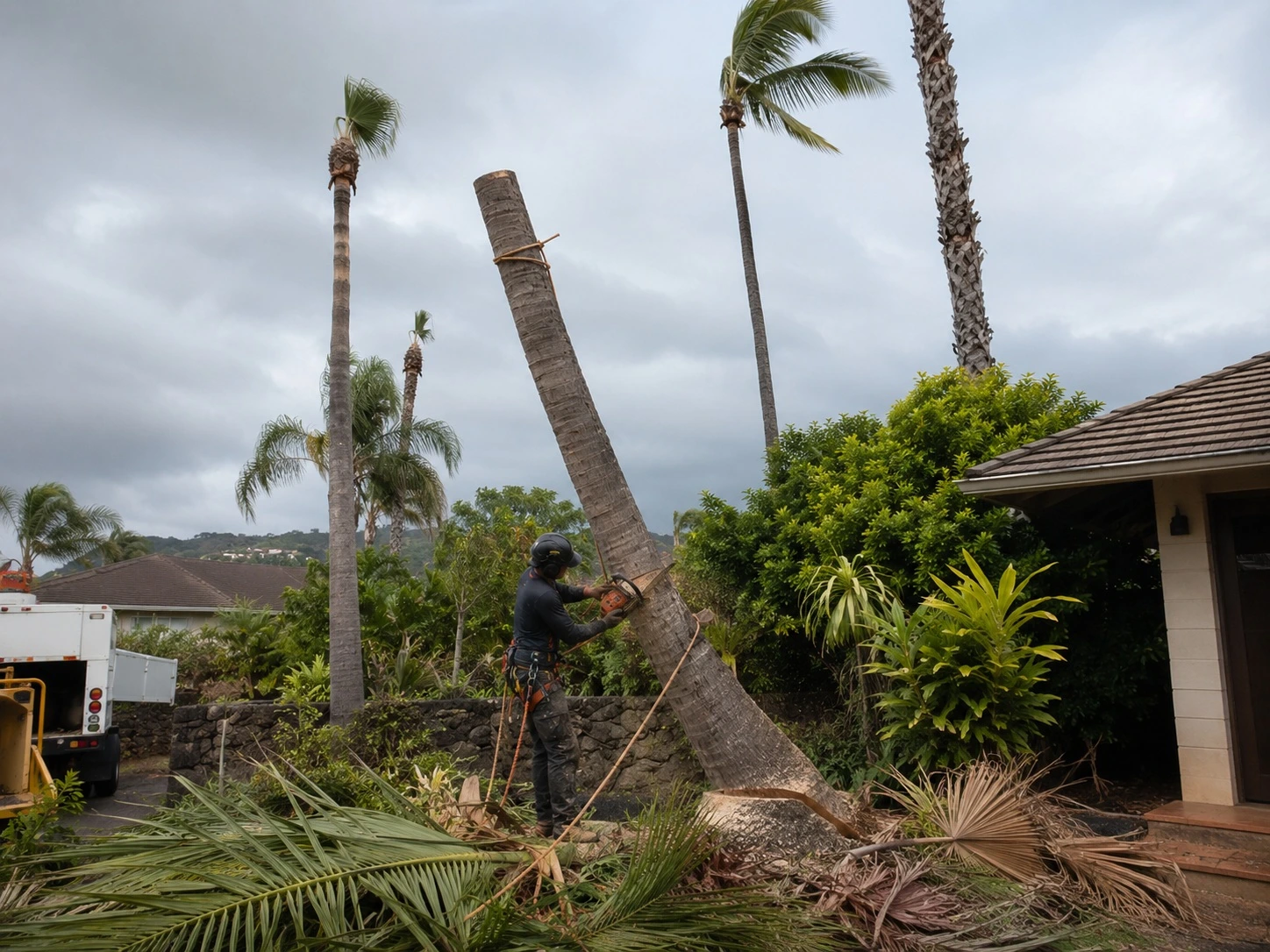
Palm Emergencies Near Towers & Condos
Landscaped palms around residential and commercial towers can drop fronds or coconuts onto walkways and parking areas below. See Palm Tree Removal for routine and emergency handling.
How wind and weather move through the metro corridor
The metro core sits in a natural wind channel between the Koʻolau range and the coast, which shapes how storms actually affect trees here.
Channeled Trade Winds
Persistent northeast trade winds get funneled and accelerated through the valleys feeding into the metro core, putting steady, long-term stress on canopy trees even outside of storm events.
Kona Storm Reversals
Occasional Kona storms push wind from the opposite direction trees are used to bracing against, which is when trunk and root failures in mature metro trees are most likely to show up.
Valley Rainfall Differences
Nuuanu and Pauoa Valley receive noticeably more rainfall than the drier coastal parts of the metro core, so root saturation and soil-related lean issues are more common there than in Kakaako or Ala Moana.
Urban Heat & Drought Stress
Trees surrounded by pavement and buildings in the densest parts of downtown and Kakaako deal with more heat and less soil moisture, which can weaken a tree's structure years before it becomes visibly obvious.
Species we see most often across the metro core
Decades of urban planting decisions have left the metro core with a distinct mix of species, and each comes with its own failure pattern.
Monkeypod & Banyan
Common street and yard trees across Makiki, Nuuanu, and Punchbowl, planted generations ago and now large enough that their broad canopies extend well over neighboring rooflines.
Albizia
Fast-growing and weak-wooded, albizia shows up frequently on older metro lots where it was planted decades ago for quick shade, and it's now a common source of sudden limb failure.
Landscaped Palms
Coconut, royal, and fan palms line the entrances and courtyards of condo towers and commercial buildings across Ala Moana and Kakaako, often planted in raised beds with limited root space.
Working around the metro core's mix of property types
Few neighborhoods in Honolulu Metro consist of a single property type, and each one changes how a job is planned.
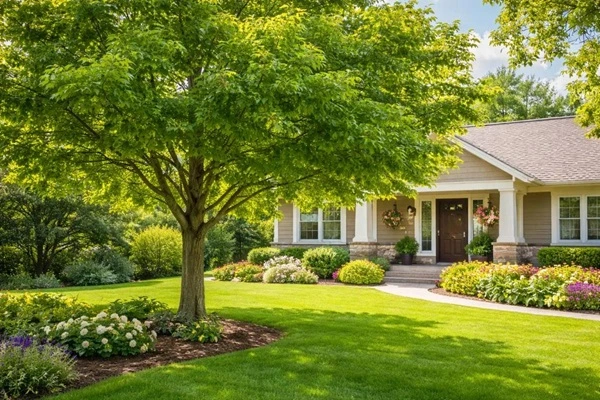
Plantation-era homes, walk-up apartments, and towers
Older single-family homes on narrow lots make up much of Makiki, Kalihi, and Pauoa Valley, often with a single large legacy tree that's grown well beyond what the lot was designed for. Multi-unit walk-ups common in McCully and Moiliili add shared driveways and tighter access into the mix, while condo towers and commercial properties around downtown and Kakaako bring landscaped, planter-grown trees and coordination with building management or HOAs into the process.
Whatever the property type, the same on-site assessment applies first: confirming access, checking what's nearby, and building a plan around the specific constraints of that lot rather than a one-size approach. For a full property removal beyond an emergency situation, see tree removal.
Our response process in Honolulu Metro
Density changes the logistics, not the standard of care.
Call or Request
Tell us your neighborhood and what's happening, by phone or through the estimate form.
Access & Hazard Check
We factor in lot size, shared driveways, and street parking before a crew arrives.
Written Estimate
A clear, itemized estimate based on the on-site assessment, before any work begins.
Careful Removal
Rigging planned around close neighbors, fences, and shared property lines.
Cleanup
Debris cleared so driveways, sidewalks, and shared access are usable again.
A crew that already knows the metro core's constraints
The tightest lot in Kalihi and the landscaped bed outside a Kakaako tower both get the same careful assessment before a single cut is made.
Every crew member is trained, and every job is backed by full insurance coverage.
Crews who already know the narrow driveways, hillside streets, and shared lots common across the core.
A written estimate after an on-site visit, with no hidden fees added later.
The same team behind Emergency Tree Removal Honolulu covers every metro neighborhood.
We also serve the areas surrounding Honolulu Metro
If your property is outside the metro core, we cover the rest of Oʻahu as well. View all service areas →
Honolulu Metro questions before you call
How quickly can a crew reach a property in Honolulu Metro?
Response depends on the hazard and current traffic conditions across the metro core, but active emergencies like a tree on a structure or blocking a road are prioritized ahead of routine visits. Call to describe the situation and a crew will advise on realistic timing.
Do you work on tight, urban lots in neighborhoods like Makiki or Moiliili?
Yes. Much of Honolulu Metro consists of older, narrow residential lots with limited side yard access, shared driveways, and trees close to neighboring structures. Our crews regularly plan rigging around exactly these constraints rather than needing wide open space to work.
Are large trees in older Honolulu neighborhoods a bigger risk?
Many of the metro's older neighborhoods have mature canopy trees planted decades ago that have since grown close to rooflines, driveways, and property lines, so yes, size and proximity both add risk compared to a newer subdivision with younger, smaller trees.
What should I do if a tree is blocking a one-way street or shared driveway?
Avoid trying to move debris yourself if it involves anything beyond small twigs and leaves, since a blocked one-way street or shared access driveway in a dense neighborhood can affect several households at once. Call to describe the blockage and we'll prioritize clearing access first, then complete the full removal.
Do highrise and condo properties in the metro core need a different approach?
Landscaped trees around condo towers and mixed-use buildings often sit in planted beds with limited soil volume and are surrounded by hardscape, parking, and pedestrian areas, which changes both the equipment used and the coordination needed with building management before work begins.
What trees cause the most emergency calls in Honolulu Metro?
Monkeypod, banyan, and albizia are behind a large share of emergency calls in the metro area, either from large limbs failing under their own weight or from root systems that have outgrown small urban lots and started lifting sidewalks or foundations.
Is emergency tree service available throughout all of Honolulu Metro, not just downtown?
Yes. Coverage extends across the metro core and surrounding residential neighborhoods, including Kakaako, Makiki, Nuuanu, Kalihi, McCully, Moiliili, Punchbowl, and Pauoa Valley.
Do you offer free estimates for Honolulu Metro properties?
Yes. A free, no-obligation estimate can be requested through the form below or by phone, followed by an on-site assessment to confirm the scope of work.
Request a free estimate in Honolulu Metro
Tell us your neighborhood and what's happening, a fallen tree, a hanging limb, storm damage, or a hazardous palm, and a crew will follow up to confirm timing and, if needed, arrange an on-site assessment.