Emergency Tree Removal Honolulu | 24/7 Emergency Tree Service
When a storm brings a tree down, a limb lets go overhead, or a trunk starts leaning toward your home, you need an Emergency Tree Service Honolulu team led by an emergency arborist that treats every fallen tree, wind-damaged tree, and hazardous tree assessment with real urgency, not as a routine service call.
Call to describe what's happening, a fallen tree, a leaning trunk, a limb caught overhead, and we'll advise on next steps and timing.
Prefer to write it out? Request a free estimateCrews respond to fallen and hazardous trees as quickly as conditions allow.
Every emergency arborist visit starts with an in-person evaluation, not a phone quote.
Trees in contact with power lines are coordinated with the utility company first.
Debris, limbs, and wood from fallen or storm damaged trees are cleared before the crew leaves.
Written, no-obligation estimates after every hazardous tree assessment.
Tree services built around one thing: urgency
Each service below covers a distinct situation, from a routine removal to an active tree emergency, so you know what to expect before a crew ever steps onto the property.
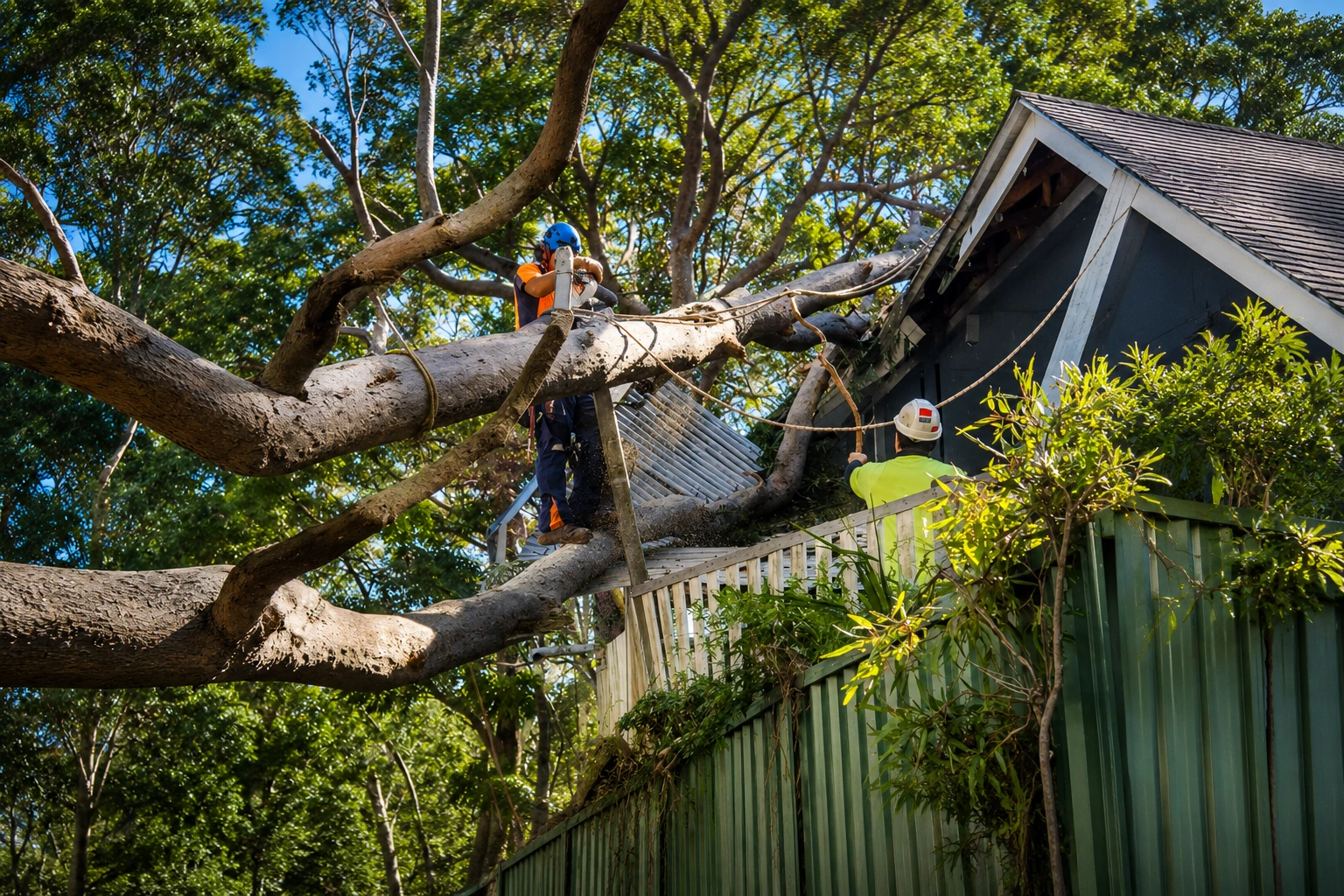
Emergency Tree Removal Honolulu
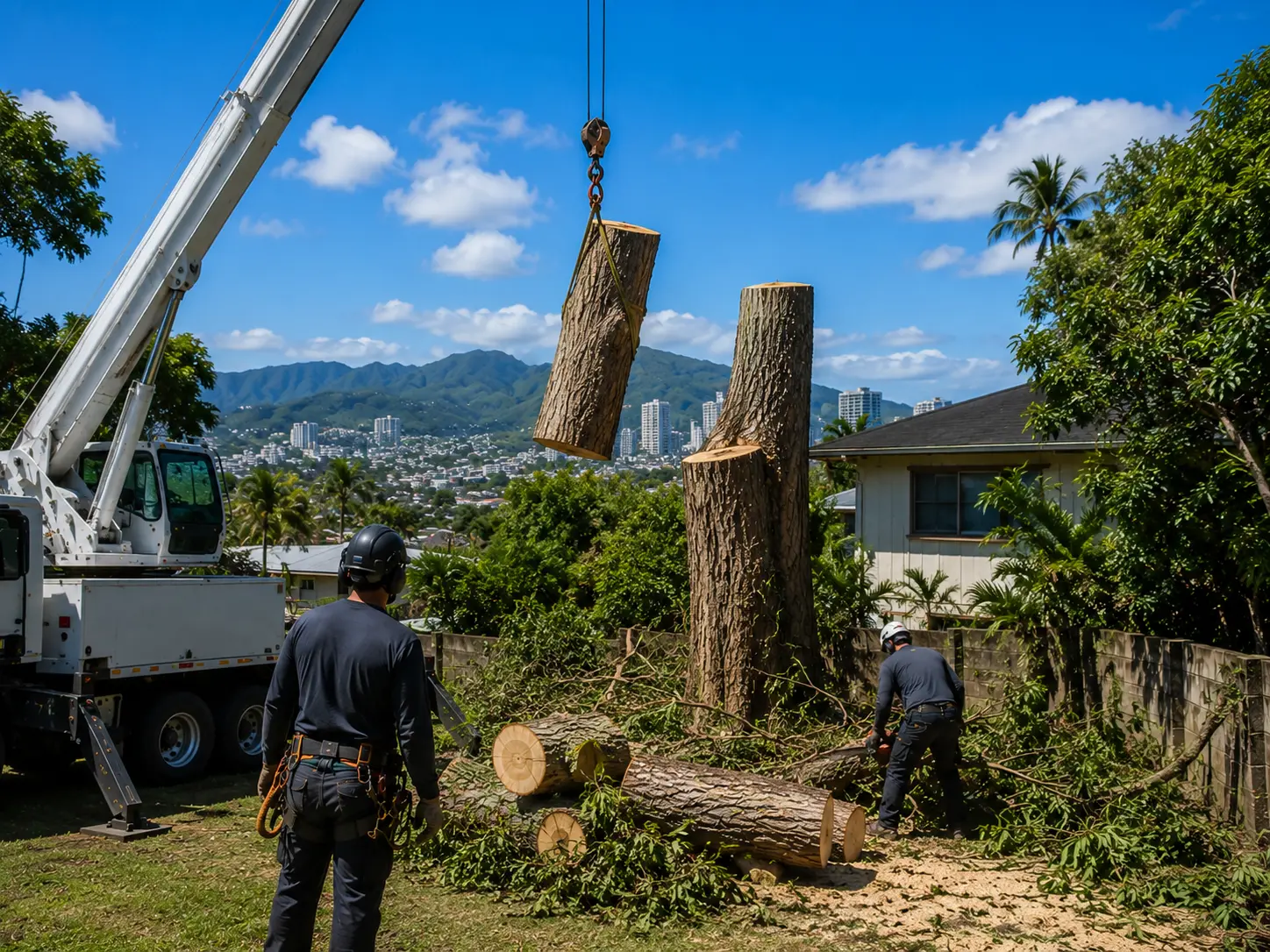
Not every tree problem is an emergency, but when a tree needs to come down, removing it correctly protects everything around it. Our tree removal service in Honolulu covers dead, diseased, and structurally compromised trees that have been assessed and cleared for full removal rather than trimming or treatment. Every job starts with an evaluation of the tree's lean, trunk condition, and proximity to structures, fences, and power lines, since that determines whether a tree can be dropped in one piece or needs to come down section by section with rope and rigging. Removal includes limb and trunk clearing, full debris haul-away, and stump grinding if you'd like the job finished completely.
Learn More About Tree Removal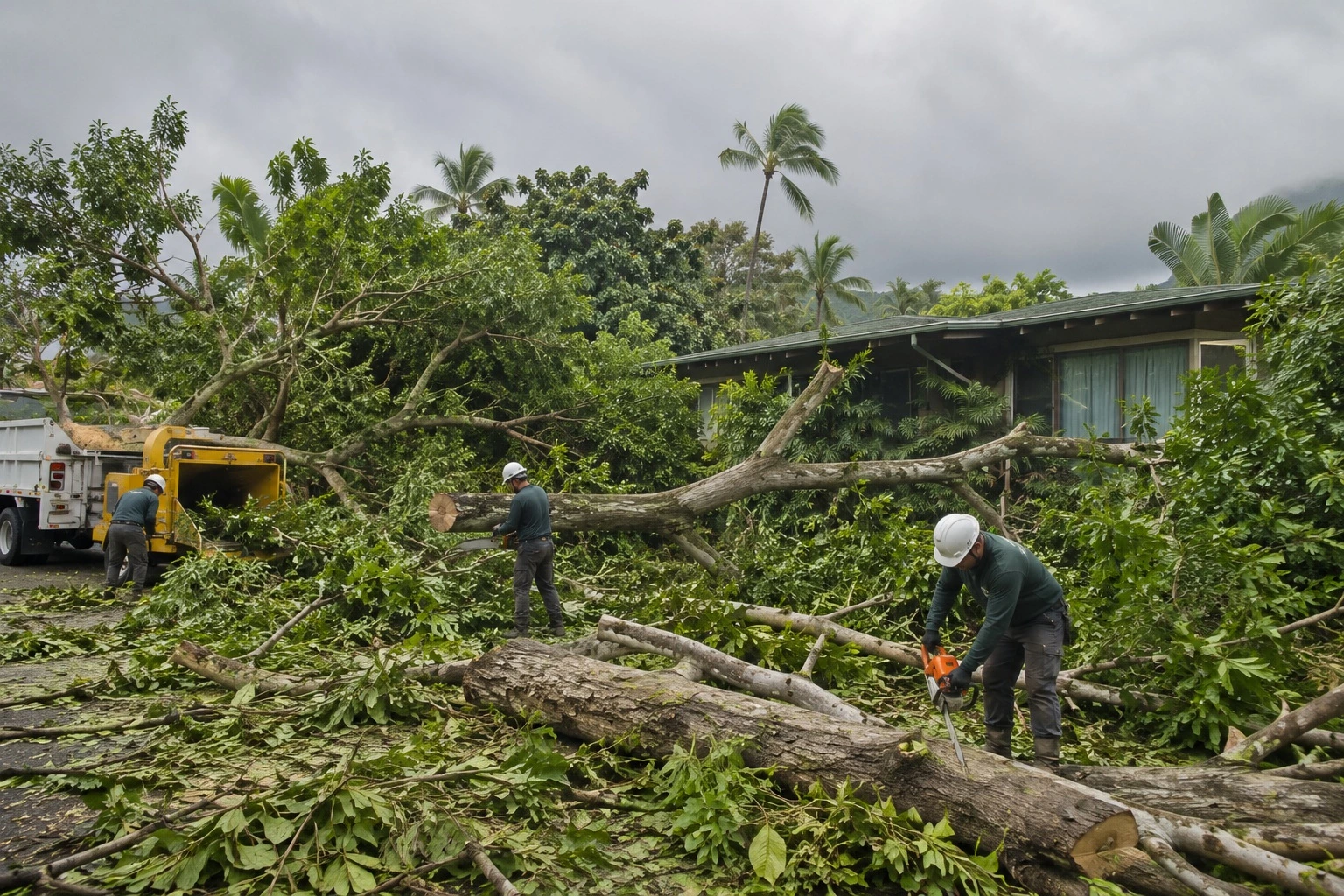
Storm Tree Removal
Oʻahu's storms don't always bring down a whole tree; sometimes it's a torn canopy, several broken limbs, or a trunk split by wind that leaves storm damaged trees standing but compromised. Storm tree removal covers the full range of wind damage, including trees that came down during the storm, limbs still tangled overhead, and root systems loosened by saturated ground. Because storm damage often affects several trees on a property at once, this service starts with a full-property assessment, followed by coordinated removal and storm cleanup so debris hauling is handled as part of the job, not billed as an afterthought.
Learn More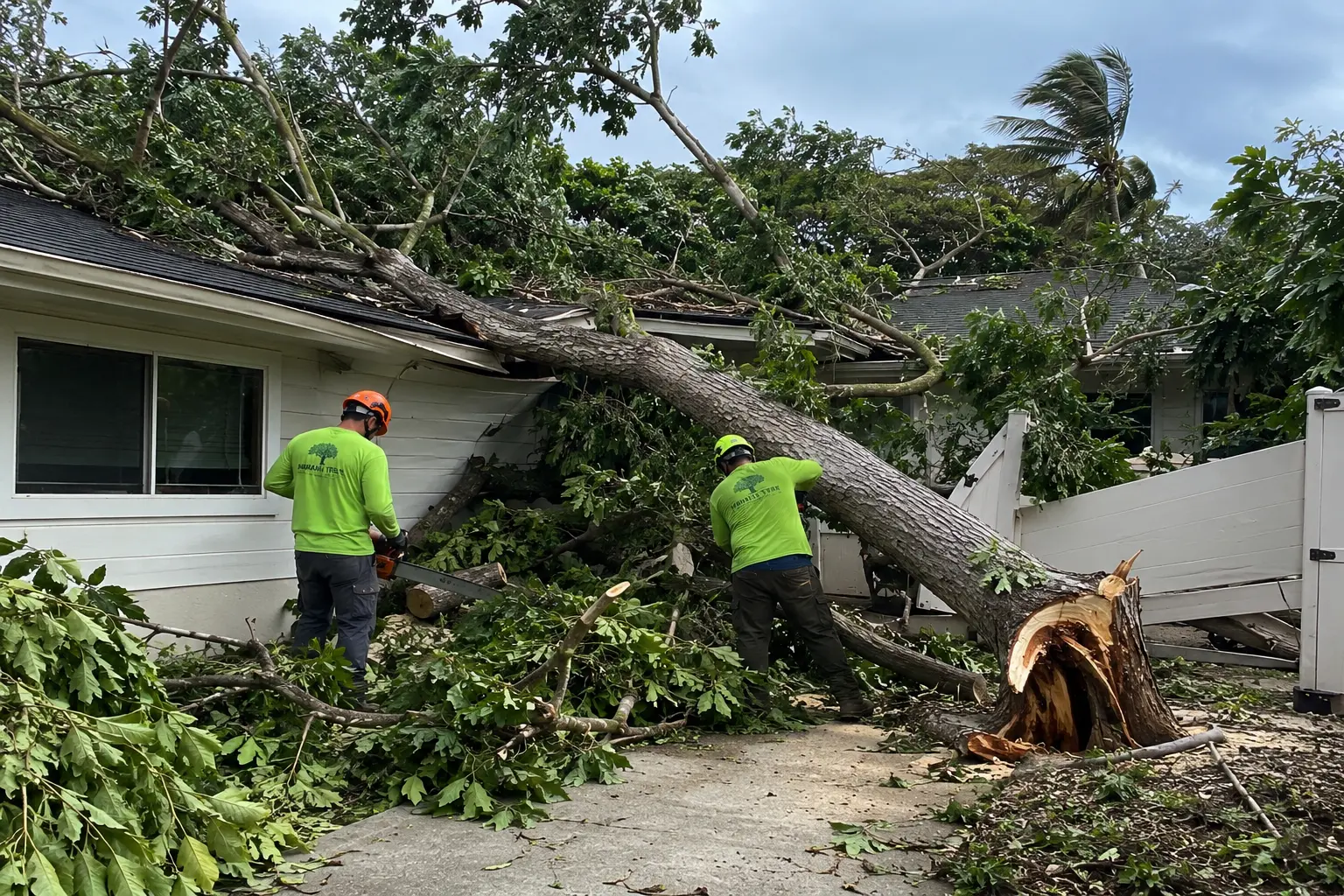
Fallen Tree Removal
A fallen tree rarely lands cleanly. It may rest across a driveway, lean on a fence, press against a roofline, or block a shared road, and the way it's positioned changes how it needs to be cut apart. Fallen tree removal starts by identifying where the weight and tension actually sit, since a trunk that looks stationary can still shift suddenly once the first cut is made. Sections are removed in a controlled order to avoid further damage, followed by full cleanup of limbs, trunk material, and wood debris so the property is usable again the same day.
Learn More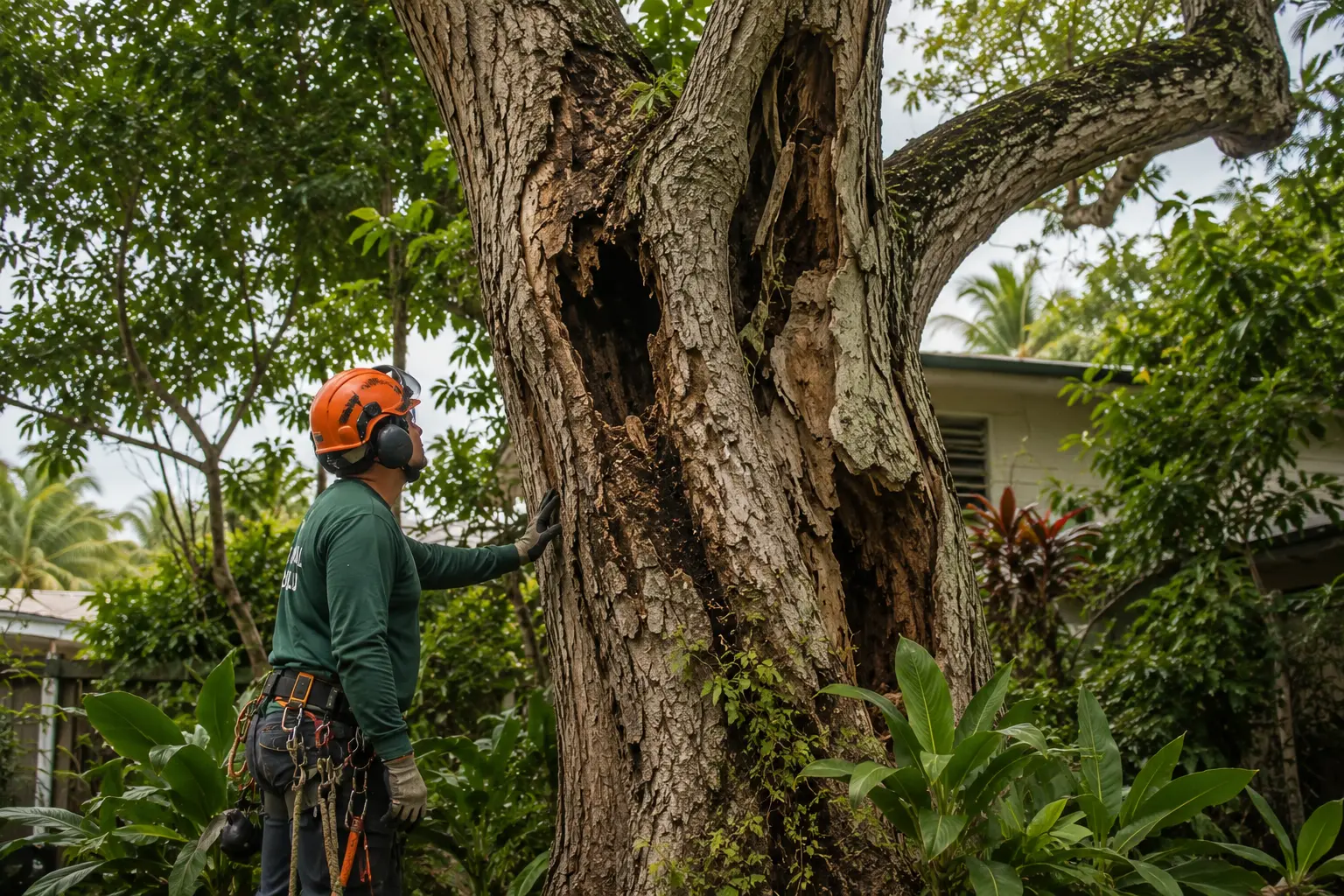
Hazardous Tree Removal
Some of the most dangerous trees on a property haven't fallen, leaned, or lost a limb yet; they just look wrong in ways that are easy to miss from the ground. Hazardous tree removal is built around a proper hazardous tree assessment: checking the trunk for cracks and cavities, the base for fungal growth that often signals root decay, and the canopy for dead wood that hasn't dropped yet. Not every hazardous tree needs to come down immediately; some can be stabilized with cabling or corrective pruning instead, which is why assessment comes before any removal decision.
Learn More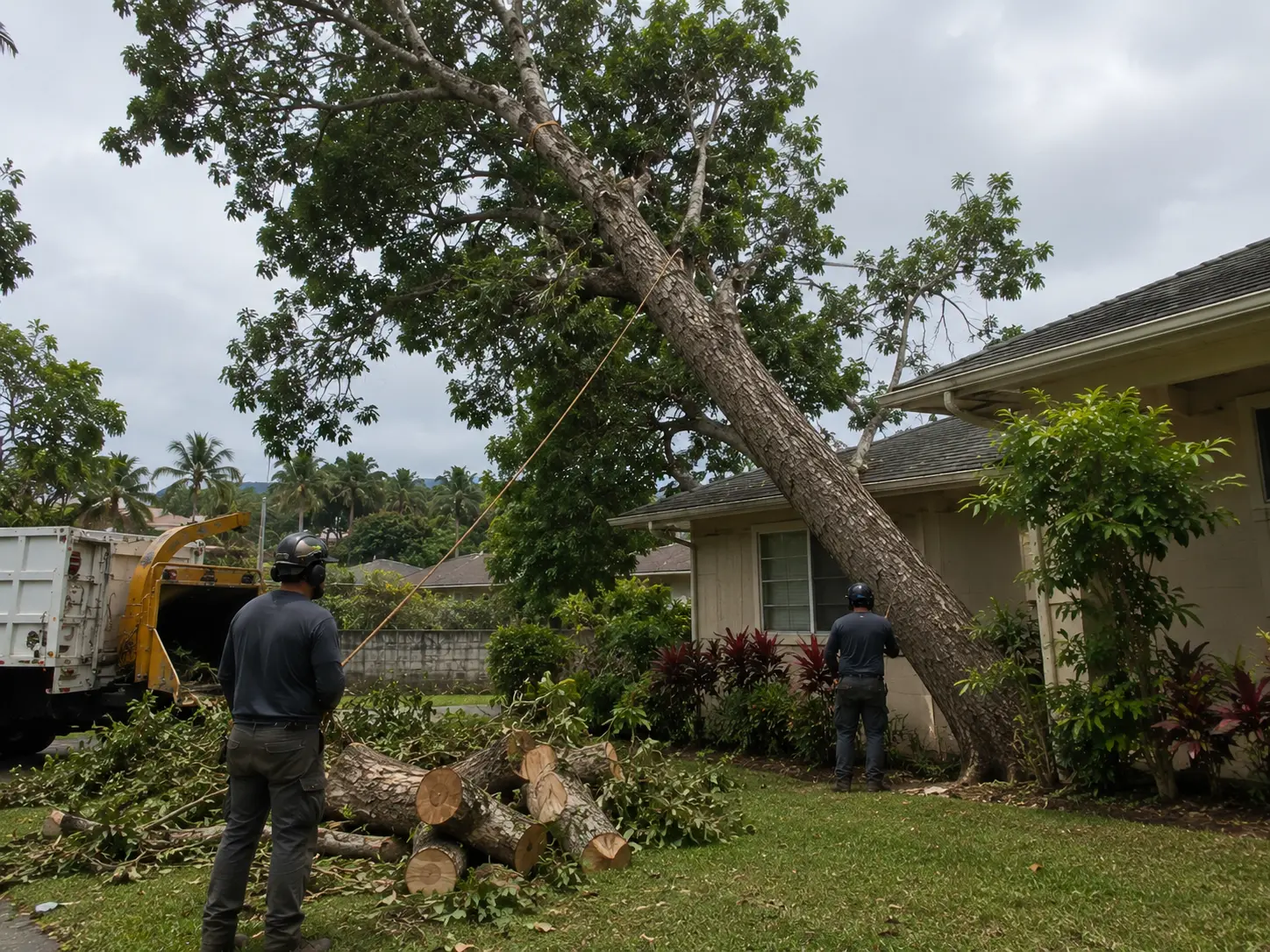
Leaning Tree Removal
A tree that has started leaning is a tree that is actively failing, even if it hasn't fallen yet. Dangerous leaning trees are usually the result of root failure, saturated soil after heavy rain, or a trunk weakened from within, and the lean tends to worsen over time rather than stabilize. Leaning tree removal treats this as an active hazard rather than a wait-and-see situation: the direction and degree of the lean determine how the tree is rigged and cut so it comes down in a controlled direction. Homeowners should avoid trying to brace or correct a leaning tree themselves.
Learn More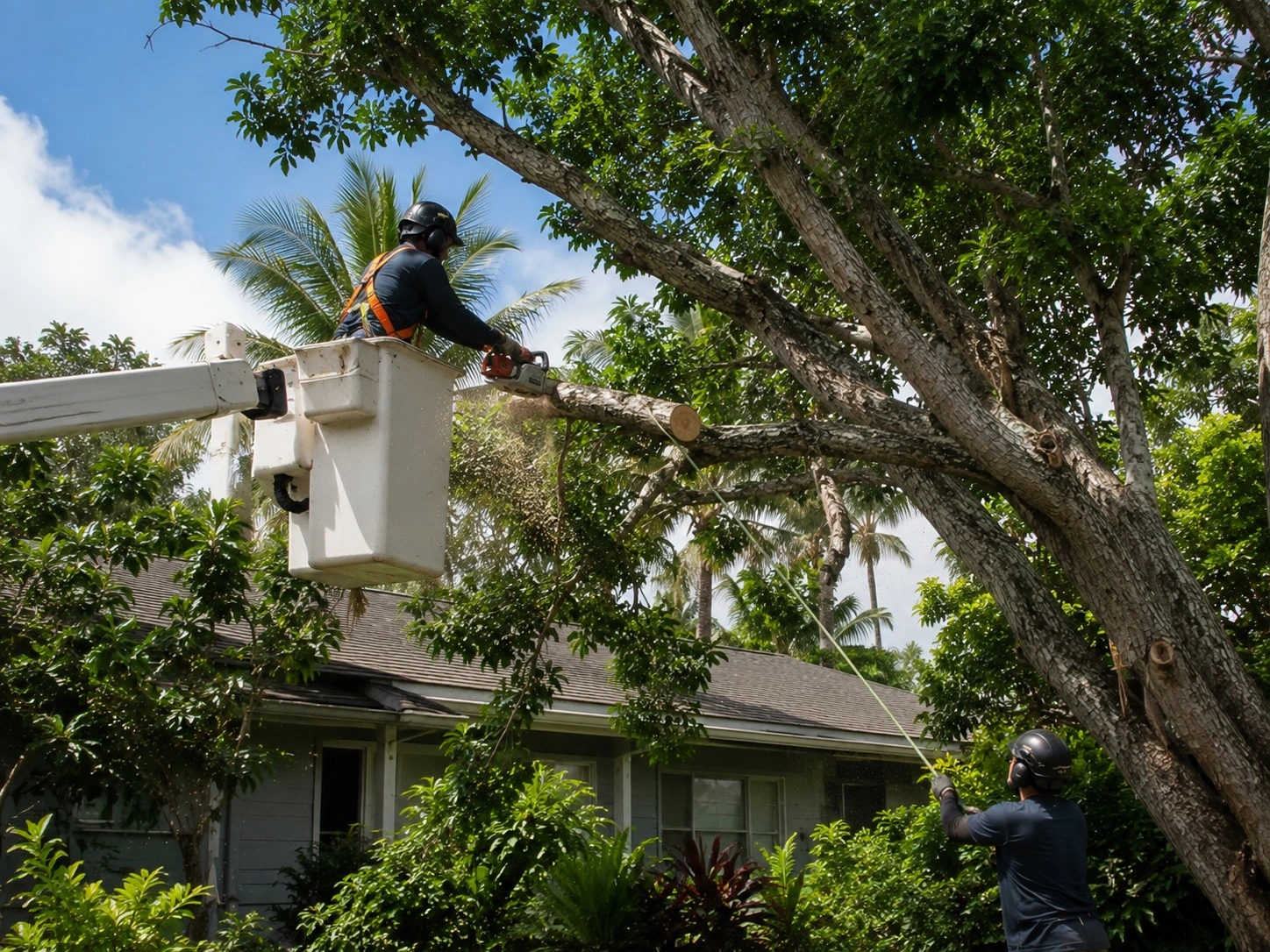
Tree Limb Removal
Broken limbs are one of the more overlooked hazards after a storm, mostly because a hanging limb doesn't always look dramatic from the ground. A branch caught in the canopy above, sometimes called a widowmaker, can hold on for days before letting go without warning. Tree limb removal addresses both storm-broken branches still tangled overhead and limbs cracked at the trunk but not fully separated. Because the limb is often under tension from its own weight, removal requires proper rigging to bring it down in a controlled way rather than letting gravity decide when it falls.
Learn More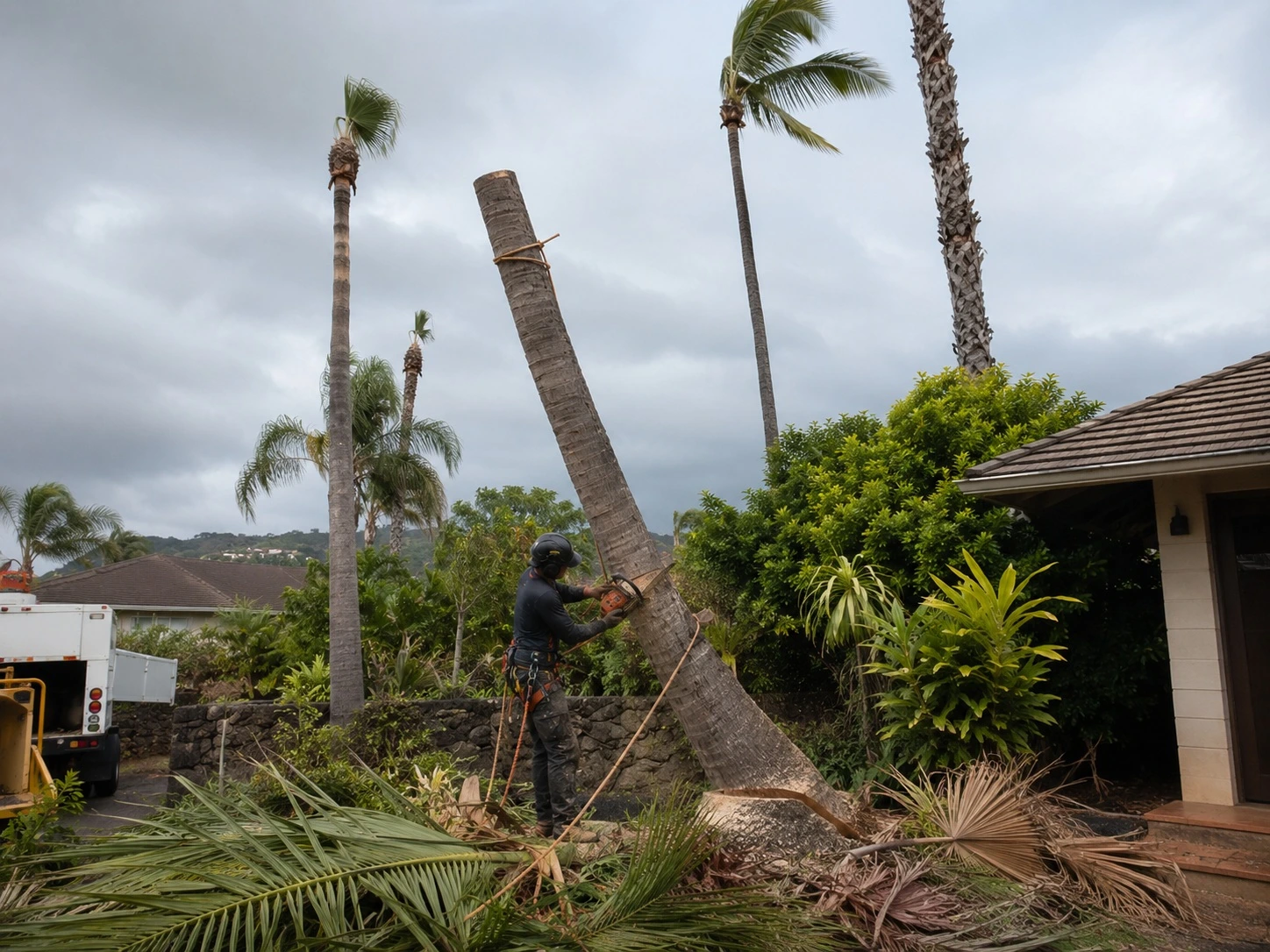
Palm Tree Removal
Palms fail differently than hardwood trees, and they're removed differently too. A palm has a single growing point at the top of the trunk, no branching structure to rig from, and a fibrous root system rather than a deep taproot, which changes both technique and equipment. Palm tree removal covers leaning, storm-damaged, and declining palms throughout Honolulu, including tall specimen palms that may need crane assistance near homes, pools, or power lines. Frond and seed pod removal is included, with extra care taken around coconut palms, since falling coconuts are a real and common liability for Oʻahu homeowners.
Learn MoreWhy emergency tree removal is different from routine tree care
A tree that has already fallen, is actively leaning, or is caught on power lines behaves differently than a tree being trimmed on a normal schedule. Weight distribution, tension in bent limbs, and root failure all change how a tree needs to be approached and cut, which is why emergency work follows a different process than a planned removal.
Rushing this kind of work, or attempting it without the right rigging, is how secondary damage and injuries happen. A wind damaged tree that looks stable can still be under enormous tension from how it fell or how it's leaning, and a fallen tree resting against a structure isn't necessarily finished settling.
- An increasing lean or a trunk that has visibly shifted since a storm
- Fungal growth at the base, often a sign of root or trunk decay
- A hanging limb caught in the canopy rather than resting on the ground
- Cracks, splits, or hollow sections anywhere along the trunk
That's why an on-site hazardous tree assessment comes first, every time: understanding the lean, the load, and the surroundings before any cutting begins is what keeps an already-dangerous situation from becoming worse.
From your call to a cleared property
The same process applies whether it's a single fallen tree or storm damage spread across the whole yard.
Call or Request
Describe the situation by phone or through the estimate form, including what's damaged and how it's positioned.
Hazard Assessment
A crew evaluates the tree, the lean, and the surroundings in person before recommending a course of action.
Written Estimate
A clear, itemized estimate is provided based on that assessment before any work begins.
Safe Removal
The tree or limb is removed with rigging suited to its lean, weight, and position.
Cleanup
Debris, limbs, and wood are cleared so the property is usable again.
If it feels urgent, it probably is
Each of these situations carries its own risks and its own wrong instinct. Here's what's actually happening in each one, and how emergency tree removal addresses it.
A tree has already fallen
When a tree comes down, onto a roof, a car, a fence line, or across a shared driveway, the danger doesn't end once it stops moving. Fallen trees can still be under tension from branches bent beneath the trunk or from whatever they landed on, and cutting into the wrong spot can cause a sudden shift. Avoid climbing on or under a fallen tree, and don't assume it's finished settling. Emergency tree removal starts by identifying where the load is concentrated, then removes the tree in sections that won't cause it, or what it's resting on, to move unexpectedly.
See Fallen Tree Removal →A tree is leaning
A tree that starts leaning after a storm or heavy rain is telling you something has already failed underground or within the trunk, not something that might fail later. The lean typically worsens with time and wind exposure, often with no visible warning before it goes from leaning to down. Avoid trying to prop, cable, or straighten a leaning tree yourself, and keep people and pets away from the direction it would fall. A crew assesses the cause of the lean, then removes the tree in a controlled direction using proper rigging.
See Leaning Tree Removal →A limb is hanging in the canopy
A broken limb caught in the branches above, sometimes called a widowmaker, is one of the least visible but most dangerous storm hazards. It can look stable for days and then release without warning, especially during wind or added rain. The mistake homeowners make most often is assuming that if it hasn't fallen yet, it isn't urgent. Avoid the area beneath it and don't attempt to knock it down or cut from below. Emergency tree limb removal uses rope and rigging to bring it down in a controlled way instead.
See Tree Limb Removal →Storm damage across the property
A single storm can leave a property with several problems at once: a few downed limbs, one tree fully down, another with torn canopy, and debris scattered everywhere in between. Treating each piece separately wastes time when hazards may exist in more than one place. Avoid clearing heavier limbs or trunk sections yourself, particularly near fence lines or anything still under tension. Storm tree removal starts with a full walk-through of the property so every wind damaged tree and hazard is identified before cleanup, then cleared in one coordinated visit.
See Storm Tree Removal →A tree looks structurally unsound
Not every hazard announces itself with a fallen branch or a visible lean. Cracks running up the trunk, cavities at the base, fungal growth near the root flare, or an unevenly thinning canopy can all indicate a tree failing from the inside, well before any obvious external sign. Homeowners often wait for a clearer signal before calling, which is exactly the wrong instinct here. A hazardous tree assessment looks at the trunk, canopy, and root zone together, since a problem in one area usually shows up as a symptom elsewhere.
See Hazardous Tree Removal →A palm is leaning or damaged
Palms respond to storms and root damage differently than hardwood trees, and a leaning or storm-damaged palm carries risks that are easy to underestimate. Without a branching structure or deep root system, a palm that's lost stability can fail quickly, and a heavy crown or loose fronds can drop with little warning. Avoid standing beneath a damaged palm, especially near pools, patios, or parked cars. Emergency palm tree removal uses species-specific rigging suited to a palm's growth pattern, including crane assistance for taller specimens where ground-level access isn't practical.
See Palm Tree Removal →Emergency tree service across Oʻahu
Available throughout Honolulu and the surrounding communities, from urban lots near Waikiki to larger properties out toward Mililani and Kapolei.
Common questions before you call
What should I do if a tree falls on my house?
Keep everyone away from the affected area, especially if branches or the roofline look unstable. Avoid entering a damaged section of the house. Photograph the damage for insurance purposes if it's safe to do so, then contact a tree service to stabilize and remove the tree before any repair work starts.
Is emergency tree removal covered by homeowners insurance?
Coverage depends on your specific policy and the cause of the damage. Trees that fall during a storm and damage a covered structure are often eligible for a claim, while routine removal of a healthy tree typically is not. Check with your provider for details specific to your policy.
How can I tell if a tree is about to fall?
Warning signs include a lean that has visibly increased, large dead branches, fungal growth at the base, trunk cracks or splits, exposed or severed roots, and hollow sections. Any of these warrant a professional assessment.
What is a widowmaker branch?
A widowmaker is a broken or dead branch caught in the canopy above rather than resting on the ground. It can fall with no warning, which is why it should only be handled by a trained crew with the right rigging and safety equipment.
Do I need a permit to remove a tree in Honolulu?
The City and County of Honolulu regulates removal of certain protected and exceptional trees, even on private property. Requirements vary by species, size, and location, so it's worth confirming with the local permitting office or an arborist beforehand.
Is a dead tree always an emergency?
Not necessarily, but it shouldn't be ignored. Dead wood loses structural integrity over time, and root or trunk decay isn't always visible from the ground. A professional assessment can determine how urgent removal is.
Is emergency tree service really available outside normal hours?
Emergency tree situations, such as a fallen tree on a structure or a tree blocking a road, are handled as they arise rather than on a fixed schedule. Call to describe the situation and a crew will advise on response timing.
What's the difference between storm tree removal and routine removal?
Storm tree removal addresses trees and limbs already damaged or brought down by wind and rain, often alongside debris cleanup across the property. Routine tree removal is a planned decision made without an active hazard driving the timeline.
Is it safe to remove a tree near power lines myself?
No. Trees near power lines should only be handled by trained professionals with the correct equipment. Contact with an energized line can be fatal, and the utility company should be notified before work begins near their infrastructure.
How much does emergency tree removal cost?
Cost depends on the tree's size, condition, accessibility, and proximity to structures or power lines. A written estimate after an on-site assessment is the only reliable way to know cost for a specific situation.
What counts as a tree emergency versus routine tree work?
A tree emergency generally involves an active or imminent hazard: a fallen tree, a tree leaning after a storm, a hanging limb, or a tree in contact with power lines or a structure. Trimming and non-urgent removals fall under routine tree care.
Do you offer free estimates?
Yes. A free, no-obligation estimate can be requested through the form below or by phone, followed by an on-site assessment to confirm the scope of work.
Request a free emergency tree removal estimate
Tell us what's happening, whether it's a tree emergency, a fallen tree, a leaning trunk, storm damage, or a hazardous limb, and a crew will follow up to confirm timing and, if needed, arrange an on-site assessment.