Emergency Tree Removal Waipahu | Local, Fast, On Call
From the old plantation streets around Waipahu Town to the newer subdivisions of Village Park and Waikele and the open ag land toward Kunia, Waipahu sits on the drier, sun-baked leeward side of the island, where legacy sugar-era trees and drought stress bring their own kind of tree emergency. We work this side of Oʻahu regularly and plan every job around it.
Tell us your neighborhood and what's happening, and we'll advise on next steps and timing.
Prefer to write it out? Request a free estimateFrom Waipahu Town and West Loch to Village Park, Waikele, Royal Kunia, and Kunia.
Crews used to oversized legacy trees on lots built decades before them.
Trees near power lines are coordinated with the utility company before any work begins.
Limbs, trunk sections, and green waste cleared before the crew leaves.
Written, no-obligation estimates after every on-site assessment.
Why tree work in Waipahu isn't like the windward side of the island
Waipahu sits in the rain shadow of the Waianae range, which blocks much of the moisture that trade winds carry toward windward neighborhoods like Kailua and Kaneohe. That leaves Waipahu noticeably drier and hotter for much of the year, and trees here deal with a different kind of stress: prolonged heat and drought rather than saturated, waterlogged soil.
Waipahu also carries a distinct history as a former sugar plantation town, and that legacy shows up directly in its tree canopy. Large monkeypod, mango, and banyan trees were planted generations ago along old plantation-era streets, long before today's homes, driveways, and fences were built around them. Many of these trees are now well past the size the original layout anticipated, with roots and canopy pushing into spaces they were never meant to occupy.
- Rain-shadow effect from the Waianae range reducing rainfall compared to windward Oʻahu
- Sustained heat and drought stress on trees, especially in open, less-shaded lots
- Oversized legacy plantation-era trees on residential streets built decades after planting
- Open ag land near Kunia and Royal Kunia with windbreak trees exposed to unobstructed gusts
If a tree is actively down or hazardous anywhere in Waipahu right now, see Emergency Tree Removal Honolulu for our fastest response option.
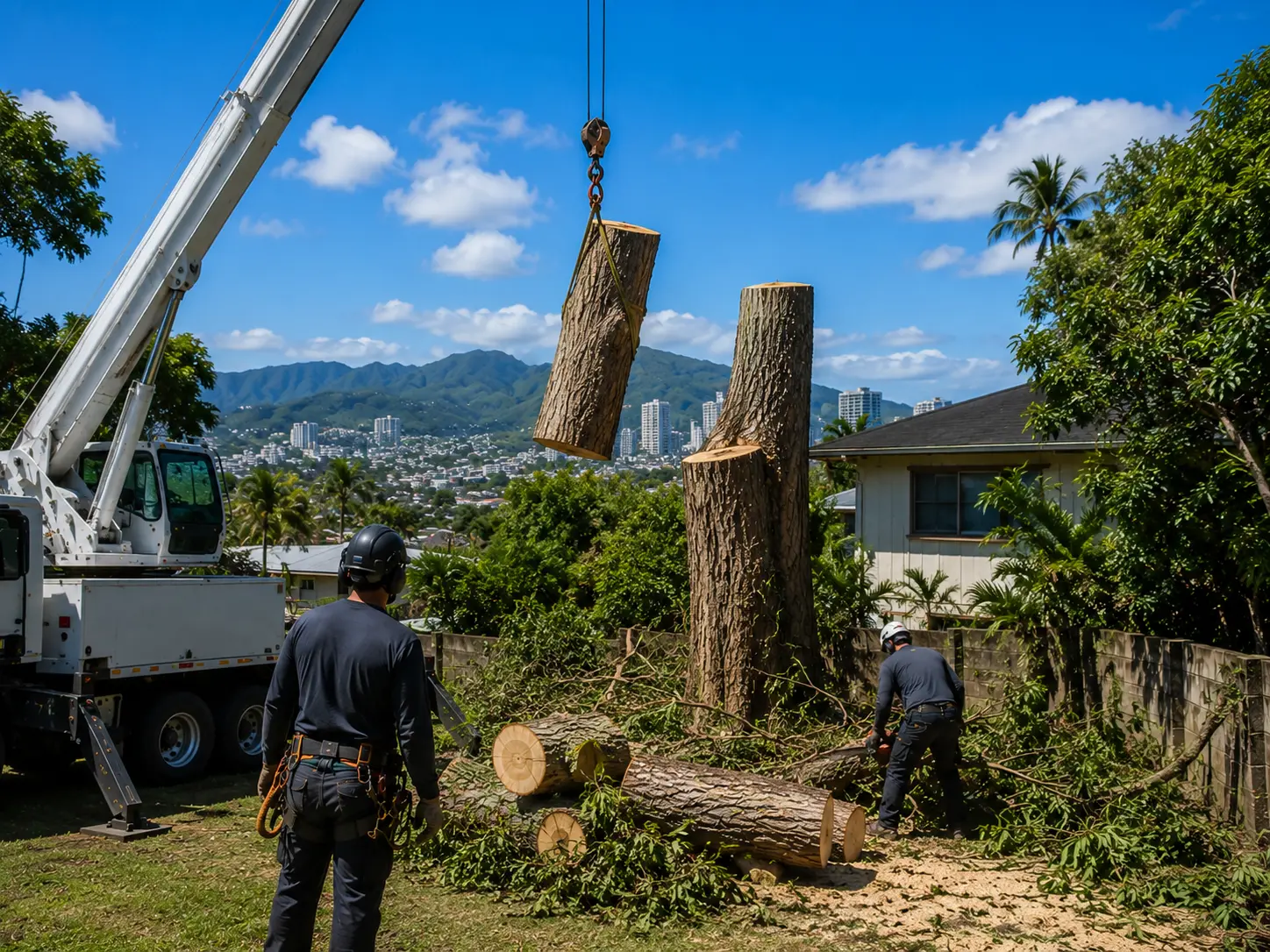
A town that changes from the old core to the open plain
Waipahu isn't one uniform area. Each neighborhood has its own tree age, lot layout, and exposure, and our crews plan accordingly.
Waipahu Town
The historic plantation core, with narrow older streets and large legacy monkeypod, mango, and banyan trees that have grown well beyond what these small residential lots were designed for.
Village Park
A planned residential subdivision with younger street trees and landscaped yards, where most calls involve smaller wind-snapped branches or palm fronds rather than large hardwood failures.
Waikele
A mix of residential streets and commercial frontage near the retail center, where landscaped trees around parking areas and drainage channels need coordinated access during removal.
Royal Kunia
Hillside subdivisions bordering agricultural land, where windbreak trees along field edges and property lines take more direct, unobstructed wind exposure than a sheltered neighborhood lot.
West Loch & Waipio
Newer coastal-adjacent subdivisions near the harbor, with a mix of landscaped palms and younger shade trees planted during development rather than decades-old legacy specimens.
Kunia
Open agricultural land and rural properties where kiawe and windbreak trees planted along field boundaries can fail under stress that wouldn't affect a typical suburban yard tree.
Common tree emergencies across Waipahu
Legacy plantation trees, drought-stressed canopy, and open ag land each fail differently, and knowing which one you're dealing with changes the response.
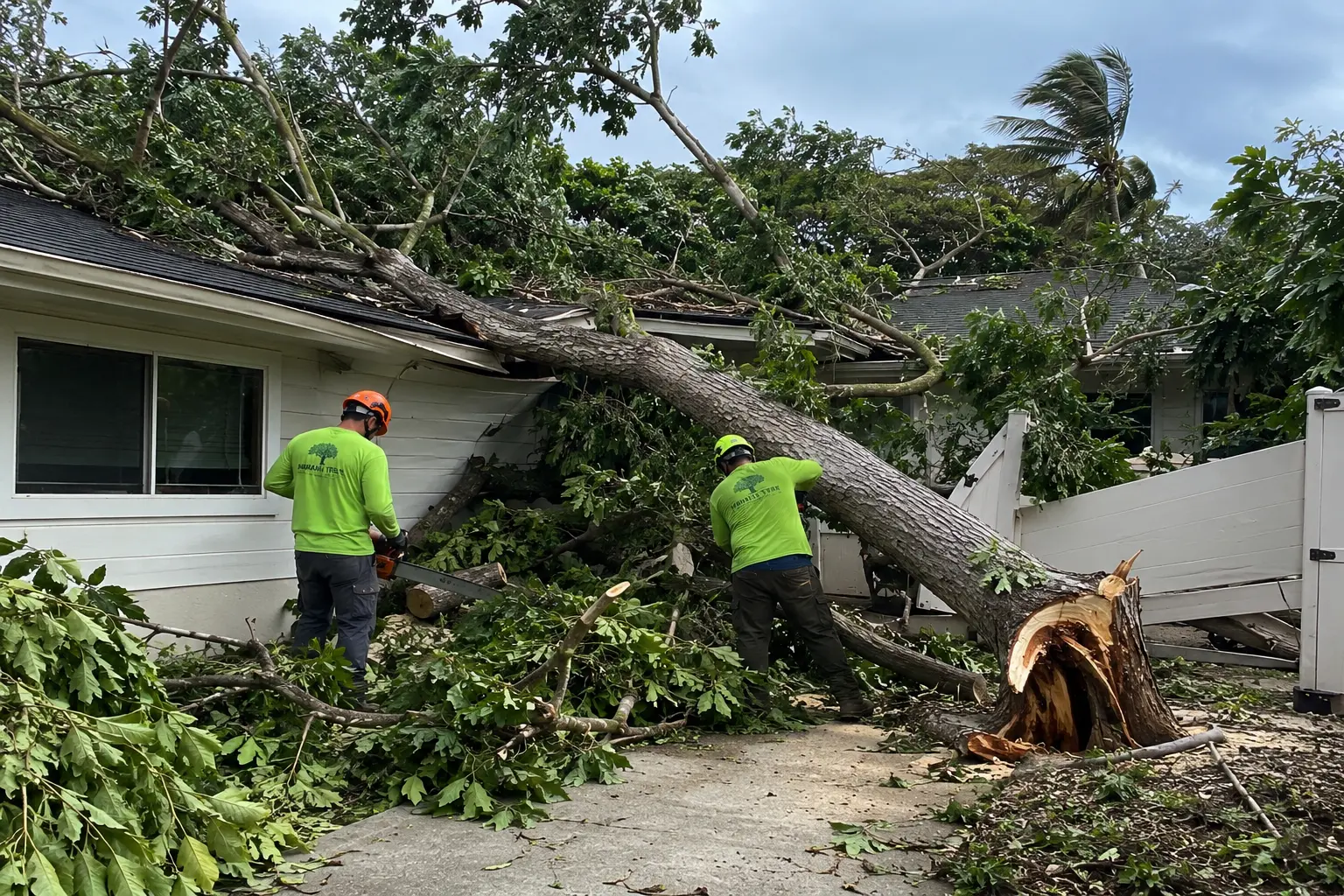
Legacy Trees Down on Older Homes
A large plantation-era monkeypod or mango failing on a Waipahu Town lot can land across a carport, a fence, or a neighboring driveway. See Fallen Tree Removal for how we sequence that kind of job.
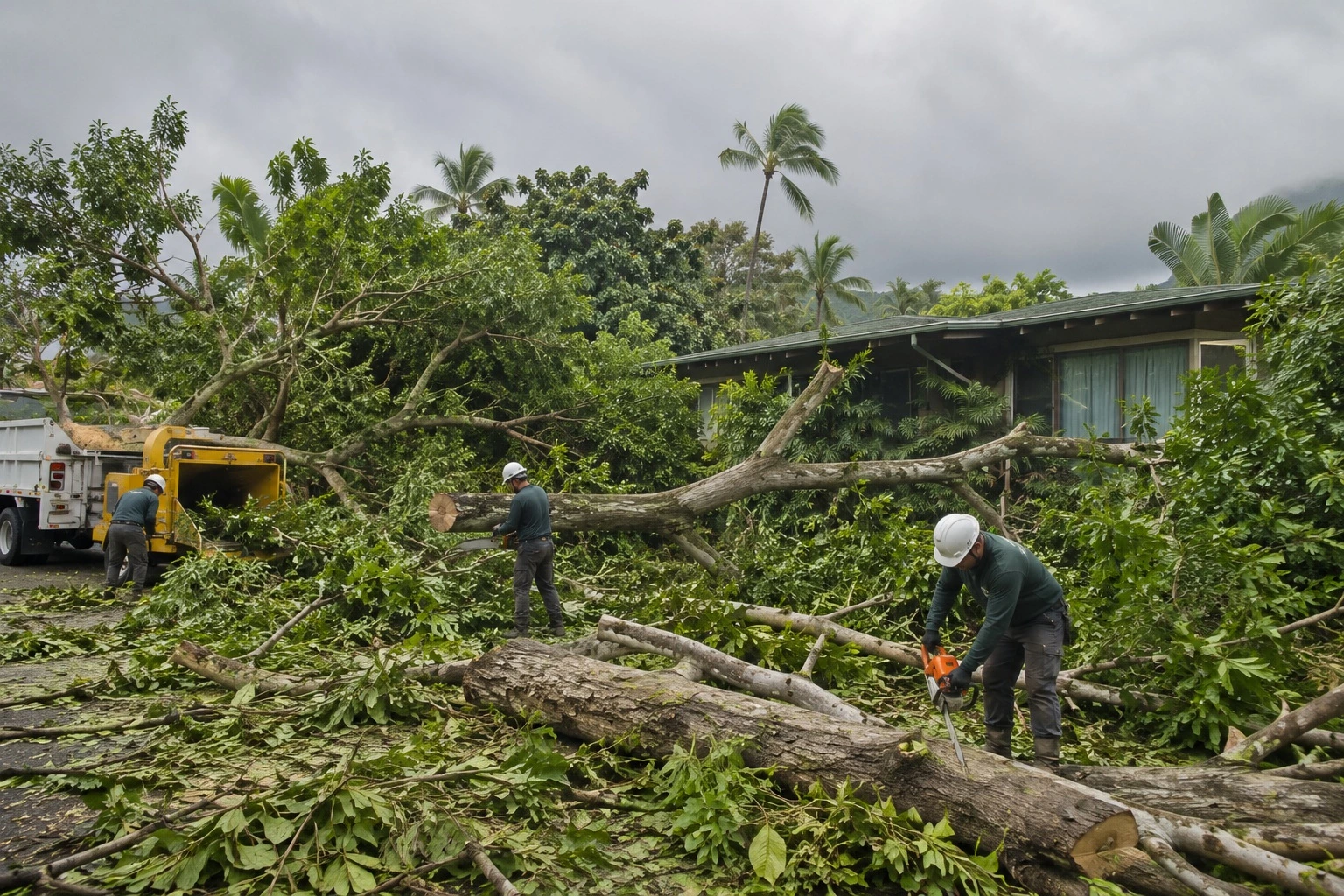
Wind-Damaged Ag & Windbreak Trees
Kona storms crossing the open plain toward Kunia and Royal Kunia can hit windbreak and field-edge trees with little to slow the gusts down first.
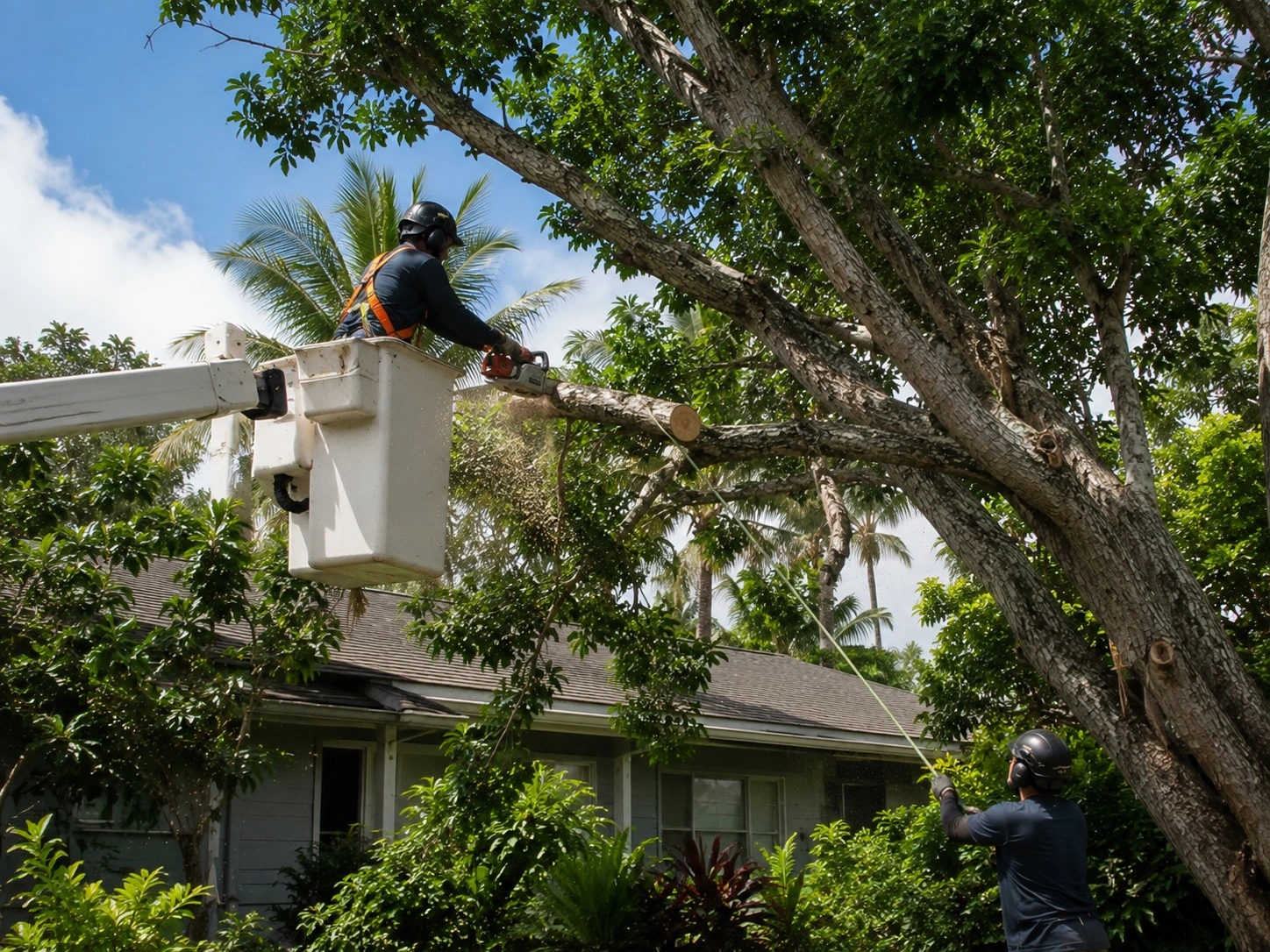
Hanging Limbs Over Old Plantation Streets
A broken limb caught above a narrow Waipahu Town street or driveway can block access until it's cleared. See Tree Limb Removal for how these are handled.
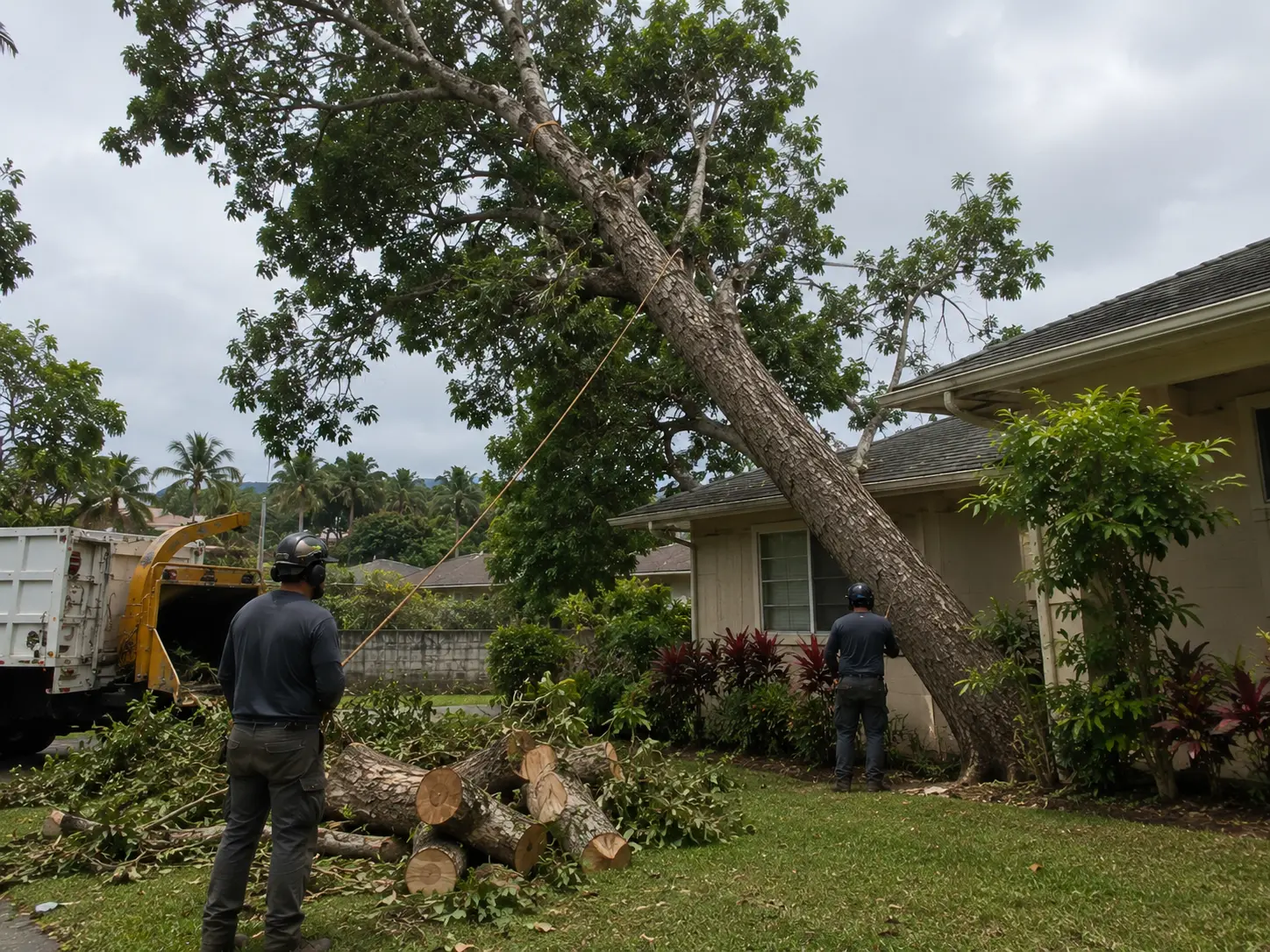
Leaning Trees on Hillside Ag Lots
Erosion and irrigation runoff on Royal Kunia's sloped ag-adjacent lots can loosen a tree's footing over time, and a lean here is worth a prompt look. See Leaning Tree Removal.
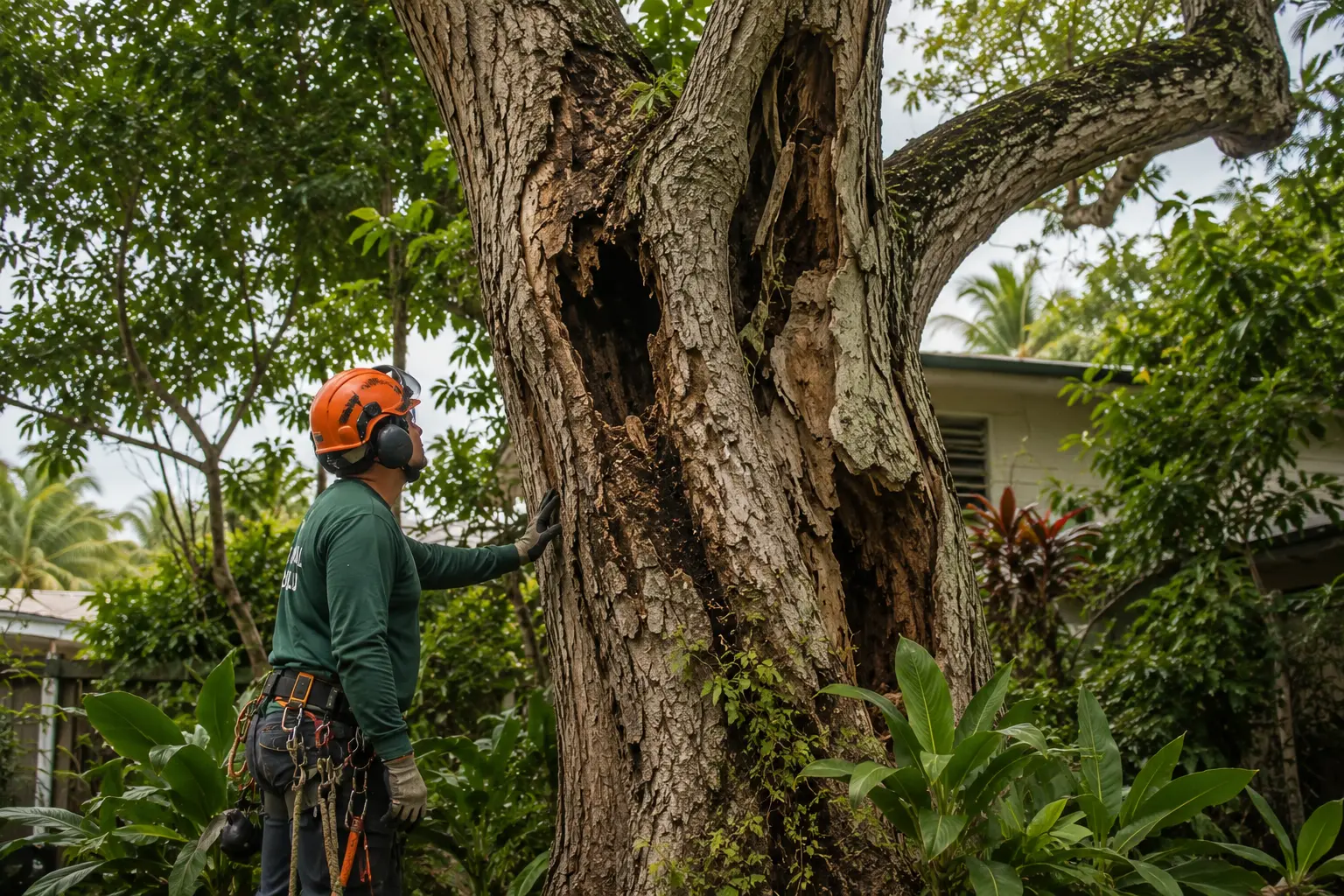
Drought-Stressed & Aging Legacy Trees
Decades-old trees on Waipahu Town lots sometimes show trunk decay or dieback tied to prolonged heat and drought stress. See Hazardous Tree Removal for how we assess these.
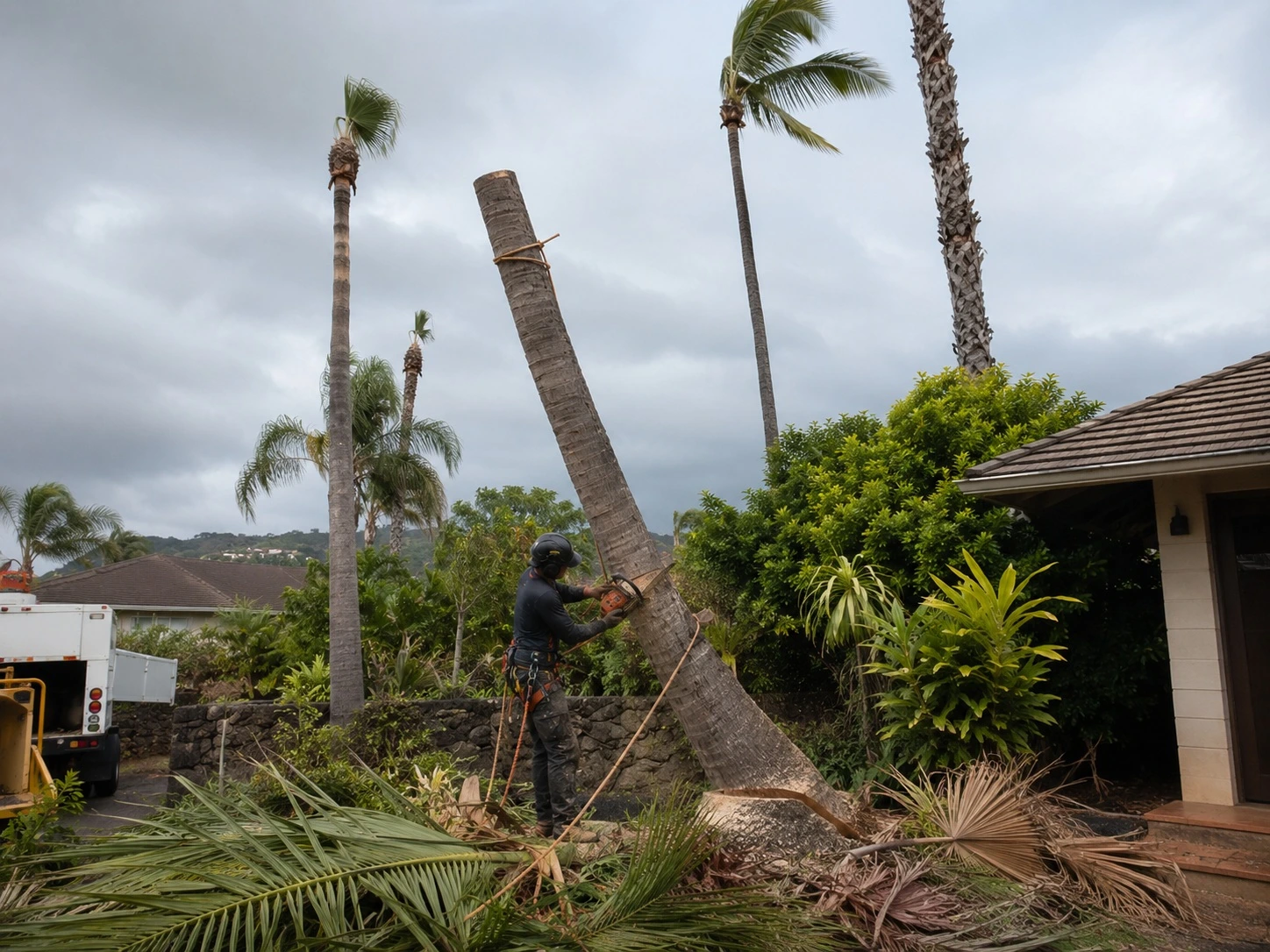
Palm Emergencies in Newer Subdivisions
Landscaped palms throughout Village Park, Waikele, and West Loch can drop fronds or coconuts onto driveways and parking areas below. See Palm Tree Removal for routine and emergency handling.
How wind and weather move through Waipahu
Sitting in the leeward rain shadow, Waipahu sees a very different weather pattern than the windward side of the island.
Waianae Rain Shadow
The Waianae range blocks much of the moisture that trade winds would otherwise carry into Waipahu, leaving the area drier for most of the year than windward and even central Oʻahu neighborhoods.
Sustained Heat & Drought Stress
Long dry stretches put slow, cumulative stress on trees here, weakening root systems and trunk wood in ways that aren't always visible until a storm or heavy wind event exposes the failure.
Kona Storm Exposure
When Kona storms do move through, the open plain around Kunia and Royal Kunia offers little natural shelter, so wind can hit windbreak and field-edge trees with more direct force than in a built-up neighborhood.
Irrigation & Runoff Differences
Ag land and older plantation lots often still carry irrigation infrastructure that changes local soil moisture, sometimes keeping root zones wetter than the surrounding dry conditions would suggest.
Species we see most often across Waipahu
A century of plantation-era planting and agricultural land use has left Waipahu with a distinct mix of species, and each comes with its own failure pattern.
Monkeypod & Mango
Legacy plantings across Waipahu Town, often decades old and heavy with fruit or broad canopy that extends well over neighboring rooflines and driveways.
Kiawe & Albizia
Common on ag-adjacent land near Kunia and Royal Kunia, kiawe's thorned, drought-tolerant wood and albizia's fast, weak growth both show up frequently in windbreak and field-edge failures.
Landscaped Palms
Coconut and fan palms are common throughout the newer subdivisions of Village Park, Waikele, and West Loch, planted during development along streets and entrances.
Working around Waipahu's mix of lots
Few streets in Waipahu look like the ones on either side of them, and each property type changes how a job is planned.
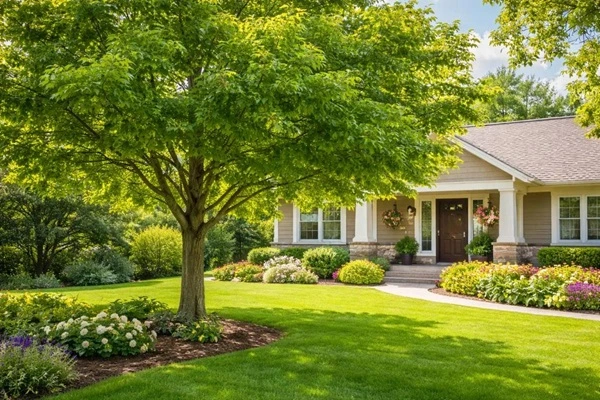
Old sugar-town streets, planned subdivisions, and open farmland
Waipahu Town's older plantation-era homes sit on narrow lots often anchored by a single oversized legacy tree, while the planned subdivisions of Village Park, Waikele, and West Loch bring younger, more manageable street trees and tighter HOA-style landscaping into the mix. Out toward Kunia and Royal Kunia, properties bordering active agricultural land add windbreak trees, irrigation infrastructure, and open-field wind exposure to the picture.
Whatever the property type, the same on-site assessment applies first: confirming access, checking the tree's age and condition, and building a plan around that lot's specific constraints rather than a one-size approach. For a full property removal beyond an emergency situation, see tree removal.
Our response process in Waipahu
Old town, subdivision, or ag land, the logistics change, not the standard of care.
Call or Request
Tell us your neighborhood and what's happening, by phone or through the estimate form.
Access & Hazard Check
We factor in legacy tree size, ag land access, and subdivision layout before a crew arrives.
Written Estimate
A clear, itemized estimate based on the on-site assessment, before any work begins.
Careful Removal
Rigging planned around older structures, shared driveways, and field boundaries.
Cleanup
Debris cleared so driveways, streets, and shared access are usable again.
A crew that already knows Waipahu's legacy trees and dry-side conditions
An oversized monkeypod in old Waipahu Town and a windbreak tree bordering a Kunia field both get the same careful assessment before a single cut is made.
Every crew member is trained, and every job is backed by full insurance coverage.
Crews who already know the plantation-era trees and dry-side conditions common across Waipahu.
A written estimate after an on-site visit, with no hidden fees added later.
The same team behind Emergency Tree Removal Honolulu covers every Waipahu neighborhood.
We also serve the areas surrounding Waipahu
If your property is outside Waipahu, we cover the rest of Oʻahu as well. View all service areas →
Waipahu questions before you call
How quickly can a crew reach a property in Waipahu?
Response depends on the hazard and where in Waipahu the property sits, since the older town core, the Village Park and Waikele subdivisions, and the ag lots out toward Kunia each have different access. Active emergencies like a tree on a structure or blocking a road are prioritized ahead of routine visits. Call to describe the situation and a crew will advise on realistic timing.
Is Waipahu drier than windward neighborhoods like Kailua?
Yes. Waipahu sits on the leeward, drier side of Oʻahu, shielded from the trade winds by the Waianae range, so it sees noticeably less rainfall and more sustained heat than windward areas. This changes which tree failures are common here, with drought stress and Kona-storm wind damage playing a bigger role than saturated-soil lean.
Are legacy plantation trees in older Waipahu a bigger risk?
Many of Waipahu's older residential streets still have large monkeypod, banyan, and mango trees planted during the town's sugar plantation era, decades before today's homes and driveways existed. These legacy trees are often oversized for the lots they're on, with roots and canopy that have long since outgrown the original layout.
Do newer subdivisions like Village Park and Waikele see fewer tree emergencies?
Generally yes, since younger, smaller street trees planted during development haven't reached the size where major limb or trunk failure becomes common. Most calls from these areas involve palm fronds, smaller wind-snapped branches, or landscaping trees rather than large legacy hardwoods.
What should I do about a tree near agricultural land in Kunia or Royal Kunia?
Avoid the area beneath it and don't attempt to clear it yourself, especially near irrigation lines, fencing, or field equipment. Properties bordering ag land in Kunia and Royal Kunia often have windbreak trees planted decades ago specifically to block wind across open fields, and these can fail under stress that wouldn't affect a typical yard tree. Call to describe the location and a crew will assess it before recommending next steps.
What trees cause the most emergency calls in Waipahu?
Monkeypod and mango dominate the older plantation-era streets, kiawe and albizia show up frequently on ag-adjacent lots near Kunia and Royal Kunia, and coconut and fan palms are common throughout the newer subdivisions and around West Loch.
Is emergency tree service available throughout all of Waipahu?
Yes. Coverage extends across Waipahu's neighborhoods, including Waipahu Town, Village Park, Waikele, Royal Kunia, West Loch, Waipio, Crestview, and out toward Kunia.
Do you offer free estimates for Waipahu properties?
Yes. A free, no-obligation estimate can be requested through the form below or by phone, followed by an on-site assessment to confirm the scope of work.
Request a free estimate in Waipahu
Tell us your neighborhood and what's happening, a fallen tree, a hanging limb, storm damage, or a hazardous palm, and a crew will follow up to confirm timing and, if needed, arrange an on-site assessment.