Fallen Tree Removal Honolulu | Houses, Cars, Roads & Fences
A tree on the ground isn't a finished situation, it's a load that hasn't settled yet. Whether it's resting across your roofline, pinning a car, blocking a shared driveway, or lying across a public road, our crews read where the weight is sitting before a single cut is made, then clear it in a sequence that won't cause a second incident.
Tell us what the tree landed on, a house, a vehicle, a fence, or a road, and we'll advise on what to avoid until a crew arrives.
Prefer to write it out? Request a free estimateEvery fallen tree is assessed for stored tension before any cut is made.
Roofs, siding, fences, and vehicles are protected throughout the removal.
Blocked driveways and roadways are prioritized to reopen access quickly.
Trunk sections, limbs, and wood scraps are cleared before the crew leaves.
Written, no-obligation estimates after every on-site assessment.
A fallen tree isn't done moving when it stops moving
The moment a tree lands, most of its energy has already been released, but not all of it. Branches pinned beneath the trunk stay compressed. A root plate that tore free of the ground can still be half-attached, rocking slightly with every gust. A trunk resting across a fence line or a car's frame is often supported unevenly, with one end carrying more weight than the other, and that balance can shift the instant a section is cut away.
This is the part that catches people off guard: a fallen tree looks stationary, so it feels safe to walk under or start clearing branches by hand. In reality, stored tension in bent wood, an unstable root ball, and uneven weight distribution across whatever it landed on are all invisible from a casual look. Reading that load correctly, before deciding where to make the first cut, is what separates a controlled removal from a second accident.
- Branches compressed beneath the trunk that spring back once weight shifts
- A root plate still partially rooted, capable of rocking or snapping upright
- Uneven support from whatever the tree landed on, a car roof, a fence rail, another tree
- Bark and outer wood holding a split section together longer than it looks like it should
If the tree is actively shifting, or you're not sure it's safe to be near, call our Emergency Tree Removal Honolulu line for the fastest response.
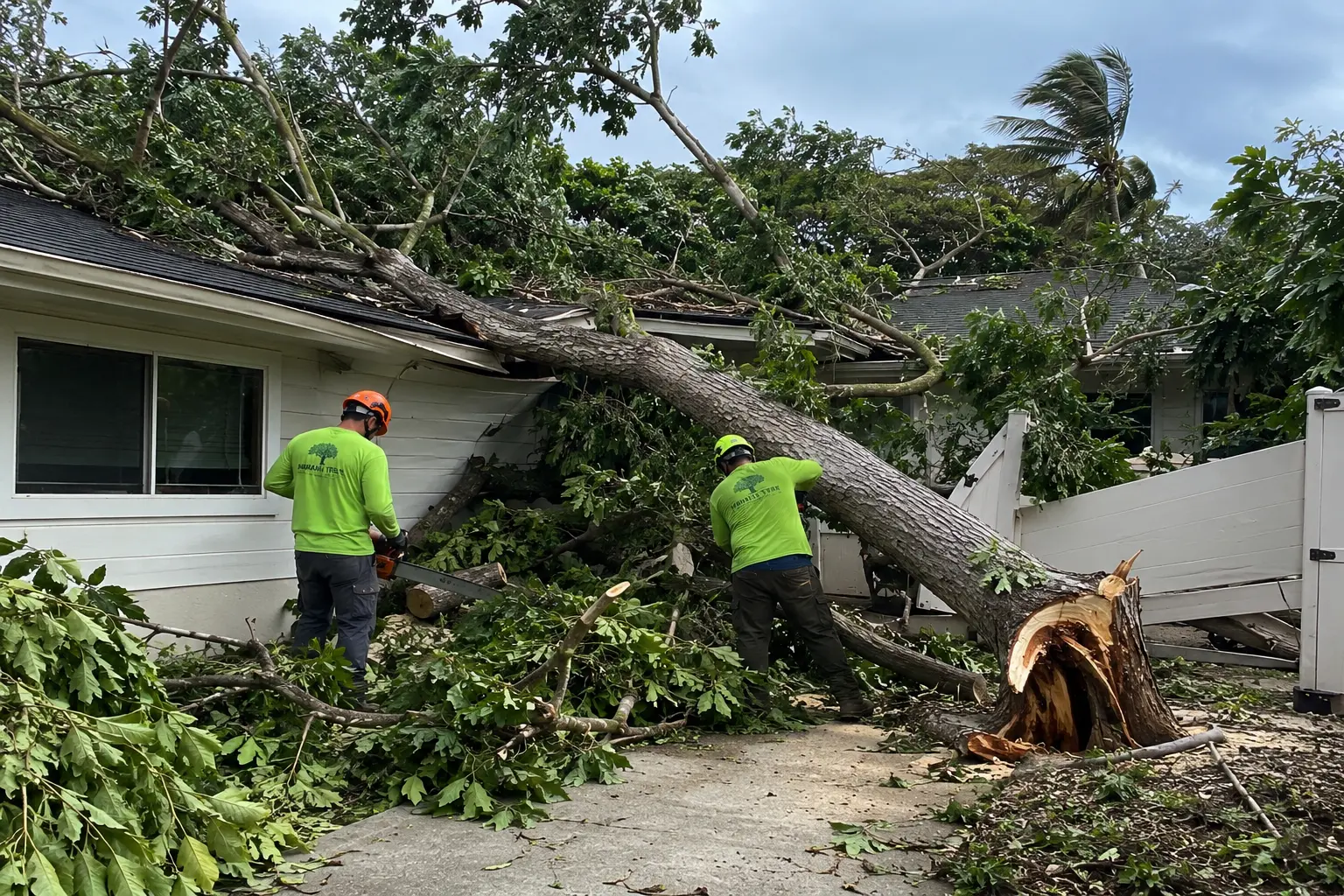
Six ways a fallen tree shows up, and what each one needs
The removal plan for a tree across a road looks nothing like the plan for a tree resting on a roof. Here's how we approach each of the situations we see most.
A Tree on the House
A trunk or major limb across a roofline puts weight on framing that was never built to carry it. Before anyone goes near the damaged section, we confirm whether the roof structure underneath is still holding, then remove the tree in pieces light enough that the roof isn't asked to bear more than it already is.
A Tree on a Vehicle
A car or truck under a fallen tree is usually holding some of the load in its frame or body panels, which means the metal is under stress even if nothing looks obviously bent. We cut in sections that lift weight off the vehicle gradually, rather than in one motion that could shift the car itself.
Blocking a Driveway
When a tree traps a vehicle or blocks the only way in or out, restoring access comes first. We open a clear path through the trunk or canopy right away, then return to finish full removal and cleanup once you're no longer stuck on the property.
Across a Road
A tree down across a public or shared road is a hazard to more than just your property. We coordinate cutting and hauling to clear the roadway as quickly as it can be done safely, watching for traffic and, where relevant, downed lines tangled in the canopy.
On a Fence Line
A trunk resting across a fence often has the fence itself acting as a partial support, meaning the fence is under load and can give way suddenly once the tree is disturbed. We identify which posts or panels are bearing weight before cutting anything nearby.
Resting on Another Tree
One tree hung up in the canopy of a neighboring tree, sometimes called a hung tree, is deceptively unstable. Both trees can be supporting part of the load, and removing the wrong section first can bring down more than intended. We rig both trees into the plan, not just the one that fell.
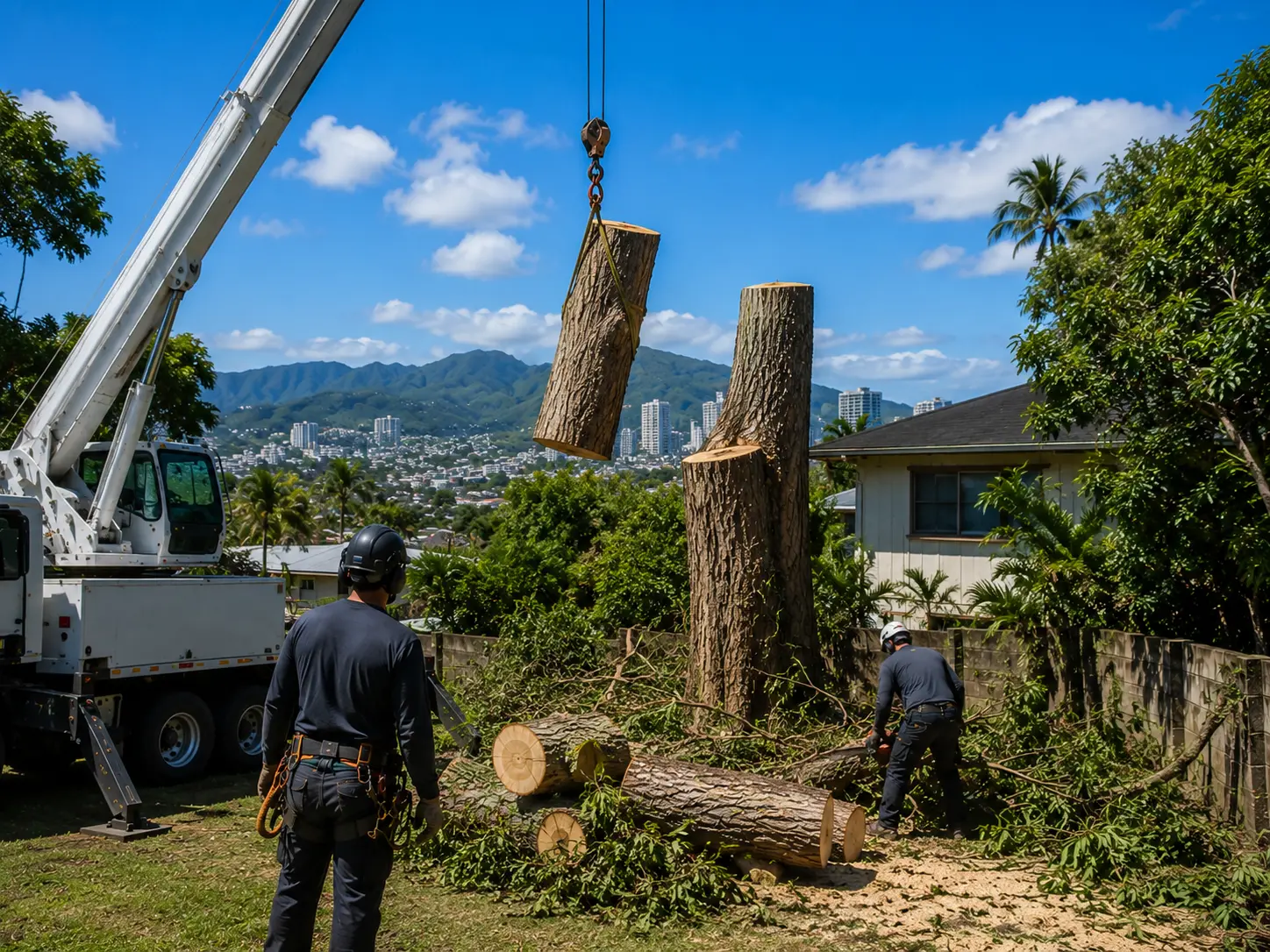
What to know about an exposed root ball
When a tree uproots instead of snapping at the trunk, it lifts a slab of soil, rock, and root mass out of the ground with it, often several feet across and heavier than the trunk itself. That root plate rarely lies flat; it usually sits at an angle, partially wedged against whatever roots haven't torn free, which means it can shift or drop further once the trunk's weight is removed. Standing near an upright or tilted root ball while a crew is working is one of the more overlooked risks on a fallen-tree site.
Occasionally, a young, structurally sound tree with most of its roots still intact can be reset and staked to recover. Most mature trees that have fully uprooted, particularly larger hardwoods common around Honolulu properties, have torn or severed too much of their root system for that to be a reliable option, and removal is the more practical path. Either way, the cavity left behind gets backfilled and leveled as part of the job, so it isn't left as an open pit that collects water or becomes a hazard in the yard. If you'd like the remaining stump ground down at the same time, that's easy to add to the visit; see tree removal for how stump grinding works.
Reading tension before the first cut
Before any saw touches a fallen tree, we walk the full length of it and identify where the wood is compressed and where it's stretched. A branch pinned under the trunk's weight is under compression on one side and tension on the other, and cutting straight through it without accounting for that can cause it to snap upward or sideways with real force, something arborists call a spring pole.
We also look at what the tree is resting on. A trunk balanced across a fence rail, a car roof, or another tree's branches is rarely evenly supported, and removing sections in the wrong order can cause the whole structure to roll or drop unexpectedly. Sections are cut in a sequence that releases stored energy gradually and in a direction we control, rather than letting the wood decide.
- Identifying spring poles and compressed branches before cutting into them
- Reading how weight is distributed across whatever the tree landed on
- Cutting in a planned sequence, lightest and least-loaded sections first
- Using rope and rigging to control where each section goes, not gravity
For limbs still tangled overhead rather than fully on the ground, see tree limb removal.
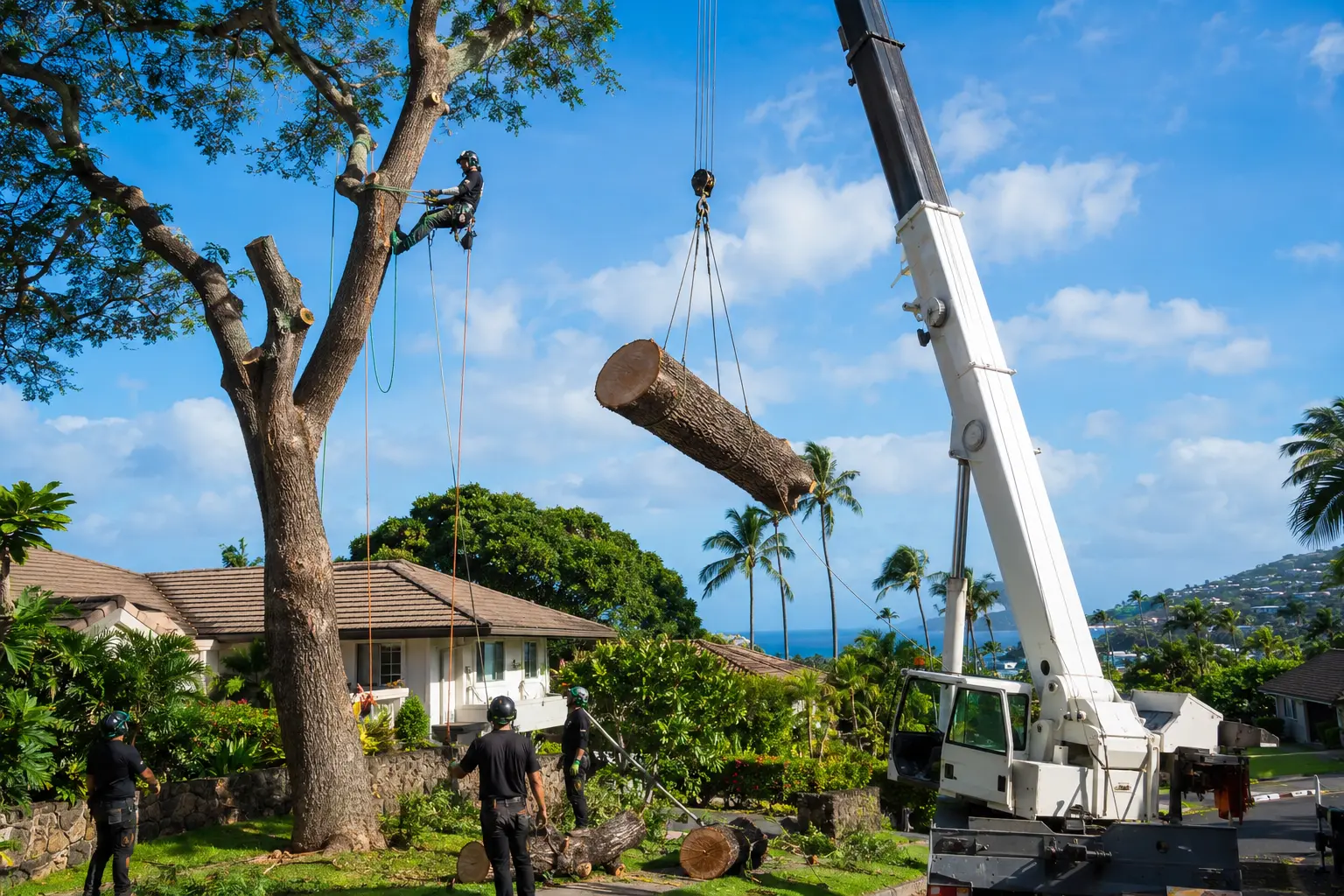
Protecting the property underneath and around it
Removing the tree is only half the job. What's directly beneath and around it needs to come through the process without a second round of damage.
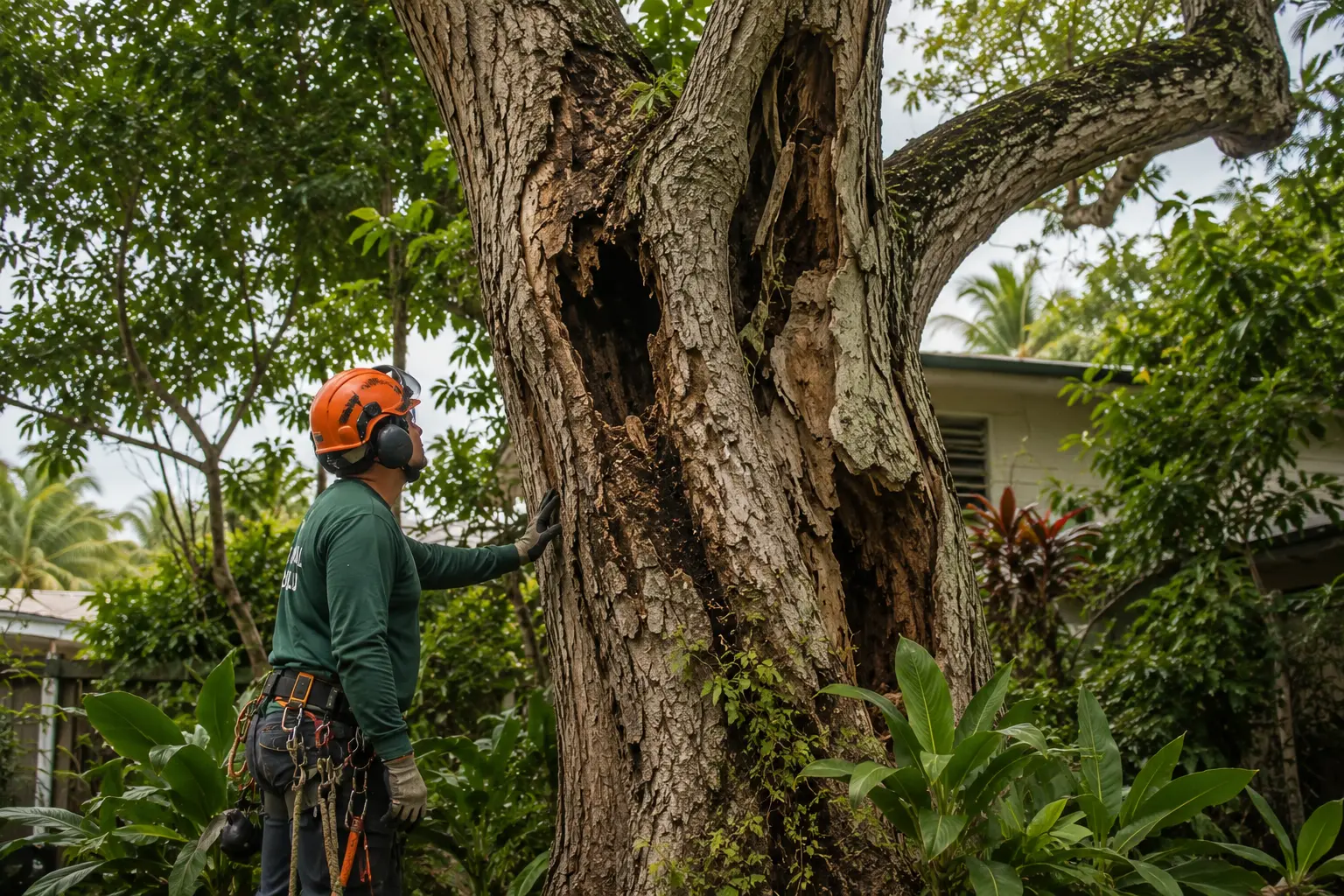
Roofs & Structures
Sections are lifted clear rather than dragged, and ground protection is placed to keep gutters, siding, and landscaping from taking additional hits during the cut-up.
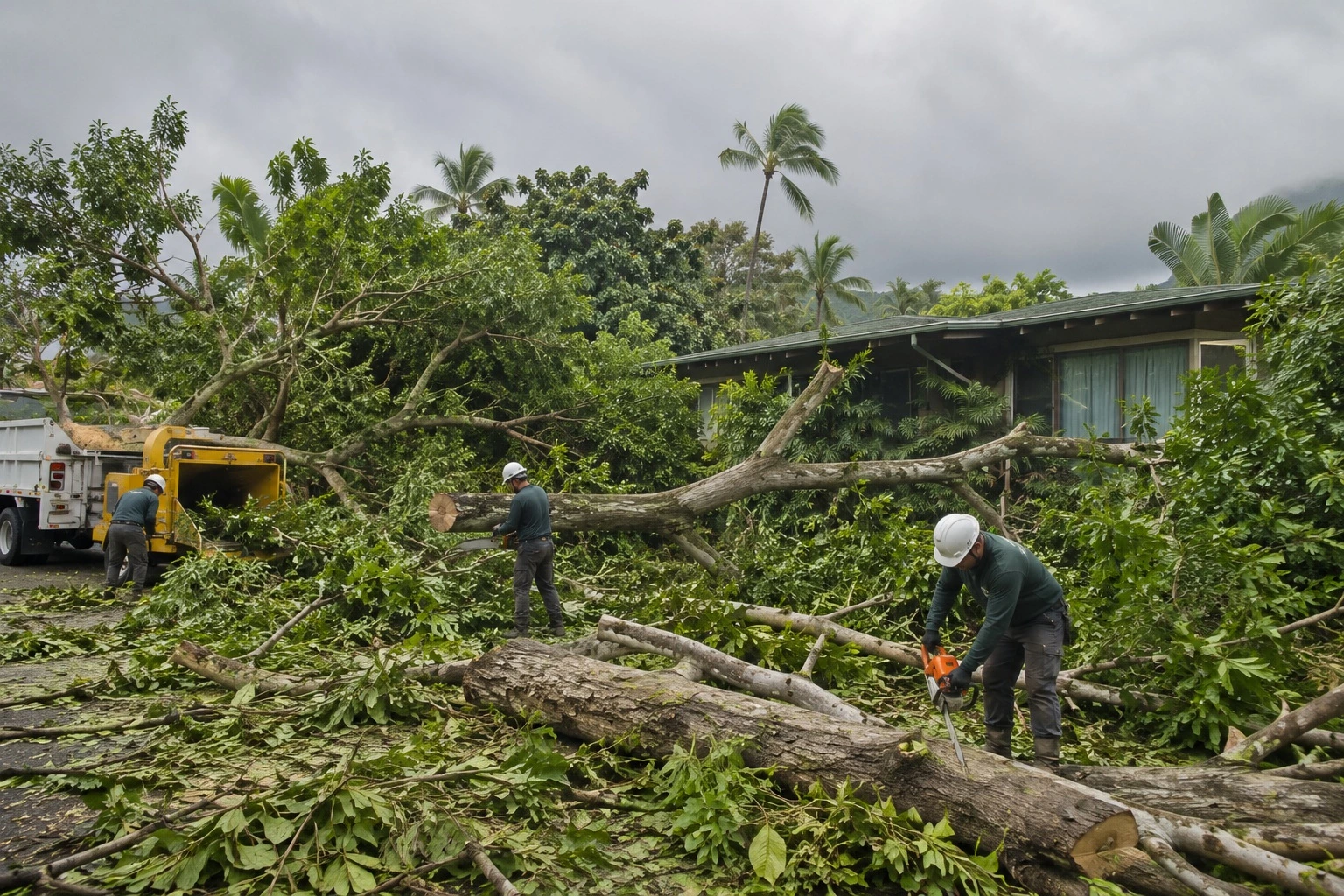
Driveways & Lawns
Plywood and mats go down under any equipment or heavy sections to prevent ruts, cracked pavers, or compacted turf while the tree is broken down and hauled away.
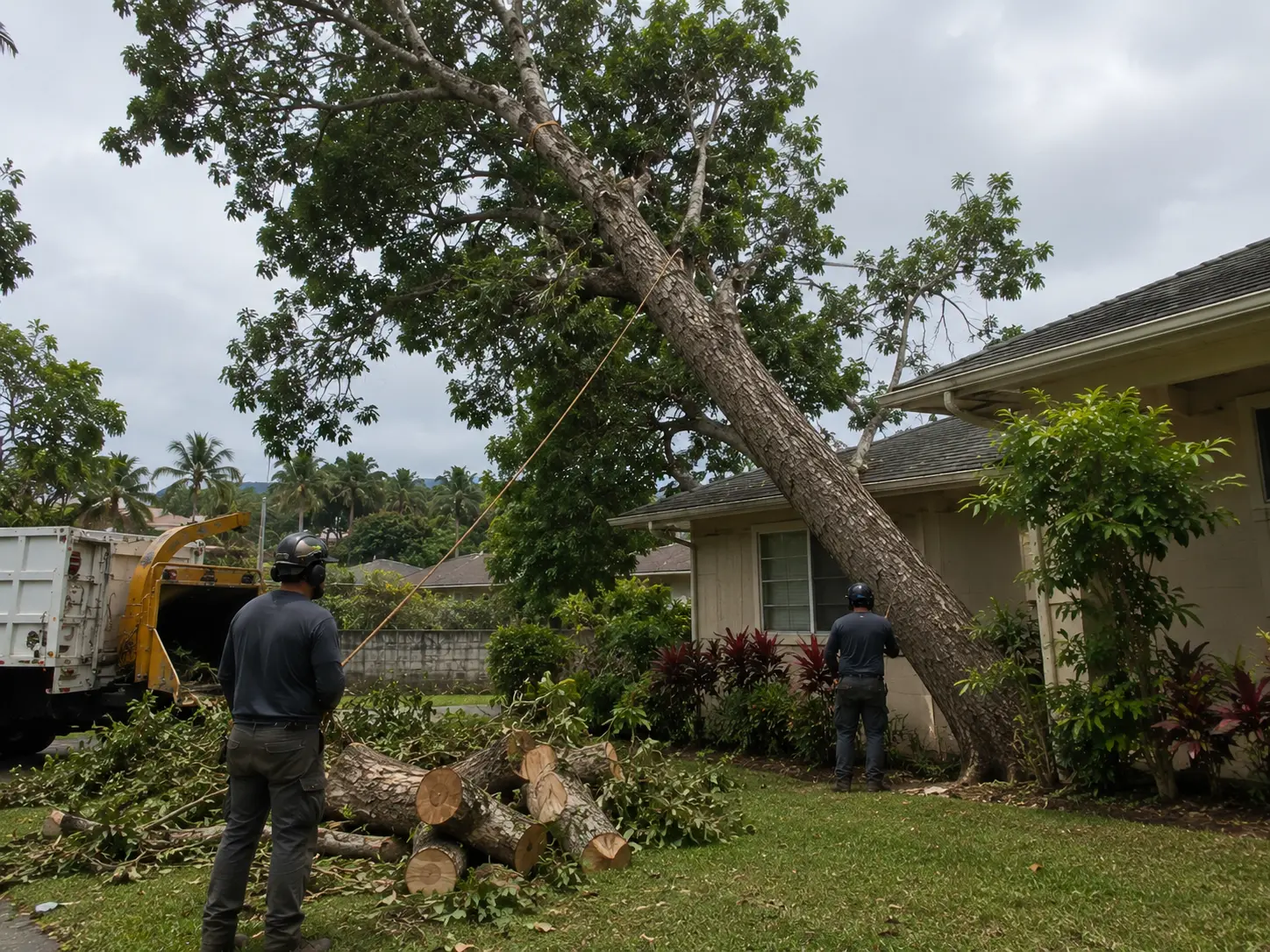
Fences & Neighboring Trees
Where a fence or a neighboring tree is bearing part of the load, we support or brace it before cutting so it isn't the next thing to fail once the pressure is released.
Insurance documentation for a fallen tree
What you do in the first hour after a tree comes down can matter as much as the removal itself if you plan to file a claim.
Photograph Before It's Touched
If it's safe to do so, photograph the tree from several angles along with whatever it damaged, the roof, the fence, the car, before any cutting begins. Once debris is cleared, an adjuster has far less to work with, so this step is worth doing even under stress.
What's Typically Covered
Coverage depends on your specific policy, but a tree that fell and damaged a covered structure, a roof, a fence, a detached garage, is often eligible for a claim. A fallen tree that only damaged itself, with no structural impact, typically is not. Confirm the details with your provider.
We can provide a written estimate and description of the removal scope that many homeowners use alongside their own photos when working with an adjuster. See tree removal for how permit rules apply once the tree is being fully cleared from the property.
Our fallen tree removal process
The same sequence applies whether the tree landed on a roof, a car, a fence, or a stretch of road.
Call or Request
Tell us what the tree landed on and how it's positioned, by phone or through the estimate form.
Load Assessment
A crew reads where the weight and tension sit before recommending a cutting sequence.
Written Estimate
A clear, itemized estimate is provided based on that assessment before any work begins.
Sectional Removal
The tree is cut and lowered in a controlled sequence that protects what's underneath.
Cleanup
Trunk sections, limbs, and debris are cleared so the property or roadway is usable again.
Debris cleanup & cavity backfill
A fallen tree removal isn't finished when the last section is cut apart.
Complete Debris Haul-Away
Trunk sections, limbs, and wood scraps are hauled off the property as part of the job, not left in a pile for you to deal with. Driveways and roadways are swept clear of smaller debris before the crew leaves.
Root Cavity Backfill
If the tree uprooted, the cavity left behind is backfilled and leveled so it isn't left as an open hole. Stump grinding on any remaining base can be added to the same visit if you'd like the site fully cleared.
Honolulu's fallen tree crew homeowners trust
The same standard of care applies whether it's a limb across a fence line or a mature tree pinning a car in the driveway.
Every crew member is trained, and every job is backed by full insurance coverage.
Crews who know Oʻahu's species, soil, and how local trees fail, not a mainland franchise.
A written estimate after an on-site visit, with no hidden fees added later.
The same team behind Emergency Tree Removal Honolulu handles every fallen tree call.
Fallen tree removal across Oʻahu
Available throughout Honolulu and the surrounding communities. View all service areas →
Fallen tree removal questions before you call
A tree just fell on my house. What should I do first?
Get everyone out of the affected rooms and keep them out, especially below any part of the roofline that looks sagged or cracked. Don't go up into the attic or the damaged section to look around. If it's safe to do so from a distance, take photos for insurance, then call a tree crew that can assess the load before anything is touched.
Is it safe to move a fallen tree off my car myself?
No. A tree resting on a vehicle is often still under tension from the way the body panels or frame are bent, and cutting into it without knowing where that load is can cause a sudden shift. It's best left to a crew that can read the load before making the first cut.
Why is a fallen tree still dangerous once it stops moving?
A fallen tree is rarely fully at rest. Branches bent underneath the trunk, a root ball still partially in the ground, or a trunk resting across an uneven surface can all hold stored energy that releases suddenly once a cut is made in the wrong place.
What is a spring pole and why does it matter?
A spring pole is a bent branch or trunk section held under tension, often pinned beneath the weight of the tree. If cut carelessly, it can whip back with enough force to cause serious injury, which is why identifying tension before cutting is a core part of safe fallen tree removal.
Can a tree that fell with its roots exposed be put back?
Occasionally, if the tree is young, healthy, and the root system is largely intact, it can be reset and staked. Most mature trees that have uprooted have torn or broken enough roots that resetting isn't a reliable option, and removal is usually the safer path.
Do you clear trees blocking a road or shared driveway?
Yes. When a fallen tree is blocking access, we prioritize opening a clear path first, then return to finish full removal and cleanup once the immediate access issue is resolved.
Is fallen tree removal covered by homeowners insurance?
Coverage depends on your specific policy and what the tree damaged. A tree that fell and damaged a covered structure, like a roof or a fence, is often eligible for a claim, while a fallen tree that only damaged itself typically is not. Check with your provider for details.
Should I take photos before the tree is removed?
Yes, if it's safe to do so. Photograph the tree from a few angles and any damage it caused before cleanup begins, since debris that's already hauled away is much harder to document for an adjuster after the fact.
What happens to the hole left by an uprooted tree?
The cavity left by an uprooted root ball is backfilled and leveled as part of the job so it isn't left as a tripping hazard or a spot where water collects. If you'd like the stump ground down as well, that can be added to the same visit.
How much does fallen tree removal cost in Honolulu?
Cost depends on the tree's size, what it's resting on, how it's positioned, and whether a root ball or stump also needs to be addressed. A written estimate after an on-site assessment is the only reliable way to know the cost for a specific situation.
Do you handle debris cleanup, or just the tree removal?
Debris cleanup is included. Limbs, trunk sections, and wood scraps are cleared from the property as part of the job, and the area is left usable, not just cut apart and left in place.
Request a free fallen tree removal estimate
Tell us what the tree landed on, a roof, a vehicle, a fence, a driveway, or a road, and a crew will follow up to confirm timing and arrange an on-site assessment. If the situation is urgent, call our Emergency Tree Removal Honolulu line instead.