Tree Limb Removal Honolulu | Broken, Hanging & Down
A branch doesn't have to hit the ground to be dangerous. Whether a limb is resting on your roof, pinning a car, blocking your driveway, sitting across the road, or still hanging overhead by a few splinters of bark, it's rigged and lowered the same careful way, not pushed, pulled, or dropped.
Tell us where the limb is, what it's resting on or hanging from, and we'll advise on next steps.
Prefer to write it out? Request a free estimateEvery limb's weight, attachment, and tension are checked in person before anything is cut.
Limbs are lowered on rope, never dropped, regardless of what's underneath them.
Roofs, vehicles, fences, and landscaping are protected throughout the removal.
Branches, splinters, and leaf litter are cleared before the crew leaves.
Written, no-obligation estimates after every limb assessment.
A limb resting somewhere is still attached to something
A tree limb rarely separates cleanly. Even one that looks fully down, lying flat across a driveway or draped over a fence, is often still connected to the tree by a strip of bark, splintered wood, or the weight of a neighboring branch holding it in place. Cut it in the wrong spot and the whole piece can shift, roll, or snap upward before you've finished the cut.
The limbs that cause real injuries usually aren't the ones lying obviously on the ground. They're the ones still partway up, caught in the tree's own canopy, resting across a fence line at an angle, or wedged into a neighboring tree's branches. Weight that looks supported from below can still be under load from above, and that load doesn't announce itself before it lets go.
- Torn bark or splinters still connecting a "down" limb to the trunk above
- A limb bent or bowed under its own weight, storing energy in the wood
- Branches propped against a fence, roofline, or vehicle at an angle
- A limb caught in the canopy of the same tree or a neighboring one
If a limb is actively cracking, shifting, or came down with a structure or vehicle underneath it, call our Emergency Tree Removal Honolulu line for the fastest response.
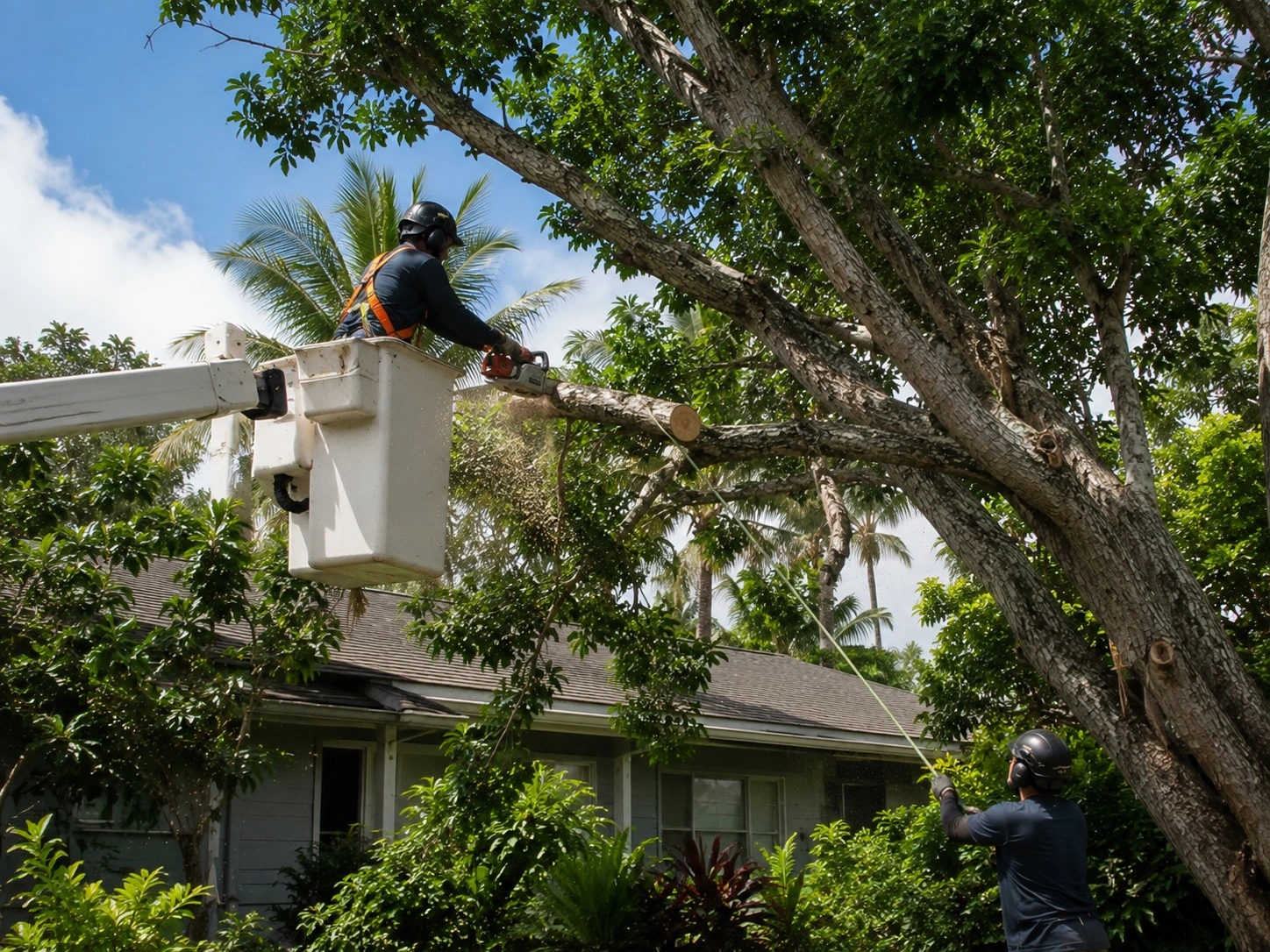
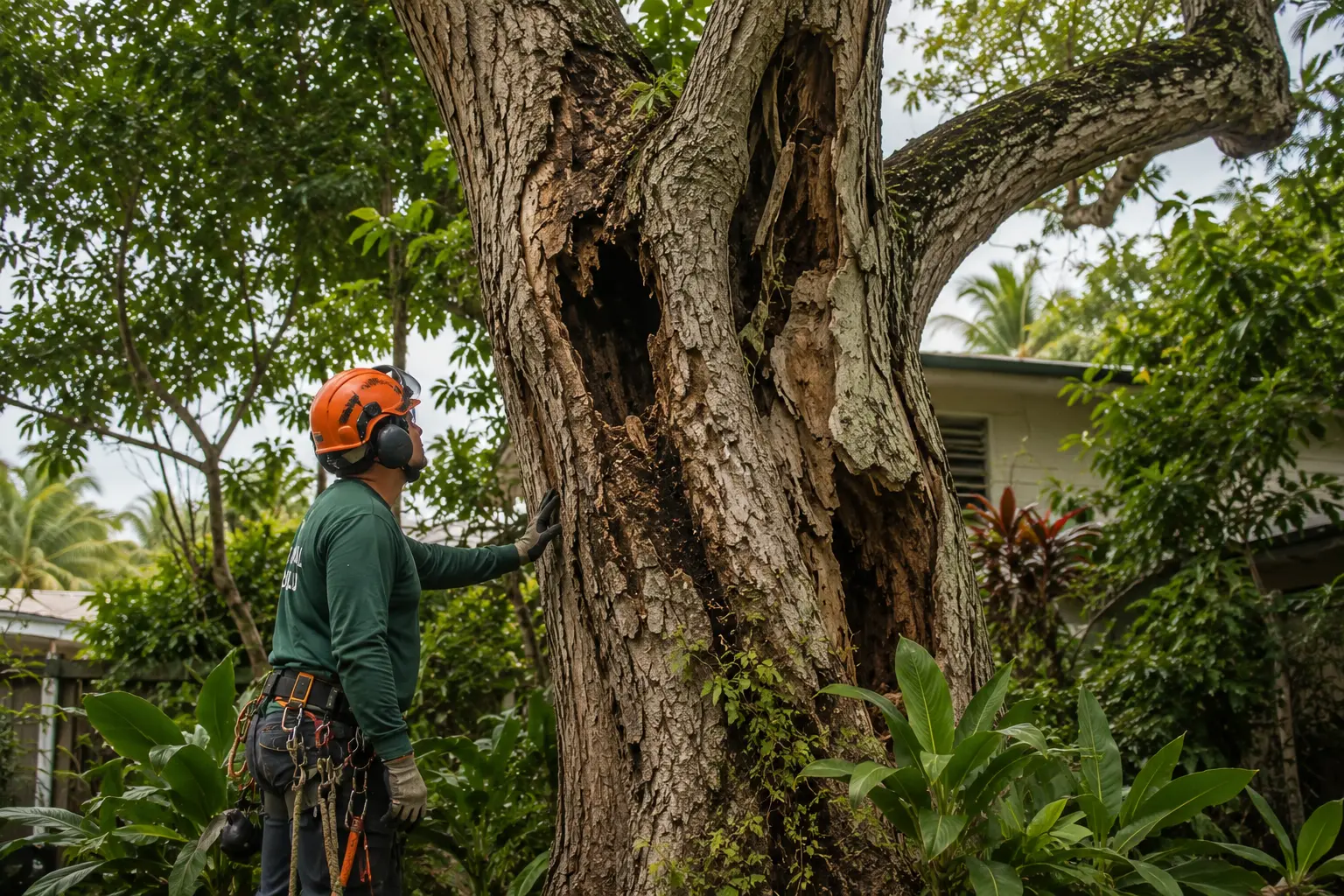
What a widowmaker actually is
A widowmaker is a broken or dead limb that never made it to the ground. Instead, it's caught somewhere in the branches above, resting against other limbs at an angle that can hold for days, weeks, or until the next gust of wind or heavy rain finally works it loose. From the ground, it can look like part of the normal canopy rather than a hazard waiting to drop.
What makes a widowmaker genuinely dangerous is the lack of warning. Unlike a leaning tree that gives you a visible, worsening sign, a hung-up limb can hold its position right up until the moment it doesn't, and it can fall from well above head height with real force behind it. We never assume a hung-up limb is stable just because it hasn't moved yet; every one is roped and guided down under control rather than left to gravity.
Every situation calls for a different approach
A branch on a lawn and a branch pinning a windshield are not the same job. Here's how we handle the situations that come up most.
A Limb Is Resting on the House
A branch draped over a roofline or gutter is still transferring weight into the structure underneath it. We check how it's loaded before cutting, since removing support at the wrong point can let it settle further into the roof rather than lift cleanly away.
A Limb Is Down on a Vehicle
A limb resting on a hood, windshield, or roofline can be heavier and more tension-loaded than it looks. We rig and lift it clear in sections rather than dragging it off, which limits further scratching, denting, or glass damage.
A Limb Is Blocking the Driveway
Even a limb lying flat across pavement can still be attached at the trunk end. We confirm that connection first, then cut it into manageable sections so your driveway is clear the same visit.
A Limb Is Across the Road
A branch spanning a street or shared access road is a hazard to drivers as much as to the property it fell from. We prioritize clearing the roadway first, then return to finish cleanup and any remaining canopy work.
A Limb Has Fallen on the Fence
A branch draped over or through a fence line often has weight pressing on the rails or posts. We support the limb with rigging as it's cut so the fence isn't asked to take more load partway through the job than it already has.
A Limb Is Hung Up in Another Tree
A branch that fell into a neighboring tree instead of the ground is one of the least predictable situations we handle. It's roped and lowered deliberately, since pulling it free from below can bring down more than just the one limb.
Reading tension before the first cut
Wood under tension is storing energy, and a cut in the wrong spot releases that energy suddenly rather than letting the piece fall predictably. A limb bowed under its own weight, one wedged between two branches, or one still half-attached at a splintered break can all spring, twist, or snap back toward the person making the cut if the load isn't read correctly first.
Before any cut is made, our crew traces where a limb is actually supported, at the trunk, against a fence, on a roofline, or by another branch, and identifies which side of that support is under compression and which is under tension. A relief cut is often made first on the compression side to control how the piece releases, rather than cutting straight through in one pass and hoping it falls the way it looks like it should.
- Identifying the true point of attachment before assuming a limb is fully separated
- Reading compression versus tension along a bent or wedged branch
- Relief cuts that control the release instead of one straight cut through
- Rope rigging to lower each section rather than letting gravity decide
For a tree that's leaning as a whole, rather than a single limb, see leaning tree removal.
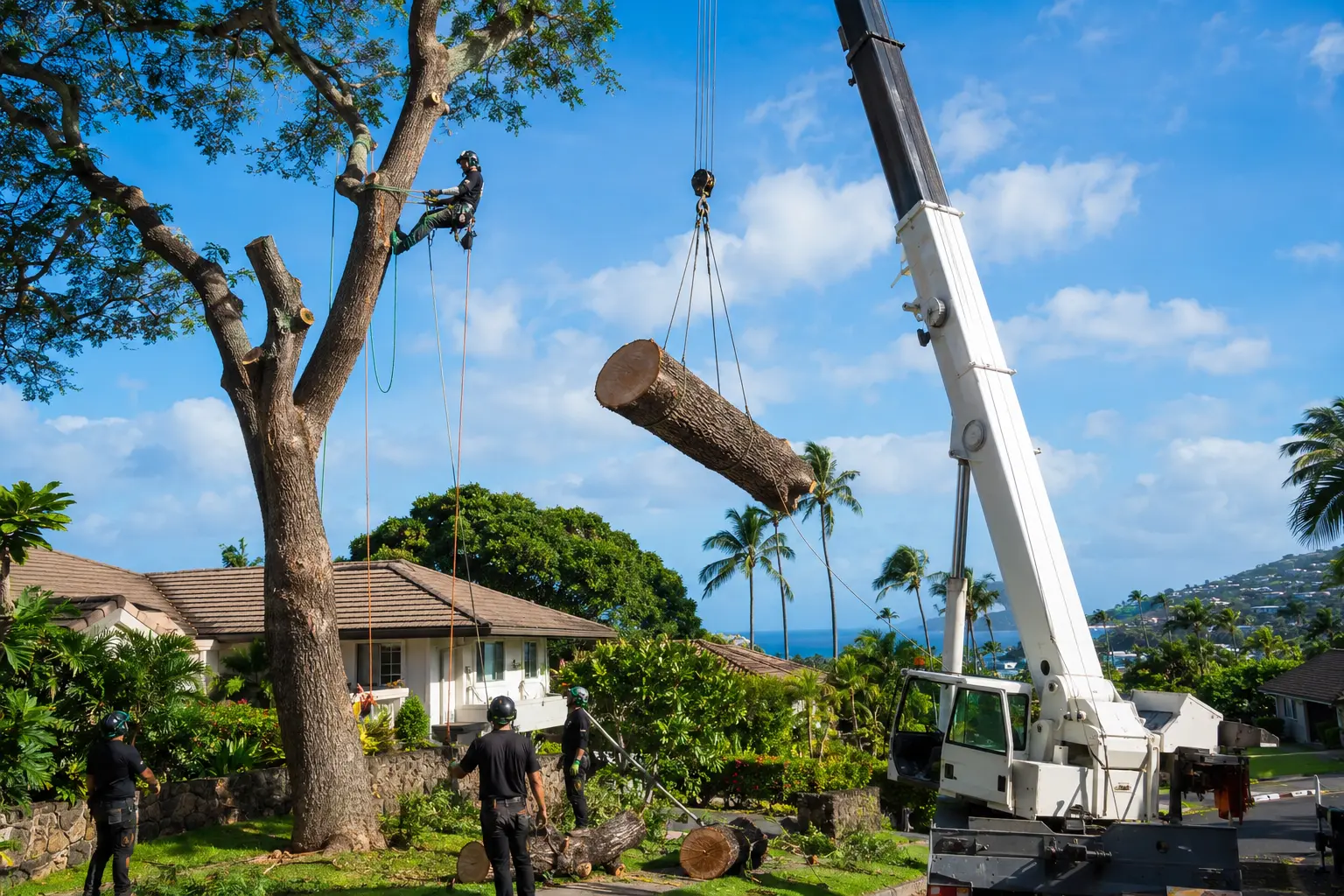
Large limbs that pull up soil and roots with them
Some of the largest limbs on mature hardwoods grow low enough, and heavy enough, that when they finally fail, they tear a section of root plate up with them rather than snapping cleanly at the trunk.
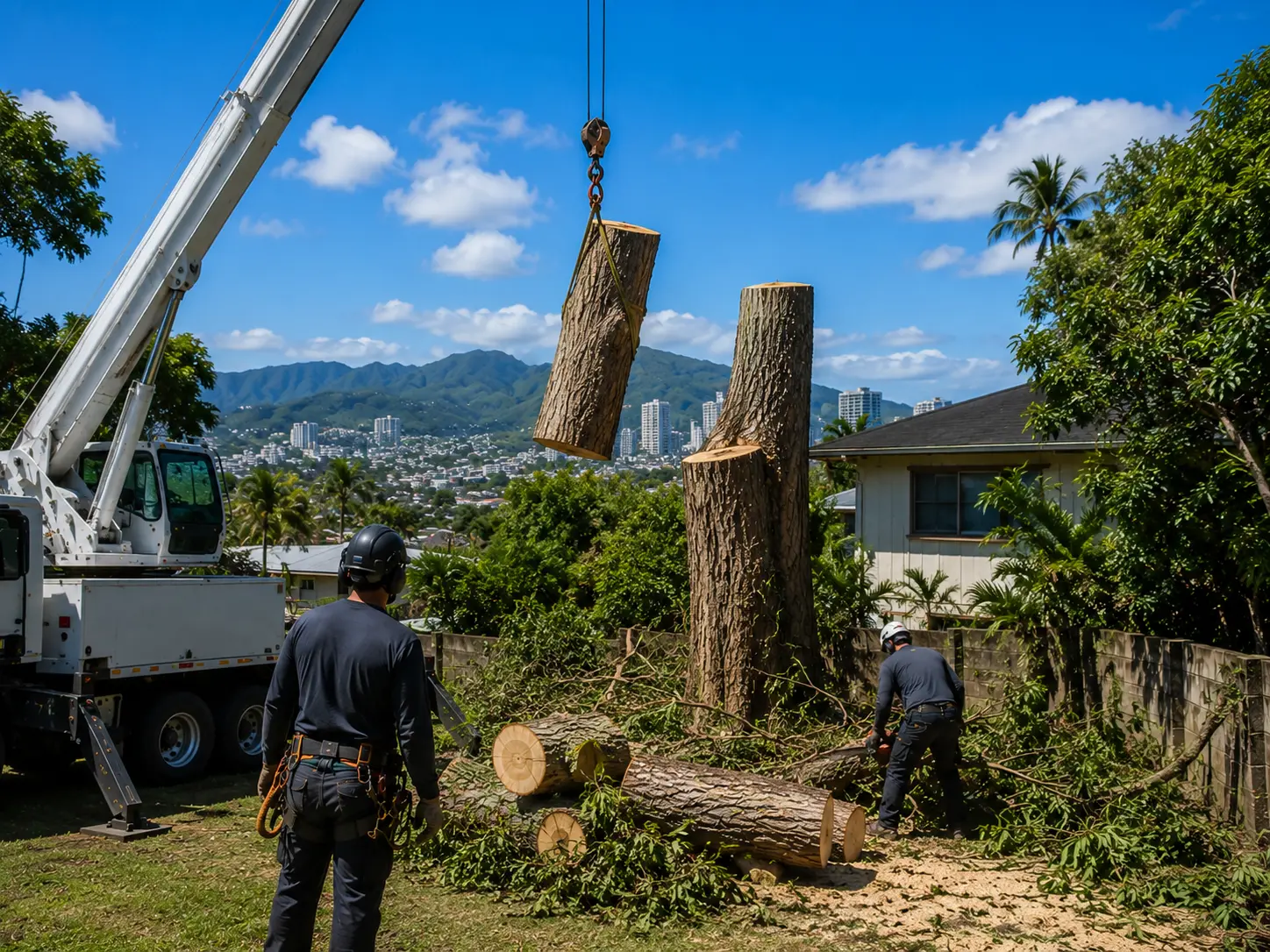
Reading a Partial Root Pull
A heavy low limb can act like a lever on the trunk, and its failure sometimes lifts a section of the root plate on that side rather than breaking cleanly. We check whether the tree itself is now compromised, not just the limb.
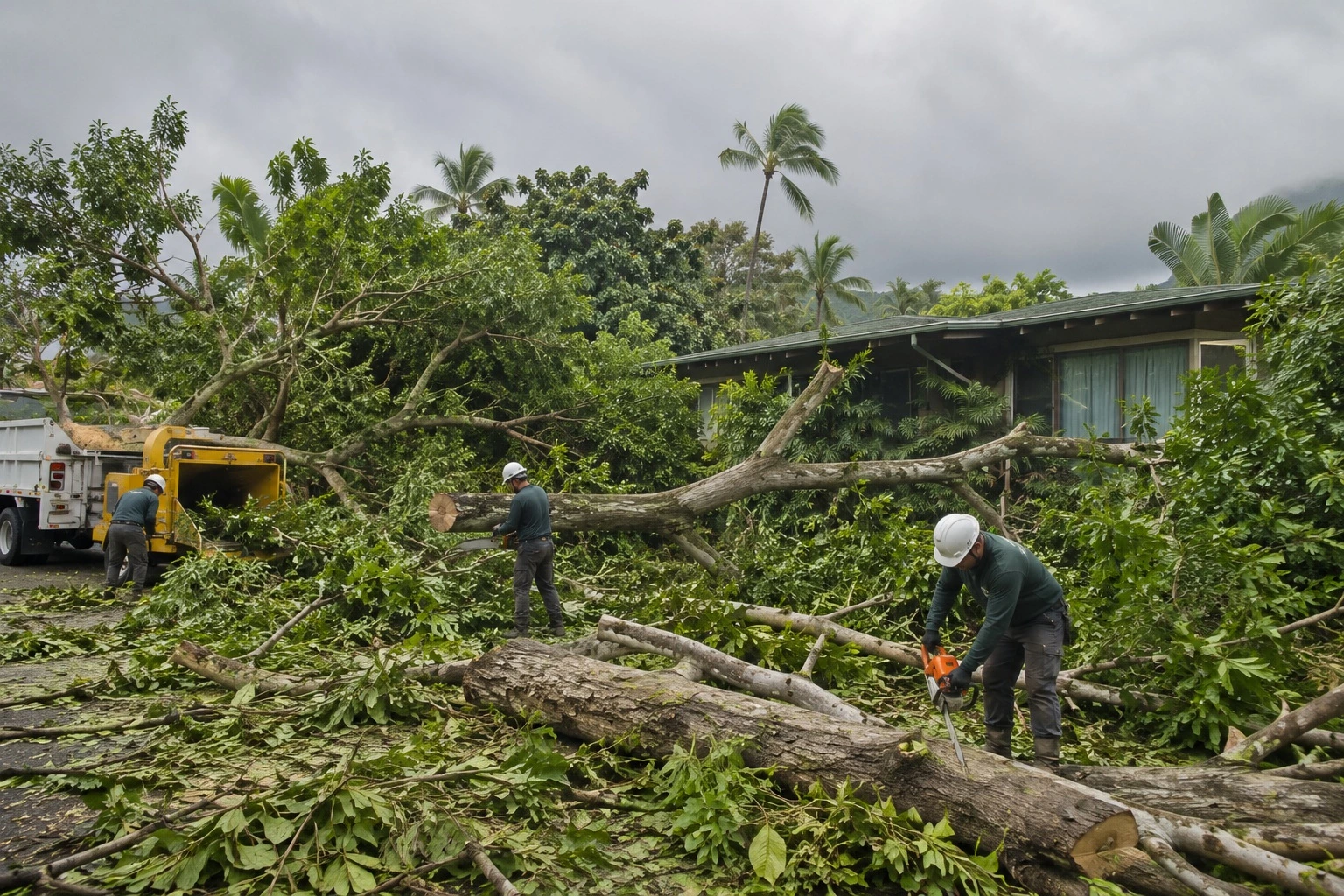
Backfilling & Soil Disturbance
A torn root section leaves an open pocket that can be a trip hazard and an entry point for water. We address the exposed area as part of the cleanup, not as an afterthought.
Checking the Remaining Tree
A large limb failure can leave a wound or imbalance in the tree it came from. If the trunk itself now needs attention, see hazardous tree removal.
Documenting limb damage for insurance
Whether a limb landed on a roof, a vehicle, or a fence, the paperwork matters as much as the damage itself.
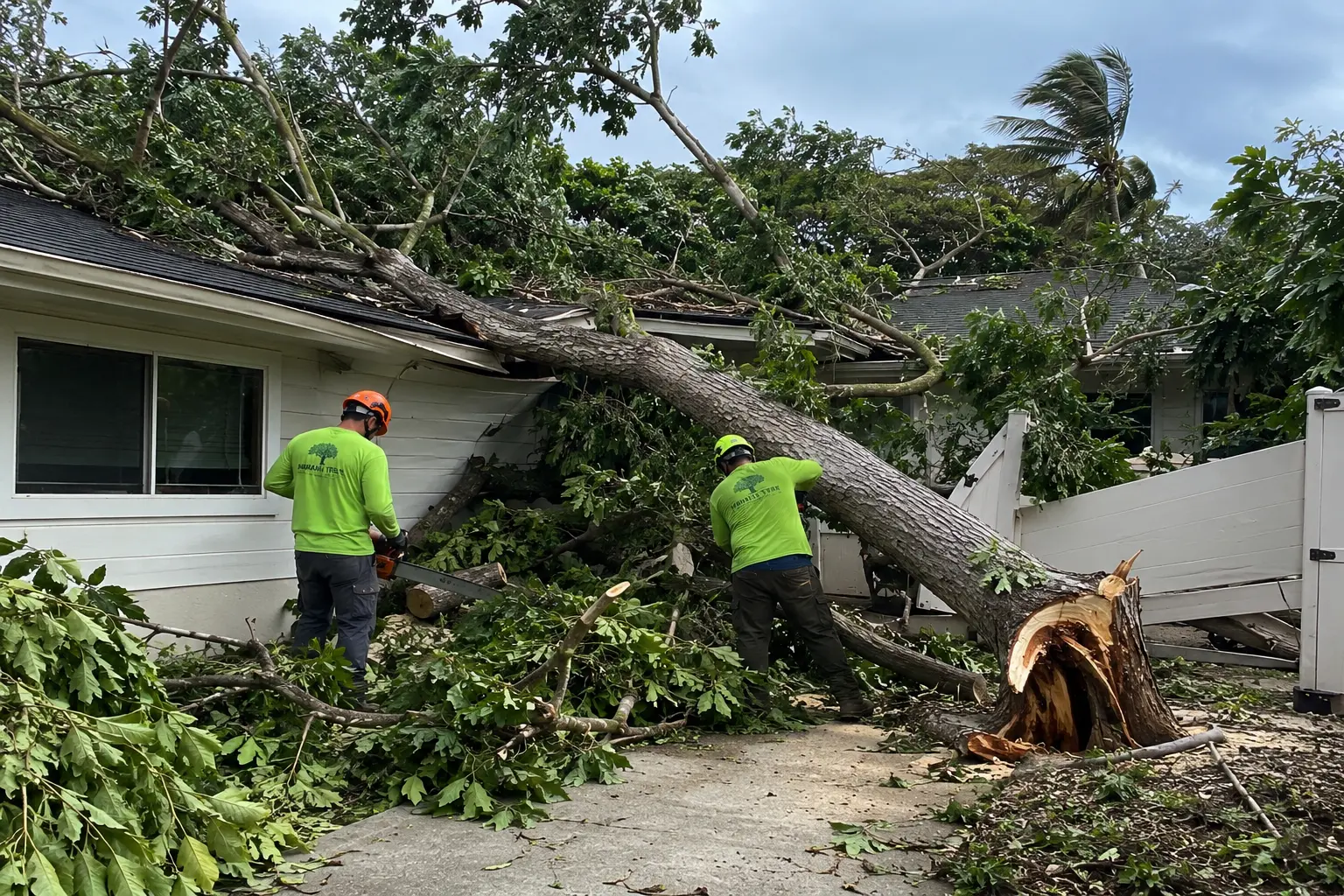
Photograph before anything is moved
If it's safe to do so, photograph the limb from several angles before removal begins, including where it's resting and any visible damage to the roof, vehicle, or fence underneath it. Insurance coverage depends on your specific policy and whether the limb damaged a covered structure or vehicle; a limb that came down without causing damage typically isn't a covered event on its own.
We provide a written, itemized estimate before work begins, which many adjusters ask to see alongside your own photos. For a limb tied to broader storm damage across the property, see storm tree removal for how full-property documentation is handled.
Our tree limb removal process
The same sequence applies whether it's one branch on a driveway or a limb hanging over a road.
Call or Request
Describe where the limb is and what it's resting on or hanging from.
Load Assessment
A crew checks the limb's attachment, tension, and what's underneath it in person.
Written Estimate
A clear, itemized estimate is provided based on that assessment before any work begins.
Rigging & Removal
The limb is roped, cut in controlled sections, and lowered rather than dropped.
Cleanup
Branches, splinters, and debris are cleared so the area is usable again.
A limb on or near a power line
Not every hanging limb is safe to approach the same way.
Coordination Before Cutting
A limb resting on or draped across a power line is never handled without the utility company involved first. Contact with an energized line can be fatal, so this work goes to a trained crew with the proper clearance and equipment, not a general cleanup crew with a pole saw.
Limbs Near Utility Boxes & Meters
Branches that have come down near a utility meter, transformer box, or service line get the same cautious treatment, with access confirmed and the area cleared before any equipment is brought in close.
Which Honolulu trees drop limbs, and why
Not every species fails the same way. Knowing the pattern helps us judge risk faster on-site.
Albizia
Fast growth produces genuinely weak wood, and albizia is behind more sudden, unprovoked limb failure on Oʻahu than almost any other species, often with no storm involved at all.
Monkeypod & Banyan
Broad, heavy limbs extending far from the trunk create long lever arms. When one of these fails, it's often the largest limb on the tree, not a small branch.
Mango & African Tulip
Heavy fruit and flower loads add weight to limbs that already have weaker branch unions, a combination that shows up as limb failure well before the tree looks unhealthy overall.
Palms & Coconut Palms
Palm fronds and coconuts don't behave like hardwood limbs but come down with real force. See palm tree removal for frond and coconut-specific handling.
Honolulu's limb removal crew homeowners trust
The same crew handles a single branch on the lawn and a widowmaker forty feet up, with one standard of care either way.
Every crew member is trained, and every job is backed by full insurance coverage.
Crews who know Oʻahu's species and how their limbs actually fail, not a mainland franchise.
A written estimate after an on-site visit, with no hidden fees added later.
The same team behind Emergency Tree Removal Honolulu handles every limb call too.
Tree limb removal across Oʻahu
Broken and hanging limb removal available throughout Honolulu and the surrounding communities. View all service areas →
Tree limb questions before you call
What is a widowmaker and why is it dangerous?
A widowmaker is a broken or dead limb caught in the branches above rather than resting on the ground. It's dangerous because it can look stable for days and then release without warning, often when wind or added weight from rain finally works it loose.
A limb is resting on my roof but hasn't broken through, what should I do?
Avoid entering the attic or the room directly beneath it, and don't attempt to push, pull, or cut the limb yourself, since roof framing under load can behave unpredictably. Photograph the situation from a safe distance if possible, then have a crew assess the limb's weight, tension, and how it's resting on the structure before anything is moved.
Is it safe to remove a limb from on top of my car myself?
Generally no, especially for anything larger than small twigs and leaves. A limb can be under more tension than it appears, and shifting it incorrectly can cause further damage to the vehicle or injure the person attempting to move it.
What does it mean when a branch is under tension?
A branch under tension is being pulled or bent in a way that stores energy in the wood, often from its own weight, from being caught against something else, or from a partial break at the point where it meets the trunk. Cutting into the wrong spot on a tensioned branch can cause it to spring, snap, or shift suddenly.
A limb is blocking my driveway, can it just be cut into pieces and moved?
Often yes for a straightforward limb resting flat on pavement, but it still needs to be checked for tension and for any attachment to the tree it came from before cutting. A limb that looks separated can still be connected by torn bark or splinters holding weight.
How do you remove a limb that's stuck in a neighboring tree?
A limb hung up in another tree's canopy is treated as an active hazard rather than debris, since it can shift or fall with no warning as it settles. It's typically roped and guided down in a controlled direction rather than pulled loose from the ground.
Is limb removal near power lines something I should attempt?
No. A limb resting on or near a power line should never be handled without the utility company involved first. Contact with an energized line can be fatal, and this work goes to a trained crew with the right clearance and equipment.
How much does tree limb removal cost in Honolulu?
Cost depends on the limb's size, how it's positioned, whether it's still attached or hanging overhead, and what it's resting on. A written estimate after an on-site assessment is the only reliable way to know the cost for a specific situation.
Will removing a broken limb hurt the rest of the tree?
A clean removal cut at the right point actually helps the tree, since a torn or partially attached limb left in place is more likely to invite decay into the trunk than a properly pruned cut.
Is limb removal covered by homeowners insurance?
Coverage depends on your specific policy and whether the limb caused damage to a covered structure or vehicle. Limb removal alone, without resulting damage, typically is not covered. Check with your provider for details specific to your situation.
Request a free tree limb removal estimate
Tell us where the limb is and what it's resting on or hanging from, and a crew will follow up to arrange an on-site assessment and written estimate. If the limb is actively shifting or something is trapped underneath it, call our Emergency Tree Removal Honolulu line instead.