Emergency Tree Removal Mililani | Local, Fast, On Call
Mililani's tree-lined streets, cul-de-sacs, and old plantation windbreaks sit several hundred feet above the coast, where cooler temperatures, heavier rainfall, and steady upland winds put a different kind of stress on trees than the rest of Honolulu sees. We work this side of the island regularly and plan every removal around it.
Tell us your neighborhood and what's happening, and we'll advise on next steps and timing.
Prefer to write it out? Request a free estimateFrom Mililani Town and Mililani Mauka to Launani Valley, Mililani Ike, and Kipapa.
Crews familiar with the tall eucalyptus and ironwood rows planted along old plantation boundaries.
We work with community association guidelines when a tree sits on or near common areas.
Limbs, trunk sections, and green waste cleared before the crew leaves.
Written, no-obligation estimates after every on-site assessment.
Why tree work in Mililani isn't like the rest of Honolulu
Mililani sits on the Central Oʻahu plateau, roughly 500 to 900 feet above sea level between the Waianae and Koʻolau ranges. That elevation means cooler average temperatures, noticeably more rainfall than the coastal side of the island, and steady, funneling trade winds that move across the open plateau with little to block them. Trees here spend more of the year wet and windblown than the same species would near Waikiki or Ala Moana.
The community's history adds another layer most Honolulu neighborhoods don't share. Mililani was built on former pineapple plantation land starting in the late 1960s, and many of its older streets still run alongside the tall eucalyptus and ironwood windbreak rows that once sheltered the fields. Those windbreak trees are now decades old, closely spaced, and often shallow-rooted, planted for wind protection rather than long-term structural stability next to homes.
- Elevation-driven cooler temperatures and heavier year-round rainfall
- Steady, funneling trade winds across the open Central Oʻahu plateau
- Aging plantation-era eucalyptus and ironwood windbreak rows
- Master-planned subdivisions with community association-maintained greenbelts
If a tree is actively down or hazardous anywhere in Mililani right now, see Emergency Tree Removal Honolulu for our fastest response option.
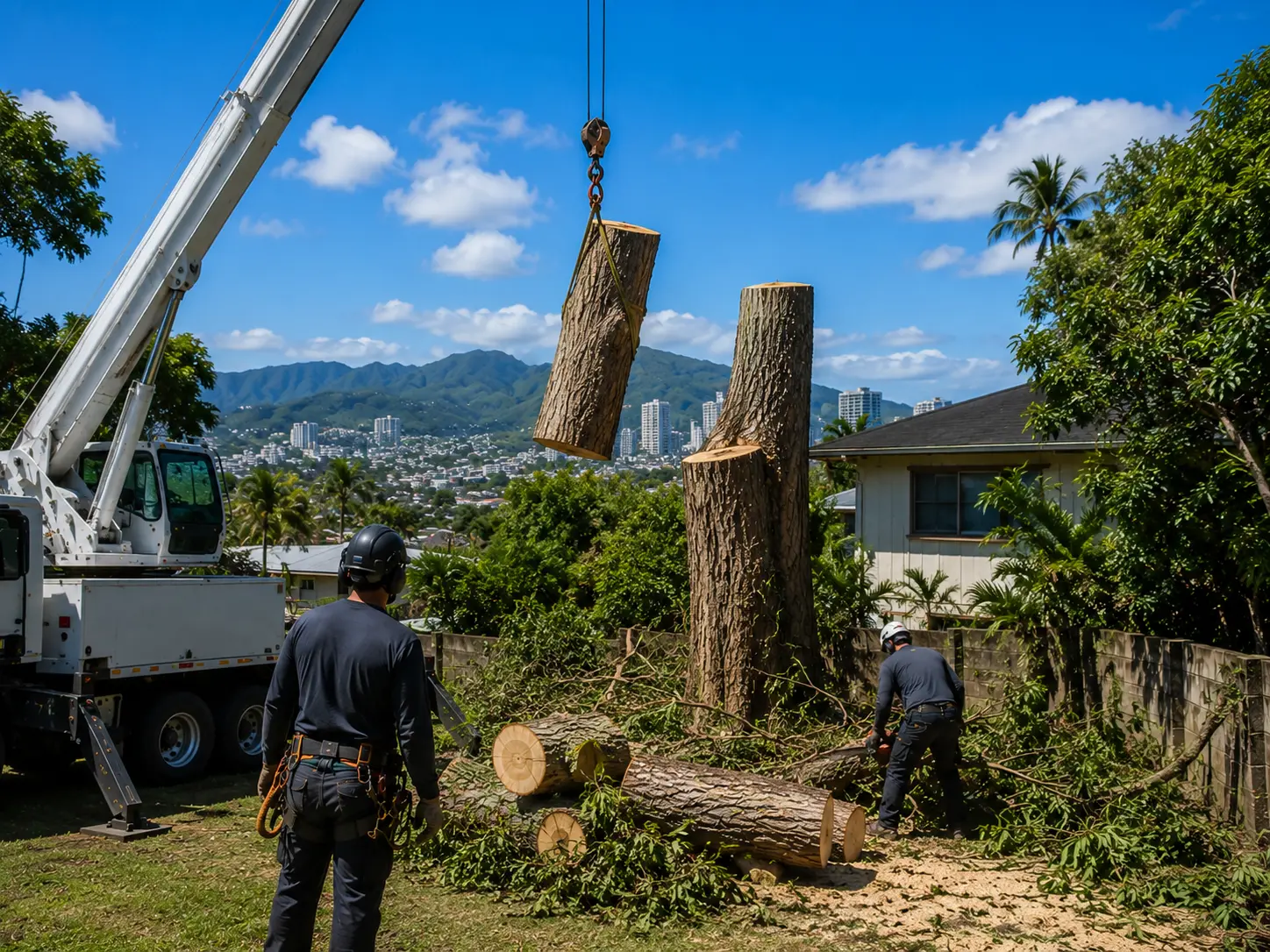
A community that grew up around its windbreaks
Mililani isn't one uniform subdivision. Each section has its own age, tree canopy, and layout, and our crews plan accordingly.
Mililani Town
The original section developed in the late 1960s, with mature street trees, greenbelt paths, and cul-de-sac lots where a single-access road can affect several households if it's blocked.
Mililani Mauka
The newer, higher-elevation section built through the 1990s, where younger landscaping trees sit alongside larger lots and homeowner association-maintained common areas near Central Oahu Regional Park.
Launani Valley
A gulch-adjacent neighborhood near Kipapa Stream where drainage, slope, and saturated soil after heavy rain factor into how root systems anchor compared to flatter parts of Mililani.
Mililani Ike & Century Park
Established residential pockets with a mix of older landscaping trees and shared retention basin edges, where community-maintained plantings often border private yards.
Kipapa
A quieter residential pocket bordering agricultural land, where older monkeypod and windbreak trees planted along property lines have had decades to grow well past their original size.
Wahiawa & Central Oʻahu
Just north along the H-2 corridor, Wahiawa shares Mililani's upland climate and older canopy, and we cover both areas as part of the same Central Oʻahu response.
Common tree emergencies across Mililani
Aging windbreaks, wet upland soil, and cul-de-sac access shape what "urgent" looks like here.
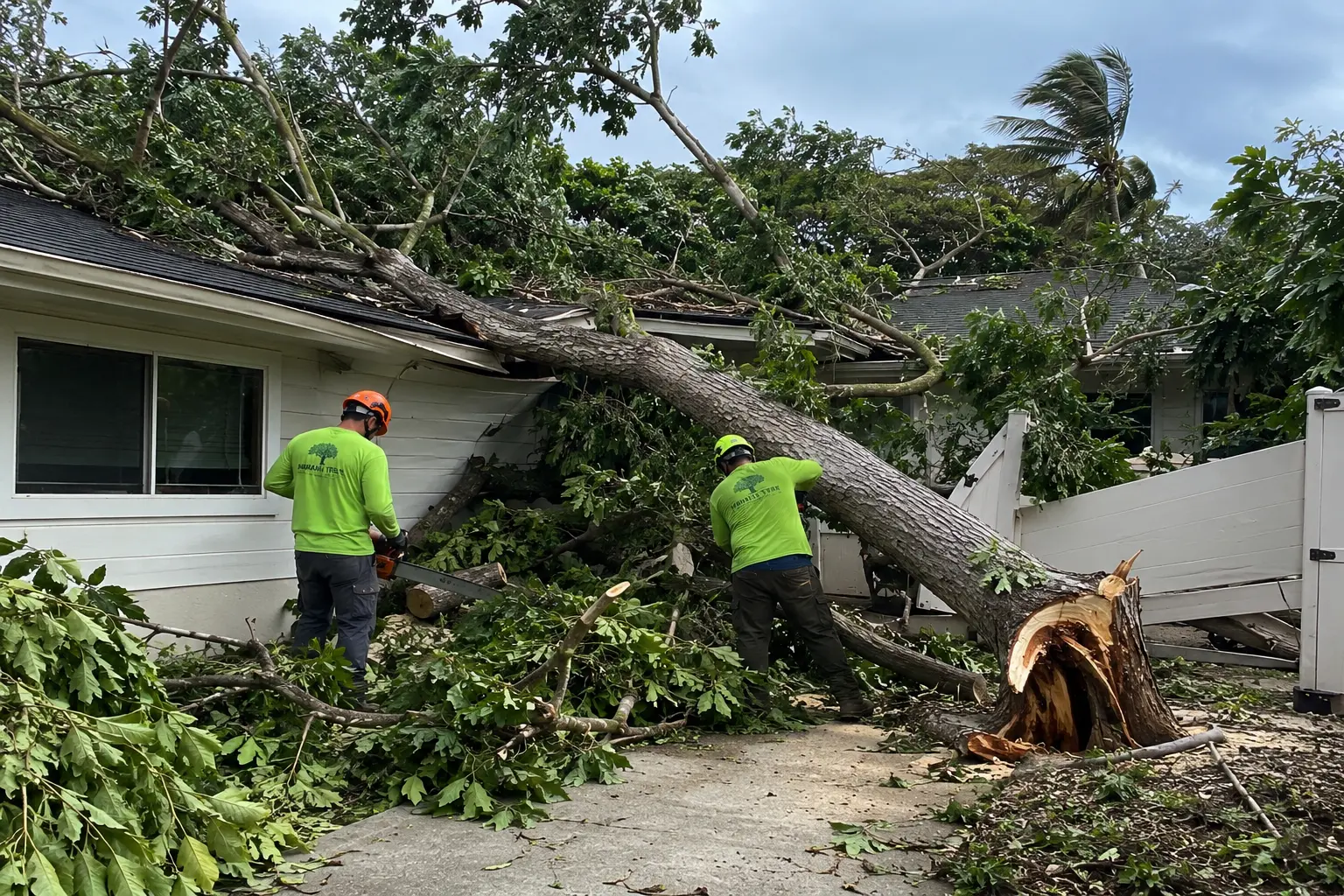
Windbreak Trees Down on Homes
A tall eucalyptus or ironwood along an old field boundary can come down across a roofline or backyard fence. See Fallen Tree Removal for how we sequence that kind of job.
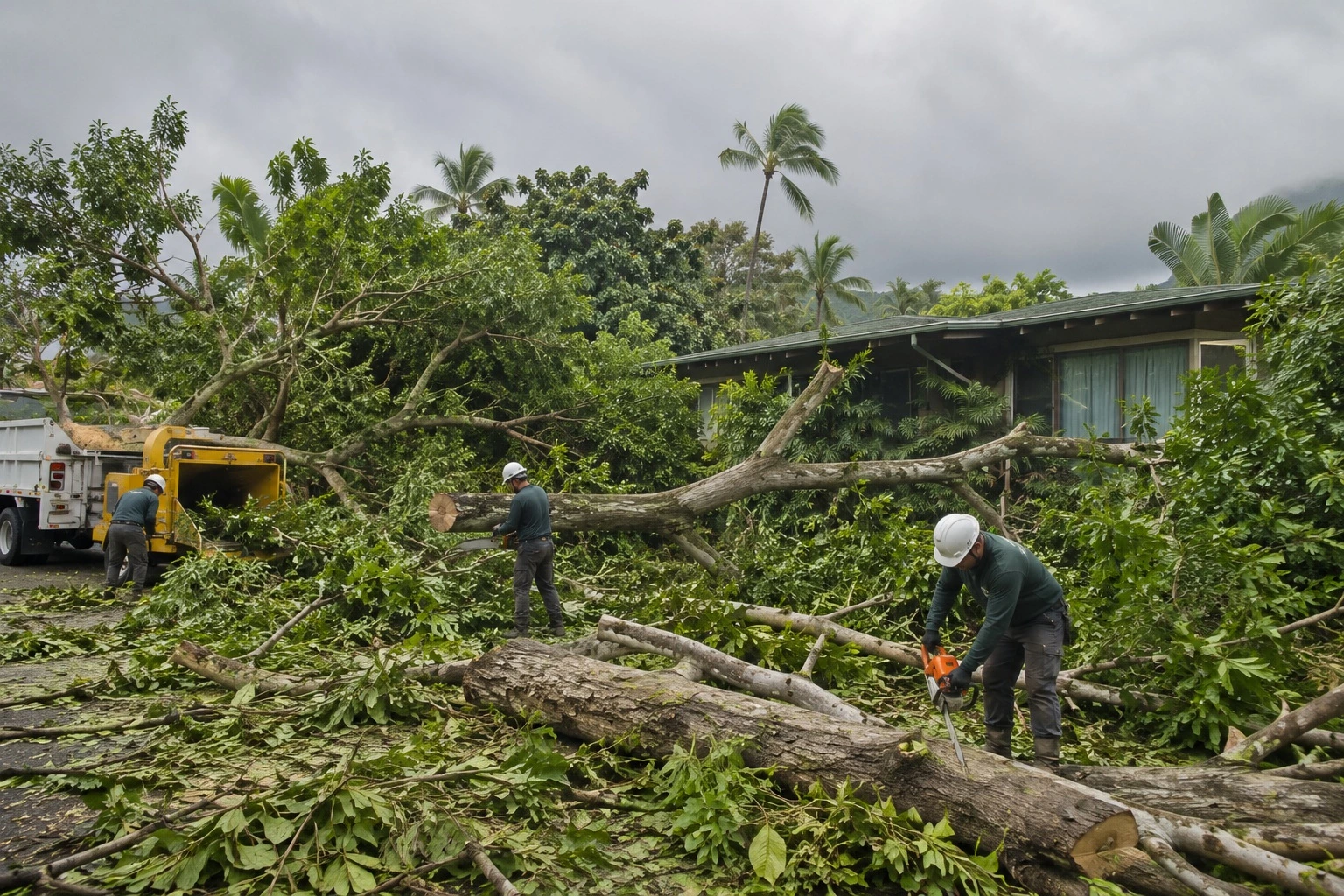
Wind-Damaged Street Trees
Sustained trade winds across the open plateau can strip canopy or snap limbs on mature street trees lining Mililani Town's older blocks.
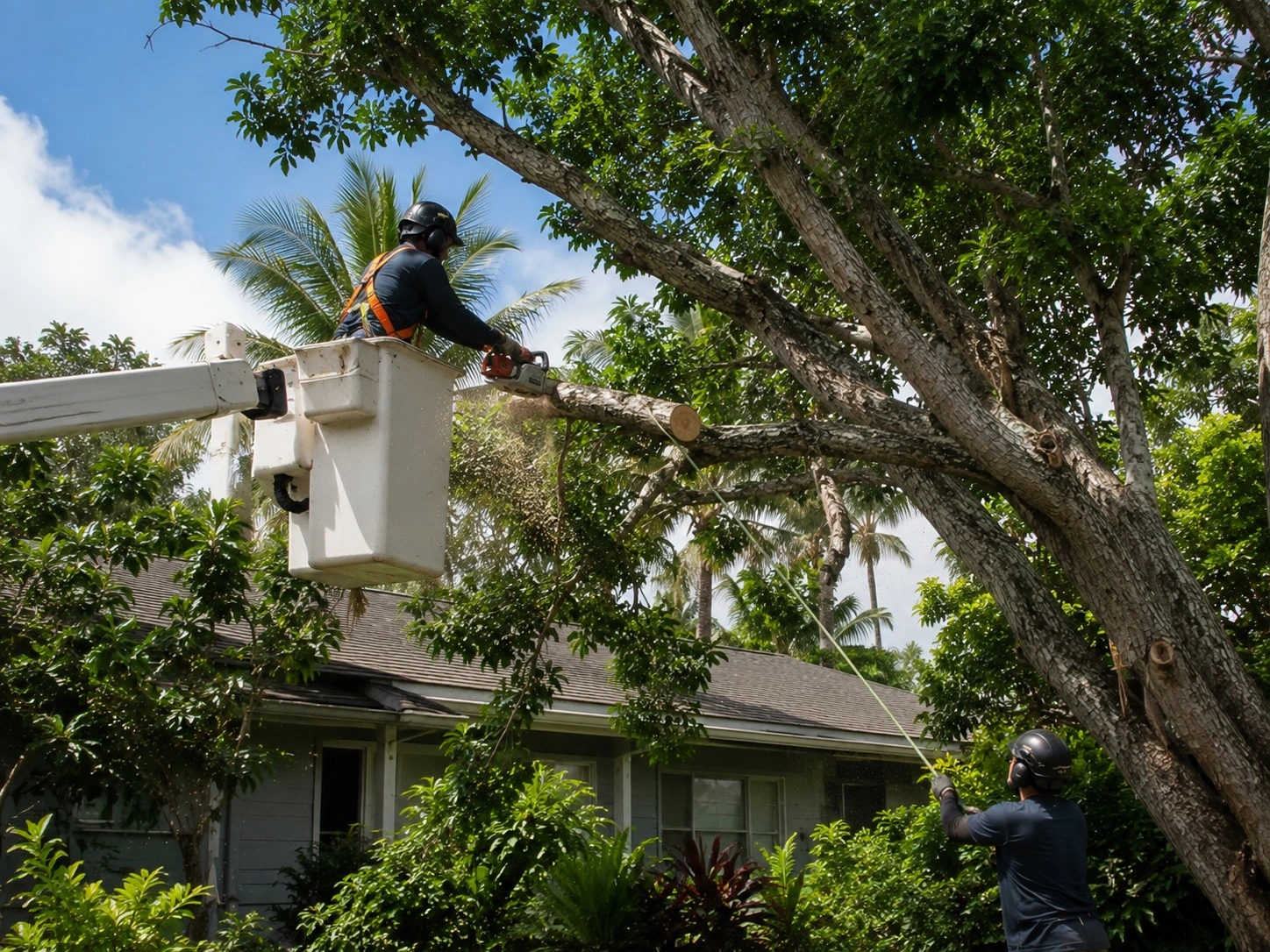
Hanging Limbs Over Cul-de-Sacs
A widowmaker caught above a single-access cul-de-sac can affect every household on the street until it's cleared. See Tree Limb Removal for how these are prioritized.
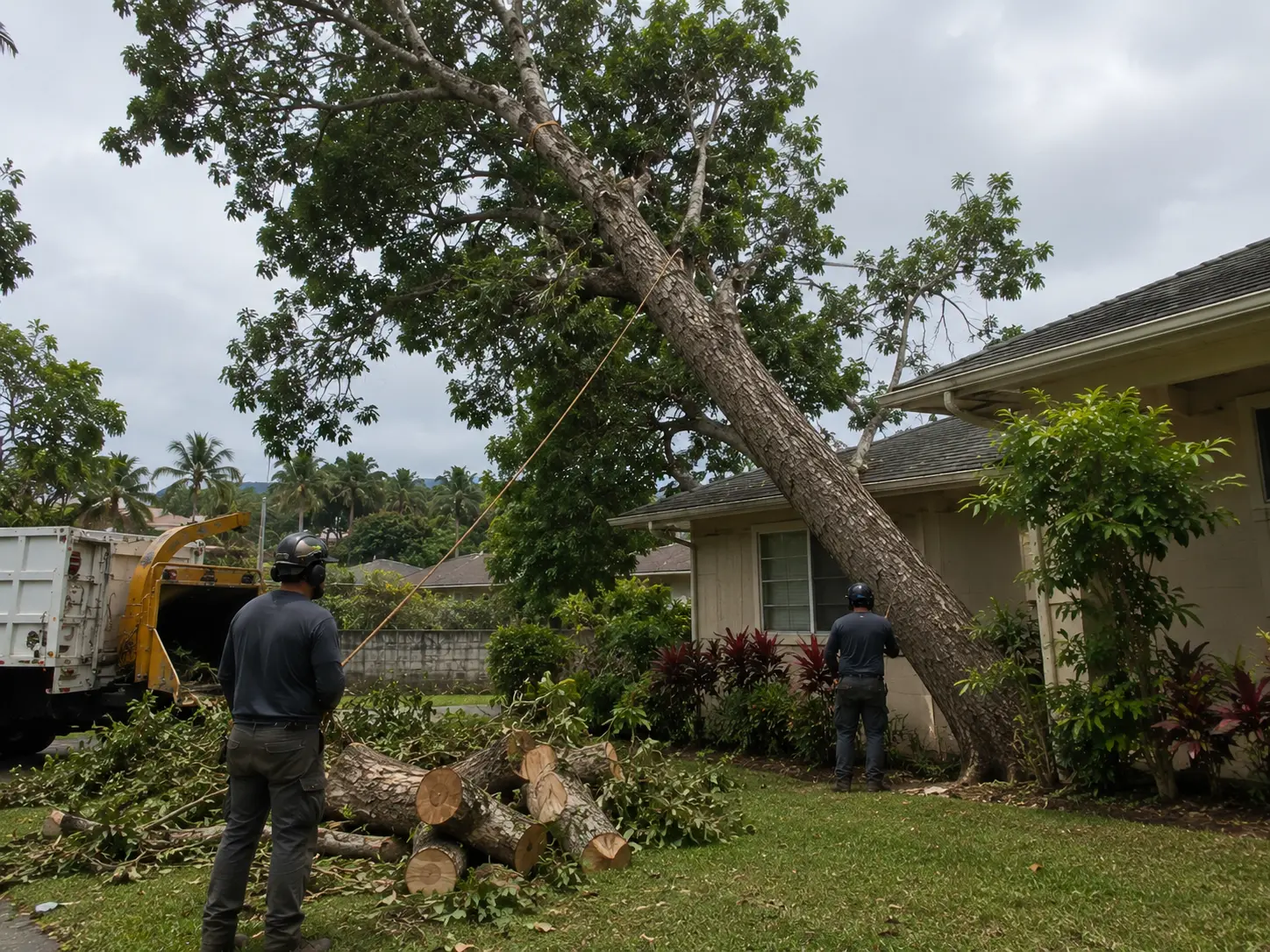
Leaning Trees After Heavy Rain
Saturated soil near Launani Valley and the Kipapa Stream gulch can loosen root systems after sustained upland rainfall. See Leaning Tree Removal.
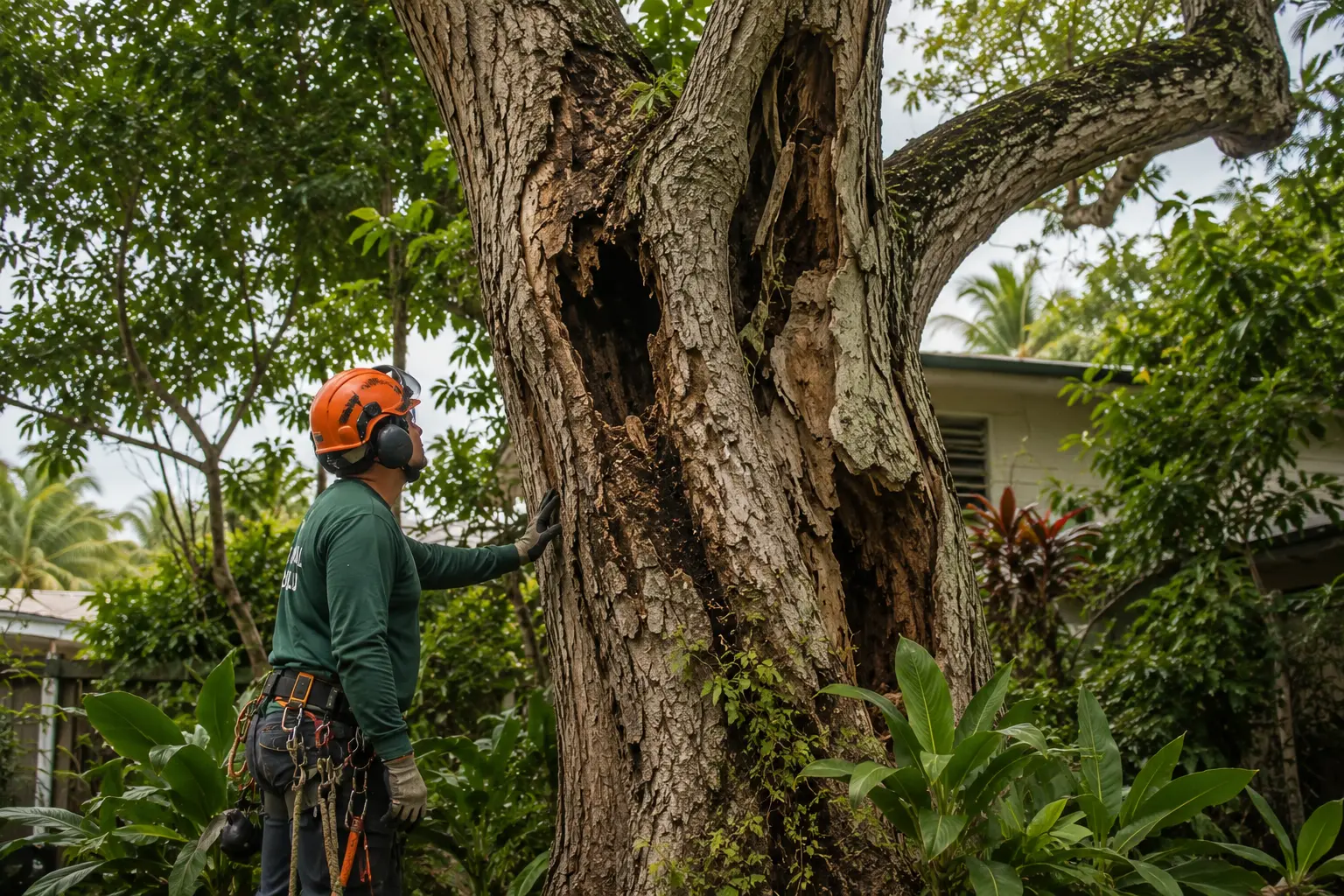
Aging Trees Near Greenbelts & Basins
Decades-old plantings along Mililani's greenbelts and retention basins sometimes show trunk decay or root heaving not obvious from the yard. See Hazardous Tree Removal.
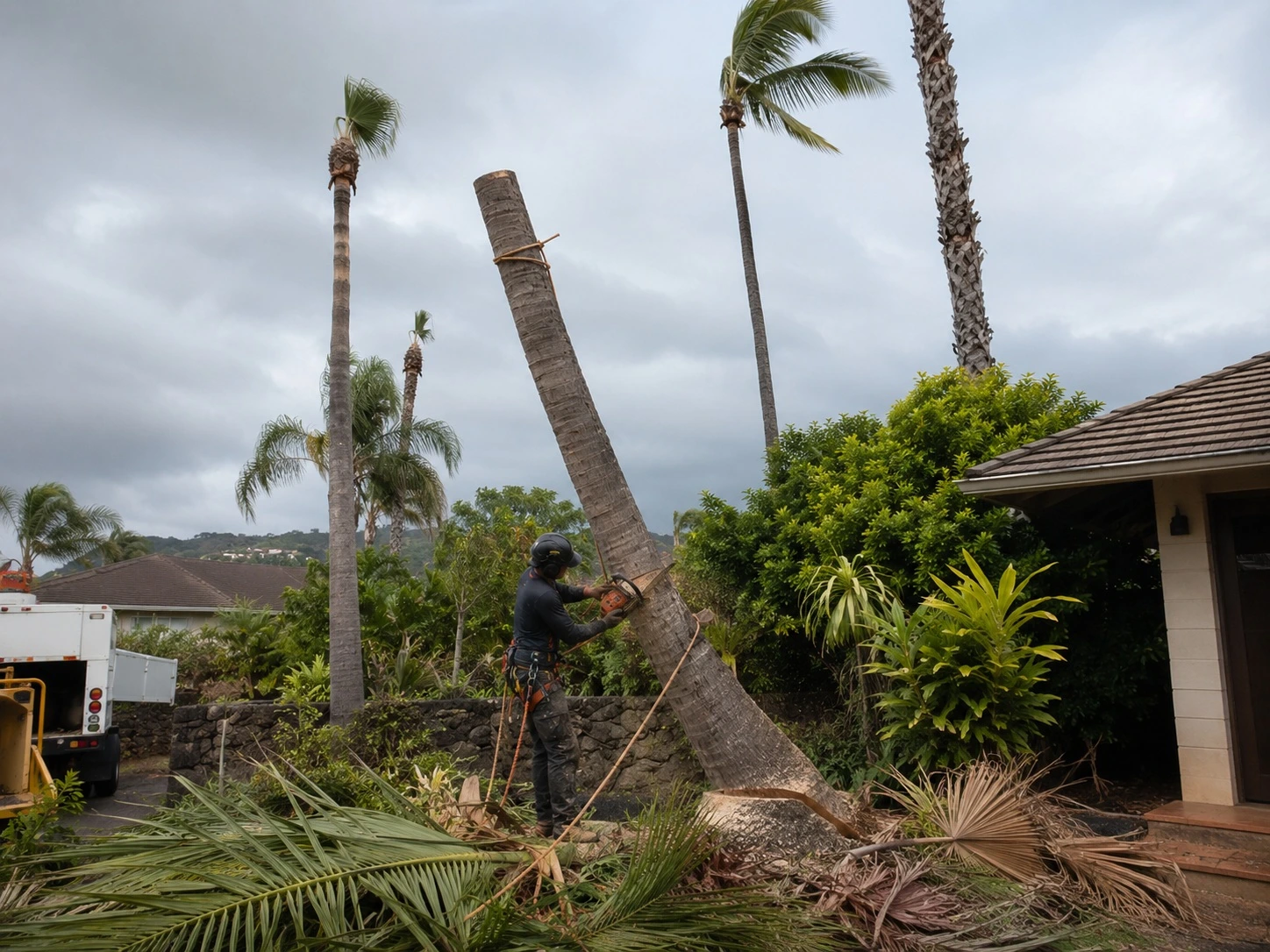
Palm Emergencies Near Parks & Pools
Landscaped palms around community pools, parks, and clubhouse areas can drop fronds onto walkways and parking below. See Palm Tree Removal for routine and emergency handling.
How wind and weather move through Central Oʻahu
Sitting on the plateau between two mountain ranges gives Mililani a weather pattern that's genuinely different from the coastal parts of Honolulu.
Funneled Plateau Winds
With the Waianae range to the west and the Koʻolau range to the east, trade winds accelerate as they funnel across the open Central Oʻahu plateau, putting steady, near-constant stress on tall, exposed trees.
Elevation-Driven Rainfall
Mililani's elevation pulls more rain out of passing weather systems than the drier coastal flats see, keeping upland soil wetter for longer after a storm passes through.
Cooler, Wetter Microclimate
Average temperatures here run several degrees cooler than Waikiki or downtown, a difference that affects how quickly saturated ground dries out and how long root systems stay compromised after rain.
Windbreak Fatigue
Trees originally planted in tight rows for wind protection often lack the room to develop deep, independent root systems, which shows up as accelerated lean or limb failure as the rows age.
Species we see most often across Mililani
Decades of plantation history and master-planned landscaping have left Mililani with a distinct mix of species, and each comes with its own failure pattern.
Eucalyptus & Ironwood Windbreaks
Planted in tight rows along former plantation field boundaries, these trees are often tall, closely spaced, and now decades past the age they were originally maintained for.
Rainbow Shower & Monkeypod
Common street and yard trees throughout Mililani Town and Mililani Mauka, planted for shade and color decades ago and now large enough to overhang driveways and rooflines.
Landscaped Palms
Common around community pools, parks, and clubhouse entrances, planted for a tropical feel but requiring the same species-specific removal approach as any palm on the island.
Working around Mililani's master-planned layout
Mililani was built as a planned community, and that planning shapes how a tree job gets staged.
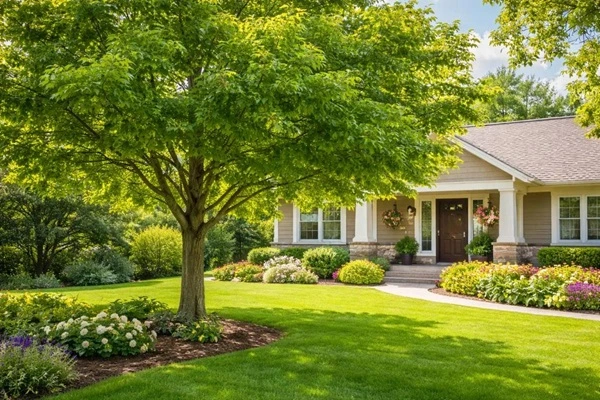
Cul-de-sac homes, greenbelts, and shared common areas
Most of Mililani consists of single-family homes on cul-de-sac or loop streets, often with a mature legacy tree in the yard or a windbreak row along the back fence line. Many subdivisions fall under community association guidelines that govern landscaping in greenbelts, retention basin edges, and other shared common areas, which we factor into planning whenever a tree sits on or near association-maintained land.
Whatever the property type, the same on-site assessment applies first: confirming access along the street or cul-de-sac, checking what's nearby, and building a plan around the specific lot rather than a one-size approach. For a full property removal beyond an emergency situation, see tree removal.
Our response process in Mililani
Cul-de-sac, greenbelt, or gulch-adjacent lot, the logistics change, not the standard of care.
Call or Request
Tell us your neighborhood and what's happening, by phone or through the estimate form.
Access & Hazard Check
We factor in cul-de-sac access, HOA common areas, and windbreak proximity before a crew arrives.
Written Estimate
A clear, itemized estimate based on the on-site assessment, before any work begins.
Careful Removal
Rigging planned around close neighbors, fences, and shared greenbelts.
Cleanup
Debris cleared so driveways, cul-de-sacs, and shared access are usable again.
A crew that already knows Mililani's windbreaks and cul-de-sacs
A decades-old eucalyptus row in Mililani Town and a newer landscaped lot in Mililani Mauka both get the same careful assessment before a single cut is made.
Every crew member is trained, and every job is backed by full insurance coverage.
Crews who already know the windbreak rows, cul-de-sacs, and HOA common areas common across Mililani.
A written estimate after an on-site visit, with no hidden fees added later.
The same team behind Emergency Tree Removal Honolulu covers every Mililani neighborhood.
We also serve the areas surrounding Mililani
If your property is outside Mililani, we cover the rest of Oʻahu as well. View all service areas →
Mililani questions before you call
How quickly can a crew reach Mililani from Honolulu?
Response depends on the hazard and conditions along the H-2 corridor, but active emergencies like a tree on a structure or blocking a street are prioritized ahead of routine visits. Call to describe the situation and a crew will advise on realistic timing for your part of Mililani.
Are Mililani's old windbreak trees a common hazard?
Yes. Many neighborhoods were built alongside eucalyptus and ironwood windbreak rows planted decades ago along the former plantation field boundaries. These trees are often tall, closely spaced, and now shallow-rooted or top-heavy, which makes them a frequent source of limb failure and lean during wind events.
Does Mililani get different weather than the rest of Honolulu?
Mililani sits several hundred feet higher than the coast on the Central Oahu plateau, which means cooler temperatures, more frequent rainfall, and steady trade winds funneling between the Waianae and Koolau ranges. Trees here are exposed to more sustained wind and moisture than the same species would see near the shoreline.
Do Mililani's HOA-governed neighborhoods affect how trees are removed?
Many Mililani subdivisions fall under community association guidelines that can apply to trees on common areas, greenbelts, or near shared retention basins. We factor this into the estimate and can coordinate with association management when a tree sits on or near association-maintained land.
What should I do if a tree is blocking a cul-de-sac or shared access road?
Avoid moving anything beyond small twigs and leaves yourself, since many Mililani streets are single-access cul-de-sacs where a blocked road affects every household on it. Call to describe the blockage and we'll prioritize clearing access before completing the full removal.
What trees cause the most emergency calls in Mililani?
Eucalyptus and ironwood windbreak trees, along with rainbow shower and monkeypod street trees, are behind most emergency calls here, whether from windbreak limbs failing in sustained trade winds or from mature street trees outgrowing the planting strips they were placed in decades ago.
Is emergency tree service available throughout all of Mililani, not just Mililani Town?
Yes. Coverage extends across Mililani Town, Mililani Mauka, Launani Valley, Mililani Ike, Century Park, Kipapa, and the surrounding Wahiawa and Central Oahu area.
Do you offer free estimates for Mililani properties?
Yes. A free, no-obligation estimate can be requested through the form below or by phone, followed by an on-site assessment to confirm the scope of work.
Request a free estimate in Mililani
Tell us your neighborhood and what's happening, a fallen tree, a hanging limb, storm damage, or a hazardous palm, and a crew will follow up to confirm timing and, if needed, arrange an on-site assessment.