Request Emergency Tree Assistance
If you're dealing with a fallen tree, hazardous tree, leaning tree, broken limb, or another emergency tree situation in Honolulu or elsewhere on Oʻahu, use this page to describe the situation and request assistance. The more you can tell us, the easier it is to understand what's happening before any follow-up.
Prefer to talk it through? Call and describe what's happening, and we'll help you figure out next steps.
Prefer to write it out? Fill out the form belowTell us what you're seeing; understanding the hazard is our job, not yours.
Next steps are based on an in-person look at the situation, not a phone guess.
Trees near power lines are flagged and coordinated with the utility company.
Any scope of work is put in writing before anything is scheduled.
Requesting assistance doesn't commit you to anything.
Request Emergency Assistance
Describe what's happening, where it's happening, and anything nearby that might be affected. The more information you provide, the easier it is to understand the situation before any follow-up.
What information helps
You don't need every detail below to request assistance, but each one makes it easier to understand the situation before any follow-up.
Property Address
Knowing exactly where the property is helps confirm the general area and terrain involved, from a flat urban lot to a sloped or coastal property.
Tree Location
Where the tree or limb sits on the property, front yard, side yard, near a fence line, or over a shared driveway, changes what's actually at risk.
What's Happening
A short, plain description, fallen, leaning, cracked, hanging, is more useful than a guess at the cause. Just describe what you're seeing.
Nearby Structures
Homes, carports, fences, pools, or vehicles in the area help clarify what could be affected if the situation changes before it's assessed.
Power Lines
If a tree or limb is touching or near a power line, mention it clearly. This changes how the situation needs to be approached from the start.
Photos (Optional)
If it's safe to do so from a distance, a photo can add helpful context. Never approach a hazardous tree just to take one.
What happens next
A straightforward path from your request to a plan for the property.
Request Received
Your description of the situation is received and logged.
Situation Reviewed
The details you provided are reviewed to understand what's involved.
Follow-Up
We follow up to gather additional details if needed to fully understand the situation.
Next Steps Discussed
Appropriate next steps are discussed based on what's been shared.
Assistance Coordinated
Emergency assistance is coordinated based on the situation and access.
Every emergency tree situation is different
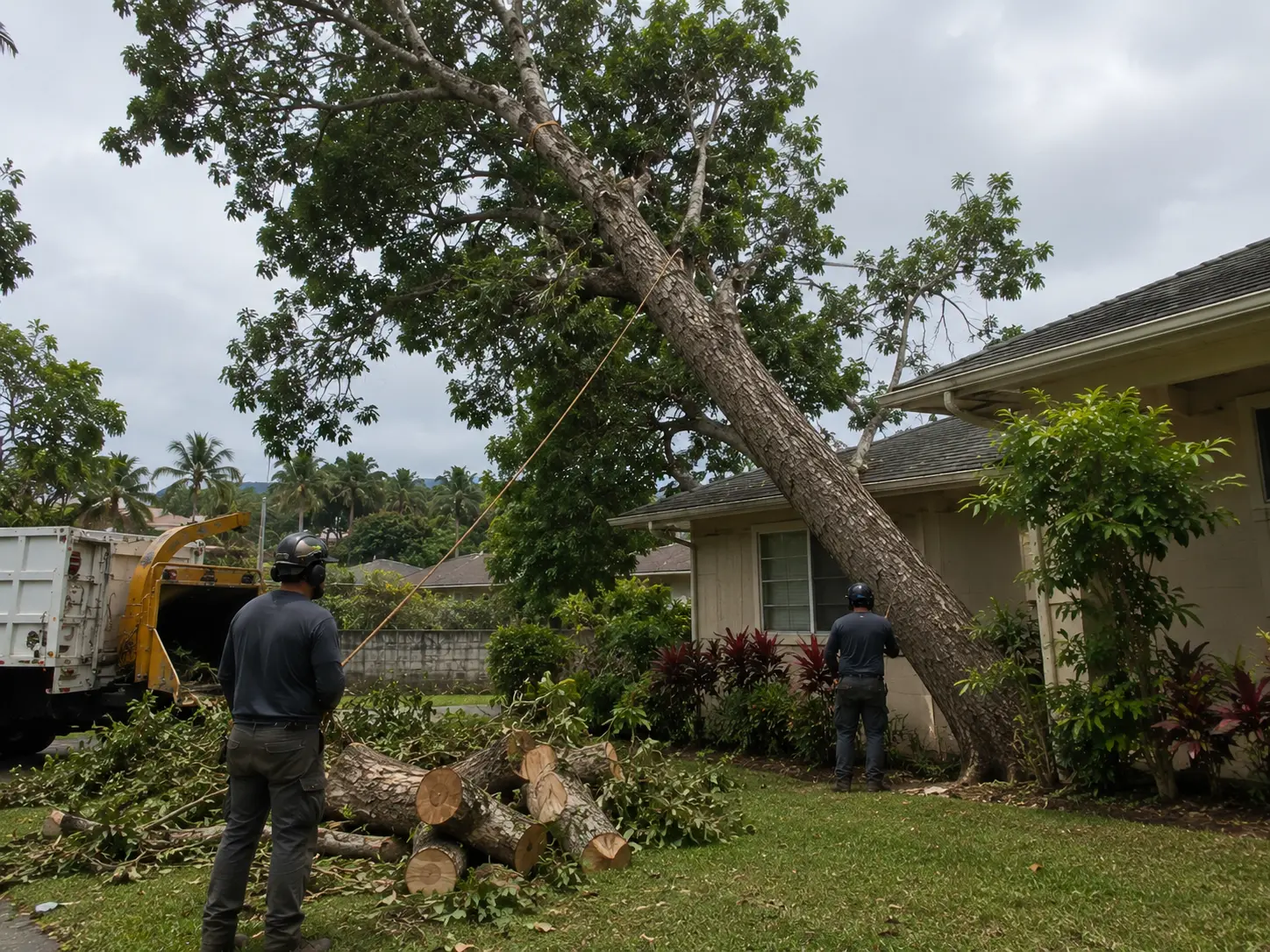
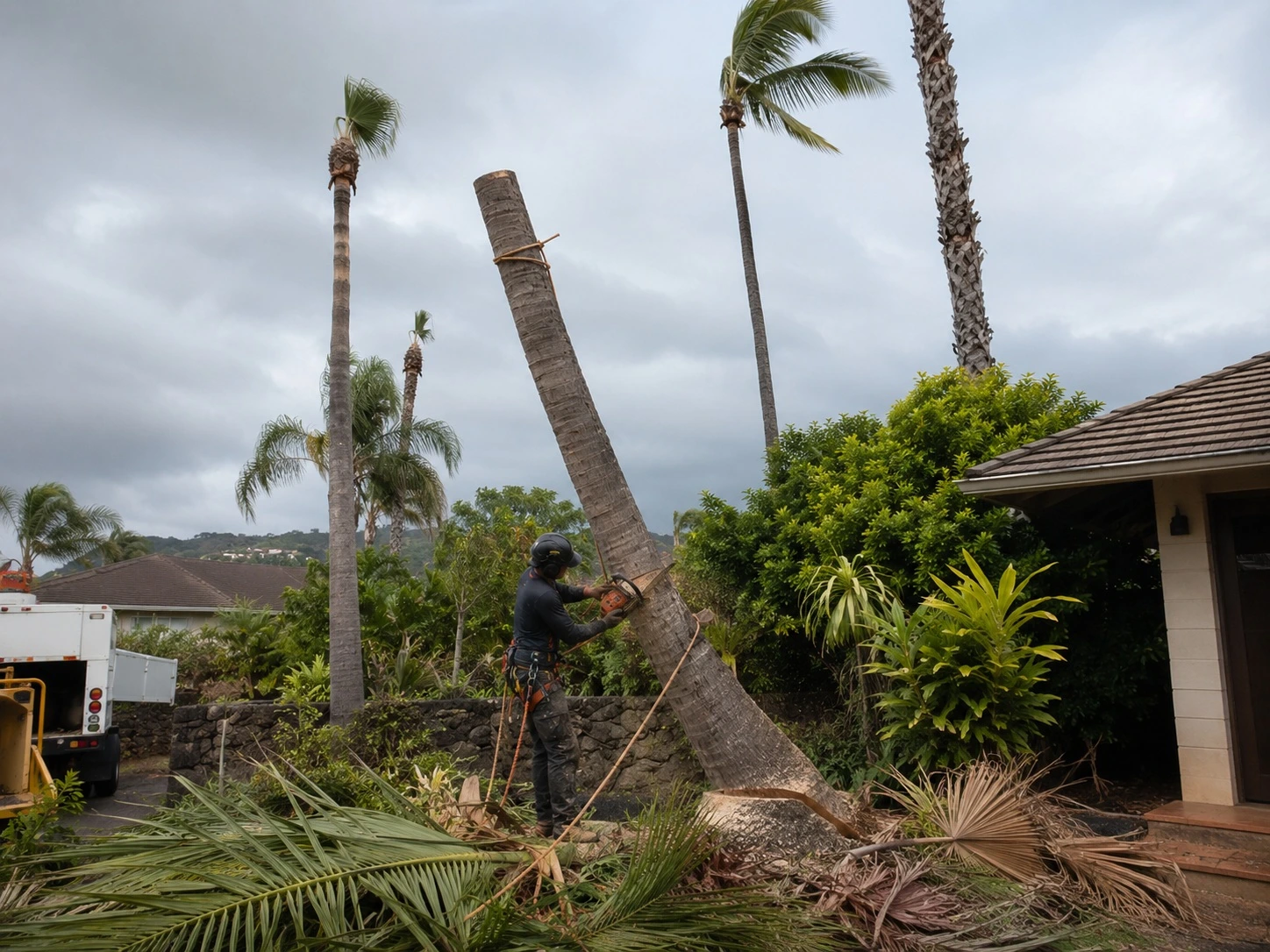
A leaning tree on a flat, open lot is a very different situation from the same lean on a steep, terraced hillside. A broken limb hanging over an empty yard carries different risk than one over a driveway, a fence, or a neighboring roof. Two properties can have what sounds like the same problem on the phone and need completely different plans once the details are actually understood.
That's why this page focuses on understanding the situation rather than quoting a price or a timeline sight unseen. Tree size, condition, access for equipment, nearby buildings, utility lines, current weather, and the terrain itself all factor into what a given situation actually calls for, and none of that can be judged accurately without the right details.
- Tree size and condition, including any visible decay, cracking, or lean
- Access for equipment, from an open yard to a narrow shared driveway
- Nearby buildings, fences, vehicles, or pools that could be affected
- Utility lines, current weather, and the property's terrain or slope
Sharing as much of this as you can in your request is what allows the right next steps to be discussed, rather than a generic answer that may not fit your situation.
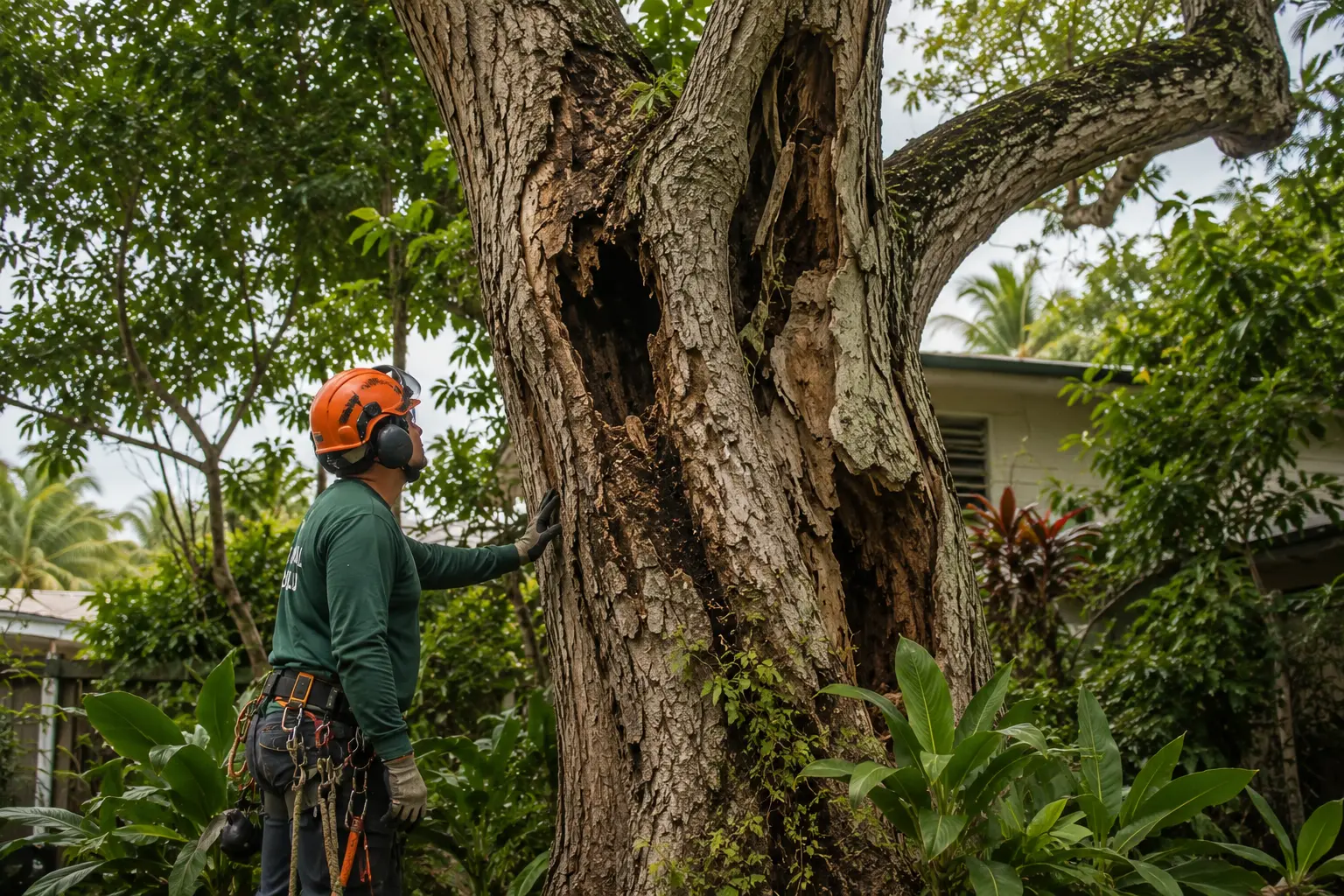
Learn more about specific situations
If you already know which situation best describes yours, these pages go into more detail.
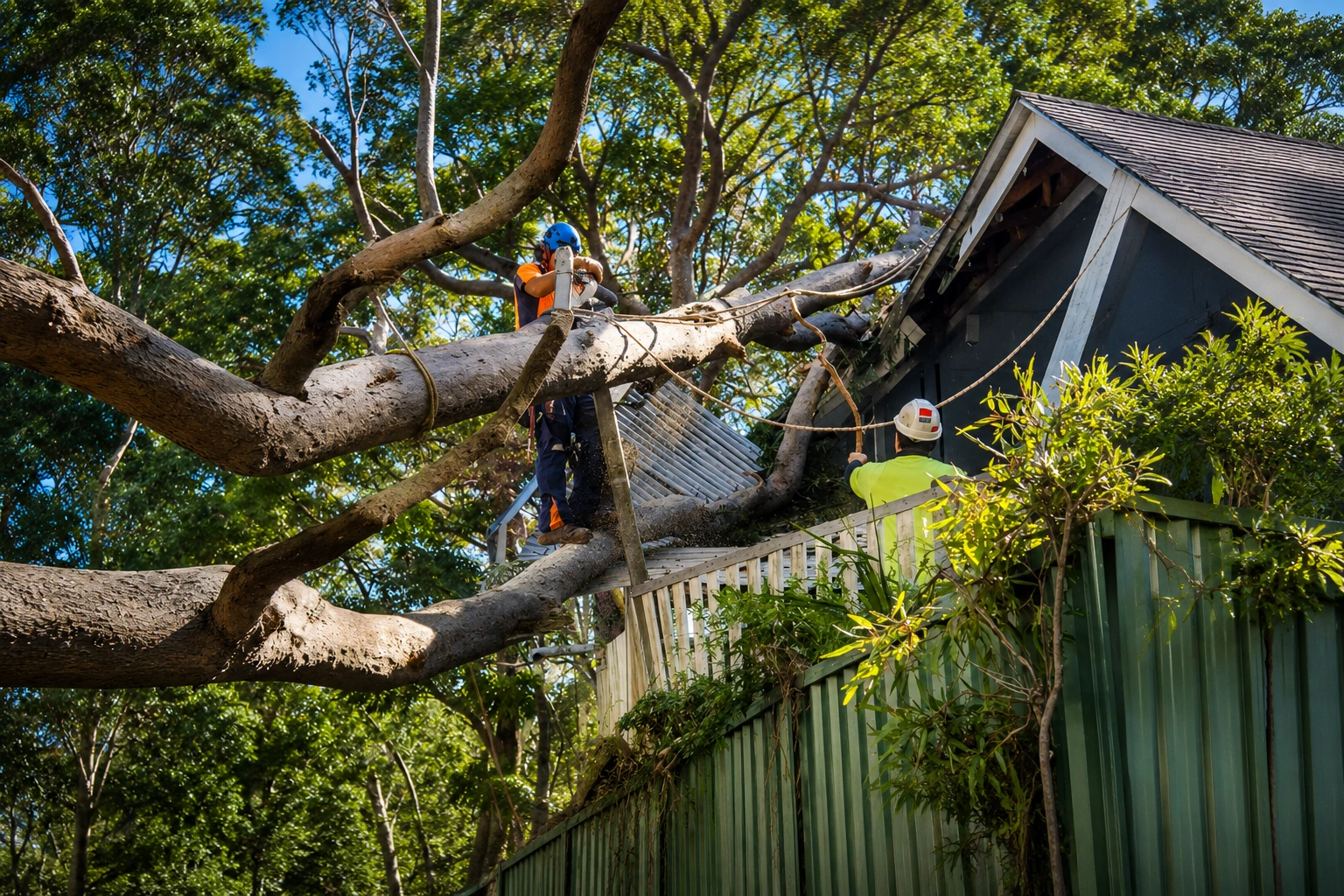
Emergency Tree Removal
An overview of how active tree emergencies are handled across Honolulu and Oʻahu.
Learn More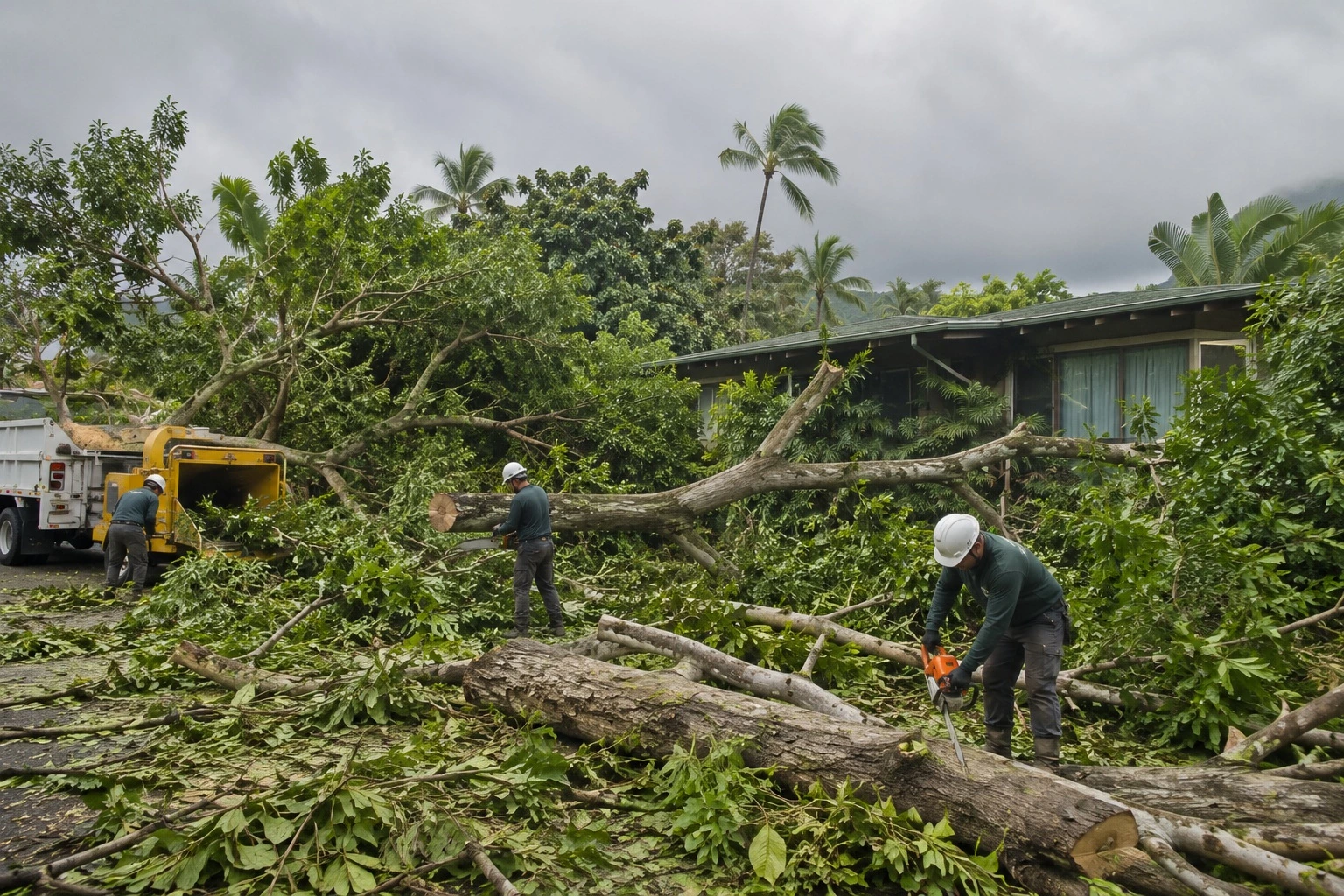
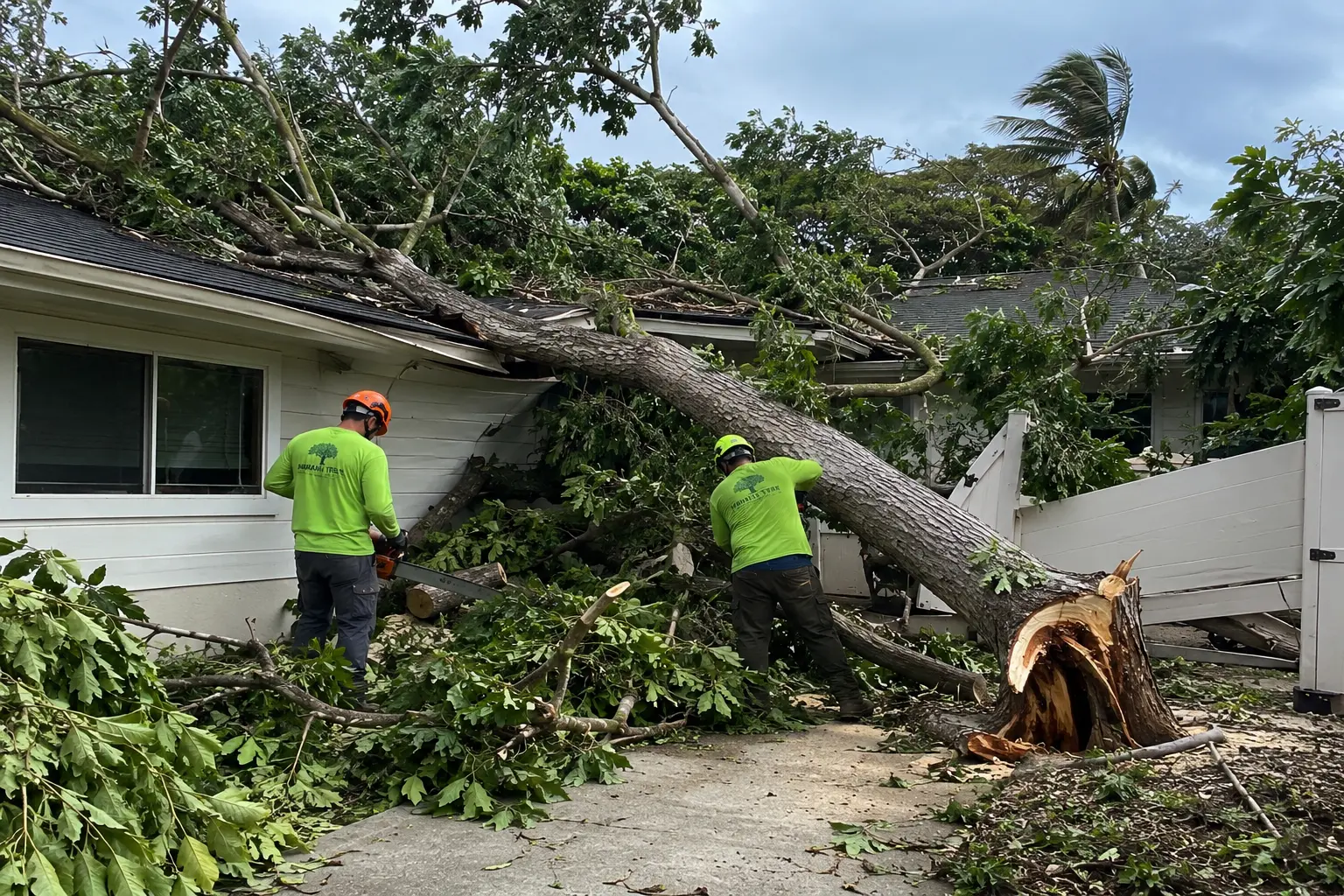
Common questions before you submit a request
What qualifies as a tree emergency?
Generally, an active or imminent hazard: a tree that has fallen, a tree that's visibly leaning or shifting, a broken or hanging limb, or a tree in contact with power lines or a structure. If something feels urgent, it's worth describing the situation and requesting assistance rather than waiting.
Should I call if the tree hasn't fallen yet?
Yes. A tree that's leaning, cracked, or showing a hanging limb can still be an active hazard even if it hasn't come down. Describing the situation before it worsens often makes it easier to understand what's happening and plan next steps.
Should I stay away from the tree?
Yes. Avoid the area beneath or around a fallen, leaning, or damaged tree, especially if branches, the root base, or a structure it's resting on look unstable. Don't attempt to move, cut, or secure it yourself.
What if power lines are involved?
Mention this clearly when describing the situation. A tree in contact with a power line should never be approached or handled without the utility company involved, and this detail changes how the situation needs to be assessed.
Should I submit photos?
Photos aren't required, but they can help provide a clearer picture of the situation if it's safe to take them from a distance. Never approach a hazardous tree just to get a photo.
Can multiple trees be included in one request?
Yes. If a storm or wind event has affected more than one tree on a property, describe all of it in the message field so the full scope can be understood at once rather than in separate requests.
Do I need to be present for the assessment?
This depends on the situation and property access. Providing a good phone number and clear details in your request makes it easier to coordinate the right next steps, whether or not you're on site.
Need emergency tree assistance?
Describe the situation using the form above, or reach out directly if you'd rather talk it through.