Storm Tree Removal Honolulu | Fast, Full-Property Cleanup
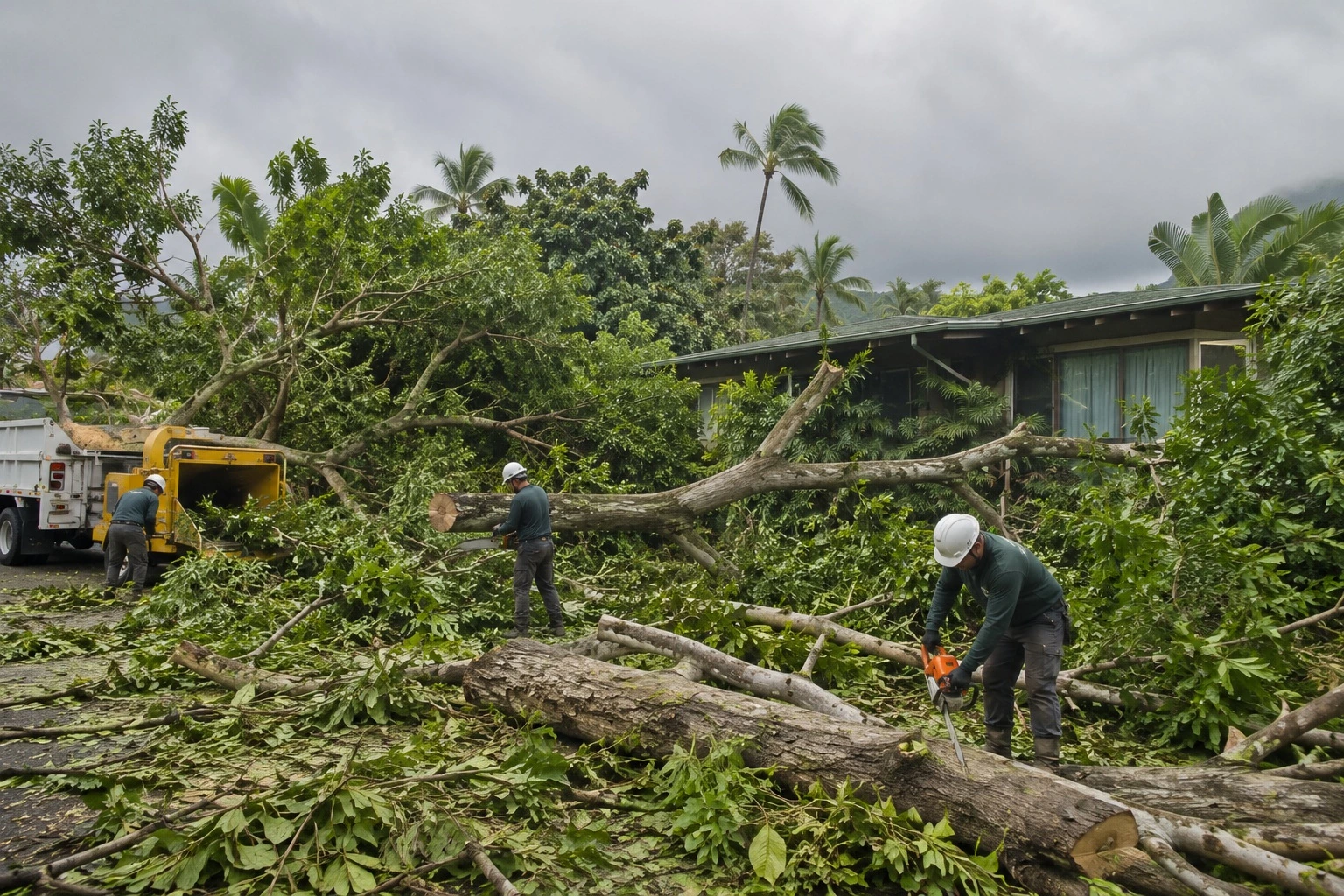
Wind and rain rarely damage just one tree. Torn canopy, broken limbs still tangled overhead, and trees weakened at the root all need to be assessed together, not one call at a time. Our crews walk the full property, clear every hazard, and haul the debris away in a single coordinated visit.
Call to describe what's down or damaged, a fallen tree, torn canopy, or a hanging limb, and we'll advise on next steps and timing.
Prefer to write it out? Request a free estimateCrews respond to storm-damaged and downed trees as quickly as conditions allow.
Every visit walks the entire property, not just the tree you called about.
Trees in contact with power lines are coordinated with the utility company first.
Limbs, trunk sections, and wood debris are cleared before the crew leaves.
Written, no-obligation estimates after every storm damage assessment.
What actually happens to a tree during a storm
Wind doesn't just push against a tree, it torques the trunk and whips the canopy back and forth, putting far more stress on the wood than a steady load ever would. Add heavy rain and the ground itself changes: saturated soil loses much of its grip on a root system, so a tree that's been anchored for decades can start rocking at the base during a single Kona storm or trade wind squall. None of this shows up as damage you can see from the driveway.
The part most homeowners don't expect is that the danger doesn't end when the wind dies down. A trunk fiber that tore partway through during the peak of the storm keeps working loose as the tree dries and shifts over the following days. A root plate that lifted slightly in soaked ground continues to settle unevenly. That delayed failure is why a tree that looked fine the morning after a storm can still come down a week later.
- Root plates lifted or cracked by wind-rocked, saturated soil
- Internal trunk fractures that stay invisible until the tree shifts again
- Limbs cracked at the union but still held by bark and splinters
- A tree now leaning on a neighboring tree for support, not its own roots
If a tree is actively falling, leaning, or blocking access right now, call our Emergency Tree Removal Honolulu line for the fastest response.
When storm damage calls for removal
Not every storm-stressed tree needs to come down. These are the signs that tell us, and you, which ones do.
Split or cracked trunk
A trunk split by wind rarely heals. Once the structural core is compromised, removal is usually the safer path.
Torn or stripped canopy
Losing more than a third of the canopy in one storm puts real stress on a tree's ability to recover.
Exposed or loosened roots
Saturated ground can loosen a tree's anchoring even when the trunk still looks upright and undamaged.
Hanging or cracked limbs
Limbs cracked at the trunk but not fully separated can hold on for days before releasing without warning.
Coordinating cleanup when more than one tree is down
A single broken limb is a straightforward visit. A storm that's touched five trees and blocked your driveway is a logistics problem before it's a cutting problem, and how we sequence the work matters.
Single-Tree Storm Damage
One tree took the hit, everything else on the property is fine. We assess it, confirm whether it's salvageable, and clear it in one visit.
Get a Free Estimate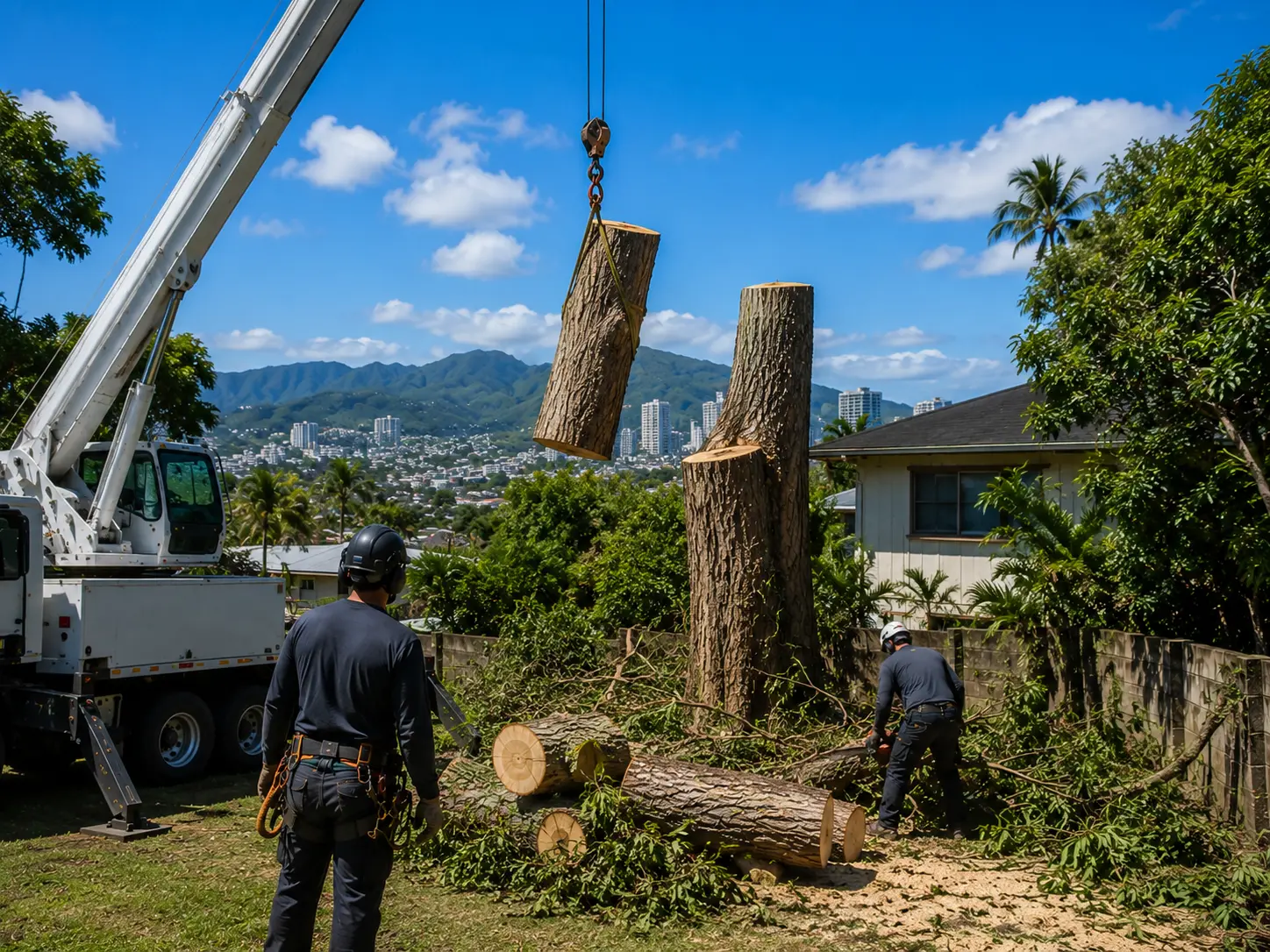
Whole-Property Storm Damage
When several trees are affected, we walk the entire lot once and build a single estimate covering every hazard, not a separate visit per tree.
Get a Free Estimate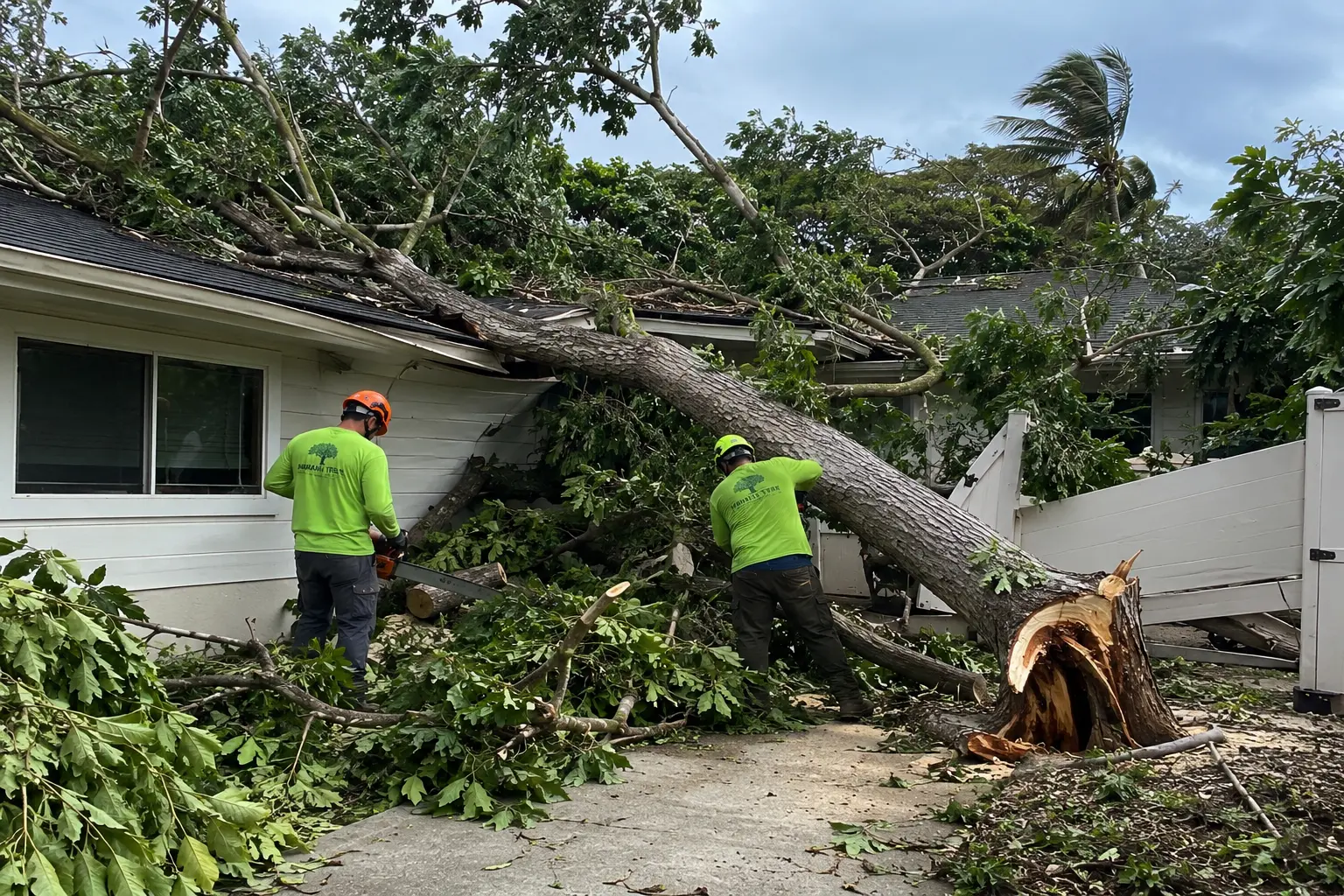
Blocked Driveways & Access
If debris has you or your car trapped on the property, we clear a path first, then come back and finish the full cleanup and removal.
Request Priority AccessHow storm damage actually fails
"Storm damage" isn't one thing. It's four different failure patterns, each with its own risk and its own approach.
Uprooted or Tilted Root Plates
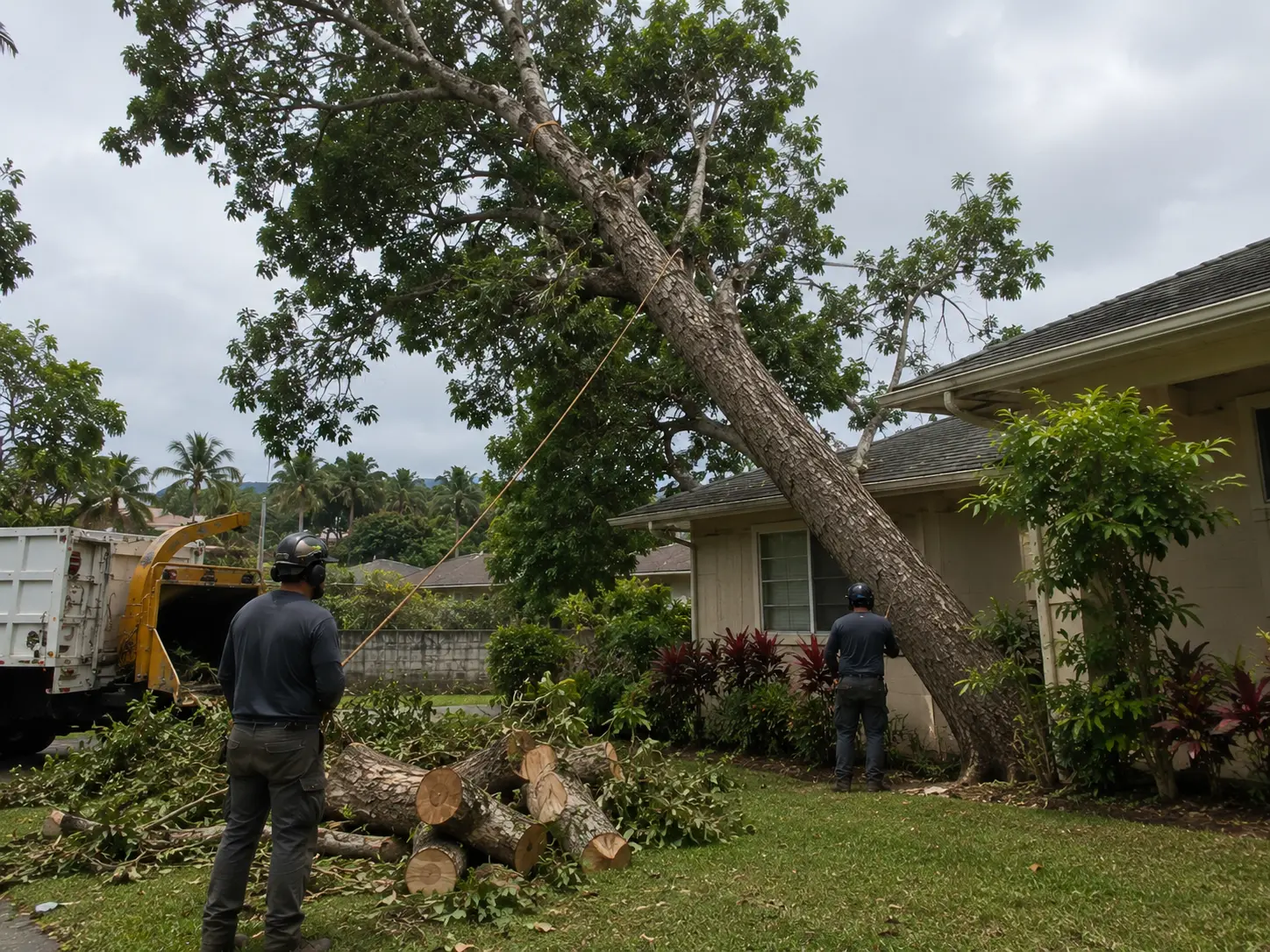
Saturated soil lets the entire root plate shift, so the tree tilts as a unit rather than snapping. It may still be attached by torn roots and look salvageable, but a partially uprooted tree rarely re-anchors on its own.
See Leaning Tree Removal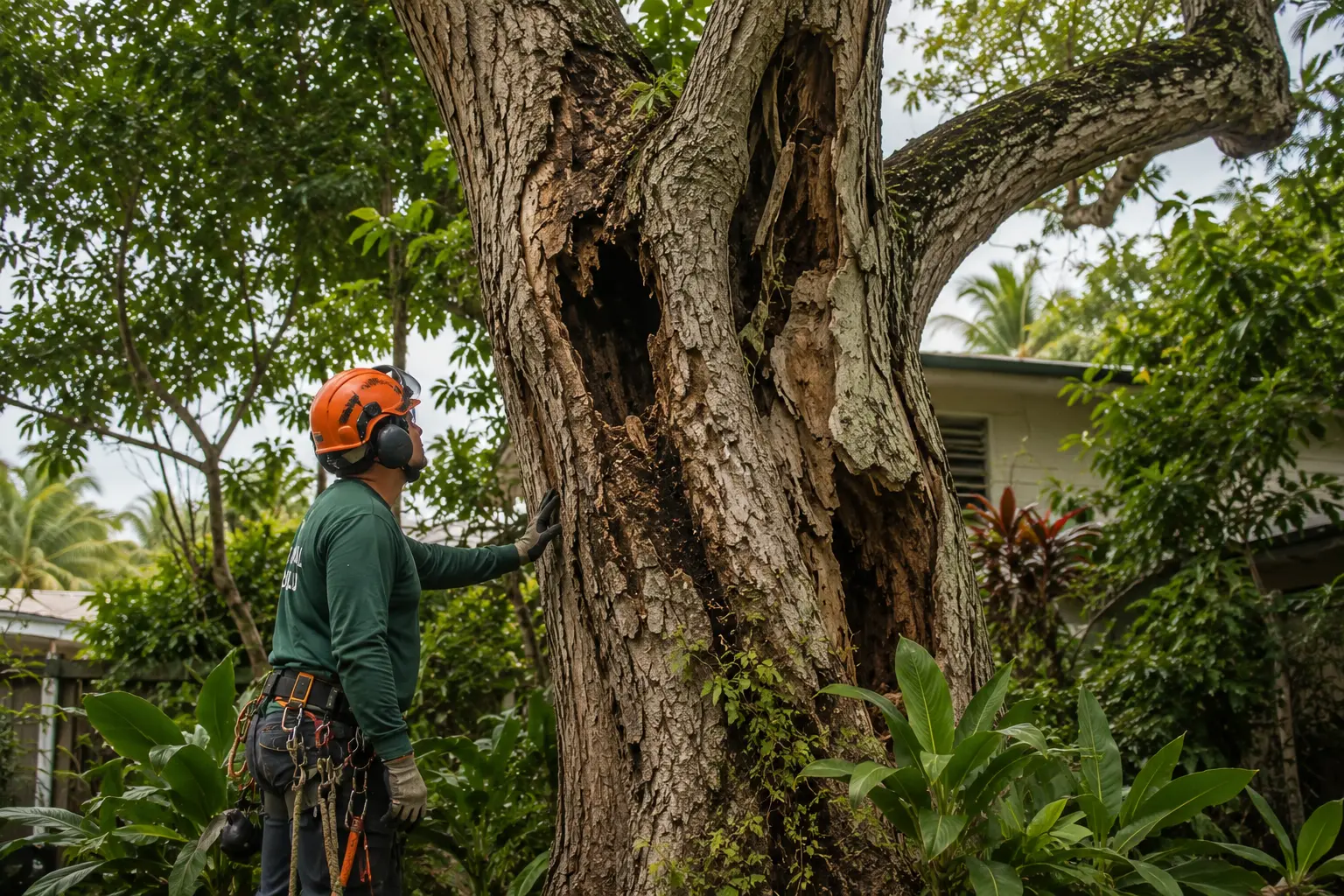
Split or Torqued Trunks
Twisting wind loads can crack a trunk vertically without ever knocking the tree down. The split may only be a few inches wide at the surface but run much deeper through the core.
See Hazardous Tree Removal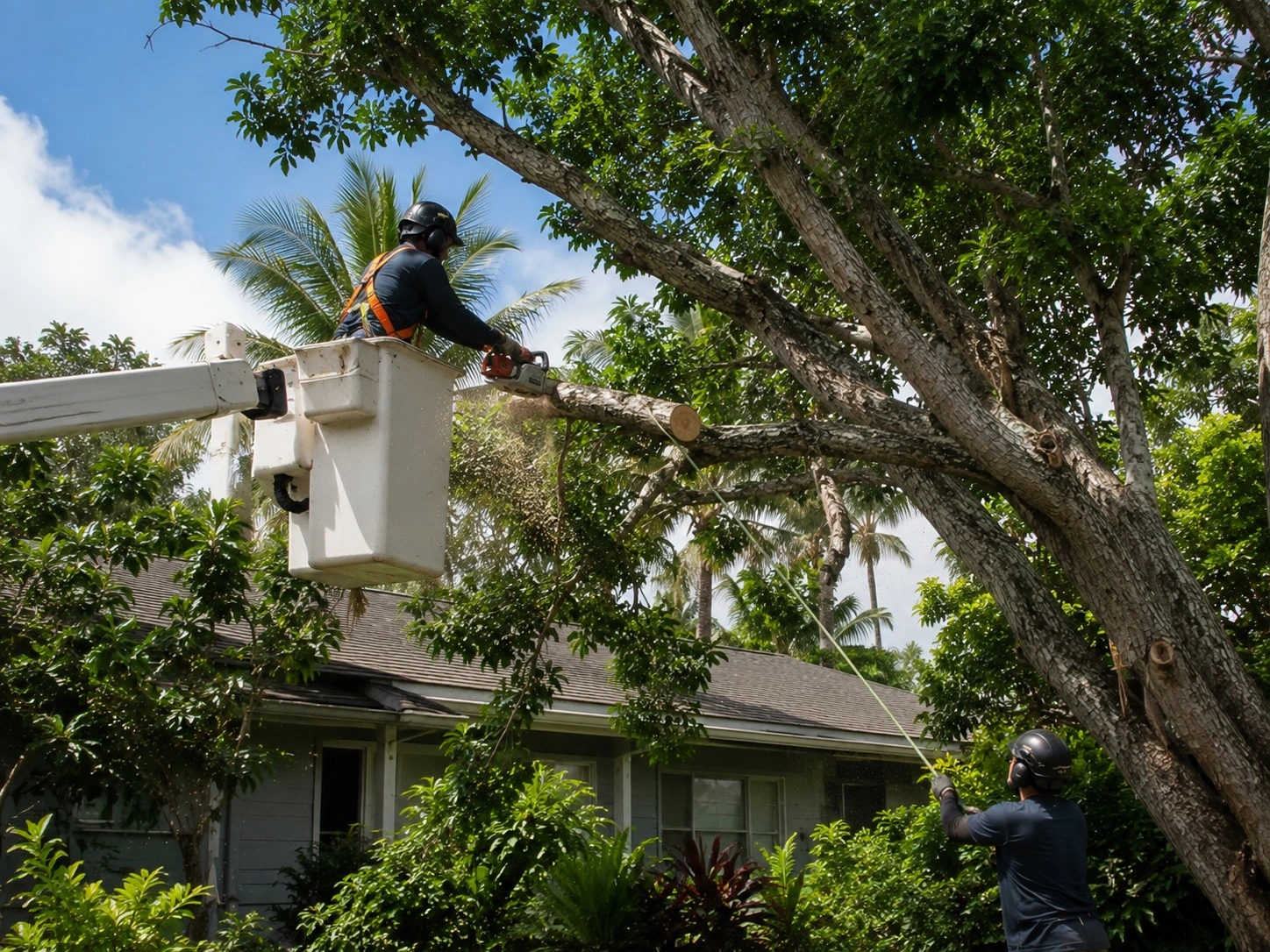
Hanging & Cracked Limbs Overhead
A limb cracked at the union but caught in surrounding branches can sit overhead for days, held by little more than bark, before it finally lets go.
See Tree Limb RemovalFully Downed Trees
Once a tree is completely down, whatever it's resting on, a roof, a fence, another tree, still carries part of its weight and has to be read before the first cut.
See Fallen Tree RemovalFor any active hazard, our Emergency Tree Removal Honolulu line is the fastest way to get a crew evaluating the situation.
Storm damage near homes & power lines
Proximity is what makes storm cleanup demanding. Here's how we handle the two situations that come up most after high wind.
Protecting What's Still Standing
A tree that's weakened but hasn't failed yet is still leaning on your house for support in some cases, or shading a section of roof it's about to drop a limb on. We treat "still standing" as a temporary status, not a safe one, and plan removal before it becomes a second incident.
Power Lines & Island-Wide Outages
A single storm can bring dozens of trees into contact with power lines across Oʻahu at once, which means utility crews are often stretched thin exactly when you need one. We coordinate with the utility company on timing, but the rule never changes: an energized line is never touched without them.
Why storm-damaged wood is rigged differently
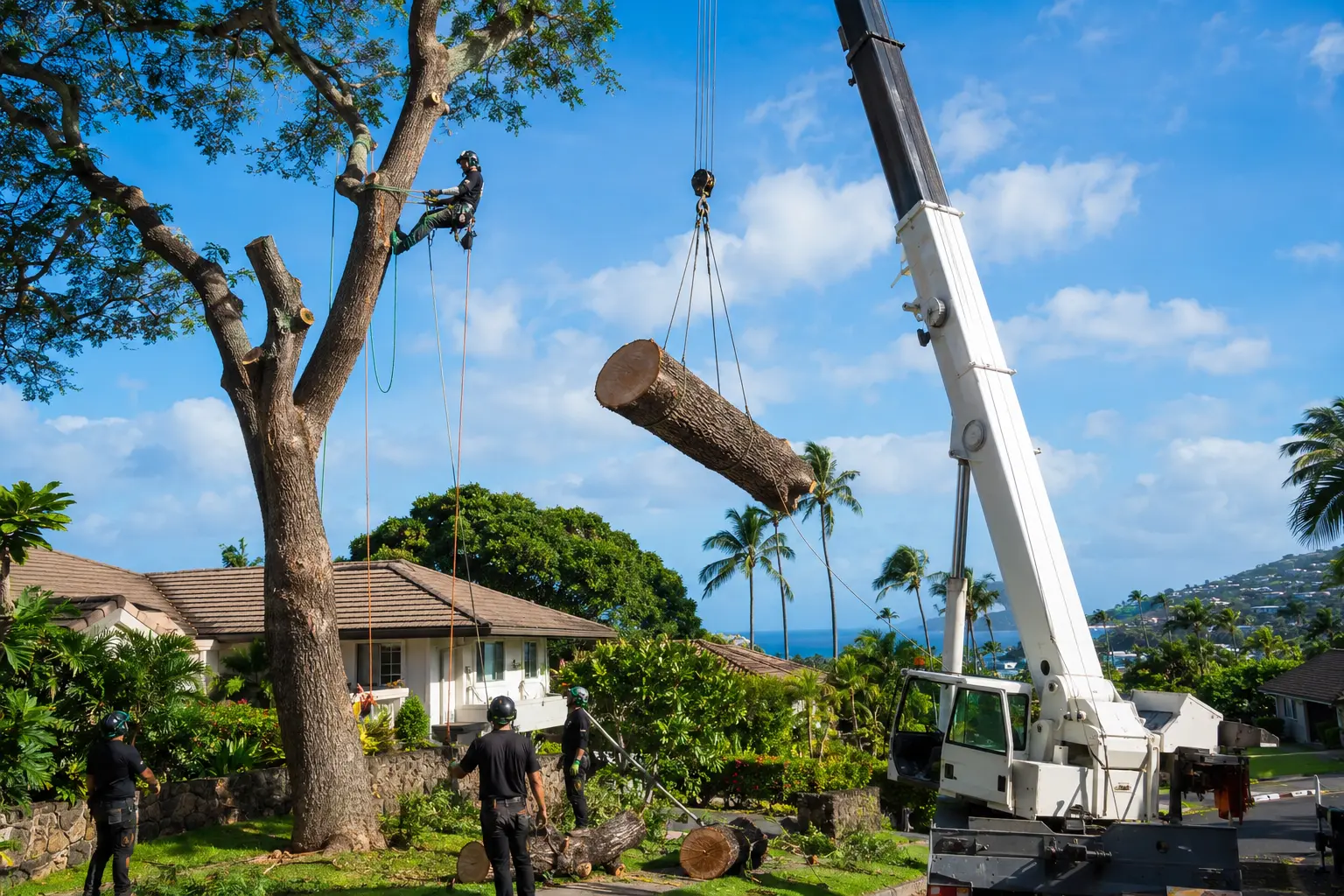
A trunk that's already torqued or a limb held on by splinters doesn't respond to a cut the way healthy wood does. Before committing to a full cut, our climbers will often test-load a section, applying gentle tension through the rigging to see how it shifts, rather than assuming it will behave like an undamaged branch. That single step is what keeps a routine cut from turning into an unplanned drop.
Wet wood adds another variable most people don't think about: a storm-soaked trunk section can weigh noticeably more than the same piece dry, which changes the load calculation on the rigging and the ground crew's positioning. A crane comes in when several large, unstable sections need to come out quickly to reopen access, lifting them clear of the property instead of lowering them through a tight, debris-filled yard.
- Test-loading a section before it's fully cut free, since torqued wood can release unpredictably
- Adjusting rigging math for the extra weight of storm-soaked wood
- Sectional removal for any trunk still leaning on a structure, fence, or another tree
- Crane extraction when several large sections need to come out quickly to restore access
For a full removal beyond storm cleanup, see tree removal.
How Honolulu's trees respond to storms
Oʻahu's canopy doesn't fail the same way tree to tree. Knowing each species' weak point is what keeps storm cleanup fast and safe.
Albizia
Albizia grows faster than almost anything else on the island, and the tradeoff is wood that's genuinely weak. It's behind more sudden limb failure during Oʻahu storms than any other species we see.
Ironwood (Casuarina)
Common along windward coastlines, ironwood has a shallow, wide root system built for sandy soil, not saturated ground. When the soil turns to mud in a storm, ironwood is one of the species most likely to tip over as a whole tree.
Monkeypod & Banyan
These are canopy failures more than whole-tree failures. The broad crown catches enormous wind load, so the trunk often holds while limbs tear loose under the strain.
Palms & Coconut Palms
Palms rarely uproot in a storm, but their fronds and coconuts become fast, unpredictable projectiles in high wind. See palm tree removal for storm-specific palm cleanup.
Permits, insurance & storm documentation
Filing an insurance claim after a storm depends on documentation as much as the damage itself. We help you get both right.
We help you document the damage correctly
Trees that fall during a storm and damage a covered structure are often eligible for an insurance claim, while damage to the tree alone without structural impact typically is not. Photograph the damage from a few angles before cleanup begins if it's safe to do so, note roughly when the storm hit, and hold onto that documentation until your adjuster has seen it, since debris that's already hauled away is much harder to substantiate after the fact.
During a widespread storm event, adjusters across the island can be backed up for weeks, so having clear photos and a written estimate in hand early tends to move a claim along faster than waiting for an inspection before starting cleanup. Protected and exceptional tree rules still apply even when a tree is storm-damaged; we confirm that during your assessment, and you can read the full picture on Honolulu's permit requirements under tree removal. For trees that came down entirely, see fallen tree removal.
Our storm cleanup process
The same process applies whether it's one broken limb or storm damage spread across the whole property.
Call or Request
Describe what's down or damaged, by phone or through the estimate form.
Full-Property Assessment
A crew walks the entire property to identify every hazard, not just the one you called about.
Written Estimate
A clear, itemized estimate is provided based on that assessment before any work begins.
Storm Cleanup & Removal
Damaged trees and limbs are removed with rigging suited to their condition.
Debris Haul-Away
Every branch, trunk section, and wood scrap is cleared before the crew leaves.
Cleanup & stump grinding
Storm cleanup isn't finished until the whole property is clear, not just the tree that made the call urgent.
Included Debris Cleanup
Limbs, trunk sections, and wood debris are cleared from the entire property as part of the job, not billed as a separate line item. Brush and leaf litter are cleared from the lawn or driveway so the property is usable again the moment the crew leaves.
Optional Stump Grinding
If a storm-damaged tree comes out entirely, we can grind the stump below grade so the area can be replanted or leveled. Wood chips can be spread as mulch or hauled away, whichever you'd prefer.
Honolulu's storm response crew homeowners trust
The same team handles routine tree work and active storm emergencies, so you get one standard of care no matter why you're calling.
Every crew member is trained, and every job is backed by full insurance coverage.
Crews who know Oʻahu's species, soil, and storm patterns, not a mainland franchise.
A written estimate after an on-site visit, with no hidden fees added later.
The same team behind Emergency Tree Removal Honolulu handles every storm cleanup too.
Storm tree removal across Oʻahu
Storm response available throughout Honolulu and the surrounding communities. View all service areas →
Storm tree removal questions before you call
How quickly can you respond after a storm?
Storm response is handled as damage is reported rather than on a fixed schedule. Call to describe what's down or damaged and a crew will advise on timing based on the hazard involved and conditions across the island.
Is storm tree removal covered by homeowners insurance?
Coverage depends on your specific policy. Trees that fall during a storm and damage a covered structure are often eligible for a claim, while damage to the tree alone without structural impact may not be. Check with your provider and ask about documentation when you request your estimate.
What's the difference between storm tree removal and routine tree removal?
Storm tree removal addresses trees and limbs already damaged or brought down by wind and rain, often alongside debris cleanup across the whole property. Routine tree removal is a planned decision made without an active hazard driving the timeline.
How much does storm tree removal cost in Honolulu?
Cost depends on how many trees are affected, the severity of the damage, accessibility, and proximity to structures or power lines. A written estimate after a full-property assessment is the only reliable way to know the cost for a specific situation.
Can a storm-damaged tree be saved instead of removed?
Sometimes. A tree with torn canopy or a few broken limbs may recover with corrective pruning, while a tree with a split trunk, exposed roots, or a severe lean is usually beyond saving. An arborist can tell you which applies during the on-site assessment.
Do you handle debris cleanup across the whole property, not just one tree?
Yes. Storm damage rarely affects a single tree, so every visit starts with a full-property walk-through to identify every hazard, followed by coordinated removal and debris cleanup in one visit rather than several separate calls.
Is it safe to clear storm debris myself?
Smaller leaves and twigs are generally fine to clear yourself. Larger limbs, sections still under tension, or anything near power lines should be left to a trained crew, since storm-damaged wood can shift or release unpredictably even after it looks settled.
Do I need a permit to remove a storm-damaged tree in Honolulu?
The City and County of Honolulu regulates removal of certain protected and exceptional trees, even when storm-damaged. We confirm requirements as part of your on-site assessment before any removal begins.
What should I do before a crew arrives after a storm?
Keep people and pets away from any leaning, split, or fallen trees, avoid the area beneath hanging limbs, and photograph visible damage for insurance purposes if it's safe to do so. Avoid attempting to move or cut any storm-damaged wood yourself.
Do you offer free estimates for storm damage?
Yes. A free, no-obligation estimate can be requested through the form below or by phone, followed by an on-site assessment to confirm the full scope of storm damage.
Request a free storm tree removal estimate
Tell us what's down or damaged, and a crew will follow up to arrange a full-property assessment and written estimate. If the situation is urgent, call our Emergency Tree Removal Honolulu line instead.