Emergency Tree Removal Ewa Beach | Local, Fast, On Call
From the mature monkeypod lining the old plantation streets of town to the canal-front lots of Ocean Pointe and the newer neighborhoods of Ewa by Gentry and Laulani, Ewa Beach carries a mix of legacy canopy and young landscaping that few other parts of Oʻahu combine. We work this coastline regularly and plan every removal around it.
Tell us your neighborhood and what's happening, and we'll advise on next steps and timing.
Prefer to write it out? Request a free estimateFrom Old Ewa Beach town to Ocean Pointe, Ewa by Gentry, Laulani, and Iroquois Point.
Crews familiar with the large, decades-old monkeypod and banyan trees around the historic town core.
We work around canal-front seawalls and coordinate access for Navy-managed housing.
Limbs, trunk sections, and green waste cleared before the crew leaves.
Written, no-obligation estimates after every on-site assessment.
Why tree work in Ewa Beach isn't like the rest of the island
Ewa Beach grew out of the old Ewa Plantation, and the original town core still carries some of the largest legacy monkeypod and banyan trees in leeward Oahu, planted well before any of the modern subdivisions around them existed. Those trees have had generations to grow into the space above rooflines and driveways that were never designed with a tree that size in mind, which is a very different risk profile than the younger, still-establishing trees found just a few minutes away in Ocean Pointe or Laulani.
The coastline adds its own layer. Homes along Ewa Beach Park and the shoreline take direct salt exposure much like Ko Olina or Hawaii Kai, while the canal-front lots threaded through Ocean Pointe's marina sit on filled, low-lying land where a tree's roots anchor differently than they would in ordinary yard soil. And with Iroquois Point's Navy housing peninsula sitting within the same service area, some properties here follow a different access and scheduling process than a typical residential call.
- Mature plantation-era monkeypod and banyan trees in the historic town core
- Younger, still-establishing landscaping across newer subdivisions
- Filled, low-lying canal-front soil throughout Ocean Pointe
- Navy-managed housing at Iroquois Point requiring separate coordination
If a tree is actively down or hazardous anywhere in Ewa Beach right now, see Emergency Tree Removal Honolulu for our fastest response option.
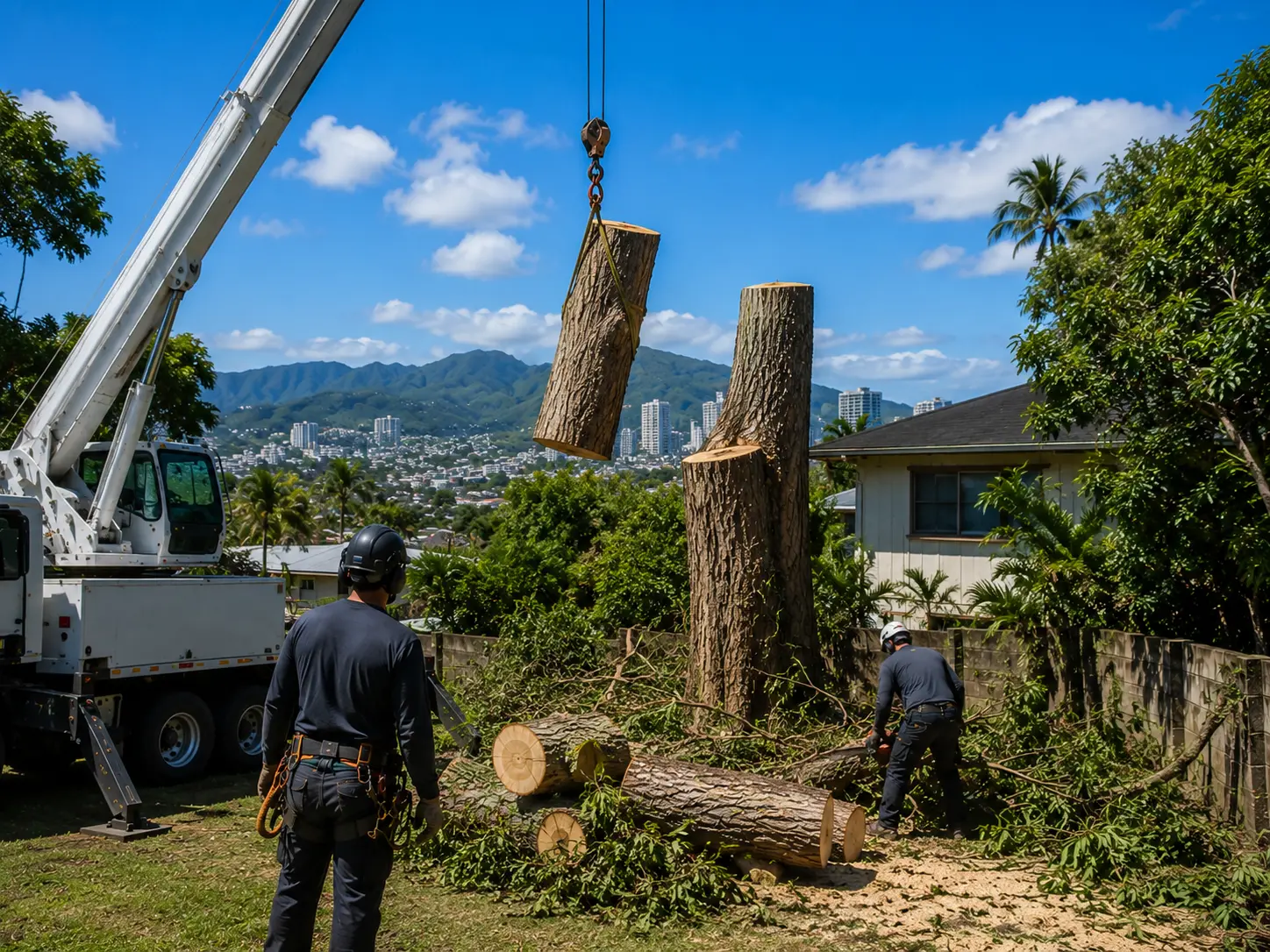
A canopy that ranges from historic to brand new
Ewa Beach isn't one uniform suburb. Each pocket has its own age, tree canopy, and layout, and our crews plan accordingly.
Old Ewa Beach Town
The original plantation-era core, with narrow streets, older single-family lots, and some of the largest legacy monkeypod and banyan trees in the wider Ewa area.
Ocean Pointe
A canal-front and marina community built on filled coastal land, where seawalls, docks, and low-lying soil change how a tree's root system is read compared to inland lots.
Ewa by Gentry & Laulani
Newer, master-planned subdivisions with younger street trees and landscaped common areas, most still well short of the size legacy trees reach in the old town core.
Iroquois Point
A Navy-managed housing peninsula near the entrance to Pearl Harbor, where mature shoreline trees sit close to federal housing and access follows a separate coordination process.
Fairways at West Loch
A golf course community bordering West Loch, with irrigated fairway-adjacent landscaping that behaves differently than the drier lots further from the course.
Ewa Villages & Shoreline
Neighborhoods closest to Ewa Beach Park and the open coastline, where ironwood and coconut palms deal with the most direct salt exposure in the area.
Common tree emergencies across Ewa Beach
Legacy plantation trees, canal-front soil, and coastal salt exposure each fail differently, and knowing which one you're dealing with changes the response.
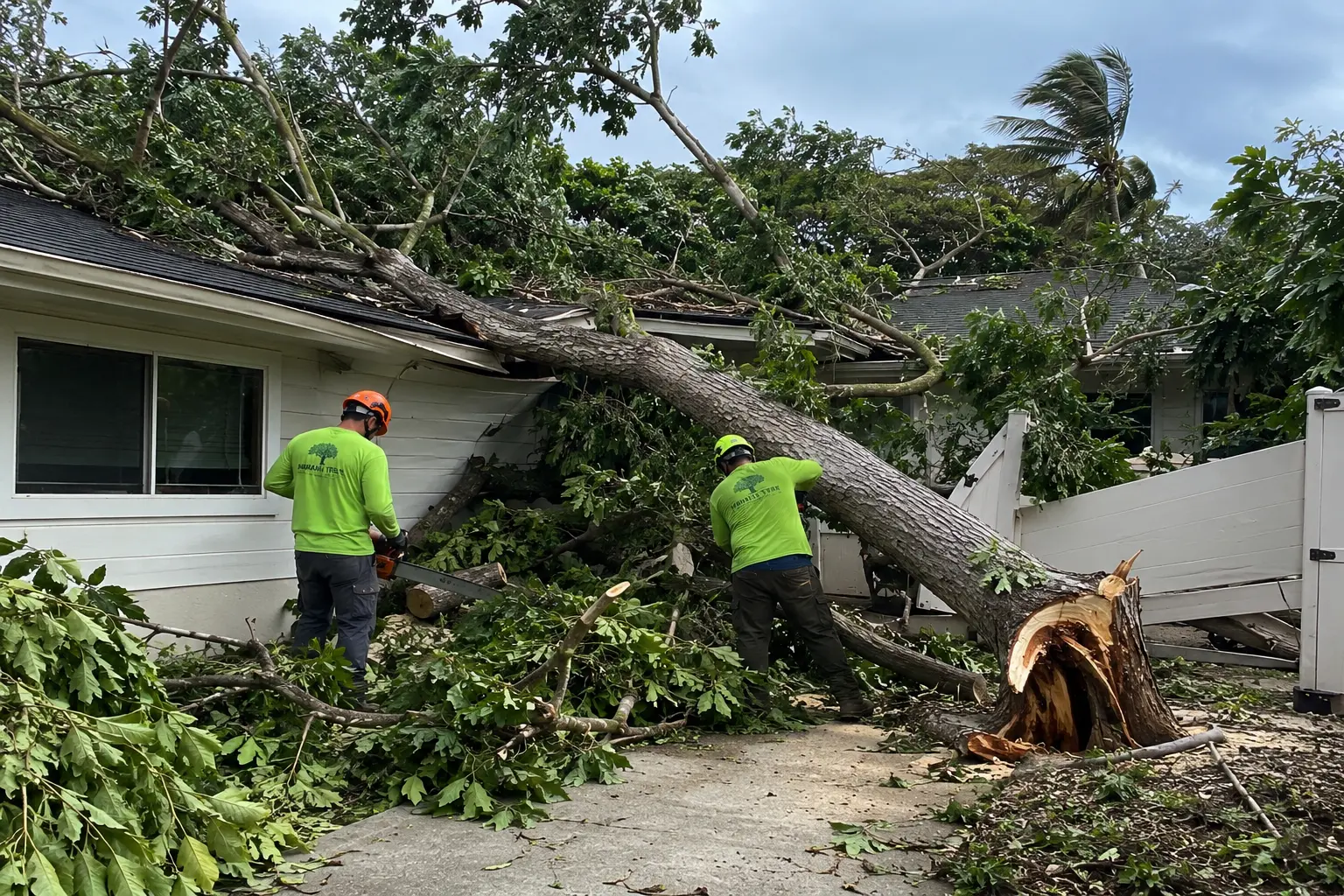
Legacy Trees Down on Homes
A large, aging monkeypod in the old town core can fail across a roofline or property line with real force given its size. See Fallen Tree Removal for how we sequence that kind of job.
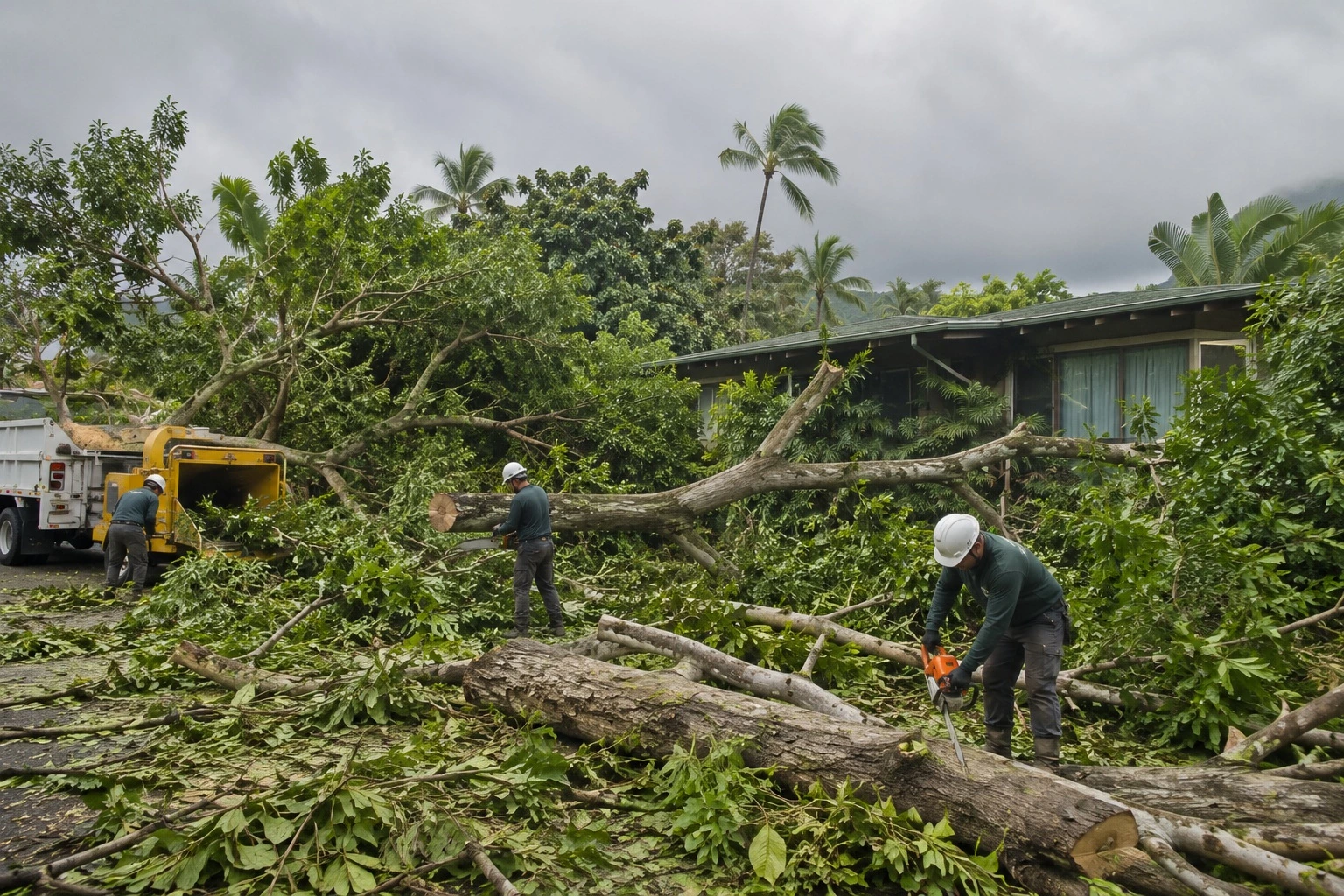
Wind-Damaged Shoreline Trees
Trees closest to Ewa Beach Park and the open coastline take the most direct wind and salt exposure in the area, often before it's noticeable a few blocks inland.
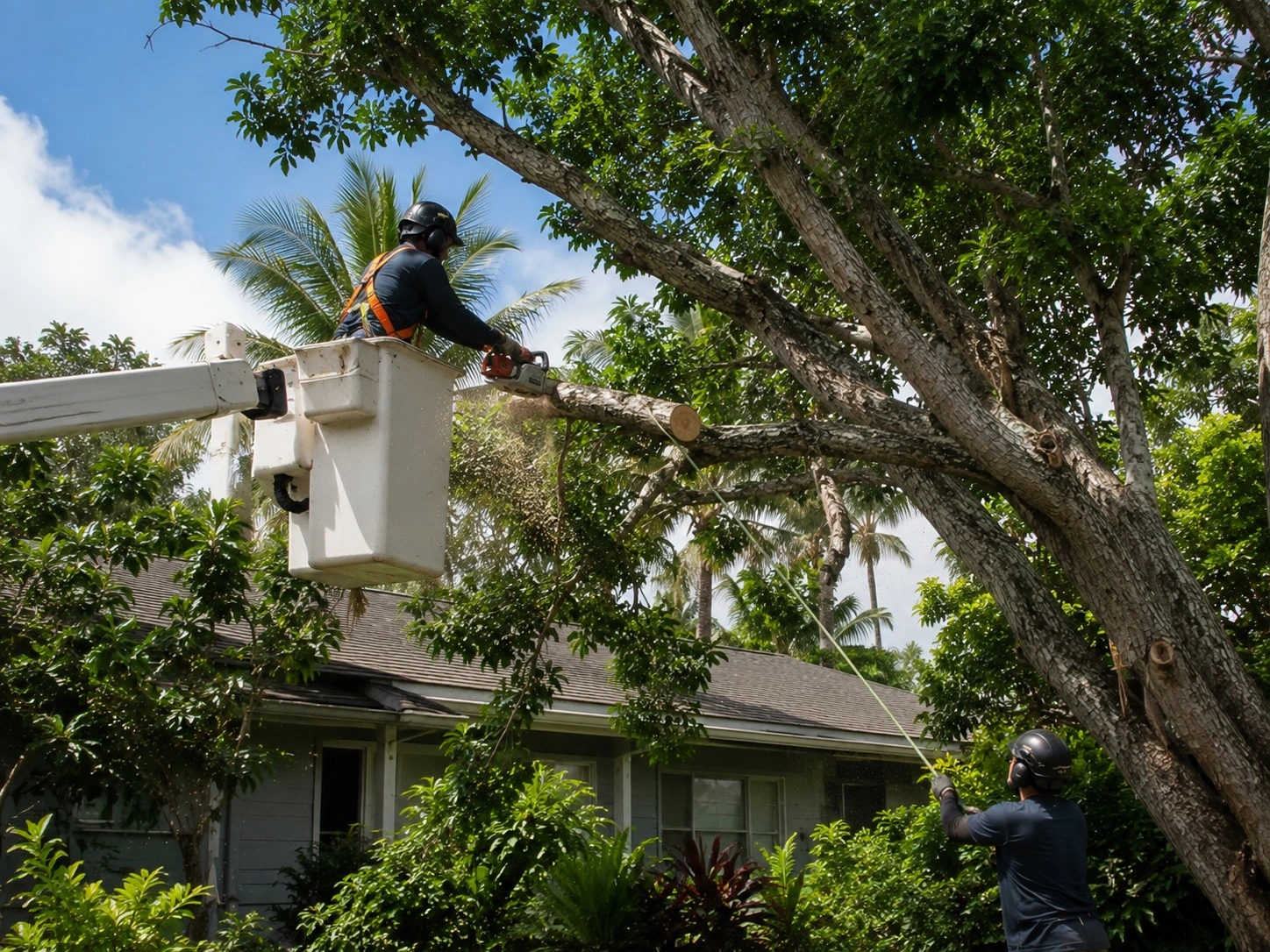
Hanging Limbs Over Older Streets
A widowmaker caught above one of the town core's narrower streets can affect several properties until it's cleared. See Tree Limb Removal for how these are prioritized.
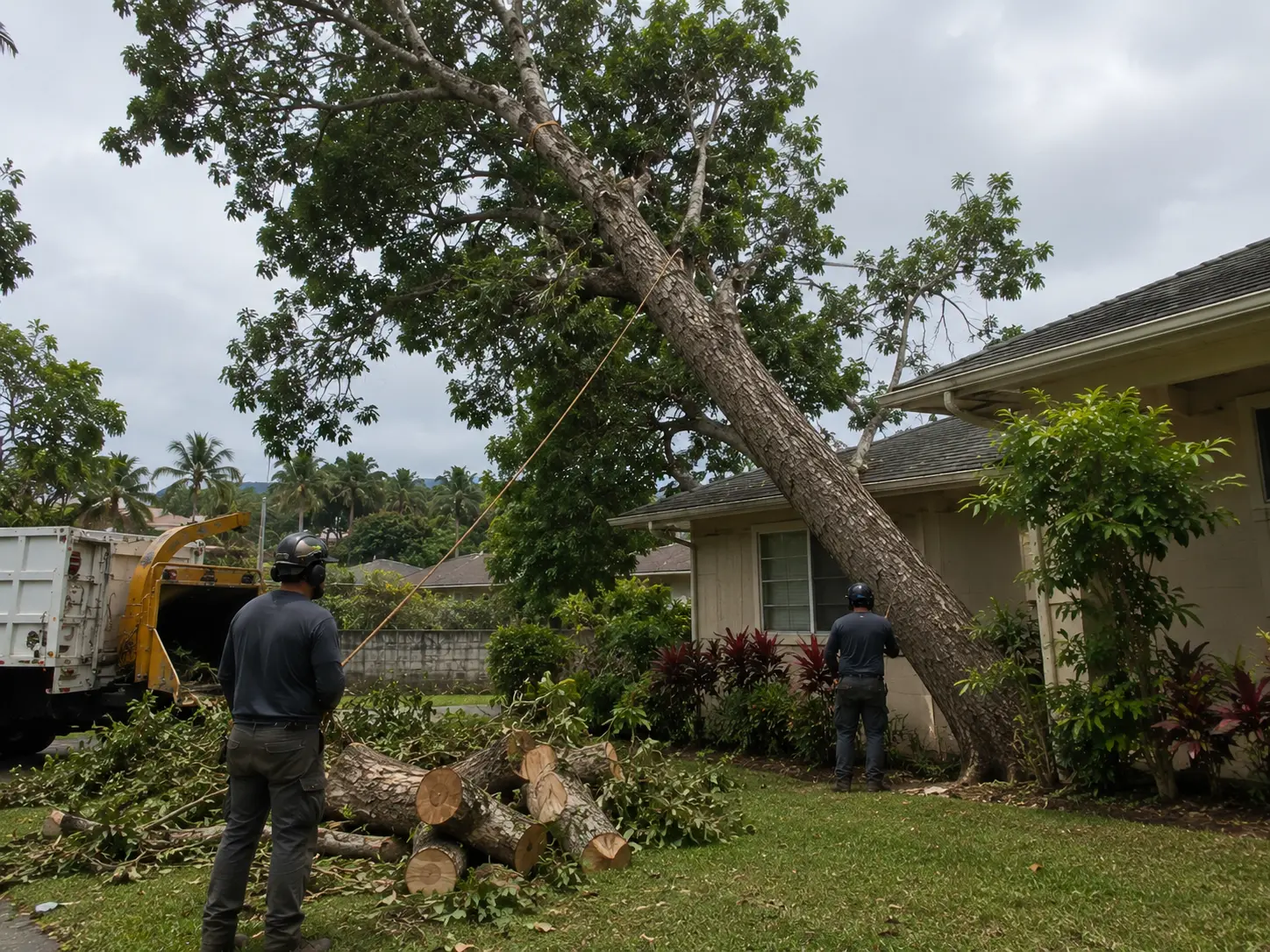
Leaning Trees Near the Canals
Filled, low-lying soil throughout Ocean Pointe can shift over time, and a tree leaning toward a canal or seawall needs a different read than one on solid inland ground. See Leaning Tree Removal.
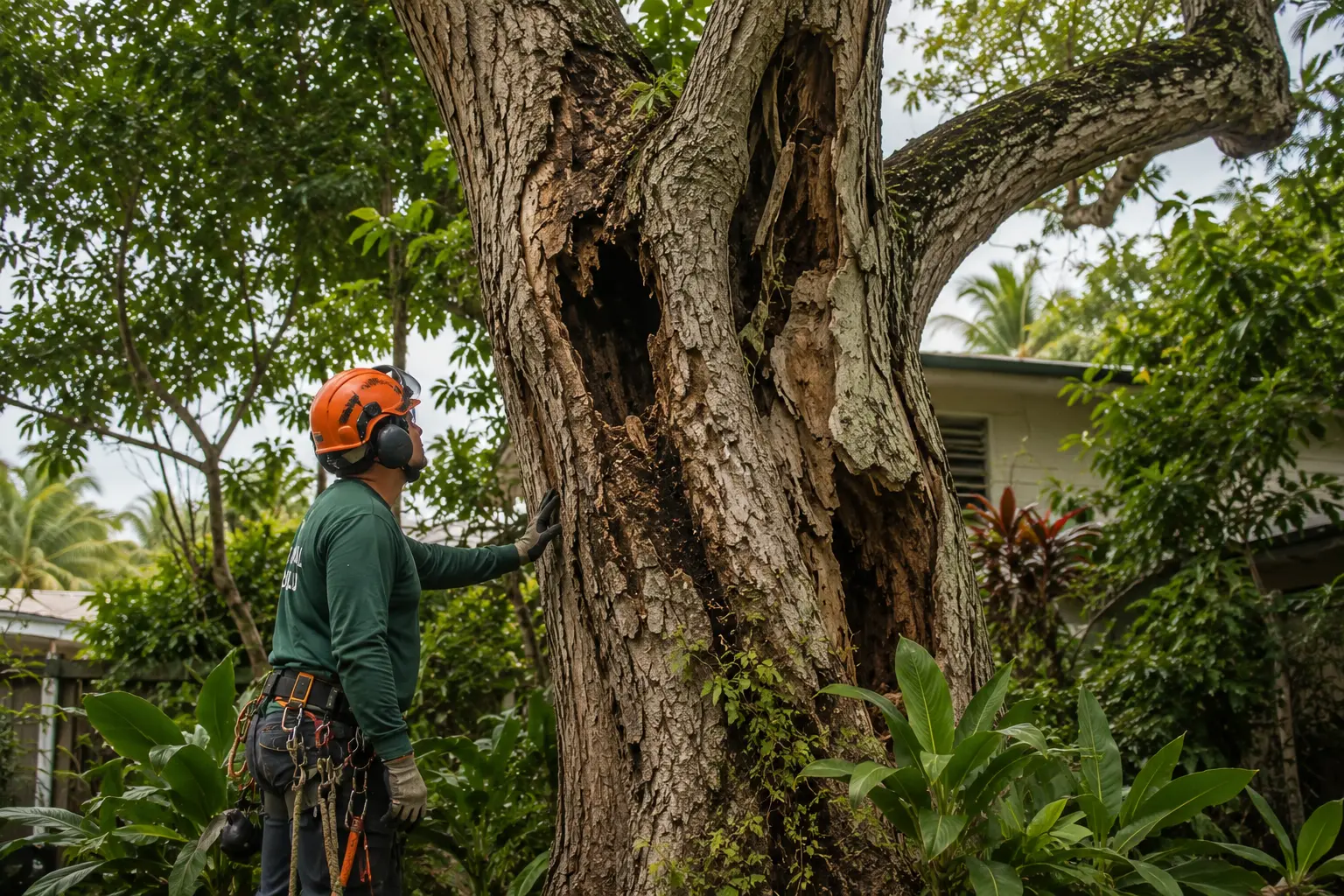
Aging Plantation-Era Trees
Decades-old monkeypod and banyan trees around the historic town sometimes carry internal decay that isn't visible from the yard despite an otherwise healthy-looking canopy. See Hazardous Tree Removal.
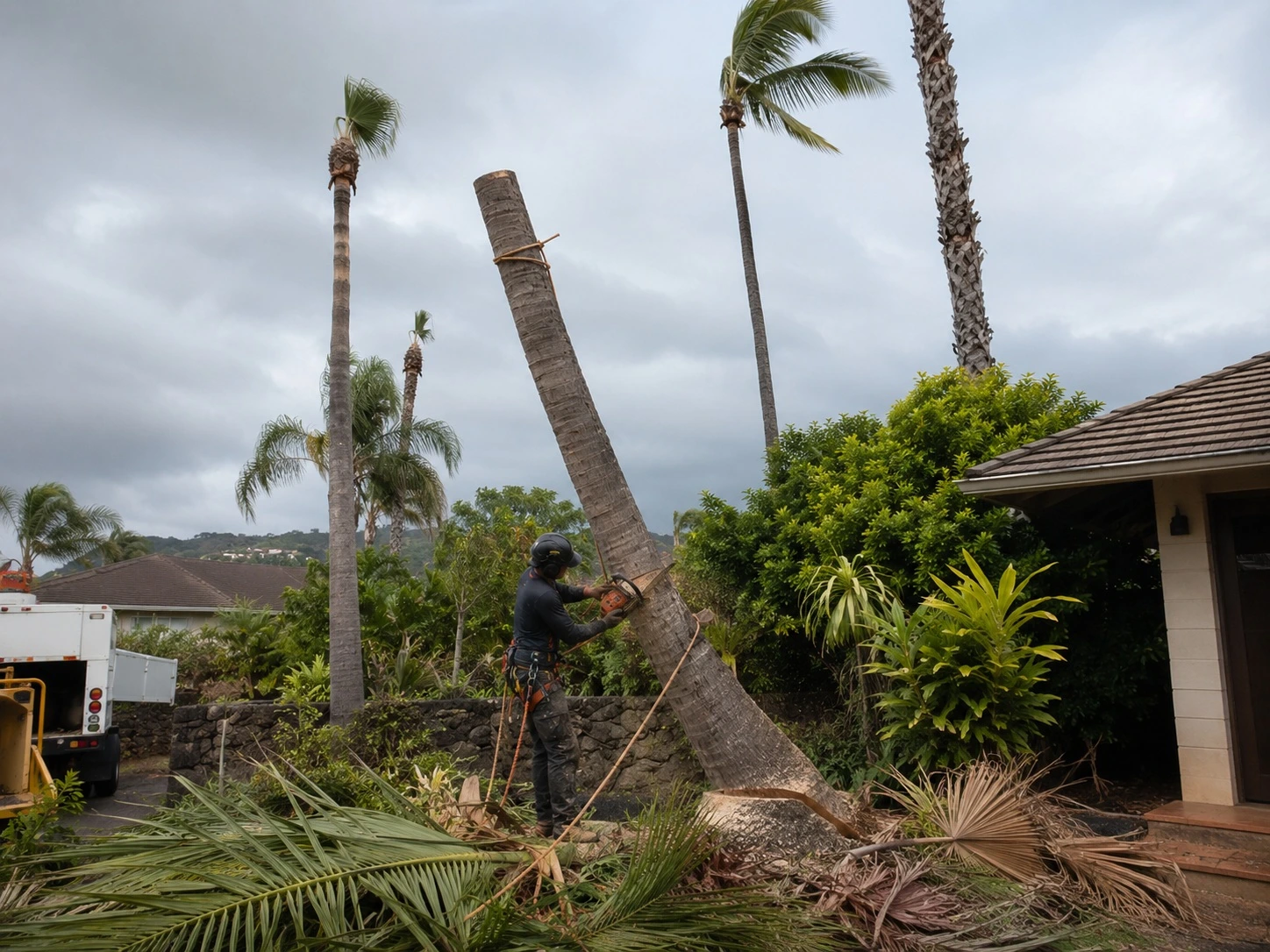
Palm Emergencies Along the Shoreline
Coconut and ironwood-adjacent palms near Ewa Beach Park and the coastline can drop fronds or coconuts onto walkways and parked cars below. See Palm Tree Removal for routine and emergency handling.
How wind and weather move through Ewa Beach
Sitting on the flat, leeward southwest coast gives Ewa Beach a weather pattern shaped by both dry inland air and direct oceanfront exposure.
Leeward Dryness
Like the rest of the Ewa Plain, Ewa Beach sits in the rain shadow of the Waianae range and receives far less annual rainfall than windward or upland Oahu, leaving trees more prone to drought stress than root-loosening rain.
Direct Shoreline Salt Exposure
Trees along Ewa Beach Park and the open coastline take steady salt spray off the water, which can stress foliage and shorten the lifespan of species not suited to it faster than the same tree would decline further inland.
Flat-Plain Wind Exposure
With open, low-lying terrain across much of the area, wind moves through Ewa Beach with little to slow it down, similar to the broader Ewa Plain, putting steady pressure on tall or exposed trees.
Canal & Fill-Soil Conditions
Ocean Pointe's canal-front lots sit on filled coastal land that behaves differently under saturation and wind than the natural soil found in the older town core or newer inland subdivisions.
Species we see most often across Ewa Beach
A plantation history alongside newer coastal and golf course development has left Ewa Beach with a distinct mix of species, and each comes with its own failure pattern.
Monkeypod & Banyan
The signature legacy species of the historic town core, planted generations ago and now large enough to shade multiple properties at once.
Ironwood
Common along the shoreline and Ewa Beach Park, valued for its salt tolerance but shallow-rooted enough to lean or uproot once ground conditions shift.
Coconut Palms
Planted throughout the coastal and canal-front neighborhoods, requiring the same species-specific removal approach as any palm on the island regardless of how well-kept they look.
Working across Ewa Beach's mix of old and new
Few communities on Oahu pair a century-old plantation core with brand-new canal-front development quite like Ewa Beach, and that mix shapes how a job gets staged.
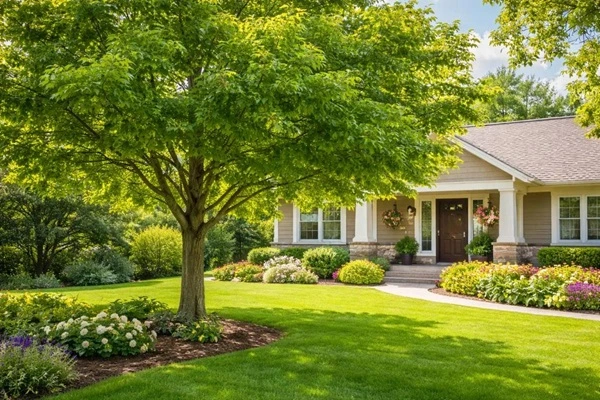
Plantation-era homes, waterfront lots, and master-planned streets
The historic town core carries older single-family homes with legacy trees that have long outgrown their original planting space, while Ocean Pointe's canal-front lots bring seawalls and filled soil into the equation. Newer communities like Ewa by Gentry, Laulani, and the Fairways at West Loch add HOA-governed common areas and younger, still-establishing landscaping into the mix, and Iroquois Point's Navy housing follows its own access process entirely.
Whatever the property type, the same on-site assessment applies first: confirming access, checking the ground the tree is rooted in, and building a plan around that lot's specific constraints rather than a one-size approach. For a full property removal beyond an emergency situation, see tree removal.
Our response process in Ewa Beach
Historic town, canal-front lot, or Navy housing, the logistics change, not the standard of care.
Call or Request
Tell us your neighborhood and what's happening, by phone or through the estimate form.
Access & Hazard Check
We factor in seawalls, base coordination, and legacy tree size before a crew arrives.
Written Estimate
A clear, itemized estimate based on the on-site assessment, before any work begins.
Careful Removal
Rigging planned around close neighbors, canals, and shared fence lines.
Cleanup
Debris cleared so driveways, docks, and shared access are usable again.
A crew that already knows Ewa Beach's legacy trees and canals
A century-old monkeypod in the historic town core and a canal-front palm in Ocean Pointe both get the same careful assessment before a single cut is made.
Every crew member is trained, and every job is backed by full insurance coverage.
Crews who already know the legacy trees, canal-front lots, and base housing common across Ewa Beach.
A written estimate after an on-site visit, with no hidden fees added later.
The same team behind Emergency Tree Removal Honolulu covers every Ewa Beach neighborhood.
We also serve the areas surrounding Ewa Beach
If your property is outside Ewa Beach, we cover the rest of Oʻahu as well. View all service areas →
Ewa Beach questions before you call
How quickly can a crew reach Ewa Beach from Honolulu?
Response depends on the hazard and traffic along Fort Weaver Road and the H-1 corridor, but active emergencies like a tree on a structure or blocking a road are prioritized ahead of routine visits. Call to describe the situation and a crew will advise on realistic timing for your part of Ewa Beach.
Does Old Ewa Beach have larger, older trees than the newer subdivisions?
Yes. The original plantation-era streets around town have mature monkeypod and banyan trees planted many decades ago, some large enough to overhang multiple properties. Newer communities like Ocean Pointe, Ewa by Gentry, and Laulani were built more recently and generally have younger, smaller landscaping trees still establishing themselves.
Do canal-front lots in Ocean Pointe need a different approach?
Often, yes. Homes along Ocean Pointe's canals and marina sit on filled, low-lying land, and a tree rooted close to a seawall or canal bank can anchor differently than one in typical yard soil. We assess the ground a tree is rooted in as part of every canal-front estimate.
Can you work on properties within Iroquois Point's military housing?
We coordinate with base or property management processes for work on Iroquois Point and other Navy-managed housing, since access and scheduling on federal property often follow a different process than a typical residential call. Reach out and we can walk through what that coordination looks like for your situation.
Is Ewa Beach's coastal air harder on trees than inland Ewa?
Trees directly along the shoreline and Ewa Beach Park deal with more salt spray than those a mile or two inland in Laulani or Ewa by Gentry, which can stress foliage and accelerate decline in species not suited to it, on top of the dry, leeward climate common across the wider Ewa area.
What trees cause the most emergency calls in Ewa Beach?
Legacy monkeypod and banyan trees in the older plantation-era core, along with ironwood and coconut palms near the shoreline, are behind most emergency calls here, whether from large limbs failing under their own weight or fronds and coconuts dropping near the beach park and oceanfront homes.
Is emergency tree service available throughout all of Ewa Beach?
Yes. Coverage extends across Ewa Beach, Ocean Pointe, Ewa by Gentry, Laulani, Iroquois Point, Fairways at West Loch, and Ewa Villages.
Do you offer free estimates for Ewa Beach properties?
Yes. A free, no-obligation estimate can be requested through the form below or by phone, followed by an on-site assessment to confirm the scope of work.
Request a free estimate in Ewa Beach
Tell us your neighborhood and what's happening, a fallen tree, a hanging limb, storm damage, or a hazardous palm, and a crew will follow up to confirm timing and, if needed, arrange an on-site assessment.