Emergency Tree Removal Pearl City | 24/7 Emergency Tree Service
When a tree comes down near the Pearl City Shopping Center, a limb lets go over a backyard in Momilani, or a trunk starts leaning toward a home in Pearl City Highlands, you need an Emergency Tree Service Pearl City team that treats every fallen tree, wind-damaged tree, and hazardous tree assessment with real urgency, not as a routine service call.
Call to describe what's happening near Pearl City, a fallen tree, a leaning trunk, a limb caught overhead, and we'll advise on next steps and timing.
Prefer to write it out? Request a free estimateCrews respond to fallen and hazardous trees in Pearl City as quickly as conditions allow.
Every emergency arborist visit starts with an in-person evaluation, not a phone quote.
Trees in contact with power lines are coordinated with the utility company first.
Debris, limbs, and wood from fallen or storm damaged trees are cleared before the crew leaves.
Written, no-obligation estimates after every hazardous tree assessment.
Emergency tree removal built for Pearl City's hillside streets and older neighborhoods
Pearl City is spread across a mix of terrain, from the flatter streets near the Pearl City Shopping Center and Pearl Harbor waterfront up into the sloped, tree-lined neighborhoods of Pearl City Highlands, Momilani, and Waimano Home Road. Many of these residential streets were developed decades ago, and the shade trees planted along them, monkeypod, mango, and various eucalyptus and ironwood varieties, have grown large enough that root systems and canopy weight are now real factors on tighter suburban lots. A hillside property near Pearl City Highlands may have a leaning tree with a fall path toward a lower neighbor's roof, while a flatter lot near Waiau or the shopping center is more likely dealing with a storm-damaged street tree close to a driveway. Either way, when a tree is down, leaning, or holding a broken limb overhead, the same on-site assessment applies before any cutting begins.
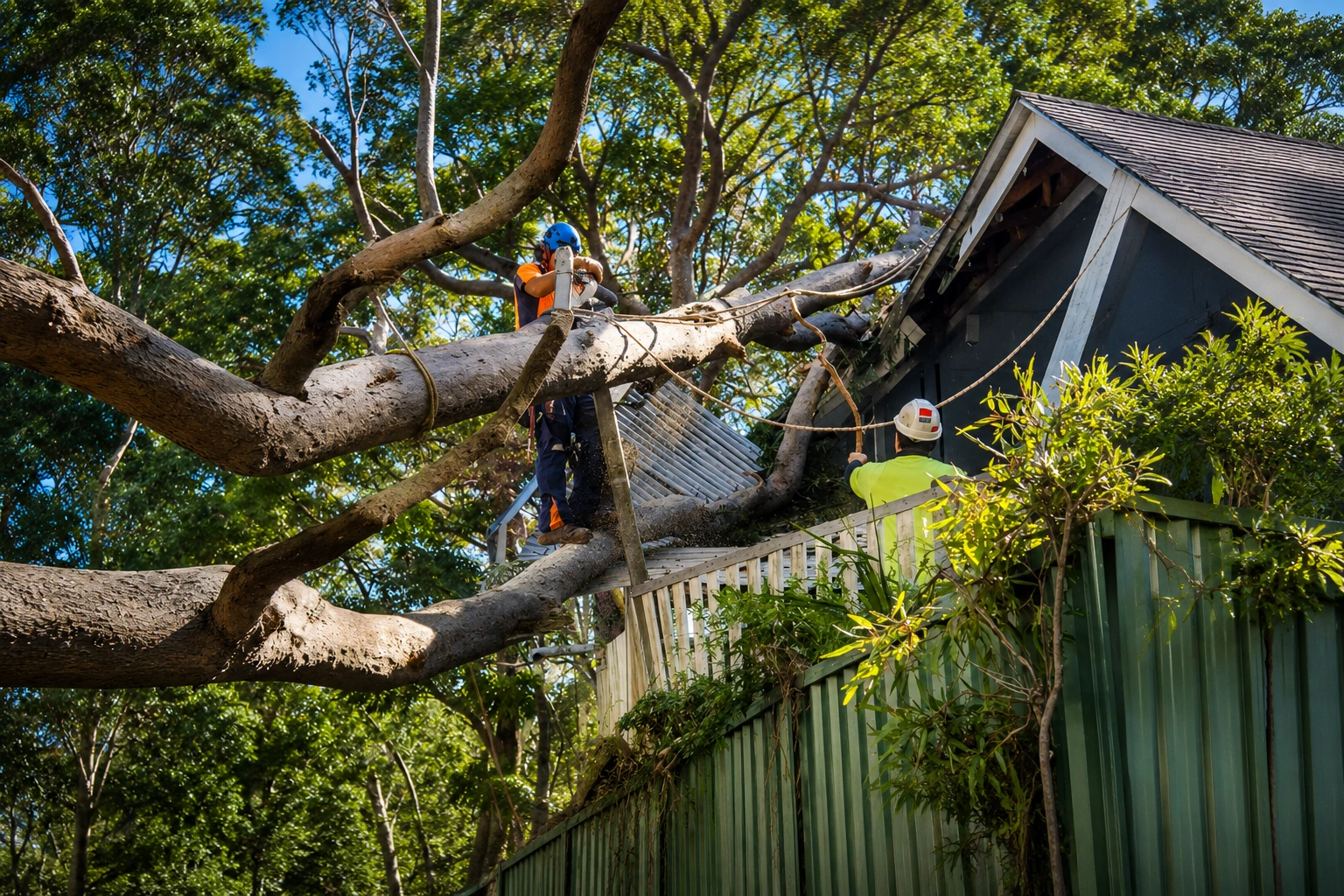
Tree Removal in Pearl City
Not every tree problem near Pearl City is an emergency, but when a tree has been assessed and cleared for full removal, doing it correctly protects everything around it, including retaining walls, carports, and the sloped yards common in the Highlands and Momilani areas. Every job starts with an evaluation of the tree's lean, trunk condition, and proximity to structures, fences, and power lines, since that determines whether a tree can be dropped in one piece or needs to come down section by section with rope and rigging. Removal includes limb and trunk clearing, full debris haul-away, and stump grinding if you'd like the job finished completely.
Learn More About Tree Removal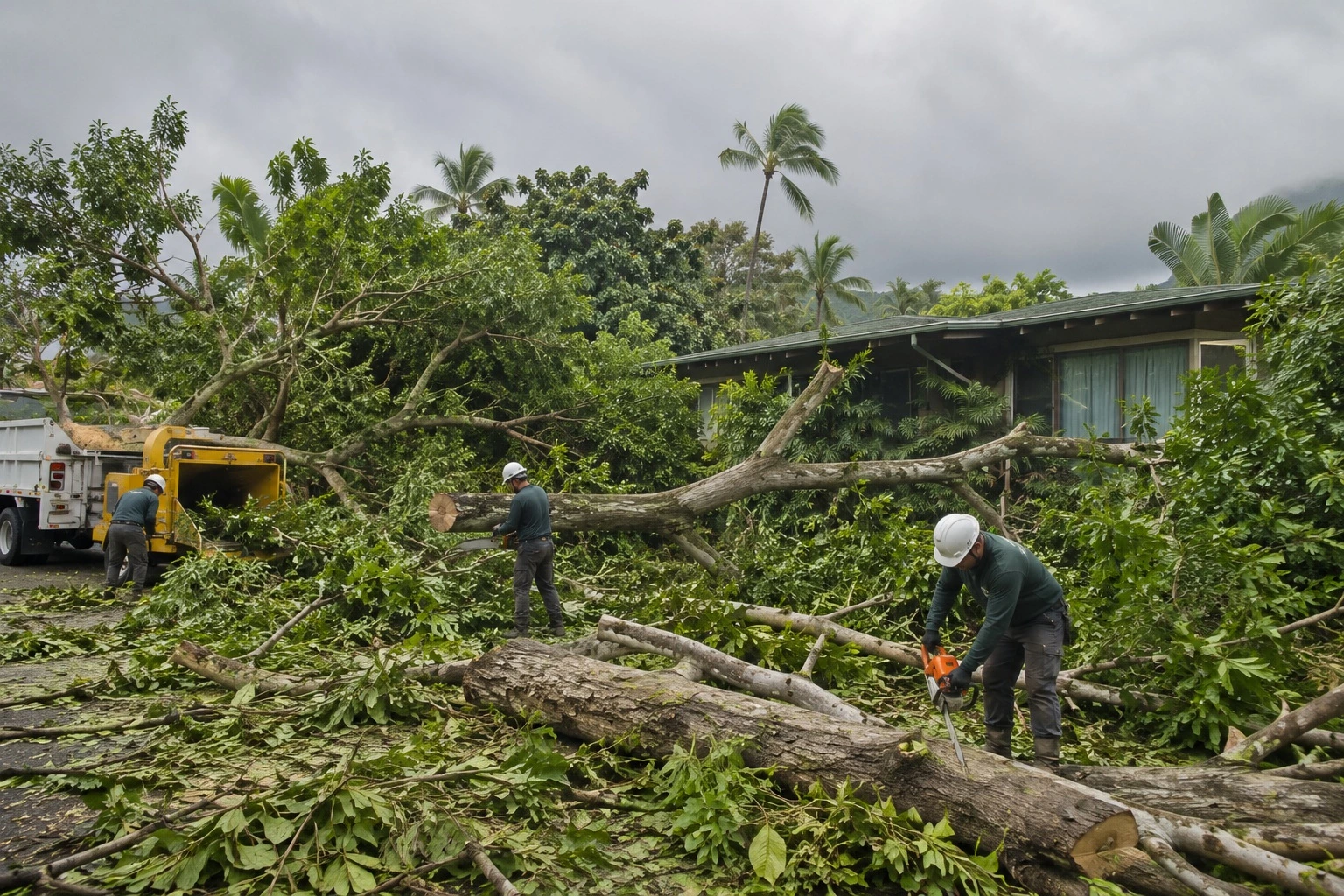
Storm Tree Removal Near Pearl City
Pearl City's hillside neighborhoods can see heavier rain runoff than the flatter parts of town, which loosens root systems on trees planted along sloped streets in Momilani and the Highlands. Storm tree removal covers trees and limbs brought down by wind and rain, including trees weakened by saturated ground on retaining slopes. Because storm damage on a hillside property often affects more than one tree at once, this service starts with a full-property assessment, followed by coordinated removal and cleanup.
Learn More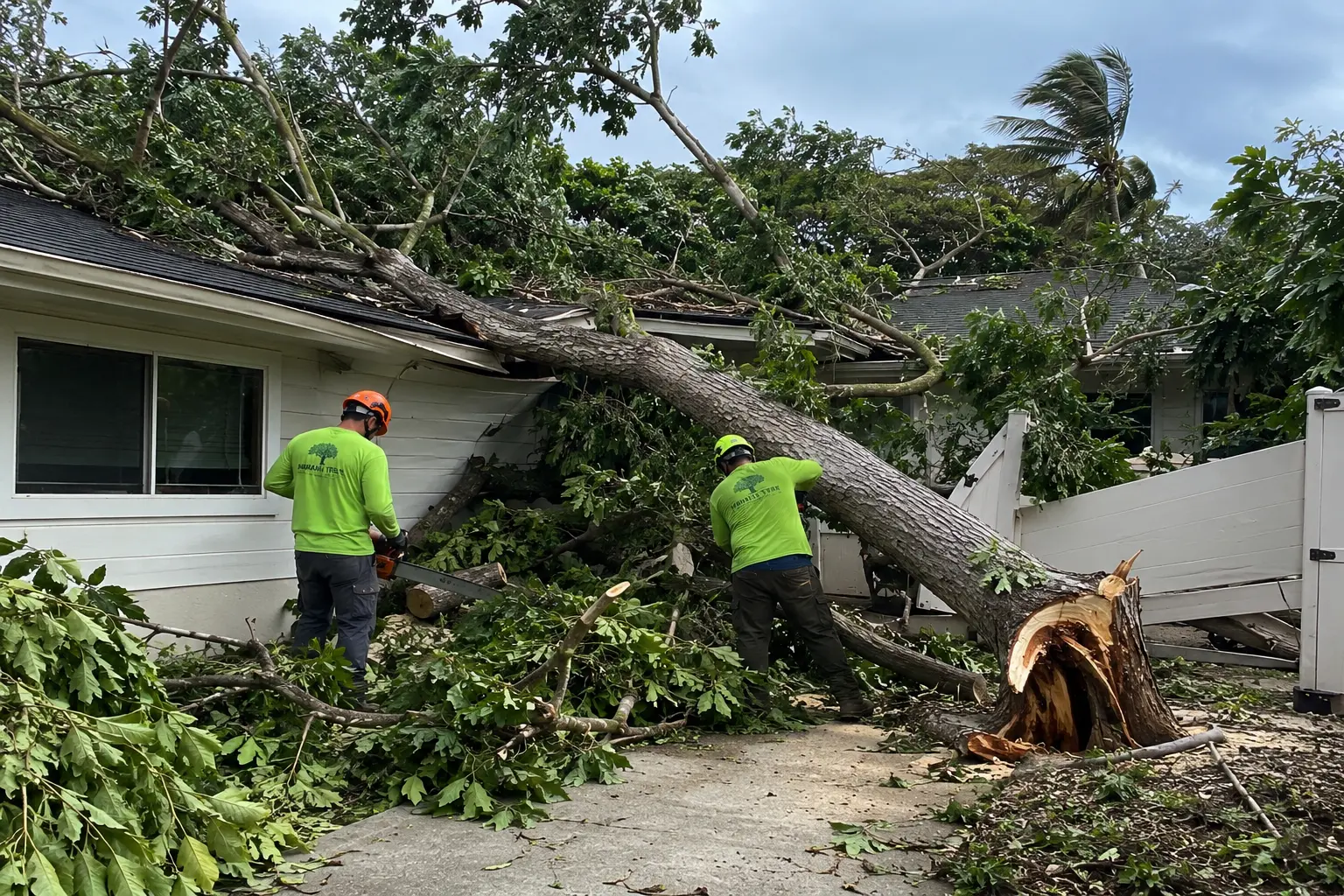
Fallen Tree Removal
A tree that comes down across a driveway, a carport, or a retaining wall on a sloped Pearl City lot needs to be approached carefully, since grade and gravity both affect how it's cut apart. Fallen tree removal starts by identifying where the weight and tension actually sit, then removes sections in a controlled order to avoid further damage to the property or anything it's resting against.
Learn More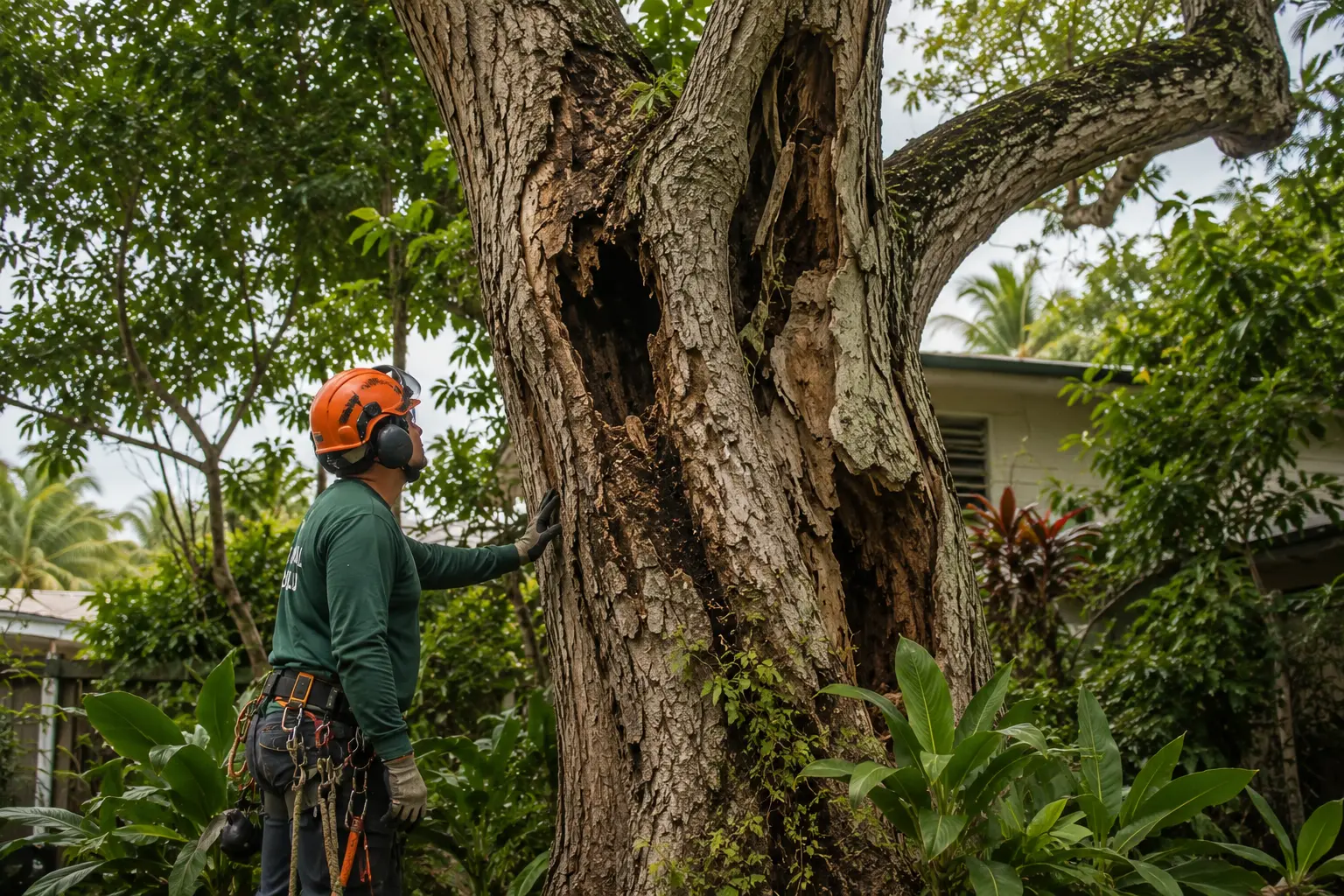
Hazardous Tree Removal
Older street trees throughout Pearl City Highlands and Momilani have often been in the ground since the neighborhoods were first developed, which means trunk cracks, base cavities, or fungal growth can develop without being obvious from the street. Hazardous tree removal is built around a proper on-site assessment before any removal decision is made, since some trees can be stabilized rather than taken down.
Learn More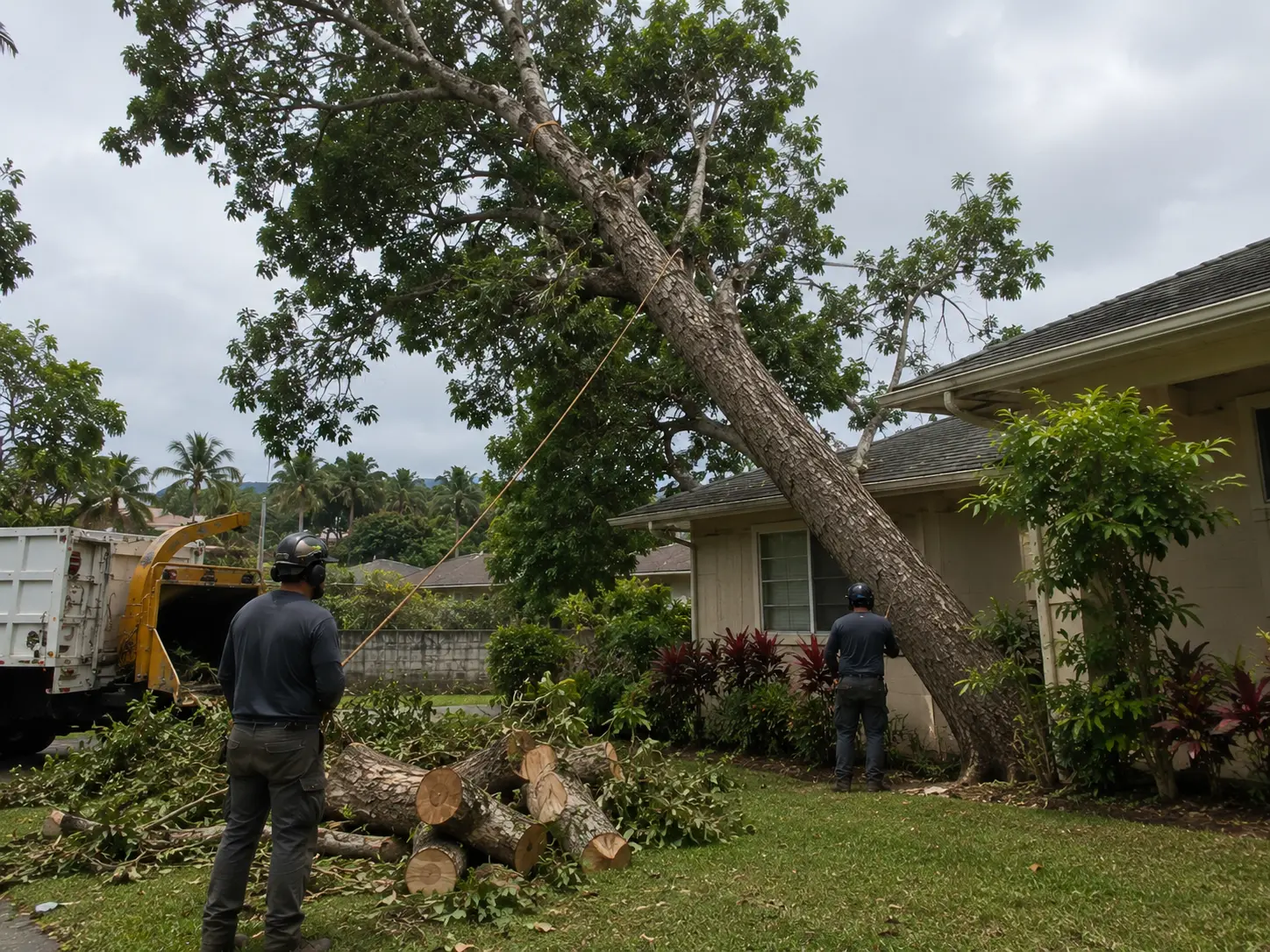
Leaning Tree Removal
A tree that starts leaning after heavy rain is telling you something has already failed underground or within the trunk. On the sloped streets around Waimano Home Road and the Highlands, a leaning tree's fall path often runs downhill toward a lower neighbor's property rather than staying on the original lot. Leaning tree removal treats this as an active hazard, with rigging suited to the direction and degree of the lean.
Learn More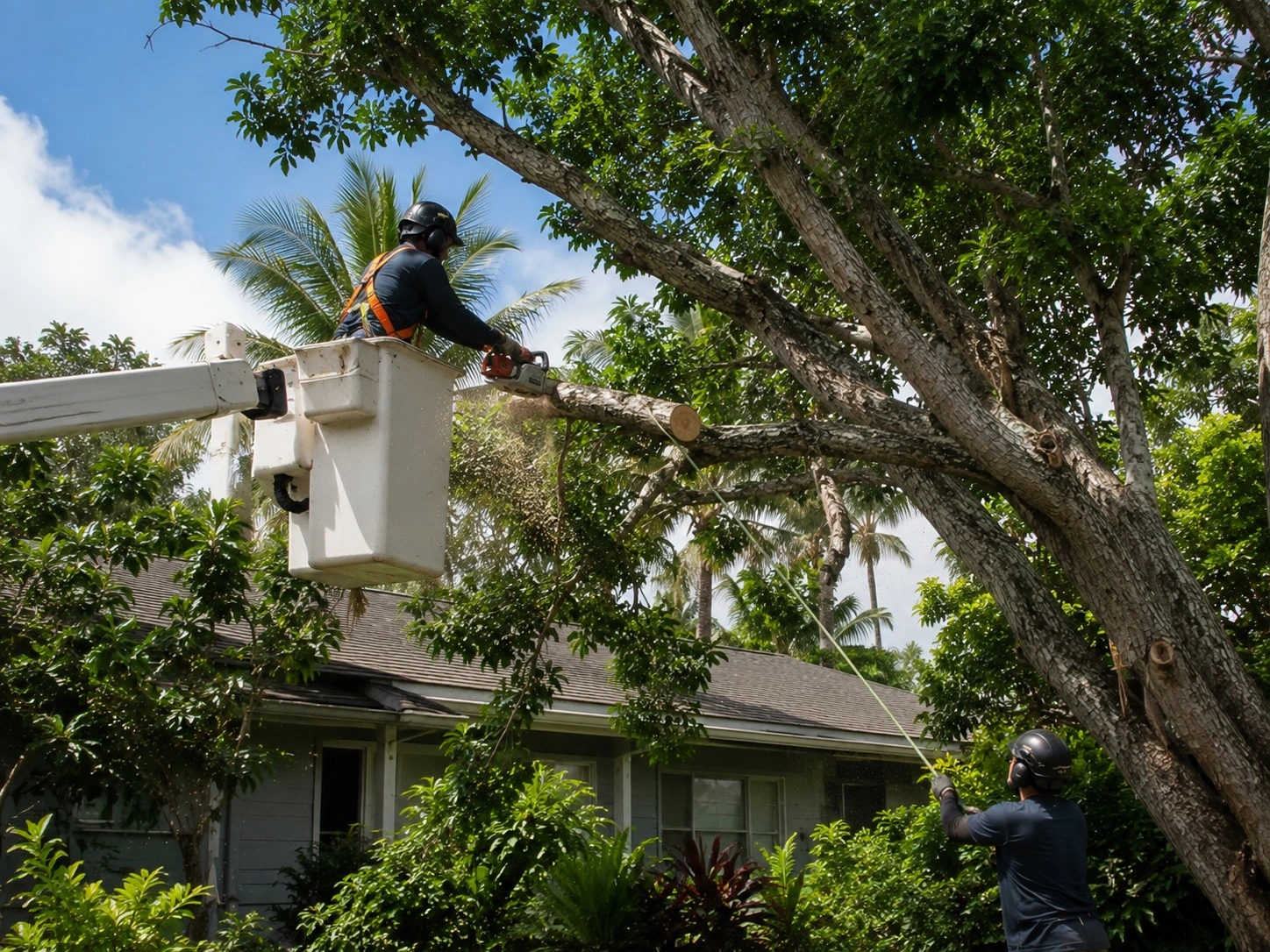
Tree Limb Removal
Large shade trees found throughout Momilani and near Pearl City District Park can hold a broken limb in the canopy for days before it lets go. Tree limb removal addresses storm-broken branches still tangled overhead and limbs cracked at the trunk but not fully separated, using rope and rigging to bring them down in a controlled way rather than letting gravity decide.
Learn More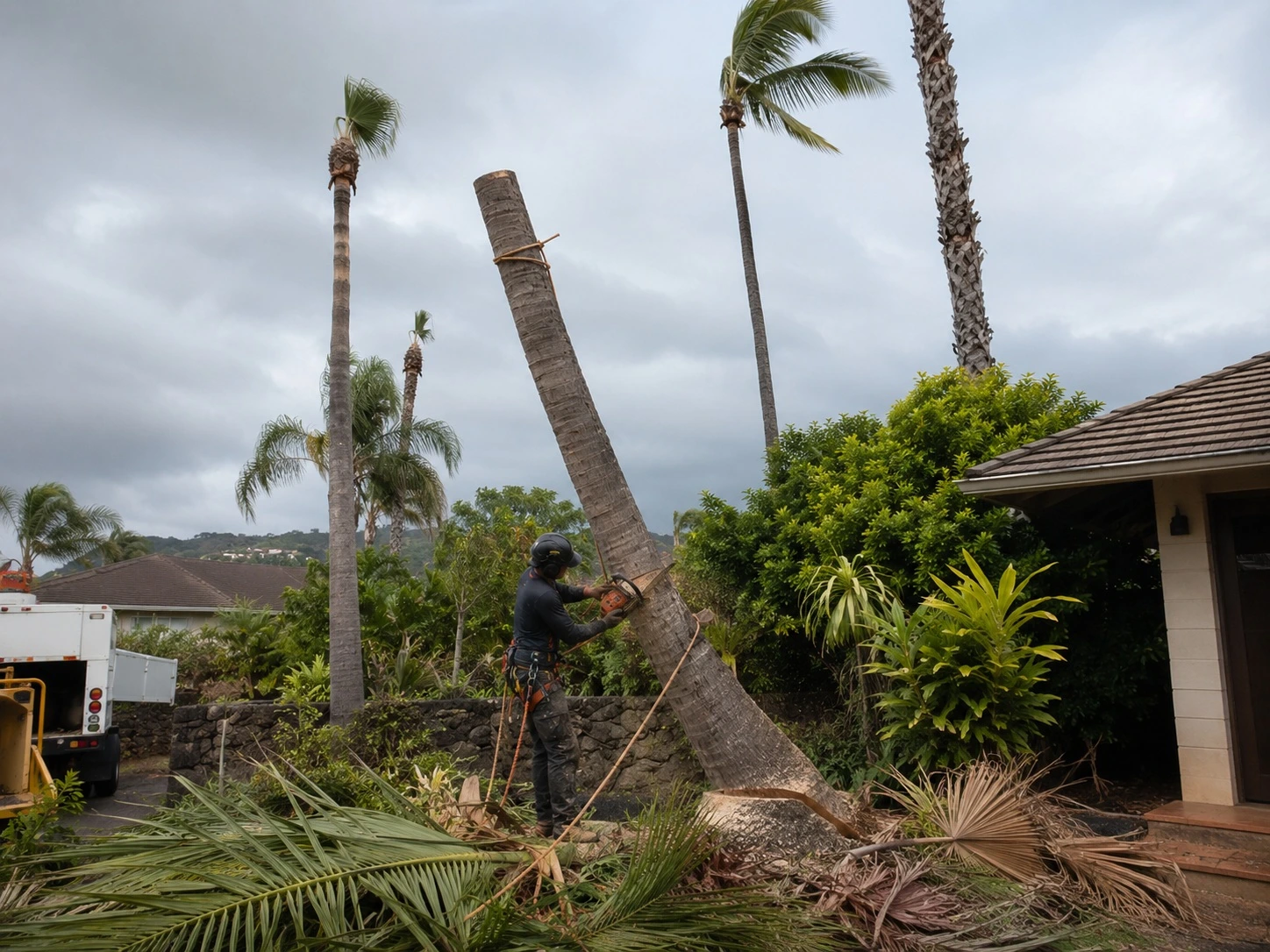
Palm Tree Removal
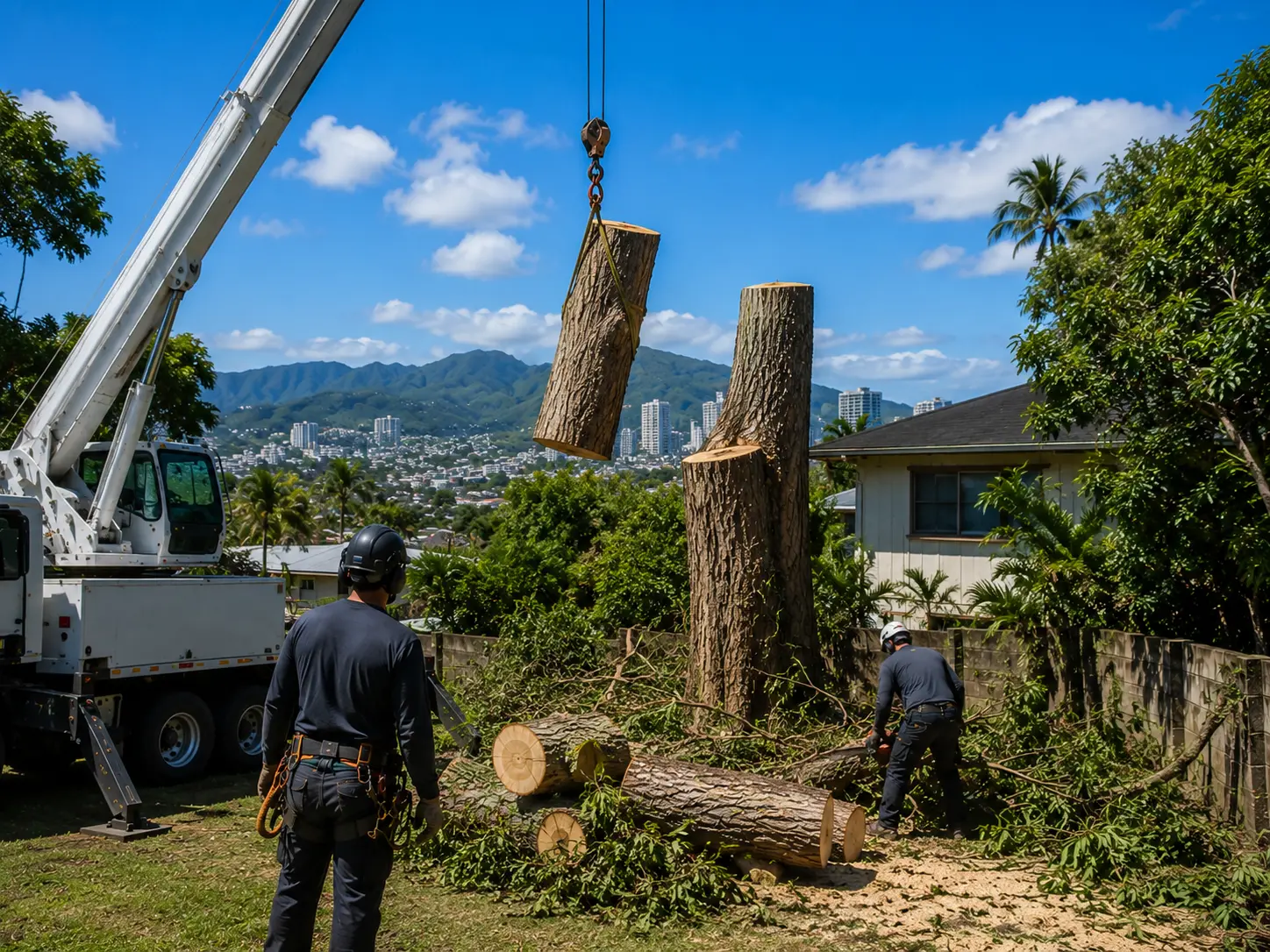
Palms are common as accent plantings around Pearl City yards and along streets near the shopping center, and a leaning or storm-damaged palm can fail quickly with no branching structure to slow it down. Palm tree removal covers leaning, storm-damaged, and declining palms, including taller specimen palms that may need crane assistance near homes or power lines, with extra care around coconut palms.
Learn MoreWhy Pearl City's hillside terrain changes how a tree emergency is handled
A tree that has already fallen, is actively leaning, or is caught on a slope behaves differently than a tree being trimmed on flat, open ground. In Pearl City, grade plays a real role: a tree on a hillside lot in the Highlands or Momilani can gain momentum downhill, and its fall path may extend well past the property line onto a neighbor's yard, driveway, or retaining wall.
Rushing this kind of work, or attempting it without the right rigging, is how secondary damage happens on a slope, whether that's a cracked retaining wall, a damaged carport, or harm to a downhill neighbor's property near Waimano Home Road or Komo Mai Drive.
- An increasing lean or a trunk that has visibly shifted since a storm
- Fungal growth at the base, often a sign of root or trunk decay
- A hanging limb caught in the canopy rather than resting on the ground
- Cracks, splits, or hollow sections anywhere along the trunk
That's why an on-site hazardous tree assessment comes first, every time: understanding the lean, the load, the slope, and the surroundings before any cutting begins.
From your call to a cleared Pearl City property
The same process applies whether it's a single fallen tree near the shopping center or storm damage spread across a sloped lot in the Highlands.
Call or Request
Describe the situation by phone or through the estimate form, including what's damaged and how it's positioned.
Hazard Assessment
A crew evaluates the tree, the lean, and the surroundings in person before recommending a course of action.
Written Estimate
A clear, itemized estimate is provided based on that assessment before any work begins.
Safe Removal
The tree or limb is removed with rigging suited to its lean, weight, and position.
Cleanup
Debris, limbs, and wood are cleared so the property is usable again.
If it feels urgent, it probably is
Each of these situations carries its own risks and its own wrong instinct. Here's what's actually happening in each one, and how emergency tree removal near Pearl City addresses it.
A tree has fallen on a sloped lot
When a tree comes down on a hillside street in Pearl City Highlands or Momilani, the danger doesn't end once it stops moving. Fallen trees can still be under tension from branches bent beneath the trunk or from the slope itself, and cutting into the wrong spot can cause a sudden shift downhill. Avoid climbing on or under a fallen tree. Emergency tree removal starts by identifying where the load is concentrated, then removes the tree in sections that won't cause it to move unexpectedly.
See Fallen Tree Removal →A tree is leaning downhill
A tree that starts leaning after heavy rain near Pearl City is telling you something has already failed underground, not something that might fail later. On sloped lots, the lean typically points downhill toward a lower neighbor's property. Avoid trying to prop or straighten a leaning tree yourself. A crew assesses the cause of the lean, then removes the tree in a controlled direction using proper rigging.
See Leaning Tree Removal →A limb is hanging over a driveway
A broken limb caught in the canopy above a driveway or carport, sometimes called a widowmaker, can look stable for days and then release without warning. This is common under the larger shade trees found throughout Momilani and near Pearl City District Park. Avoid the area beneath it and don't attempt to knock it down. Emergency tree limb removal uses rope and rigging to bring it down in a controlled way instead.
See Tree Limb Removal →Storm damage across a hillside property
A single storm can leave a Pearl City property with several problems at once: a downed limb near the carport, a leaning tree above a retaining wall, and debris scattered across a sloped yard. Storm tree removal starts with a full walk-through of the property so every hazard is identified before cleanup, then cleared in one coordinated visit.
See Storm Tree Removal →A tree looks structurally unsound
Not every hazard announces itself with a fallen branch. Cracks running up the trunk, cavities at the base, or fungal growth near the root flare can indicate a tree failing from the inside, especially on some of Pearl City's older, established streets. A hazardous tree assessment looks at the trunk, canopy, and root zone together.
See Hazardous Tree Removal →A palm near a driveway or yard is damaged
Palms are common as accent trees in Pearl City yards, and a leaning or storm-damaged palm can fail quickly without a branching structure to slow it down. Avoid standing beneath a damaged palm. Emergency palm tree removal uses species-specific rigging, including crane assistance for taller specimens near buildings.
See Palm Tree Removal →Emergency tree service around Pearl City
In addition to Pearl City itself, the same crew covers the surrounding Oʻahu communities, from Aiea and Waipahu to Mililani and the broader central corridor.
Common questions from Pearl City property owners
Do you handle trees on sloped or hillside lots?
Yes. Many Pearl City Highlands and Momilani properties sit on graded or sloped lots, which changes how a tree's fall path and rigging are planned. The same on-site assessment applies, with extra attention paid to grade and downhill neighbors.
What should I do if a limb is hanging over my driveway?
Keep people and vehicles away from the area beneath it and avoid attempting to knock it down yourself. Call to describe the situation, and a crew can advise on timing before arranging a controlled removal.
Is emergency tree removal near Pearl City covered by insurance?
Coverage depends on your specific policy and the cause of the damage. Trees that fall during a storm and damage a covered structure are often eligible for a claim, while routine removal of a healthy tree typically is not. Check with your provider for details.
Do I need a permit to remove a tree near Pearl City?
The City and County of Honolulu regulates removal of certain protected and exceptional trees, even on private property. Requirements vary by species, size, and location, so it's worth confirming with the local permitting office or an arborist beforehand.
How much does emergency tree removal cost in Pearl City?
Cost depends on the tree's size, condition, accessibility, and proximity to structures or power lines, along with slope and access on hillside lots. A written estimate after an on-site assessment is the only reliable way to know cost for a specific situation.
Do you offer free estimates for Pearl City properties?
Yes. A free, no-obligation estimate can be requested through the form below or by phone, followed by an on-site assessment to confirm the scope of work.
Request a free estimate for Pearl City tree removal
Tell us what's happening near Pearl City, whether it's a tree emergency, a fallen tree, a leaning trunk, storm damage, or a hazardous limb, and a crew will follow up to confirm timing and, if needed, arrange an on-site assessment.