Contact Emergency Tree Removal Honolulu
Whether you have a question about a fallen tree, a hazardous tree, a leaning tree, storm damage, a hanging limb, or a palm tree emergency, get in touch below. Serving Honolulu and Oʻahu, we're here to help you understand your emergency tree situation.
Call to describe what's happening, and we'll help you understand next steps.
Prefer to write it out? Request assistanceGet in touch about any emergency tree situation
You're welcome to get in touch with questions about a fallen tree, a hazardous tree, a leaning tree, storm damage, a tree limb emergency, a palm tree emergency, or general emergency tree removal questions anywhere in Honolulu or across Oʻahu.
Every emergency is different. A fallen tree resting on a fence is a different situation than one across a driveway, and a leaning tree on a hillside carries different risk than one on flat, open ground. Providing clear details about what's happening, where it's located, and what's nearby helps us understand your situation before any follow-up.
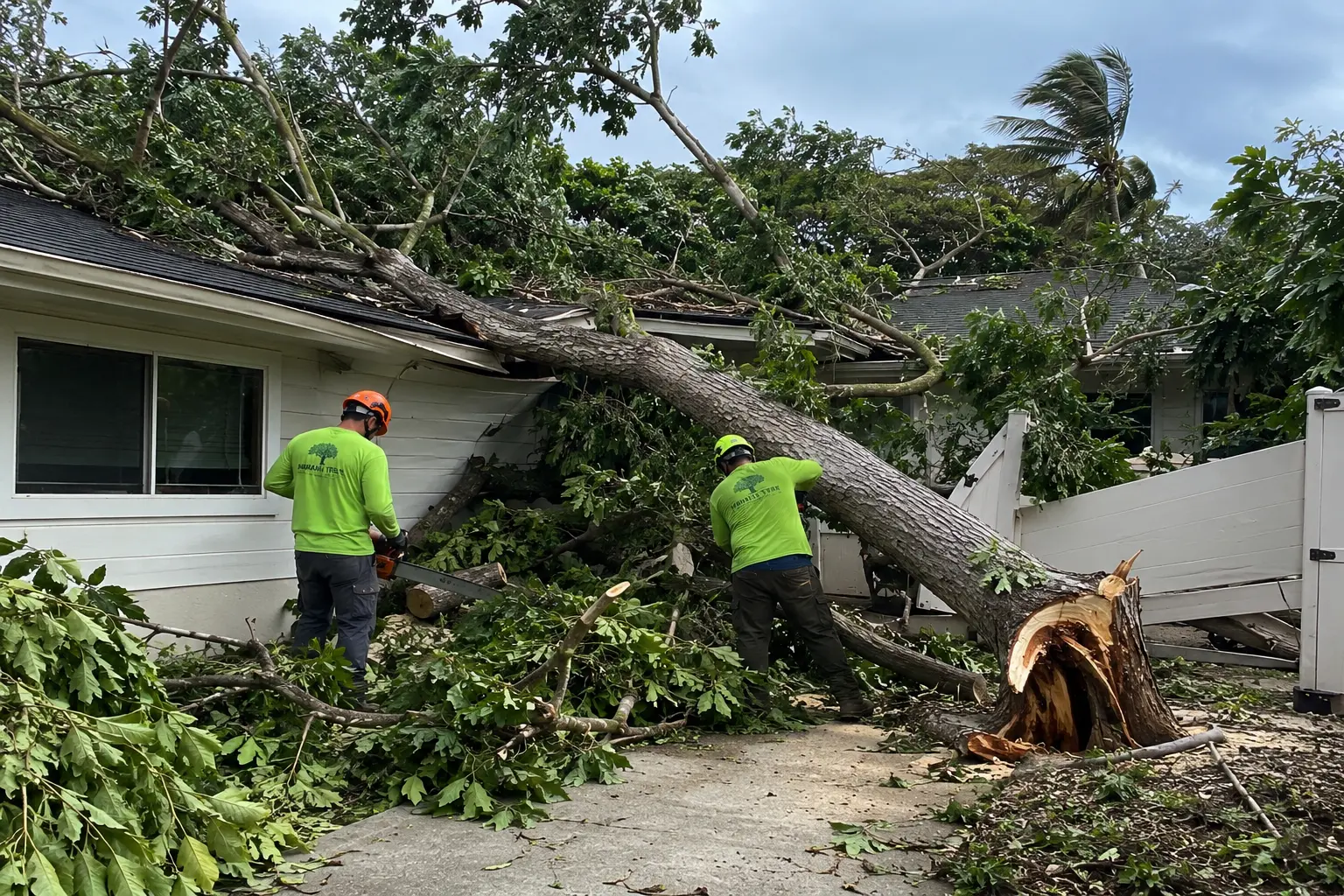
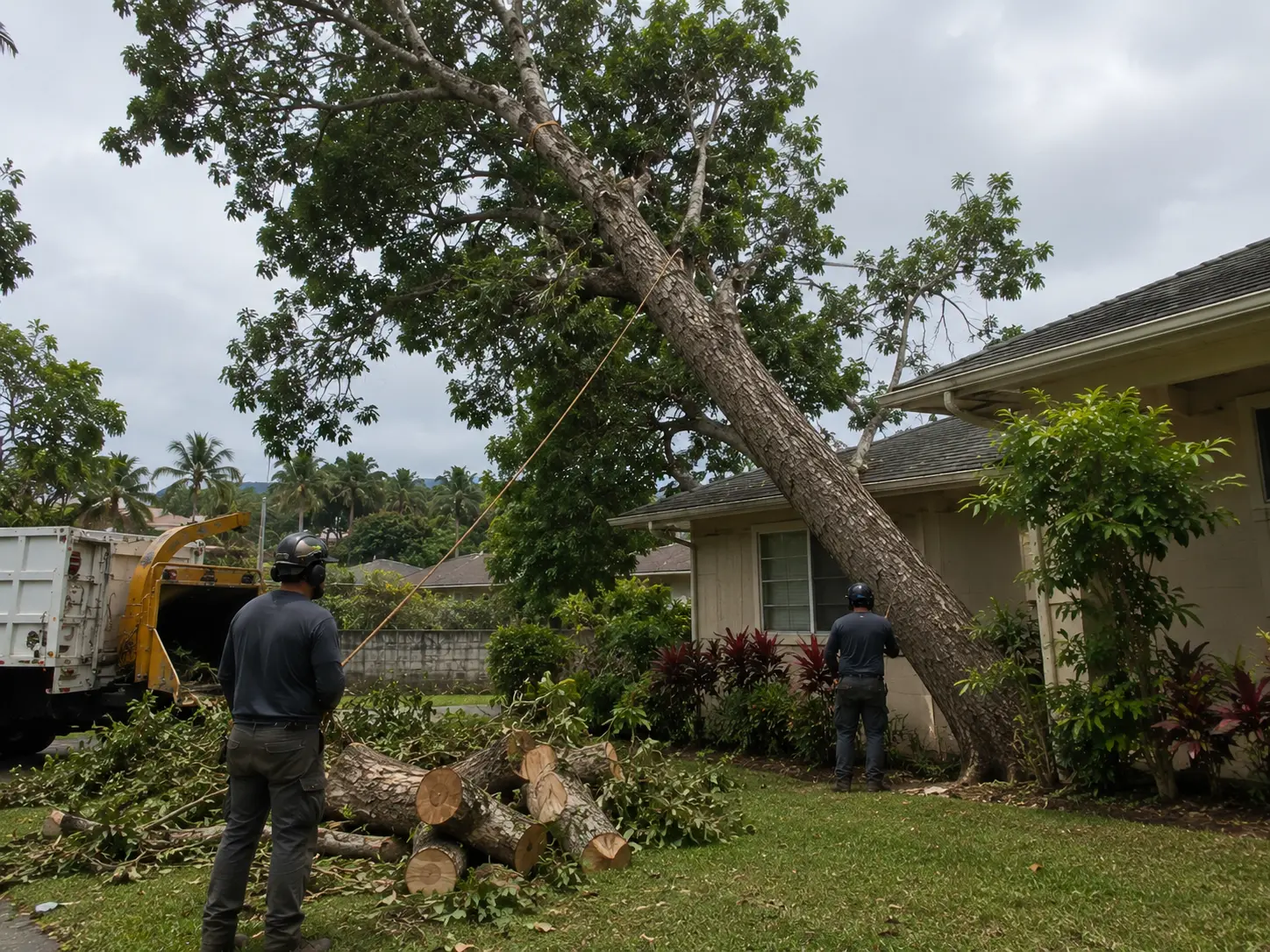
- Fallen Trees, resting on a home, vehicle, fence, or blocking access
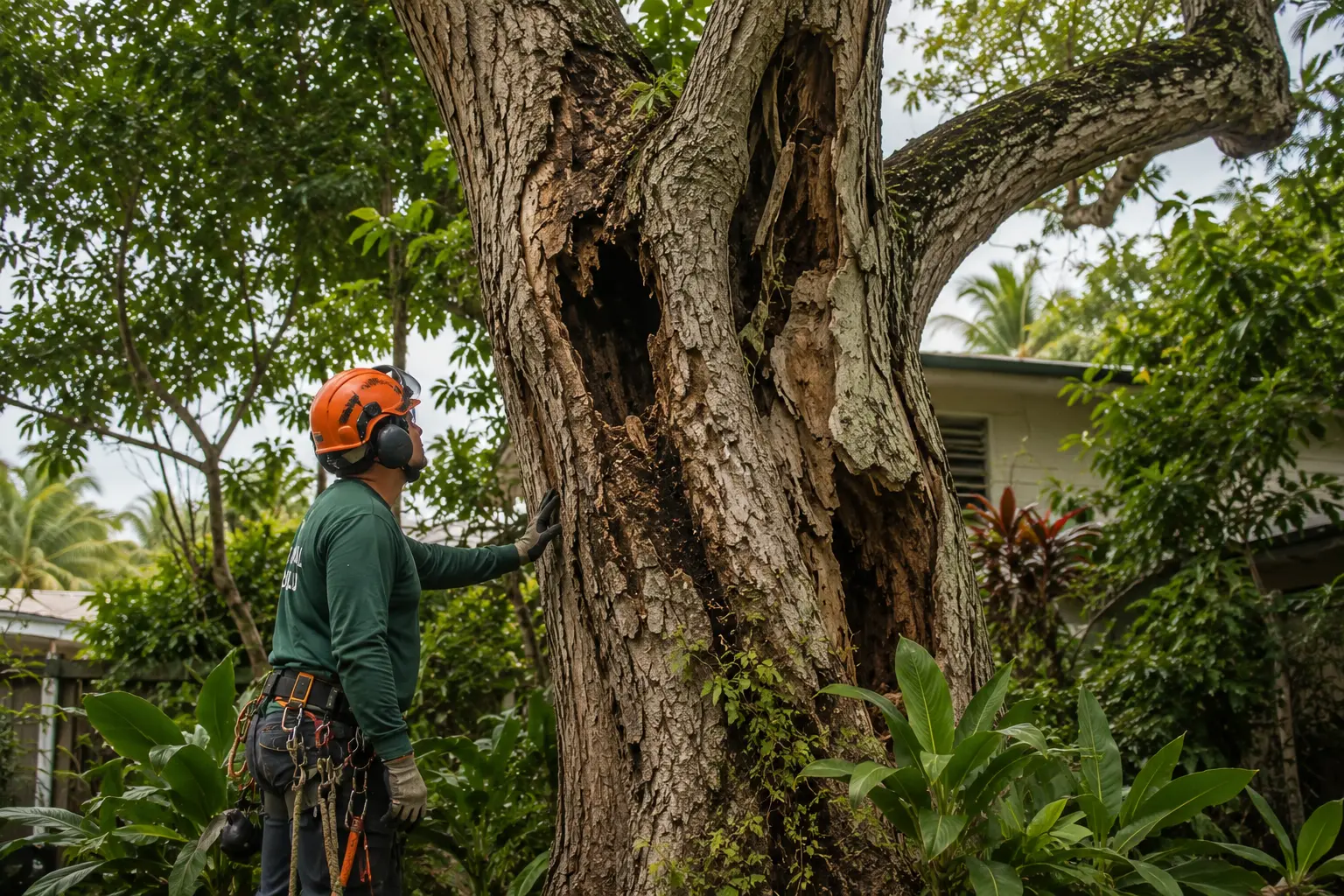
- Hazardous Trees, showing decay, cracking, or structural concerns
- Leaning Trees, new or worsening, on any type of lot
- Storm Damage, affecting one tree or an entire property
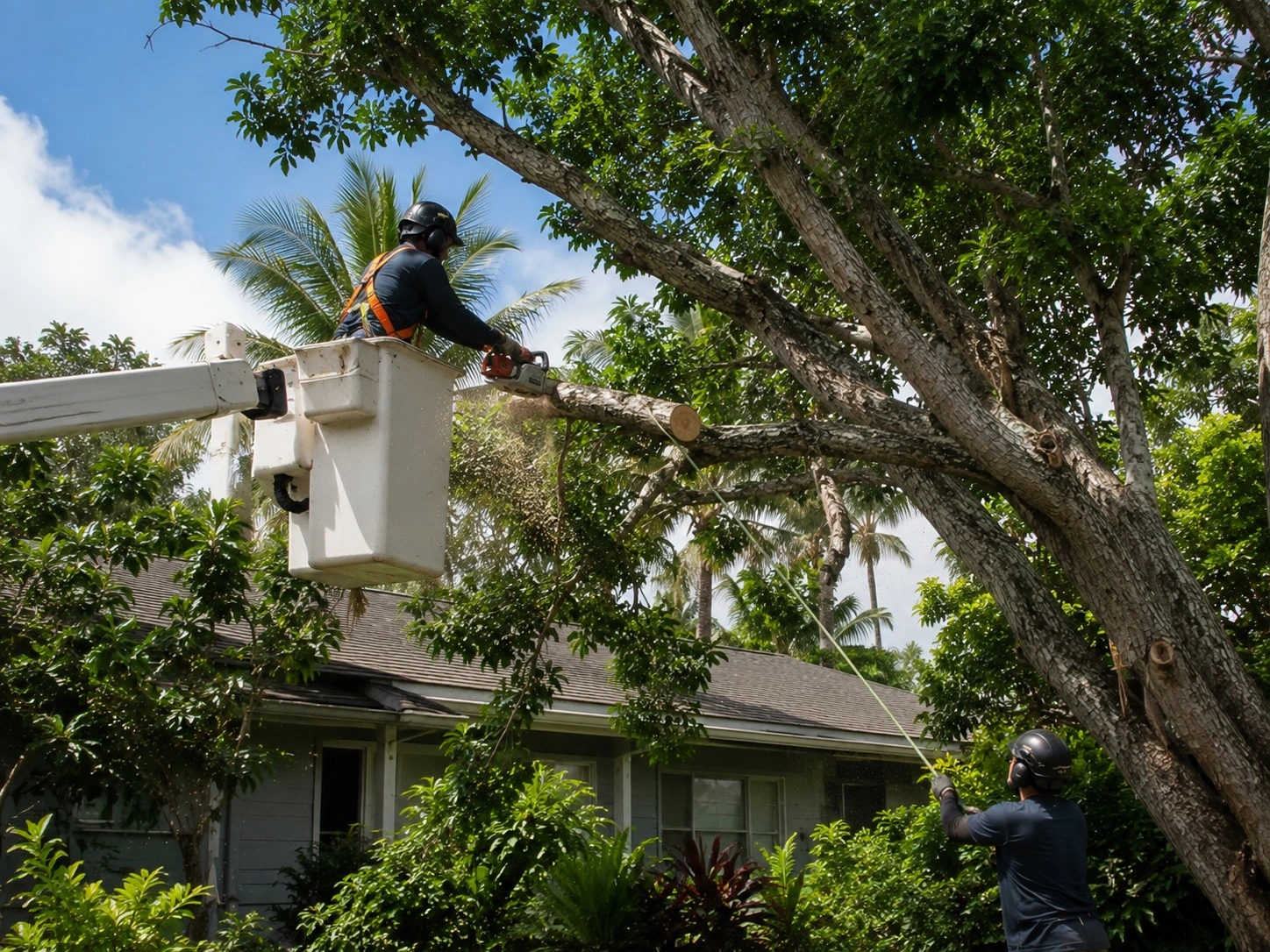
- Tree Limb Emergencies, hanging, broken, or caught overhead
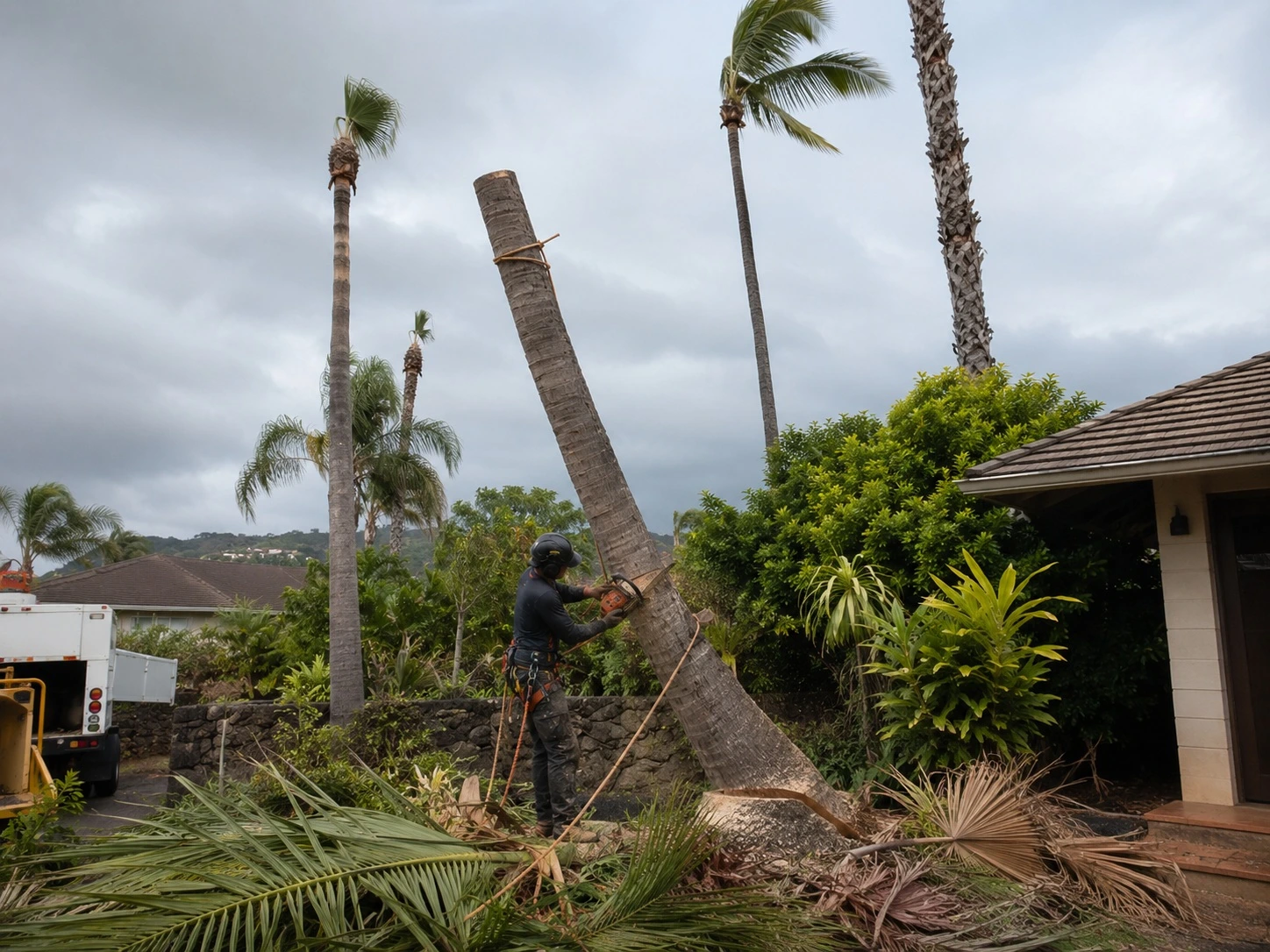
- Palm Tree Emergencies, leaning, declining, or storm damaged
Request Emergency Assistance
Describe what's happening, where it's happening, and anything nearby that might be affected. The more information you provide, the easier it is to understand the situation before follow-up.
Areas We Cover
This site focuses on emergency tree removal information throughout Honolulu and Oʻahu, including Honolulu Metro, Waikiki, Ala Moana, Kahala, Hawaii Kai, Kailua, Kaneohe, Pearl City, Aiea, Mililani, Waipahu, Kapolei, Ewa Beach, and Manoa. Whatever part of the island you're in, describing your situation is the best place to start.
Don't see your neighborhood listed? View all service areas →
Contact questions before you reach out
What qualifies as a tree emergency?
Generally, an active or imminent hazard: a tree that has fallen, a tree that's visibly leaning or shifting, a broken or hanging limb, or a tree in contact with power lines or a structure. If something feels urgent, it's worth reaching out to describe the situation rather than waiting.
Should I call if the tree hasn't fallen yet?
Yes. A tree that's leaning, cracked, or showing a hanging limb can still be an active hazard even if it hasn't come down. Reaching out before it worsens often makes it easier to understand the situation and discuss next steps.
What if power lines are involved?
Mention this clearly when you get in touch. A tree in contact with a power line should never be approached or handled without the utility company involved, and this detail changes how the situation needs to be assessed.
Can I submit photos?
Photos aren't required, but they can help provide a clearer picture of the situation if it's safe to take them from a distance. Never approach a hazardous tree just to get a photo.
Do I need to know what type of tree it is?
No. It helps if you know, but describing what you're seeing, the size, the lean, the location on the property, is more useful than guessing at a species.
Can I request help for multiple trees?
Yes. If a storm or wind event has affected more than one tree on a property, describe all of it in your message so the full scope can be understood at once.
What information should I provide?
Your property address, where the tree or limb is located, what's happening, any nearby structures or power lines, and photos if it's safe to take them. The more detail you provide, the easier it is to understand the situation before follow-up.
Learn more about a specific situation
If you already know which situation best describes yours, these pages go into more detail.
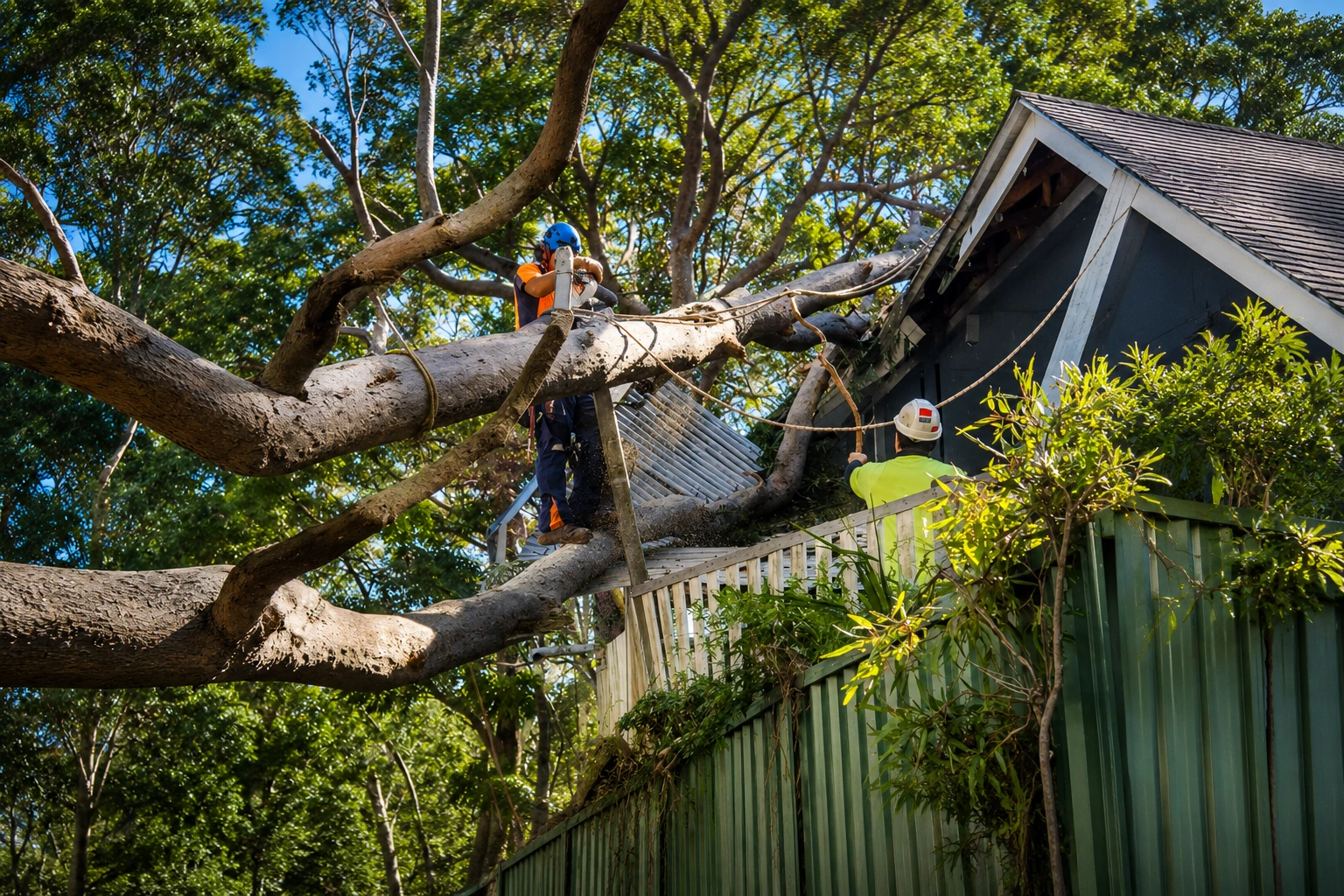
Emergency Tree Removal
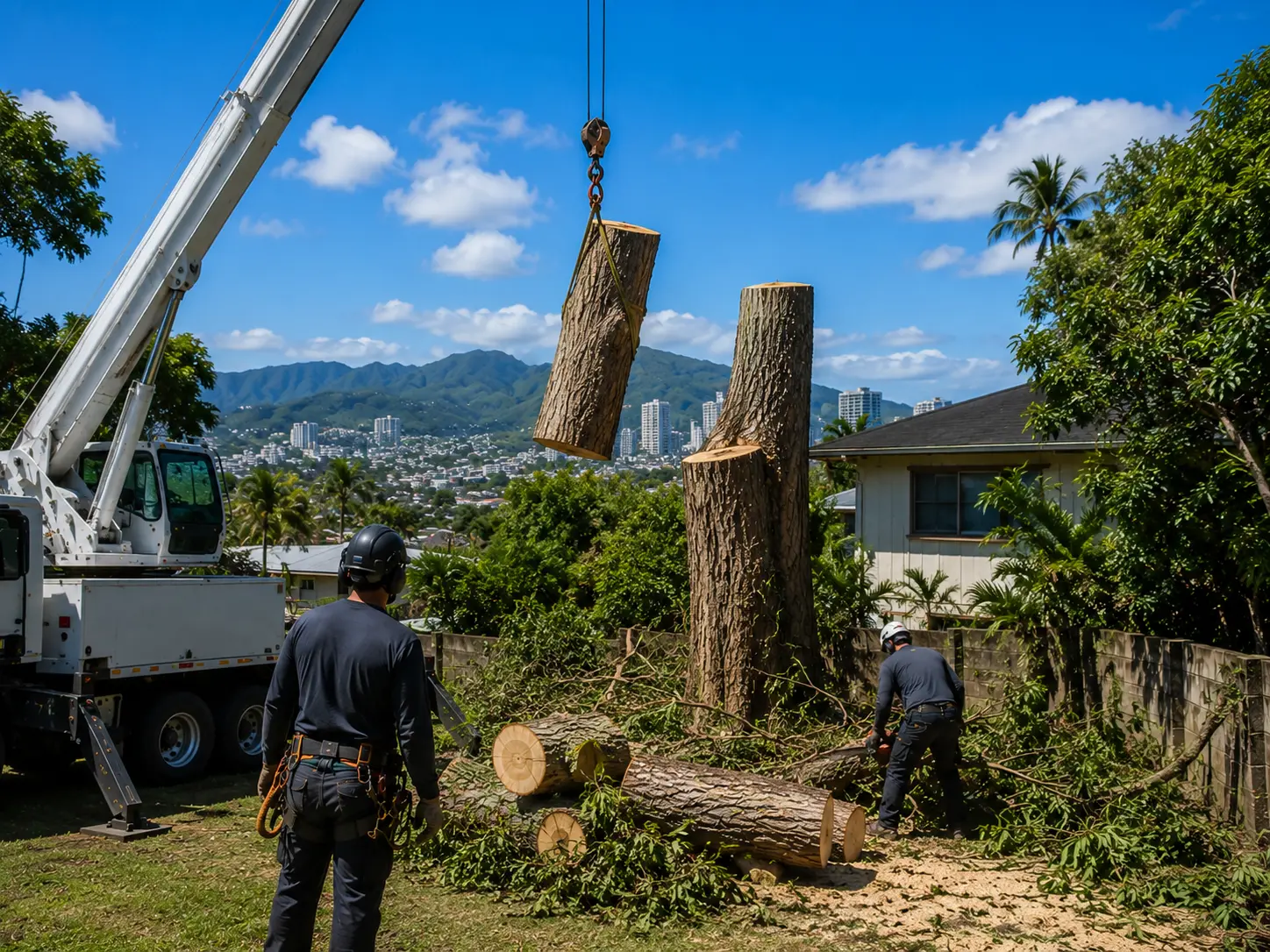
An overview of how active tree emergencies are handled across Honolulu and Oʻahu.
Learn More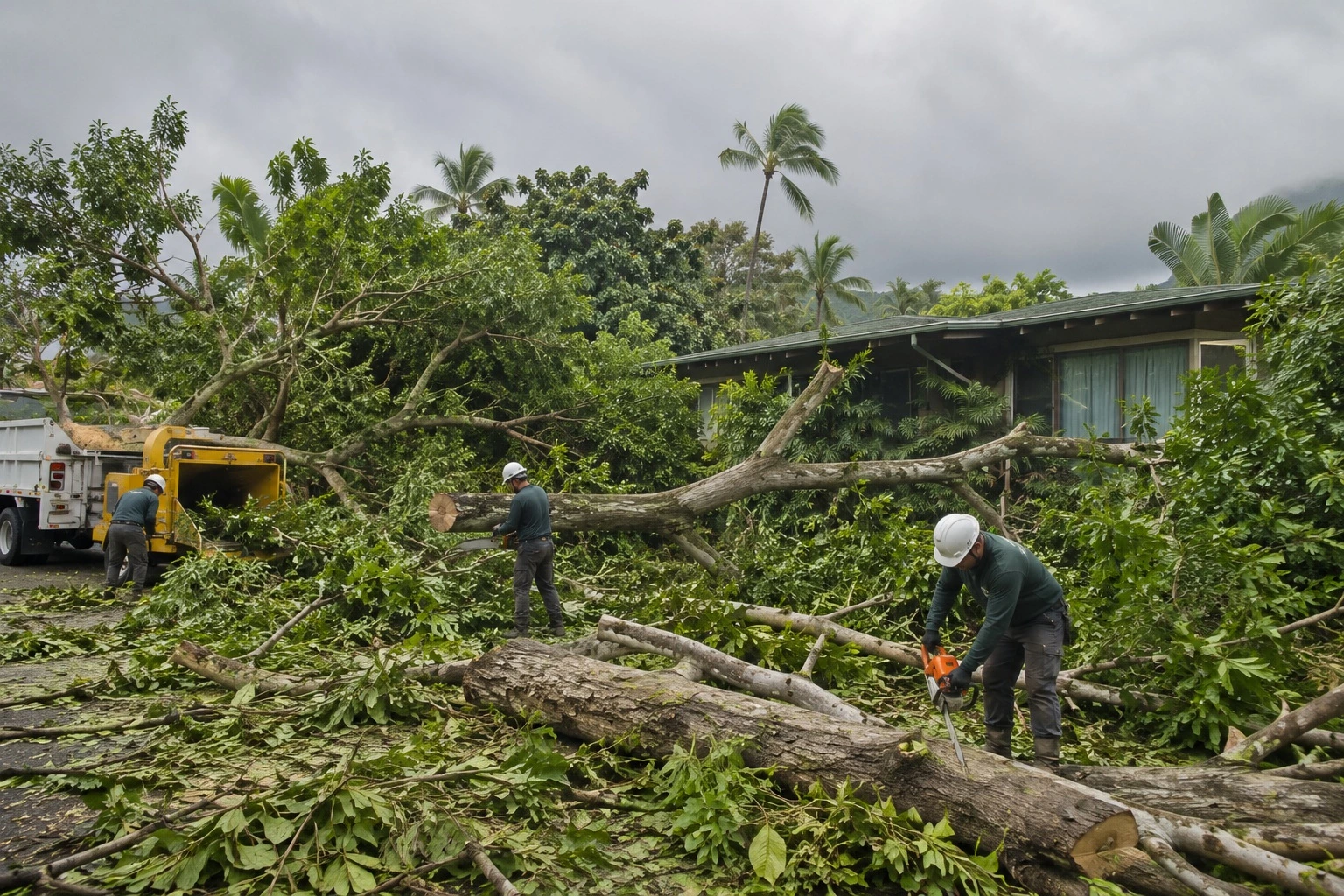
Need Emergency Tree Assistance?
Reach out by phone or request assistance online, whichever is easiest for your situation.