Emergency Tree Removal Aiea | Local, Fast, On Call
From the misty switchbacks above Aiea Heights to the sugar-mill-era streets of Newtown and the retail corridor around Pearlridge, Aiea's trees range from rainforest-adjacent hillside canopy to decades-old shade trees planted when these subdivisions were first built. We work this stretch of the island regularly and plan every job around it.
Tell us your neighborhood and what's happening, and we'll advise on next steps and timing.
Prefer to write it out? Request a free estimateFrom Aiea Heights and Halawa to Newtown, Momilani, and Pearlridge.
Crews used to steep switchback streets and narrow, terraced driveways.
Trees near power lines are coordinated with the utility company before any work begins.
Limbs, trunk sections, and green waste cleared before the crew leaves.
Written, no-obligation estimates after every on-site assessment.
Why tree work in Aiea isn't like a flat suburban lot
Aiea climbs from the edge of Pearl Harbor up to the forested ridgeline along the Aiea Loop Trail, which means a single tree service area here covers everything from salt-tinged lowland lots to misty upper-slope yards that catch far more rain than the harborside neighborhoods a mile below. Few parts of Oʻahu pack that much elevation change into so short a drive.
The older subdivisions add another layer. Newtown and Momilani were largely built out in the 1950s and 60s, and many still carry the original monkeypod and mango trees planted when the neighborhoods went in, now well beyond the size those yards were designed to hold. Higher up, Aiea Heights' narrow, winding streets leave little flat ground to stage equipment on, while the commercial landscaping around Pearlridge Center means coordinating with property management before any work begins.
- Steep switchback streets and narrow driveways climbing toward Aiea Heights
- Legacy shade trees planted when Newtown and Momilani were first developed
- Rain-fed upper slopes near the Aiea Loop Trail versus drier harborside lots
- Commercial landscaping and parking-area trees around Pearlridge Center
If a tree is actively down or hazardous anywhere in Aiea right now, see Emergency Tree Removal Honolulu for our fastest response option.
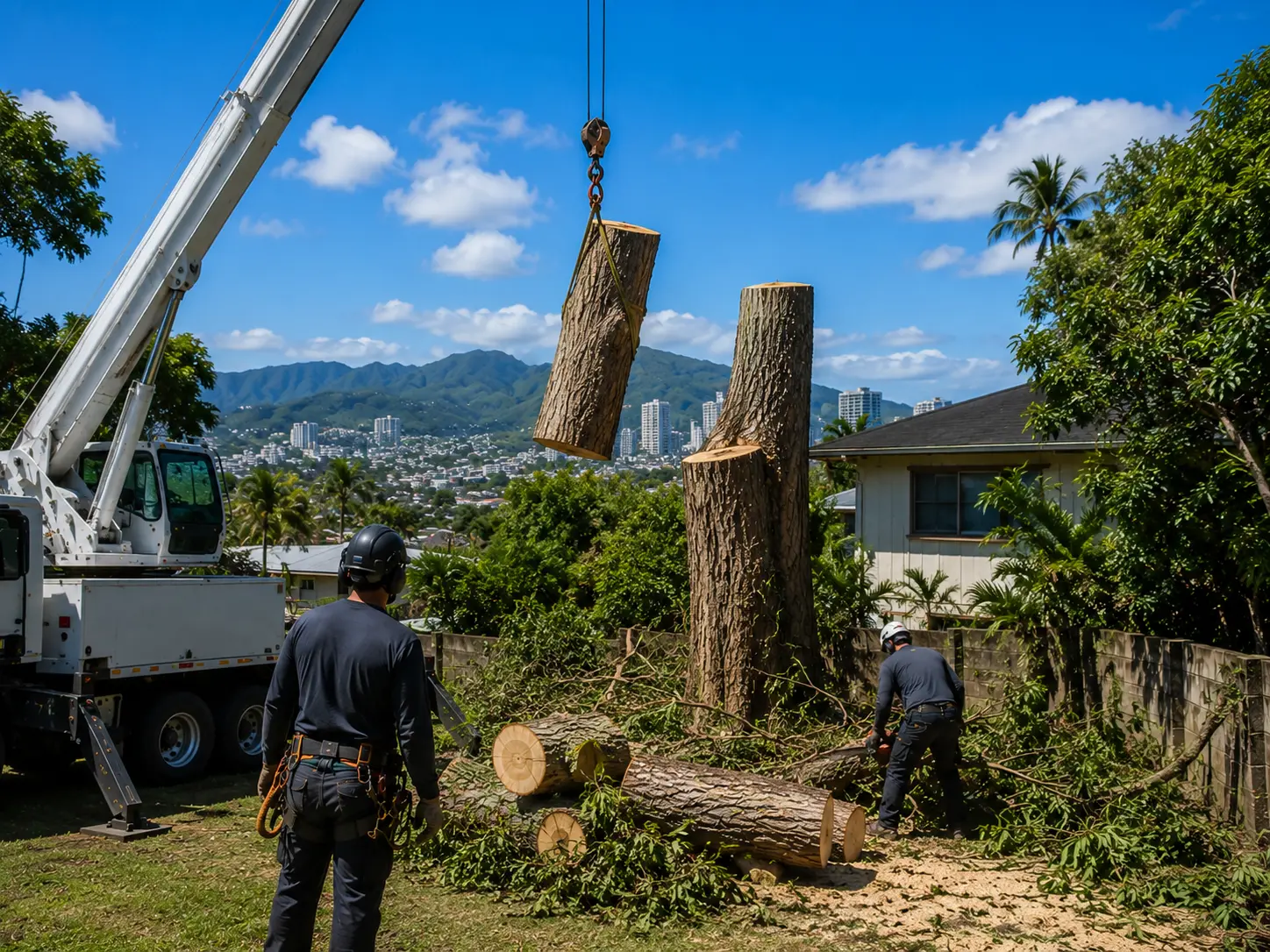
A landscape that changes from the harbor to the ridge
Aiea isn't one uniform neighborhood. Each pocket has its own elevation, soil, and lot layout, and our crews plan accordingly.
Aiea Heights
The uppermost neighborhood, bordering the forest reserve near the Aiea Loop Trail, with narrow switchback streets, steep driveways, and Cook pine and eucalyptus canopy not seen lower down the slope.
Halawa
The valley corridor running toward Halawa Xing mixes residential streets with business-park properties, where wind funneling down from the ridge and larger commercial lots both come into play.
Newtown
One of Aiea's older residential grids, with mature monkeypod and mango trees planted decades ago that now overhang rooflines and driveways on lots built for much smaller trees.
Momilani
A hillside subdivision above the highway with winding streets and established canopy, where terraced yards and retaining walls change how equipment access is planned compared to flatter ground below.
Pearlridge
Aiea's commercial core, with landscaped trees and palms around the shopping center and surrounding parking areas that require coordination with property management before any work starts.
Kalauao & Lower Aiea
The flatter, drier stretch closest to Pearl Harbor, with older plantation-era lots and coconut palms that see less rainfall but more direct sun and wind exposure than the upper slopes.
Common tree emergencies across Aiea
Hillside soil, legacy canopy, and commercial landscaping each fail differently, and knowing which one you're dealing with changes the response.
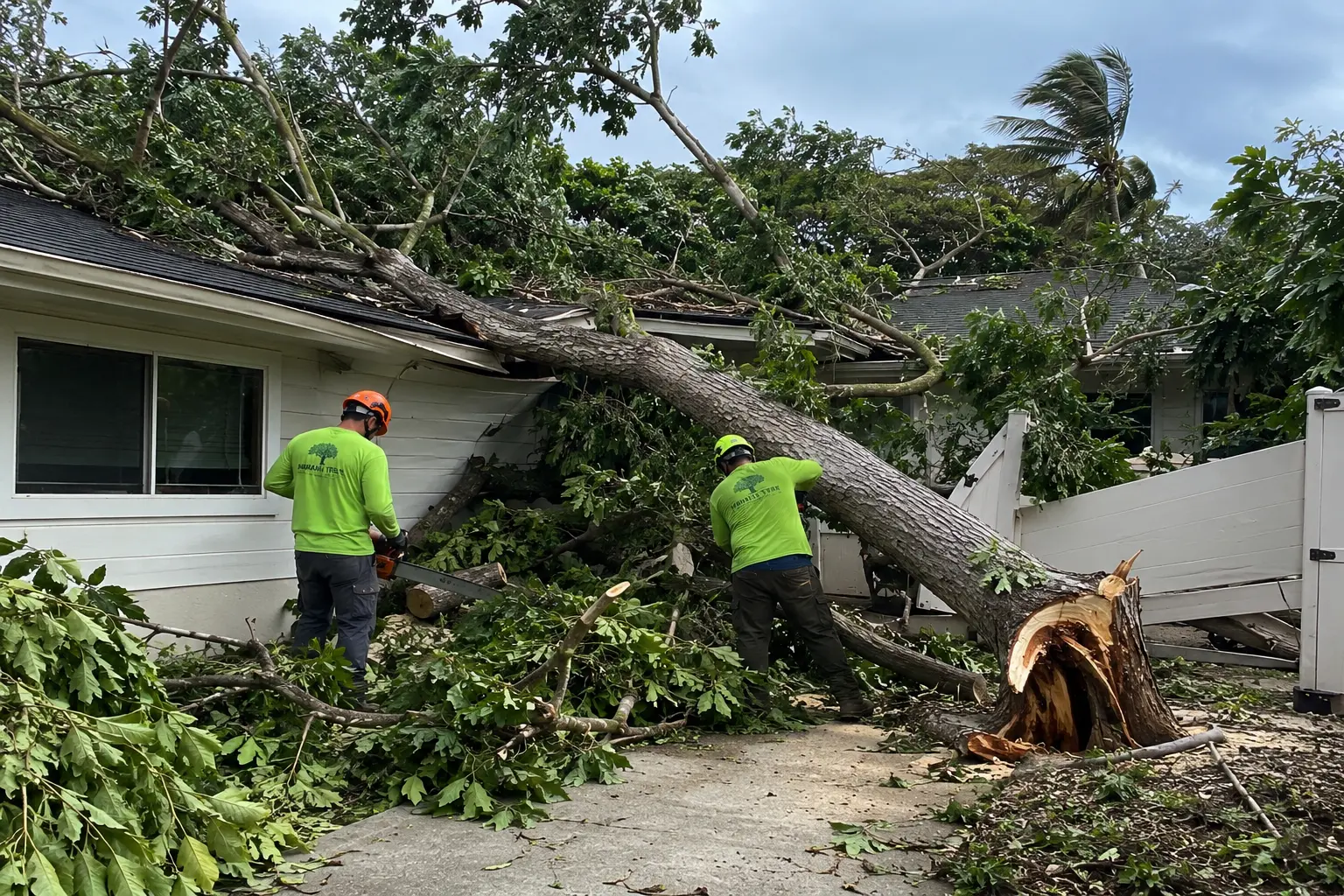
Trees Down on Older Homes
A large legacy monkeypod or mango failing onto a Newtown or Momilani roofline is one of the more common calls we get in Aiea. See Fallen Tree Removal for how we sequence that kind of job.
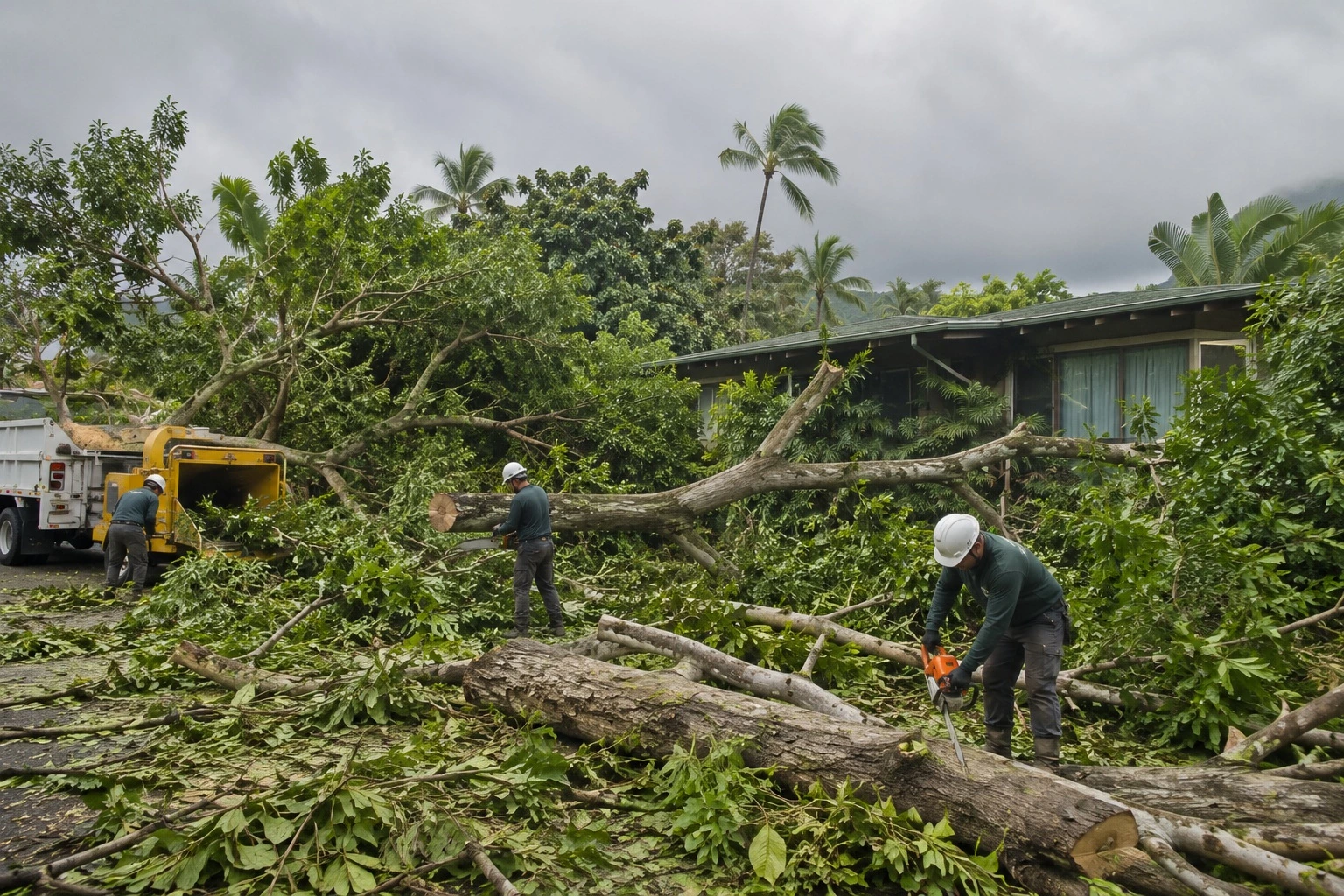
Storm-Damaged Hillside Trees
Aiea Heights and Momilani catch the brunt of any storm moving across the ridge, often with more rain and wind exposure than the flatter lots down near Pearlridge.
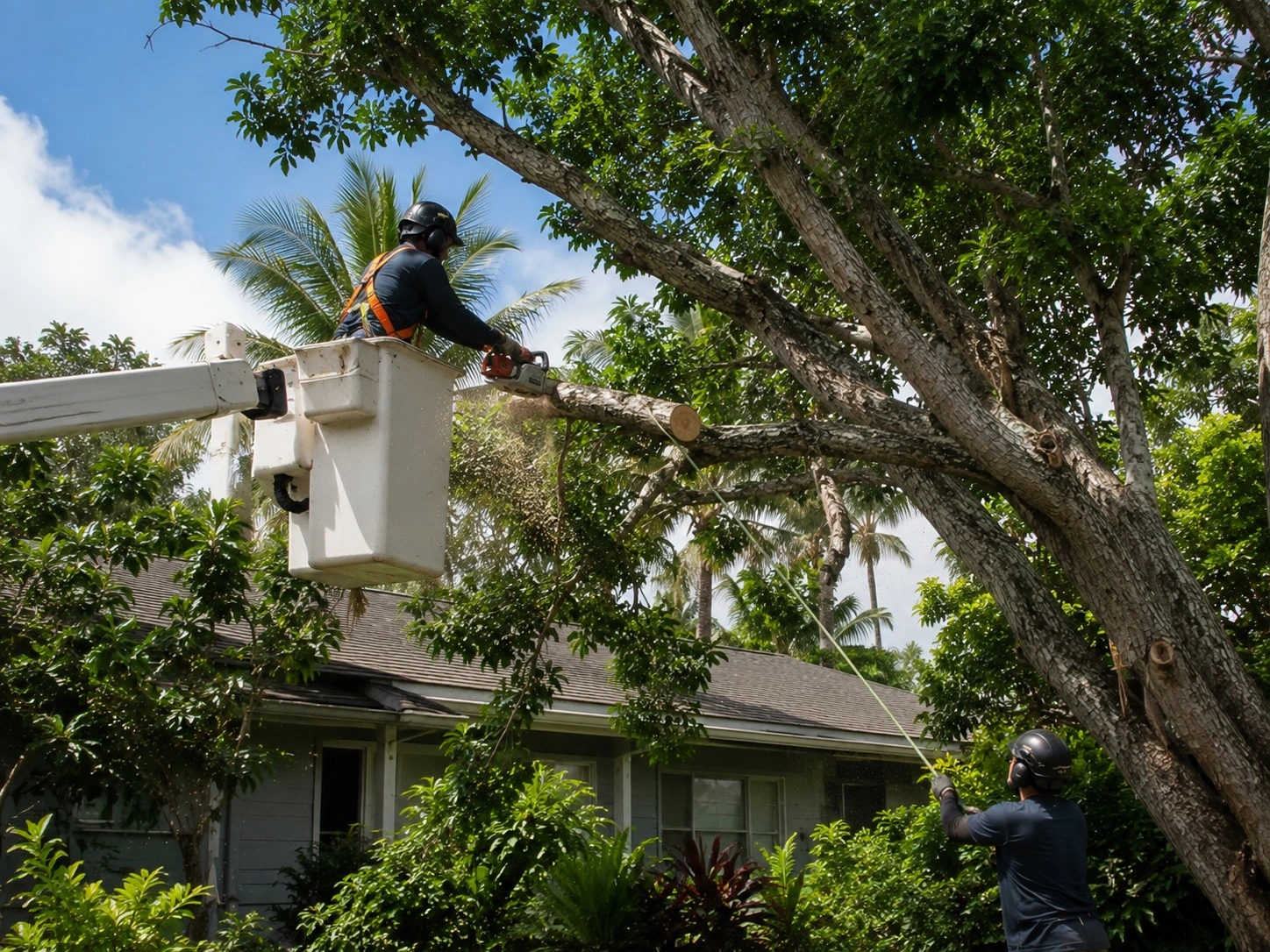
Hanging Limbs on Switchback Driveways
A broken limb caught above a narrow, single-access driveway in Aiea Heights can strand a household until it's cleared. See Tree Limb Removal for how these are handled.
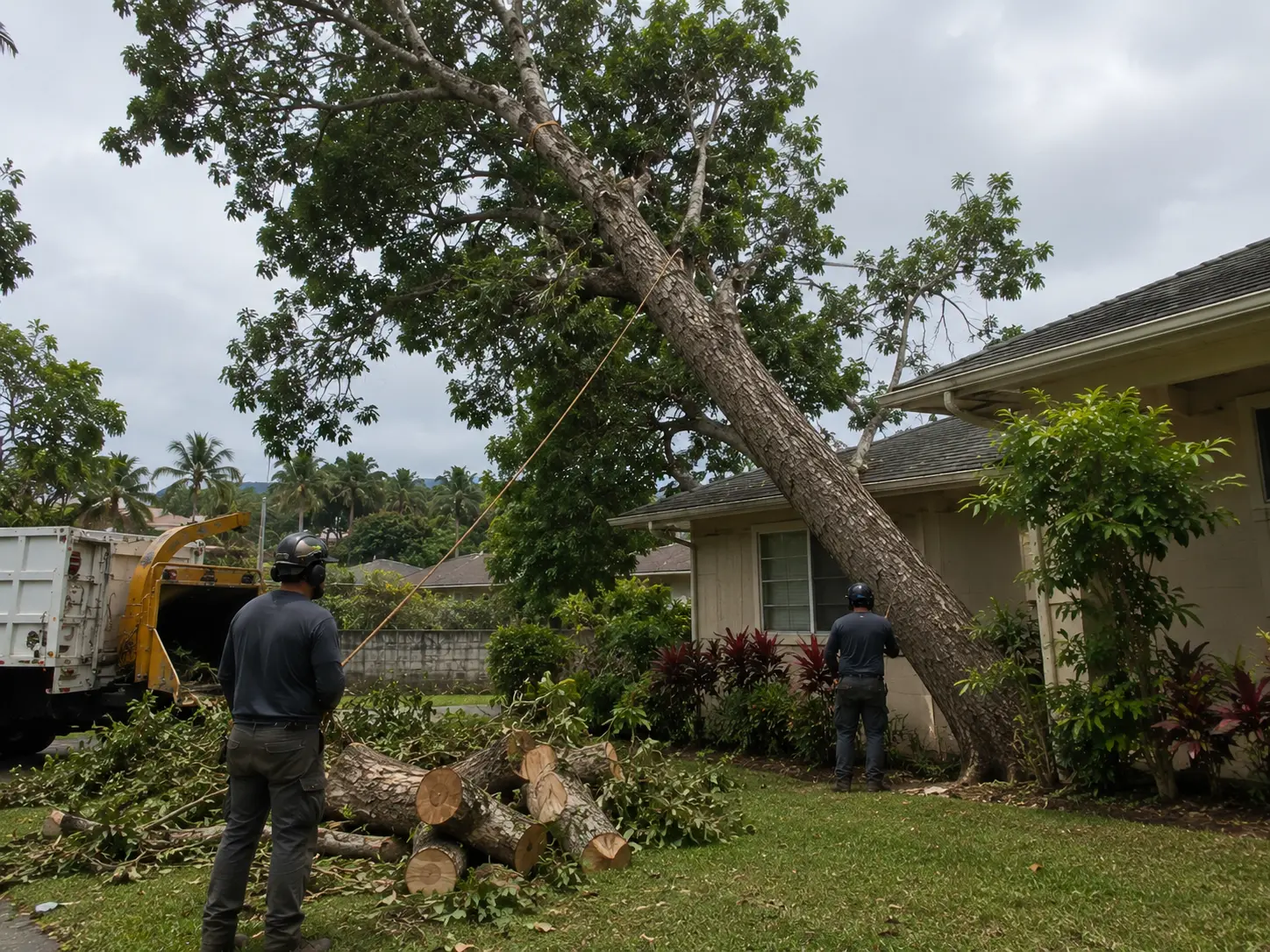
Leaning Trees After Heavy Rain
Saturated slopes above Halawa and Momilani can loosen root systems after sustained rain, and a lean on hillside soil carries different risk than one on flat ground. See Leaning Tree Removal.
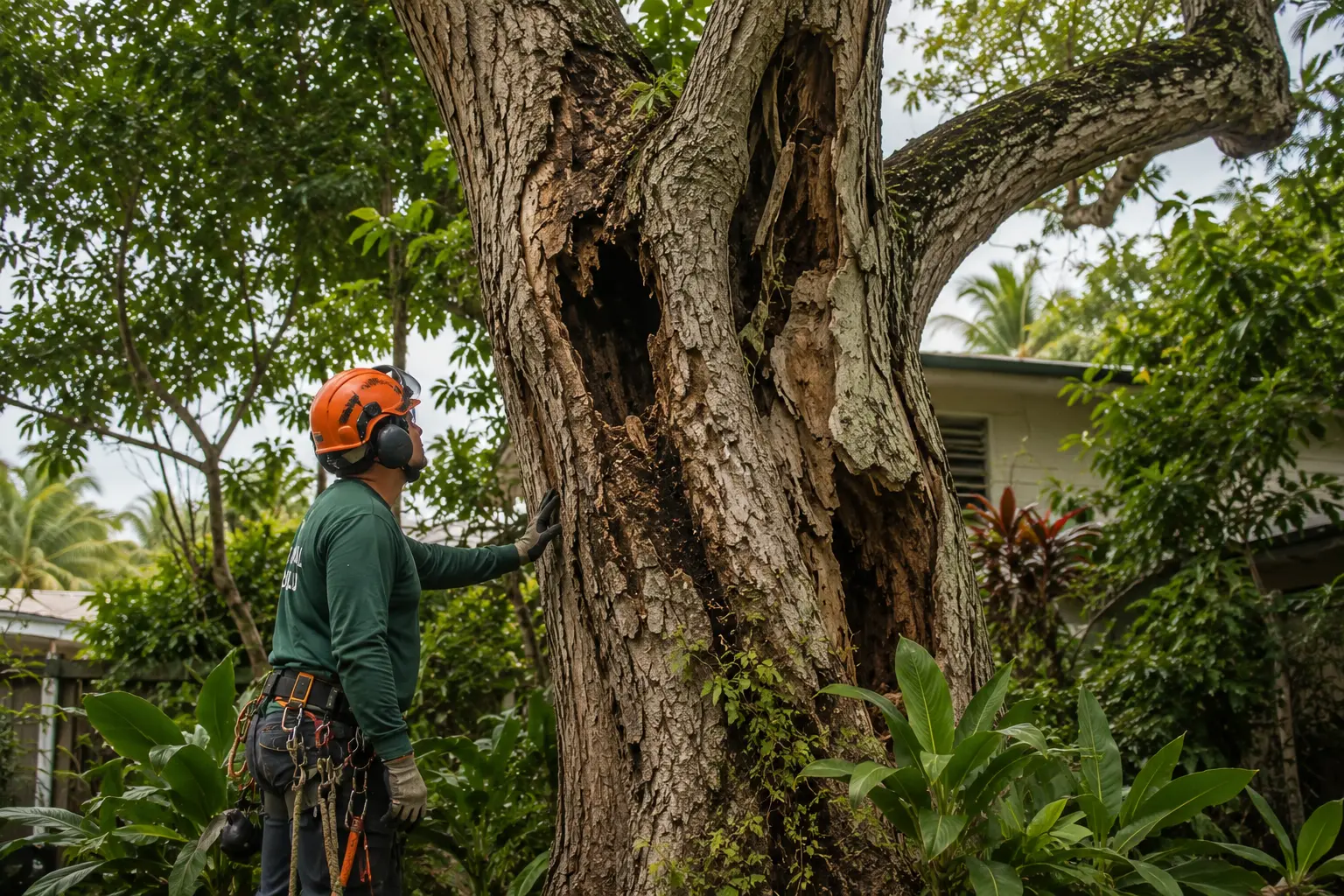
Aging Monkeypod & Mango
Decades-old trees on Newtown and Momilani lots sometimes show trunk decay or root heaving that isn't obvious from the driveway. See Hazardous Tree Removal for how we assess these.
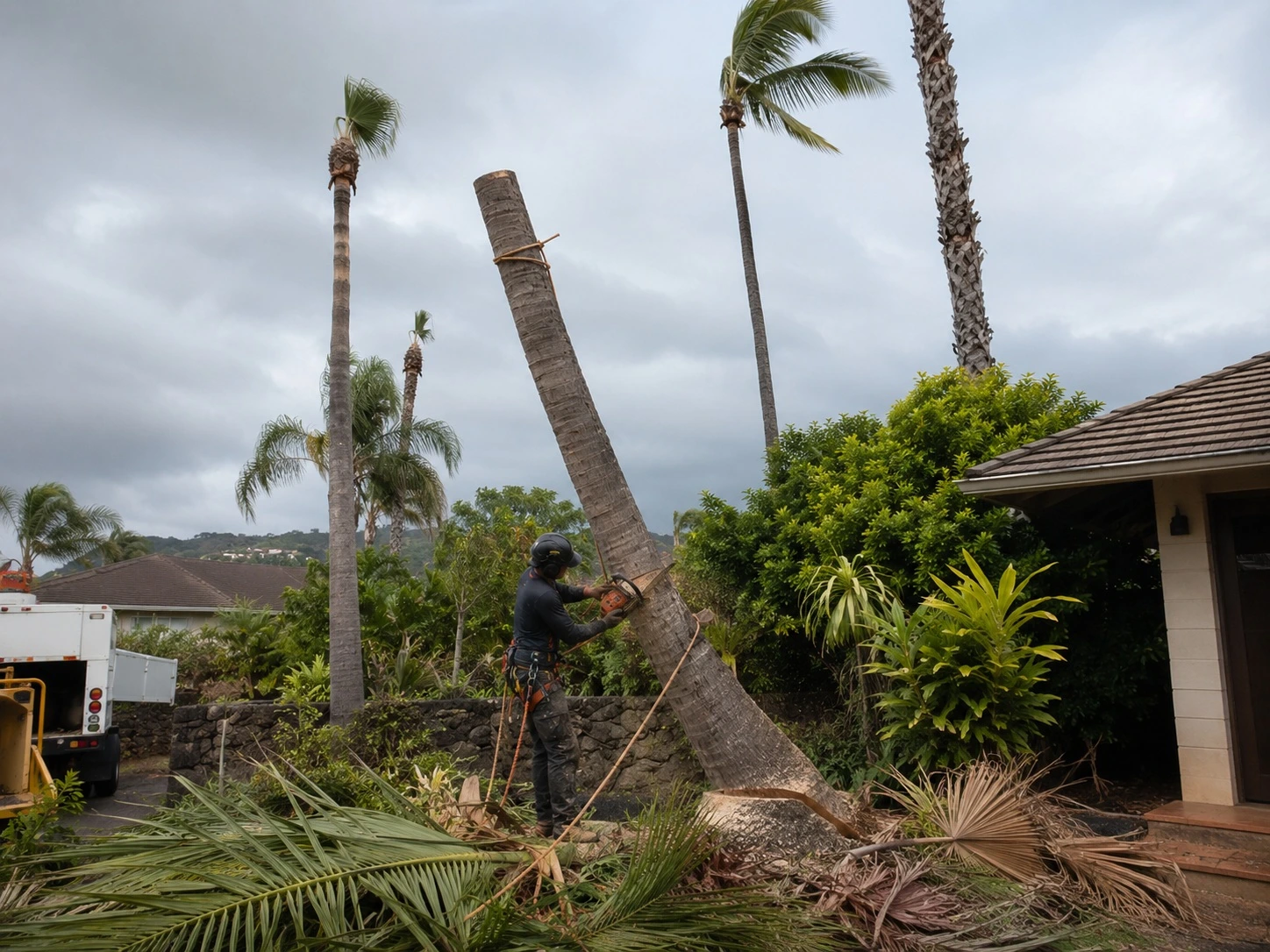
Palm Hazards Near Pearlridge
Landscaped and coconut palms around the shopping center and surrounding lots can drop fronds or coconuts onto walkways and parked cars. See Palm Tree Removal for routine and emergency handling.
How wind and rain move through Aiea
Sitting between Pearl Harbor and the Koolau ridge, Aiea catches a wider range of weather in one small area than most neighborhoods on the island.
Ridge-Fed Upper Slope Rain
Aiea Heights sits close enough to the Koolau summit to catch persistent mist and rainfall that the lower neighborhoods rarely see, keeping upper-slope soil saturated far more often.
Halawa Valley Wind Funnel
Trade winds pushing down through the Halawa corridor toward Pearl Harbor pick up speed as the valley narrows, putting extra strain on trees along that stretch during any wind event.
Kona Storm Exposure
Kona storms bring wind from the south rather than the usual trade wind direction, which is when hillside trees in Momilani and Aiea Heights are most likely to show a new lean or dropped limb.
Harborside Heat & Drought Stress
Lower Aiea and Kalauao, closer to Pearl Harbor, run drier and hotter than the upper slopes, which can stress older trees and weaken wood years before any damage becomes visible.
Species we see most often across Aiea
The elevation change from harbor to ridge has left Aiea with a distinct mix of species by neighborhood, and each comes with its own failure pattern.
Monkeypod & Mango
The dominant legacy trees across Newtown and Momilani, planted generations ago and now large enough that their canopies extend well over neighboring rooflines and driveways.
Cook Pine & Eucalyptus
Common on the forested upper slopes near the Aiea Loop Trail, these tall, fast-growing species catch more wind exposure the higher up the ridge they sit.
Coconut & Landscaped Palms
Common in the drier lowland areas near Kalauao and around the commercial landscaping at Pearlridge, where fronds and coconuts are a routine cleanup and occasional hazard.
Working around Aiea's mix of lots
Few streets in Aiea look like the ones a quarter mile up or down the slope, and each property type changes how a job is planned.
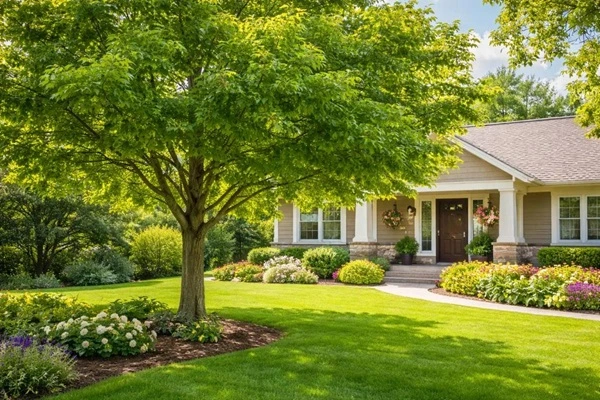
Switchback homes, 1960s subdivisions, and shopping-center landscaping
Homes climbing toward Aiea Heights bring steep, narrow driveways and terraced yards with limited staging space, while the older grid streets of Newtown and Momilani carry legacy monkeypod and mango trees that have outgrown the lots they were planted on decades ago. Down near Pearlridge, commercial and retail landscaping means coordinating with property management and working around parking areas and foot traffic rather than a private yard.
Whatever the property type, the same on-site assessment applies first: confirming access, checking the ground and slope the tree is rooted in, and building a plan around that lot's specific constraints rather than a one-size approach. For a full property removal beyond an emergency situation, see tree removal.
Our response process in Aiea
Ridge, valley, or harborside, the logistics change, not the standard of care.
Call or Request
Tell us your neighborhood and what's happening, by phone or through the estimate form.
Access & Hazard Check
We factor in slope, switchback streets, and staging space before a crew arrives.
Written Estimate
A clear, itemized estimate based on the on-site assessment, before any work begins.
Careful Removal
Rigging planned around retaining walls, terraced yards, and close neighbors.
Cleanup
Debris cleared so driveways and shared access are usable again.
A crew that already knows Aiea's slopes and streets
A switchback lot in Aiea Heights and a landscaped bed outside Pearlridge Center both get the same careful assessment before a single cut is made.
Every crew member is trained, and every job is backed by full insurance coverage.
Crews who already know the switchback streets, legacy canopy, and commercial lots common across Aiea.
A written estimate after an on-site visit, with no hidden fees added later.
The same team behind Emergency Tree Removal Honolulu covers every Aiea neighborhood.
We also serve the areas surrounding Aiea
If your property is outside Aiea, we cover the rest of Oʻahu as well. View all service areas →
Aiea questions before you call
How quickly can a crew reach a property in Aiea?
Response depends on the hazard and where in Aiea the property sits, since the hillside streets of Aiea Heights, the Halawa corridor, and the flatter lots near Pearlridge all have different access. Active emergencies like a tree on a structure or blocking a road are prioritized ahead of routine visits. Call to describe the situation and a crew will advise on realistic timing.
Are the switchback streets in Aiea Heights harder to work on?
Often, yes. The narrow, winding streets climbing toward the Aiea Loop Trail have steep driveways and limited flat staging area, which changes how rigging and equipment access are planned compared to the wider, flatter lots down near Pearlridge and Kalauao.
Does Aiea Heights get more rain than the rest of Aiea?
Yes. The upper slopes near the Aiea Loop Trail sit closer to the Koolau ridge and catch noticeably more rainfall and mist than the drier, harborside neighborhoods a mile or two below, which affects root saturation and soil stability differently across the same tree service area.
What should I do about a tree leaning on a hillside property in Aiea Heights?
Avoid the area beneath it and don't attempt to secure, prop, or trim it yourself, since a lean on saturated hillside soil can worsen quickly. Call to describe the location and slope, and a crew will assess the lean and the ground it's rooted in before recommending next steps.
Do older neighborhoods like Newtown and Momilani have different tree risks?
Many of these lots were developed in the 1950s and 1960s and still carry the original shade trees planted at that time, now decades larger than the yards were designed for. Root heaving near foundations and driveways, along with oversized canopy near rooflines, are common here in a way they aren't on newer construction.
What trees cause the most emergency calls in Aiea?
Mature monkeypod and mango on the older residential lots are behind a large share of calls, along with Cook pine and eucalyptus on the forested upper slopes of Aiea Heights, and coconut or landscaped palms dropping fronds near the commercial areas around Pearlridge.
Is emergency tree service available throughout all of Aiea?
Yes. Coverage extends across Aiea's neighborhoods, including Aiea Heights, Halawa, Newtown, Momilani, Pearlridge, and Kalauao.
Do you offer free estimates for Aiea properties?
Yes. A free, no-obligation estimate can be requested through the form below or by phone, followed by an on-site assessment to confirm the scope of work.
Request a free estimate in Aiea
Tell us your neighborhood and what's happening, a fallen tree, a hanging limb, storm damage, or a hazardous palm, and a crew will follow up to confirm timing and, if needed, arrange an on-site assessment.