Emergency Tree Removal Manoa | Local, Fast, On Call
Manoa's dense, rain-fed canopy, narrow valley streets, and steep hillside lots make it one of the wettest and greenest neighborhoods on Oʻahu, and also one of the most demanding for tree work. We work this valley regularly and plan every removal around its rainfall, slopes, and layered growth.
Tell us your street and what's happening, and we'll advise on next steps and timing.
Prefer to write it out? Request a free estimateFrom lower Manoa near Punahou to East Manoa, Woodlawn, and the university area.
Crews used to Manoa's dense, rain-fed growth and fast-growing understory species.
We assess hillside stability and streambank root zones before any cut is made.
Limbs, trunk sections, and green waste cleared before the crew leaves.
Written, no-obligation estimates after every on-site assessment.
Why tree work in Manoa isn't like the drier parts of Honolulu
Manoa Valley sits tucked directly beneath the Koʻolau range, where moisture-laden trade wind air is forced upward and cools rapidly, wringing out frequent showers that give the valley its famous rainbows and its equally famous rainfall totals, some of the highest anywhere on Oahu. That near-constant moisture keeps soil saturated far more often than the drier coastal neighborhoods, and saturated soil is one of the most common reasons a tree leans or uproots without any wind involved at all.
The valley's shape adds its own risk. Many homes sit on hillside lots along the valley walls rather than flat ground, where a tree failing on saturated, sloped soil can affect not just its own lot but the property below it. Add in Manoa's genuinely dense, layered canopy, older hardwoods growing alongside fast-spreading bamboo and rainforest species that thrive in the wet climate, and you get a tree environment that behaves more like a rainforest edge than a typical suburban yard.
- Among the highest rainfall totals of any Honolulu neighborhood
- Steep valley-wall lots where a falling tree can affect the property below
- Dense, multi-layered canopy including fast-growing, wet-climate species
- Streambank properties along Manoa Stream with erosion-prone root zones
If a tree is actively down or hazardous anywhere in Manoa right now, see Emergency Tree Removal Honolulu for our fastest response option.
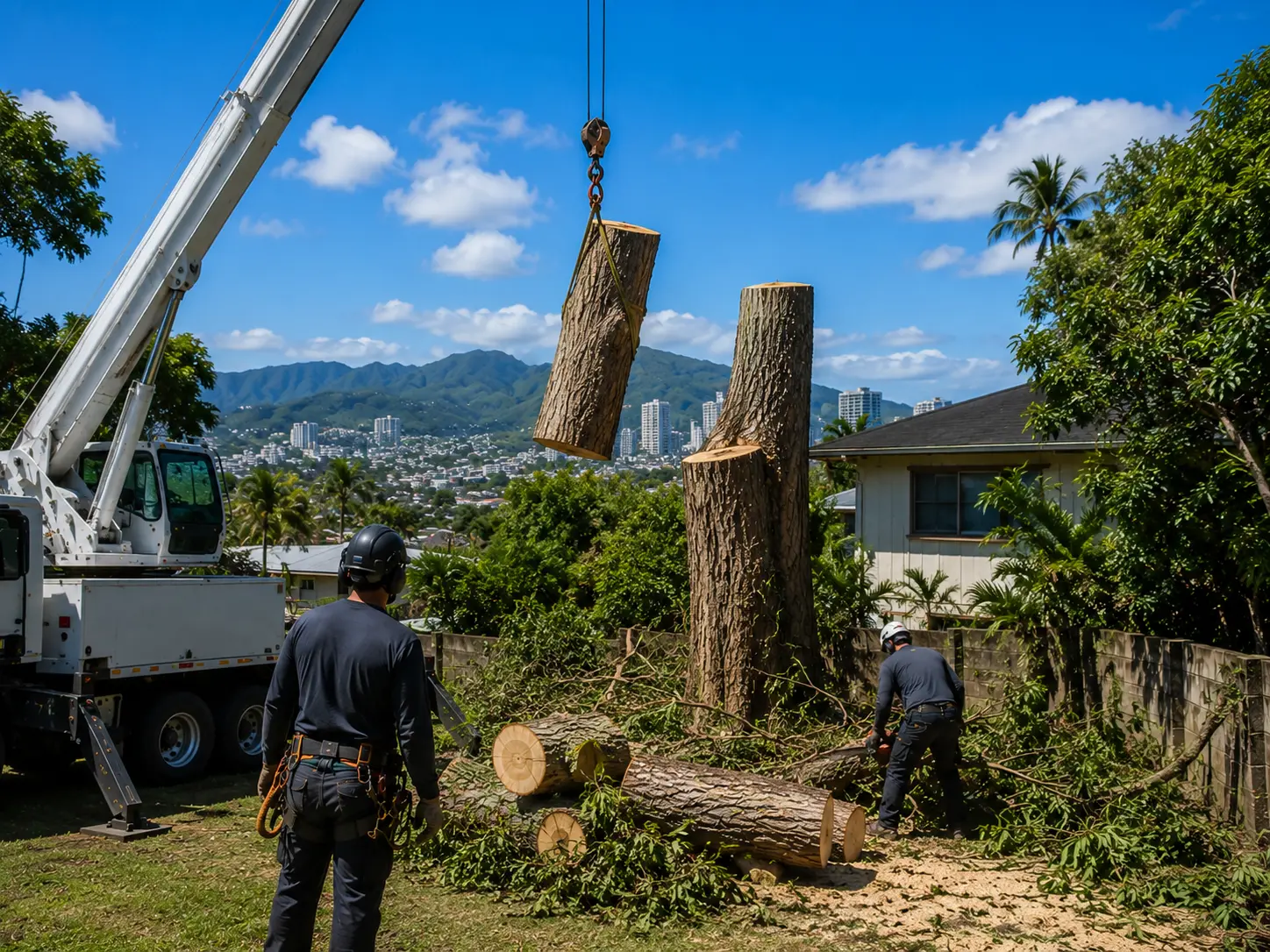
A valley that gets greener the further up you go
Manoa isn't one uniform stretch of valley. Each pocket has its own elevation, rainfall, and canopy density, and our crews plan accordingly.
Lower Manoa
Closest to Punahou and Moiliili, with older single-family homes on relatively flatter ground and slightly less rainfall than the upper valley, though still well above the coastal average.
East Manoa
Established residential streets climbing the eastern valley wall, where mature legacy trees on hillside lots have had decades to grow well beyond their original planting space.
Woodlawn
A quieter residential pocket near the valley's midpoint, with a mix of long-time family homes and canopy dense enough to keep much of the neighborhood in partial shade.
University of Hawaii at Manoa
The campus and surrounding rental-heavy streets carry large legacy shade trees planted decades ago, many now sizable enough to require careful rigging near classroom buildings and dorms.
Upper Manoa & Manoa Falls Area
The wettest, most densely forested part of the valley, bordering Lyon Arboretum and the Manoa Falls trail, where rainforest-density growth is the norm rather than the exception.
Manoa-Palolo Border
Streets along the ridge separating Manoa from neighboring Palolo Valley, sharing much of the same rainfall and slope conditions found throughout the rest of Manoa.
Common tree emergencies across Manoa
Saturated soil, hillside lots, and fast-growing wet-climate species shape what "urgent" looks like in this valley.
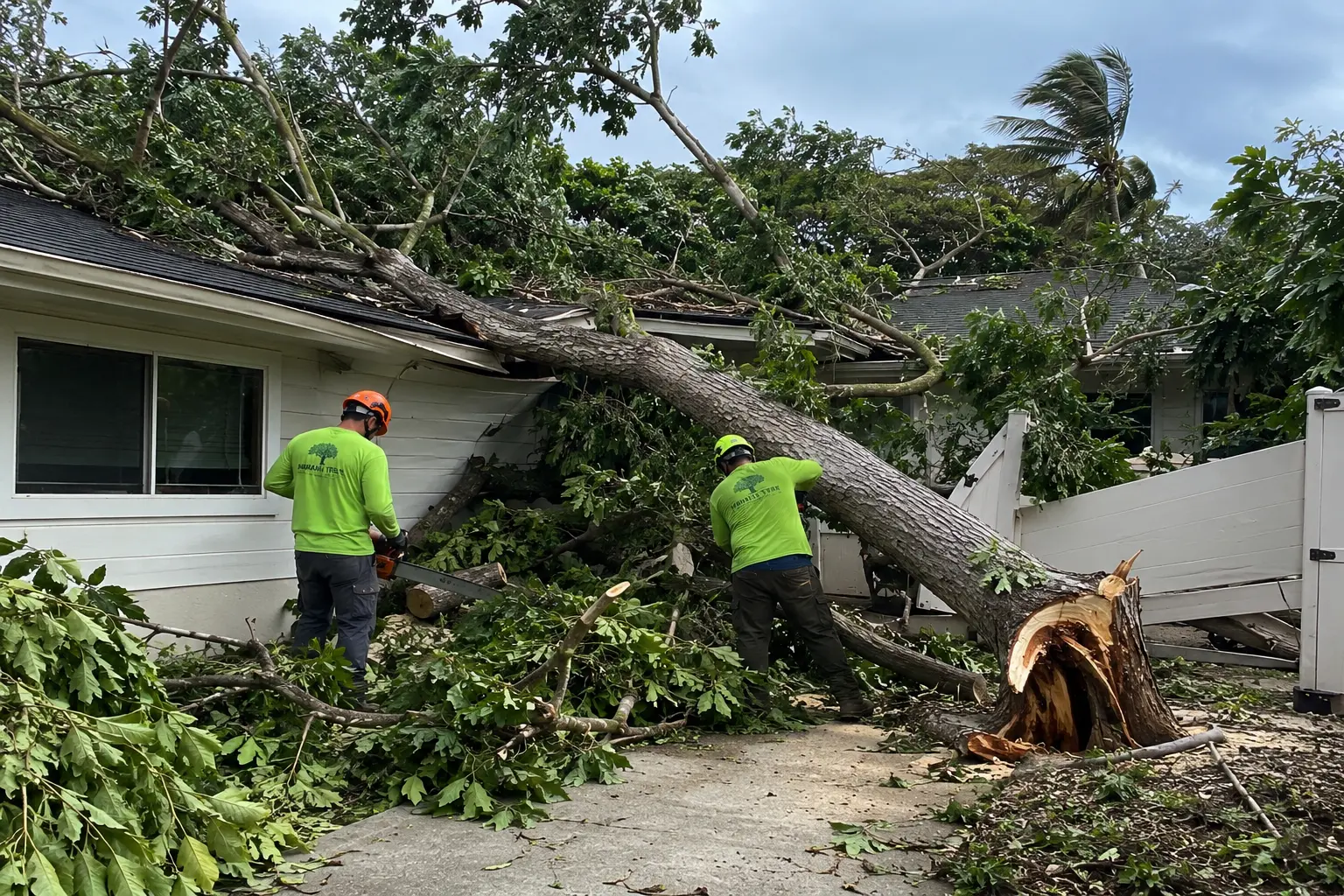
Trees Down on Hillside Homes
A tree failing on saturated, sloped soil can come down across a roofline or onto the property below it. See Fallen Tree Removal for how we sequence that kind of job.
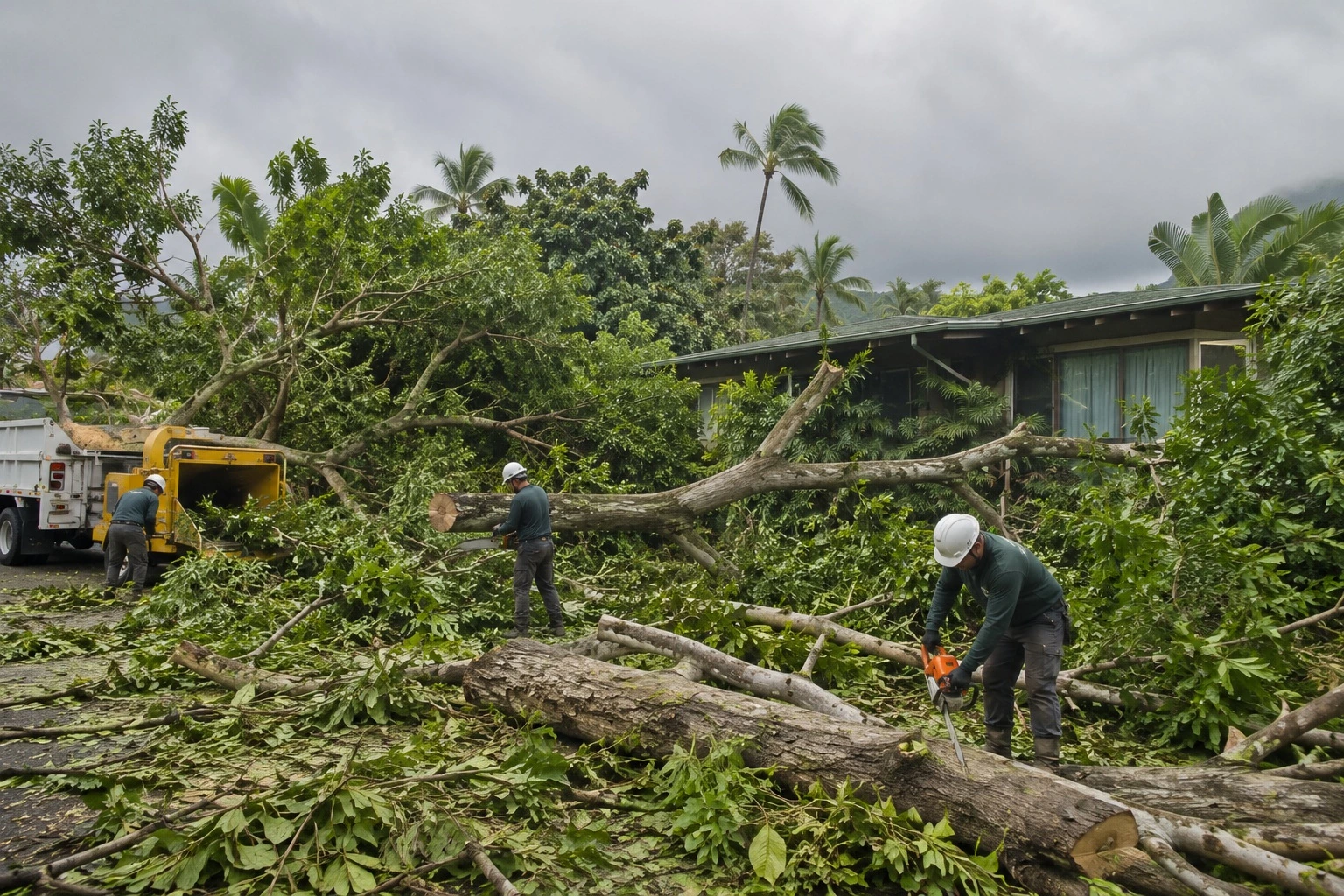
Storm Damage in the Upper Valley
Heavy rain events hit the upper valley near Manoa Falls and Lyon Arboretum hardest, often bringing down multiple trees or limbs across several properties at once.
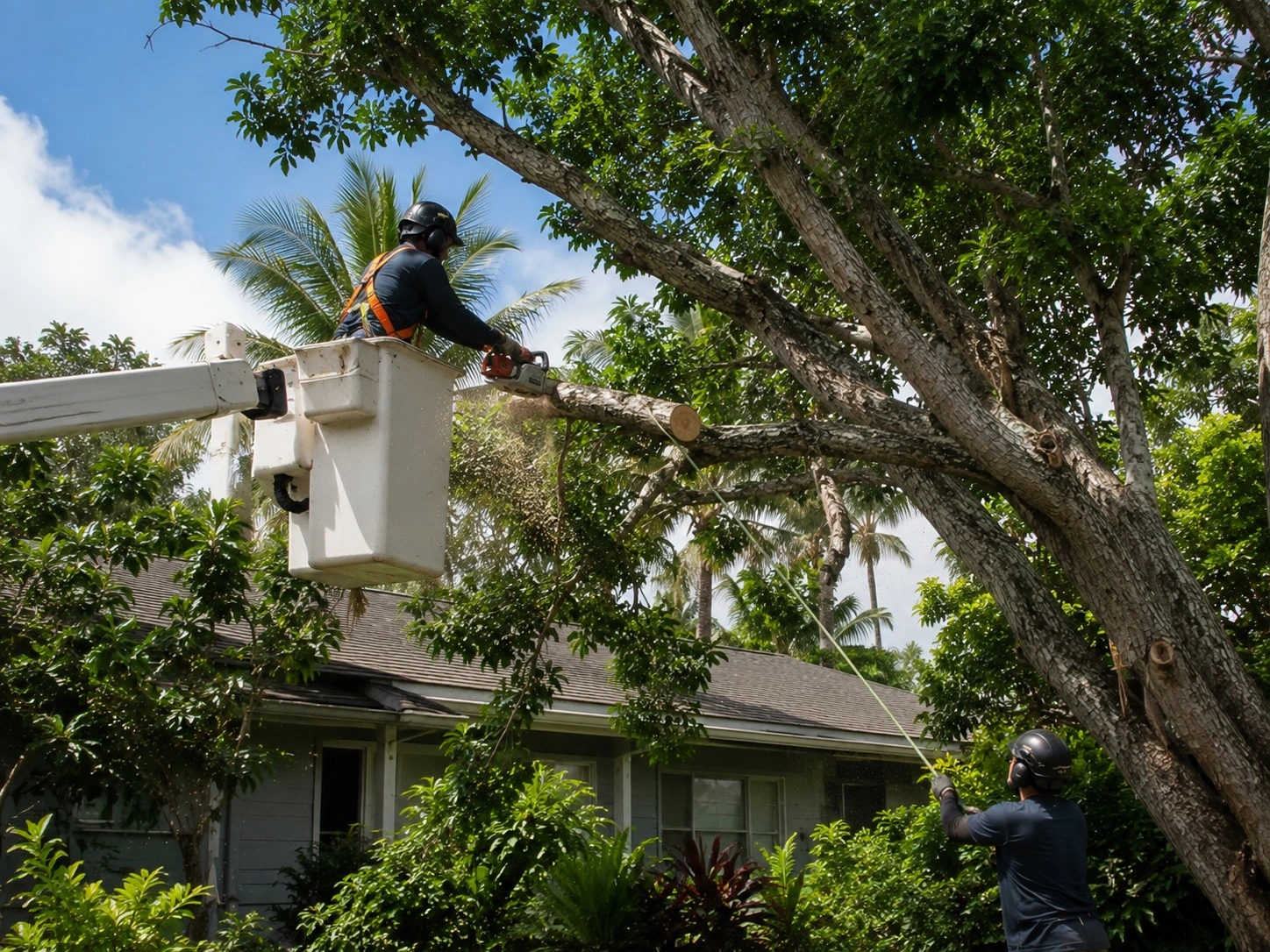
Hanging Limbs Over Narrow Streets
A widowmaker caught above one of Manoa's narrow, winding streets can block access for an entire block. See Tree Limb Removal for how these are prioritized.
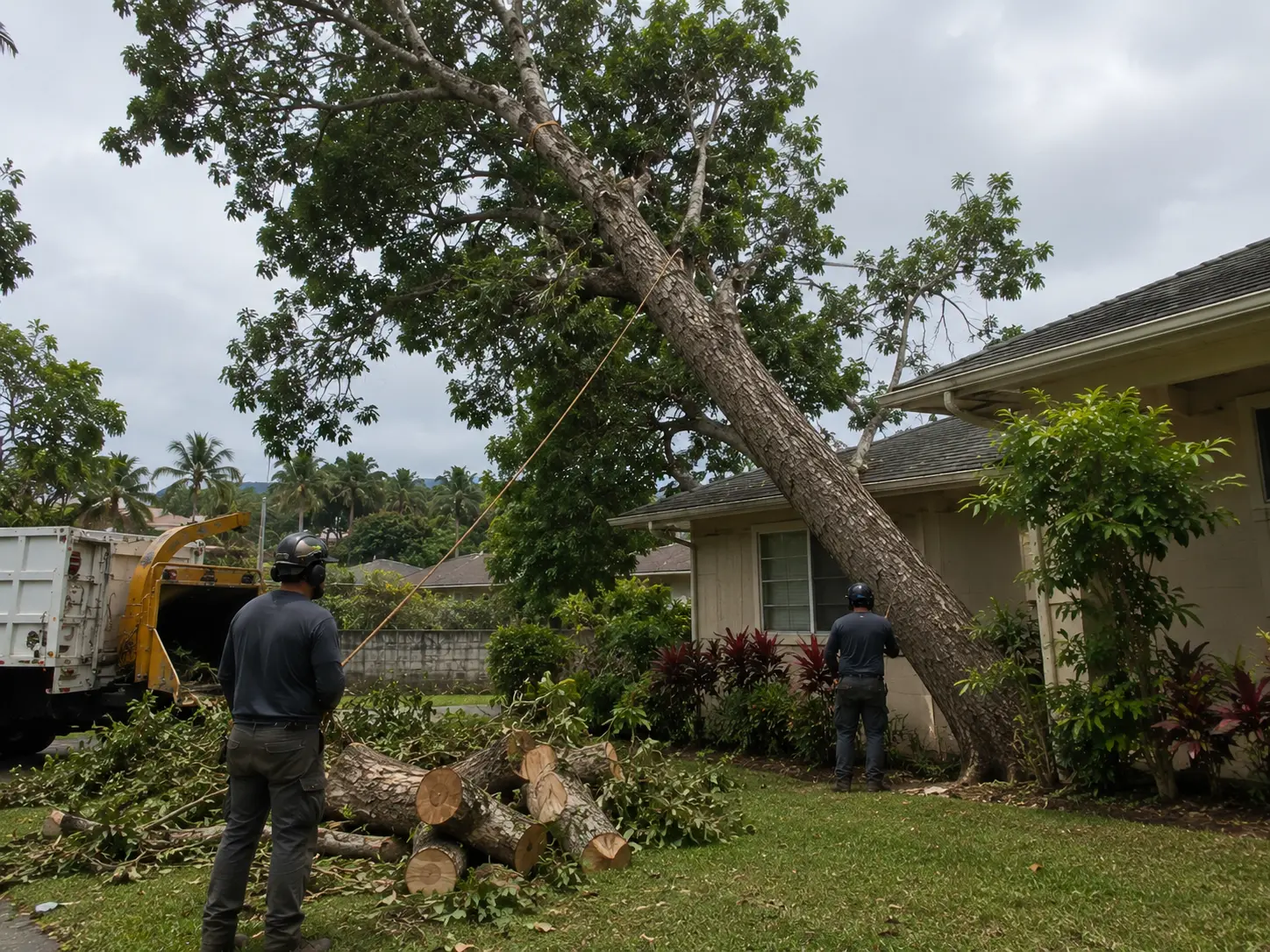
Leaning Trees on Saturated Slopes
Manoa's near-constant rainfall keeps hillside soil wetter than almost anywhere else on the island, a leading cause of lean and root failure here. See Leaning Tree Removal.
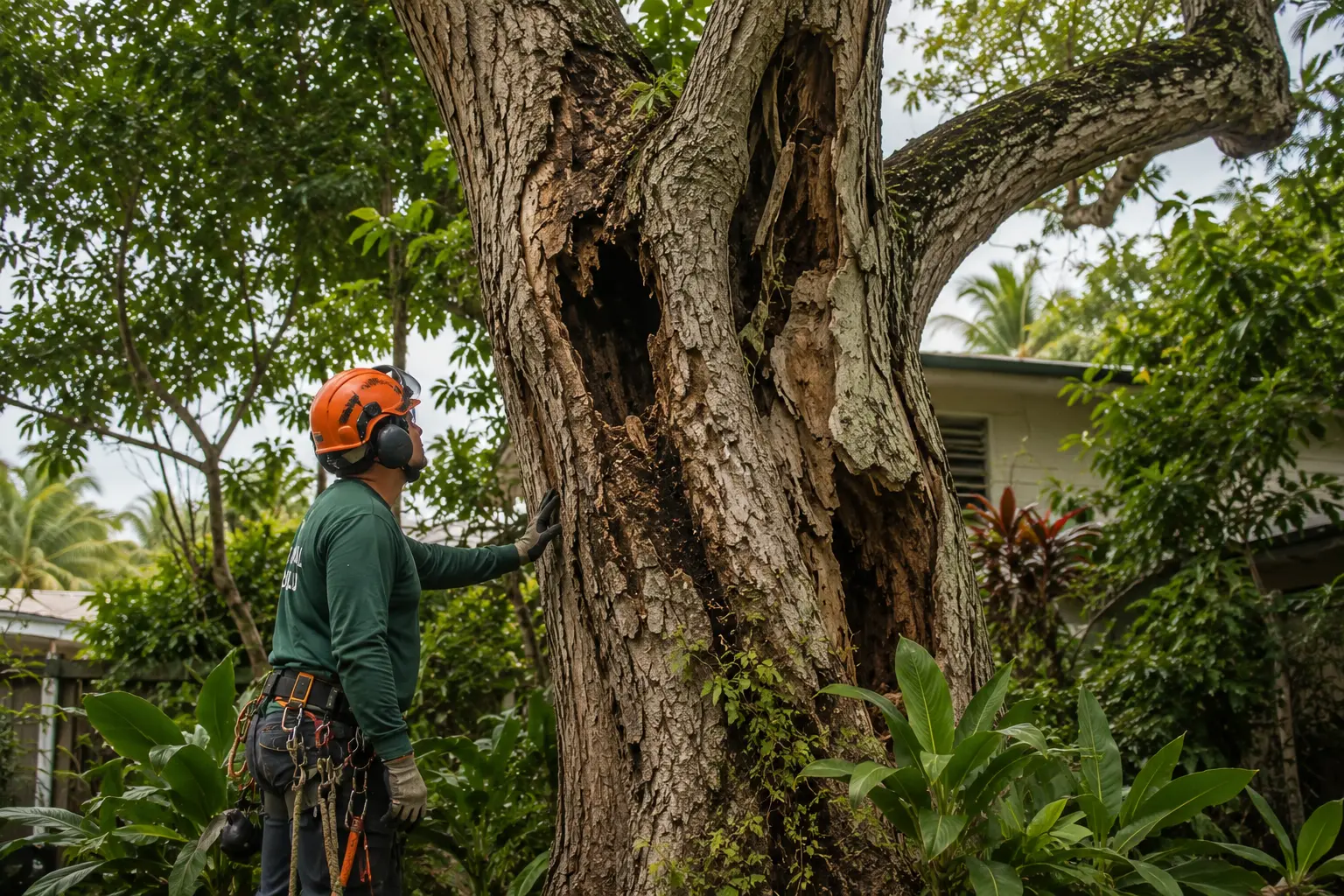
Aging Legacy Trees on Older Lots
Decades-old trees around East Manoa and the university area sometimes carry decay hidden beneath otherwise healthy-looking canopy. See Hazardous Tree Removal.
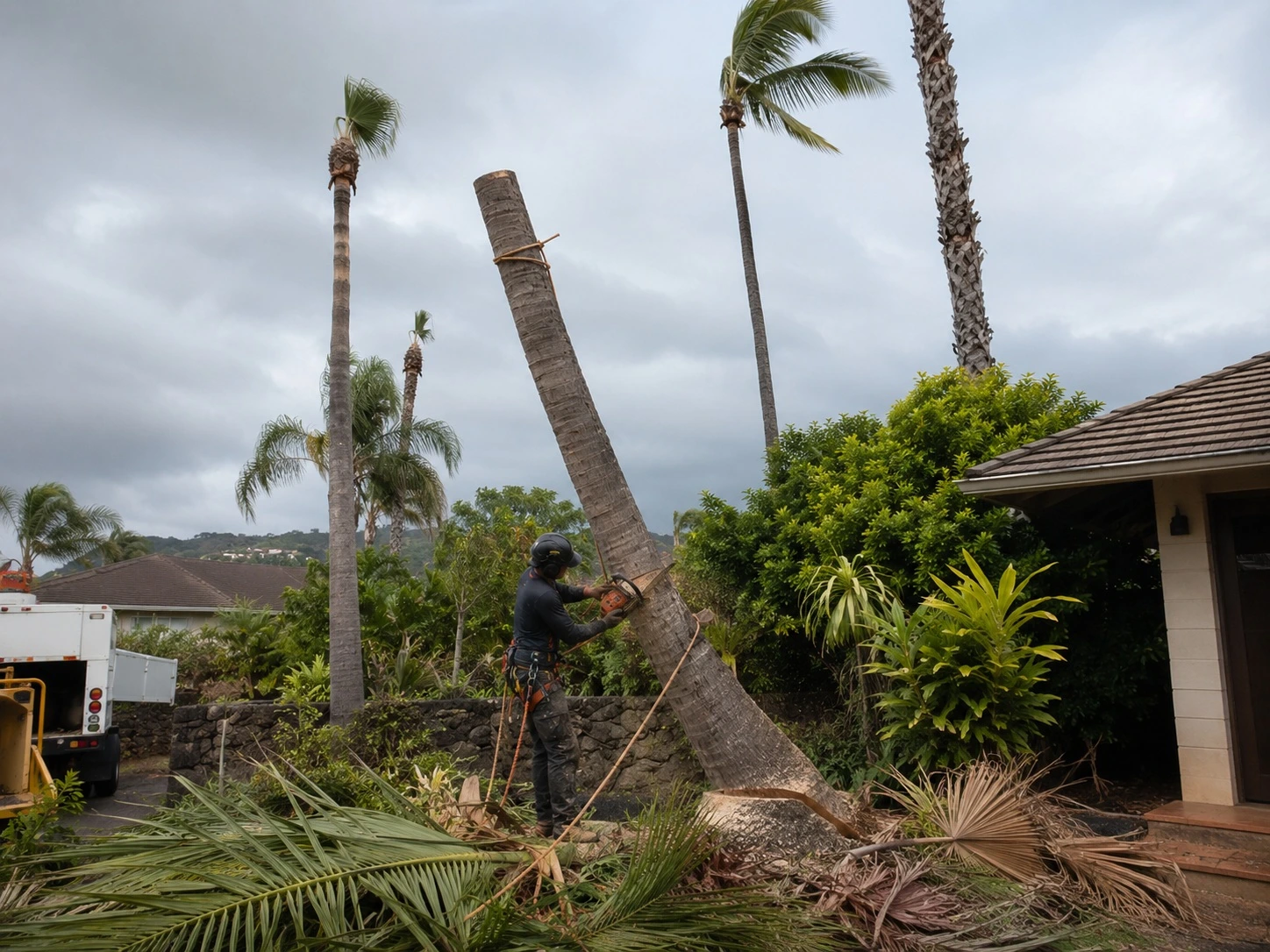
Palm Emergencies on Wetter Lots
Palms are less common in Manoa than elsewhere on Oahu, but where they do grow, constant moisture can affect root stability differently than on drier ground. See Palm Tree Removal for routine and emergency handling.
How rain and terrain shape Manoa's trees
Manoa's position at the base of the Koolau range gives it a weather pattern unlike almost anywhere else in Honolulu.
Orographic Rainfall
Moist trade wind air rising against the Koolau range cools and condenses quickly, giving Manoa some of the most frequent and reliable rainfall on the island, along with its signature rainbows.
Chronic Soil Saturation
Unlike a single storm event, Manoa's rainfall is frequent enough that soil rarely fully dries out, which keeps root systems working in wetter conditions for longer stretches than trees elsewhere on Oahu.
Streambank Erosion
Heavy rain can raise Manoa Stream quickly, and high flow events can erode or undercut the root zones of trees planted close to the bank, a failure mode distinct from wind alone.
Slope-Driven Slippage
On the valley's steeper lots, saturated soil is more prone to slippage than flat ground, which can compromise a tree's anchoring even without a specific storm event triggering it.
Species we see most often across Manoa
Manoa's rainforest-like conditions support species that don't thrive nearly as well in Honolulu's drier neighborhoods, and each comes with its own failure pattern.
African Tulip
A fast-growing species that thrives in Manoa's wet climate but carries weaker wood and shallower roots than slower-growing hardwoods, making it a frequent source of limb failure.
Bamboo Groves
Common along stream corridors and shaded lots, bamboo spreads quickly and can lean or topple under its own weight after heavy rain, often taking neighboring growth down with it.
Monkeypod & Banyan
Legacy shade trees common on Manoa's older residential lots and around the university campus, some large enough to require careful rigging near buildings and neighboring homes.
Working across Manoa's mix of hillside and valley-floor lots
Few neighborhoods on Oahu combine steep terrain, dense rainforest-like canopy, and a major university campus quite like Manoa.
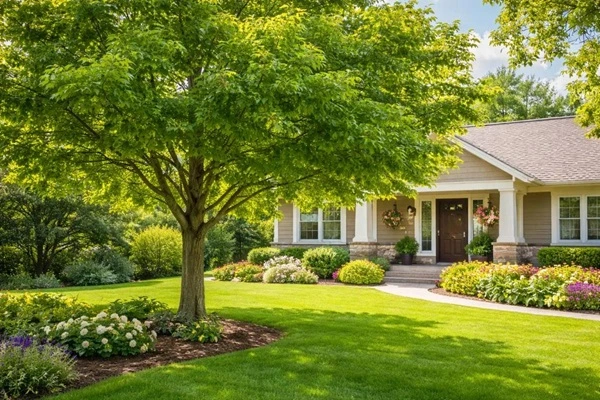
Valley-wall lots, university rentals, and streambank properties
Much of East Manoa and Woodlawn consists of older single-family homes built into the valley walls, where a legacy tree's lean or root failure can affect the property below as much as the one it's rooted on. Streets near the University of Hawaii carry a mix of long-time family homes and student rentals, often with large shade trees planted decades before the surrounding density increased. Properties backing onto Manoa Stream add streambank erosion into the mix, a factor we specifically check during any on-site assessment.
Whatever the property type, the same on-site assessment applies first: confirming access on Manoa's narrow streets, checking slope and soil saturation, and building a plan around that lot's specific constraints rather than a one-size approach. For a full property removal beyond an emergency situation, see tree removal.
Our response process in Manoa
Valley floor, hillside lot, or streambank property, the logistics change, not the standard of care.
Call or Request
Tell us your street and what's happening, by phone or through the estimate form.
Slope & Access Check
We factor in hillside grade, narrow streets, and soil saturation before a crew arrives.
Written Estimate
A clear, itemized estimate based on the on-site assessment, before any work begins.
Careful Removal
Rigging planned around close neighbors, slopes, and stream corridors.
Cleanup
Debris cleared so driveways and narrow streets are usable again.
A crew that already knows Manoa's rain and slopes
A saturated hillside lot in East Manoa and a legacy shade tree near the university both get the same careful assessment before a single cut is made.
Every crew member is trained, and every job is backed by full insurance coverage.
Crews who already know Manoa's rainfall patterns, hillside access, and dense wet-climate canopy.
A written estimate after an on-site visit, with no hidden fees added later.
The same team behind Emergency Tree Removal Honolulu covers every Manoa neighborhood.
We also serve the areas surrounding Manoa
If your property is outside Manoa, we cover the rest of Oʻahu as well. View all service areas →
Manoa questions before you call
How quickly can a crew reach Manoa Valley?
Response depends on the hazard and current conditions on Manoa's narrow, winding streets, but active emergencies like a tree on a structure or blocking a road are prioritized ahead of routine visits. Call to describe the situation and a crew will advise on realistic timing.
Why does Manoa get so much more rain than other parts of Honolulu?
Manoa Valley sits directly beneath the Koolau range, where moist trade wind air is forced upward and cools rapidly, producing frequent showers and Manoa's well-known rainbows. That consistent rainfall keeps soil saturated far more often than the drier coastal parts of Honolulu, which is a major factor in root failure and leaning trees here.
Are Manoa's rainforest-like trees more prone to failure?
Manoa's dense, layered canopy includes fast-growing species like African tulip and bamboo that thrive in wet conditions but often have weaker wood or shallower roots than slower-growing hardwoods. Combined with saturated soil, that combination shows up in emergency calls more often than in drier neighborhoods.
Do Manoa's steep valley slopes add risk?
Yes. Many homes sit on hillside lots along the valley walls, where saturated, sloped soil is more prone to slippage than flat ground, and a leaning or uprooting tree on a slope can affect the property below it as well as the one it's rooted on.
Does flooding along Manoa Stream affect tree stability?
Heavy rain events can raise Manoa Stream quickly, and trees rooted close to the streambank can have their root zones eroded or undercut during high flow, which is a different failure mechanism than wind alone and one we specifically check for on stream-adjacent properties.
What trees cause the most emergency calls in Manoa?
African tulip, bamboo, monkeypod, and banyan are behind most emergency calls here, whether from African tulip's brittle limbs, bamboo groves spreading and leaning under their own weight, or large legacy monkeypod and banyan trees common on Manoa's older residential lots.
Is emergency tree service available throughout all of Manoa, including near UH Manoa?
Yes. Coverage extends across Manoa Valley, East Manoa, Woodlawn, Lower Manoa, the area around the University of Hawaii at Manoa campus, and the Manoa-Palolo border.
Do you offer free estimates for Manoa properties?
Yes. A free, no-obligation estimate can be requested through the form below or by phone, followed by an on-site assessment to confirm the scope of work.
Request a free estimate in Manoa
Tell us your street and what's happening, a fallen tree, a hanging limb, storm damage, or a leaning tree on a slope, and a crew will follow up to confirm timing and, if needed, arrange an on-site assessment.