Palm Tree Removal Honolulu | Every Height, Every Species
A palm doesn't fail like a hardwood, and it can't be removed like one either. No branches to rig from, a single growing point at the crown, and a fibrous root mat instead of a taproot all change the plan, whether it's a backyard fan palm or a sixty-foot coconut palm leaning over the pool.
Tell us the palm's height and what's nearby, a pool, a home, or parked cars, and we'll advise on next steps.
Prefer to write it out? Request a free estimateTechniques built around a palm's single growing point, not adapted from hardwood removal.
Crane assistance available for tall specimen palms in tight or enclosed spaces.
Extra caution around pools, patios, driveways, and parked vehicles below the crown.
Fronds, seed pods, and trunk sections are cleared before the crew leaves.
Written, no-obligation estimates after every palm assessment.
Why a palm removal isn't a scaled-down tree removal
A hardwood gives a climber dozens of branches to anchor rigging to and a canopy that can be dismantled piece by piece from the top down. A palm offers none of that. Everything grows from a single point at the very top of the trunk, the crown shaft, and once that point is damaged or removed, the palm has no way to recover or regenerate the way a hardwood regrows around a pruning cut.
The trunk itself behaves differently too. It doesn't taper and branch the way a hardwood does; it's closer to a uniform column, often with a slick, fibrous surface that changes how a climber ascends and how rigging lines are set. Underneath, a palm's roots form a dense, shallow mat rather than a deep anchoring taproot, spreading wide rather than down, which is part of why a leaning palm can be a more advanced failure than it first appears.
- No branching structure, meaning no mid-canopy rigging points to work from
- A single growing point at the crown that can't recover if damaged
- A fibrous, mat-like root system spread wide rather than anchored deep
- Heavy overhead loads from fronds and, on coconut palms, the fruit itself
For a palm that's actively leaning or came down in a storm, see leaning tree removal and storm tree removal for how those situations are handled.
Falling coconuts are a genuine liability
A mature coconut can weigh several pounds and fall from thirty, forty, or sixty feet with no warning at all, no cracking sound, no visible lean, nothing that tells you it's coming. For a palm positioned over a driveway, a walkway, a pool deck, or a spot where cars regularly park, that's a standing risk rather than an occasional one.
Because of this, many property owners have coconuts and heavy fronds cleared on a routine basis, well before a full removal is ever on the table, simply to keep the area underneath the palm safe to use. We handle this as its own service, separate from a full removal, for palms that are otherwise healthy and staying put.
When a palm has crossed the line into removal
Not every declining palm needs to come down immediately, but these signs point toward removal rather than routine maintenance.
A visible lean at the trunk
Unlike a hardwood, a palm rarely straightens back out once it starts leaning, since its root mat doesn't re-anchor the way a taproot system can.
A soft or discolored crown shaft
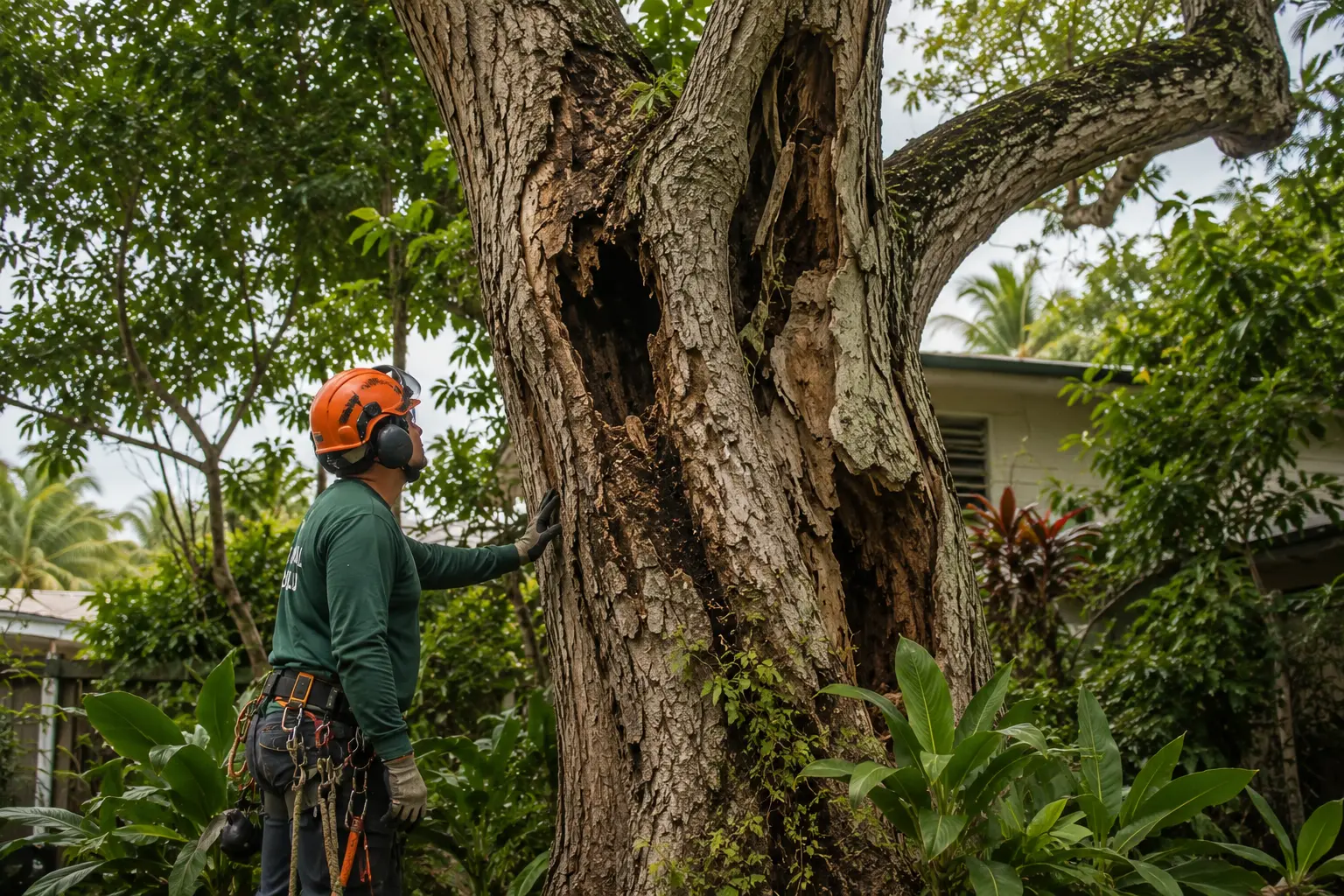
Softening at the point where new fronds emerge often signals the growing point itself is failing, a problem with no fix once it starts.
A thinning, lopsided crown
Fewer green fronds than brown, dropping ones, or a crown that's noticeably uneven suggests the palm is in decline rather than a normal seasonal cycle.
Exposed or disturbed roots at the base
Soil heaving or roots pulling loose at the surface points to the same kind of instability that leads to a full uprooting in a storm.
Removing a palm section by section from the top
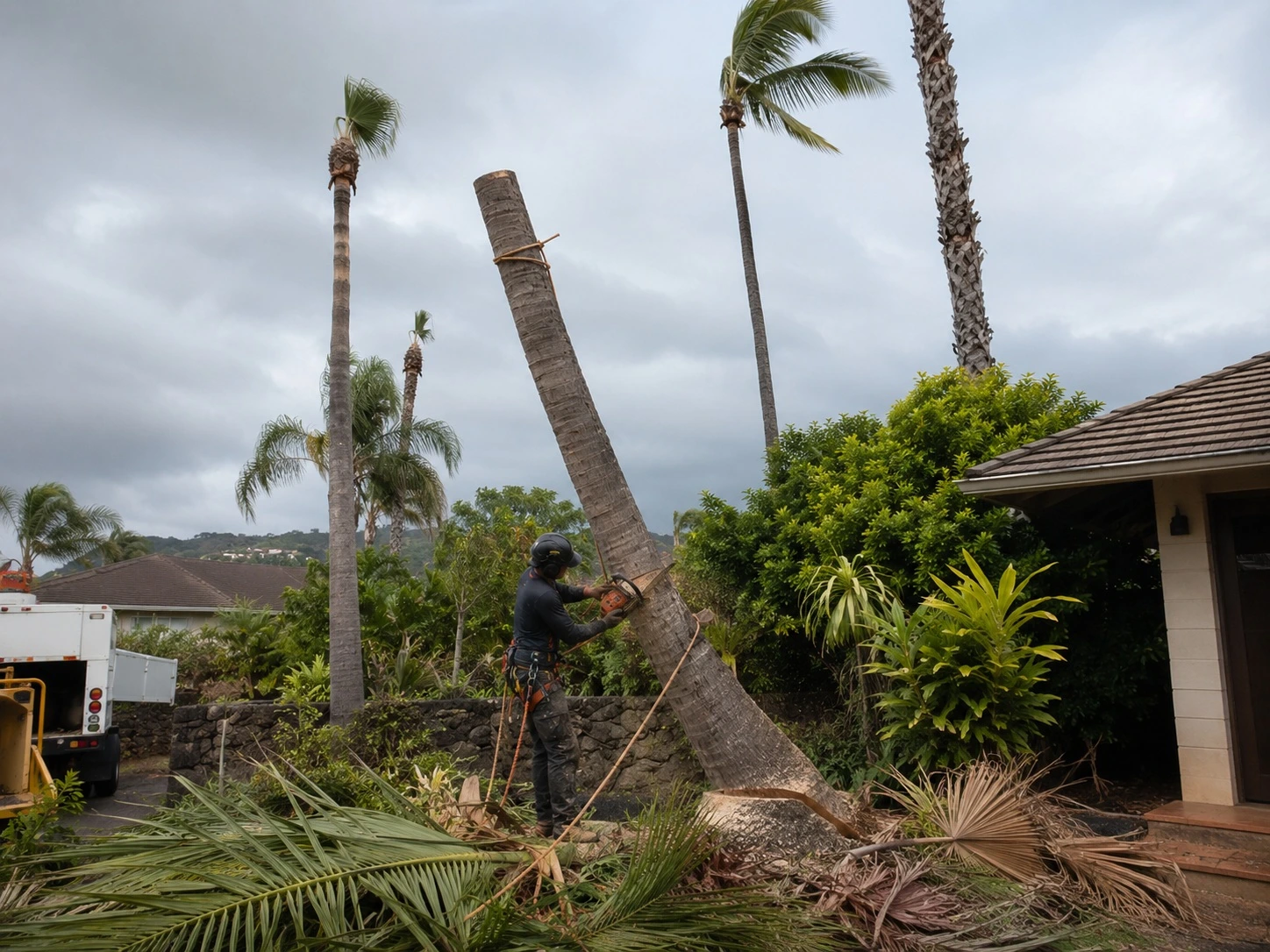
Because there's no canopy to dismantle piece by piece, a palm is typically taken down from the crown first. A climber, or in some cases a bucket truck, works from the top, removing fronds and any fruit first to reduce weight and eliminate the risk of something dropping mid-job, before working down the trunk in measured sections.
Each trunk section is roped and lowered rather than allowed to free-fall, since even a palm trunk section is far heavier than it looks and a straight drop close to a home, fence, or pool deck isn't worth the risk it introduces. The number of sections and the exact sequence depend on the palm's height and how much clearance the site actually offers.
- Fronds and fruit removed first to reduce overhead weight before trunk work begins
- Trunk sections roped and lowered in controlled lengths rather than dropped
- Ground protection placed to prevent damage from lowered sections
- Root mat ground down at the base once the trunk is fully removed
For palms brought down or damaged in a storm rather than removed on a planned basis, see storm tree removal.
When a palm calls for crane assistance
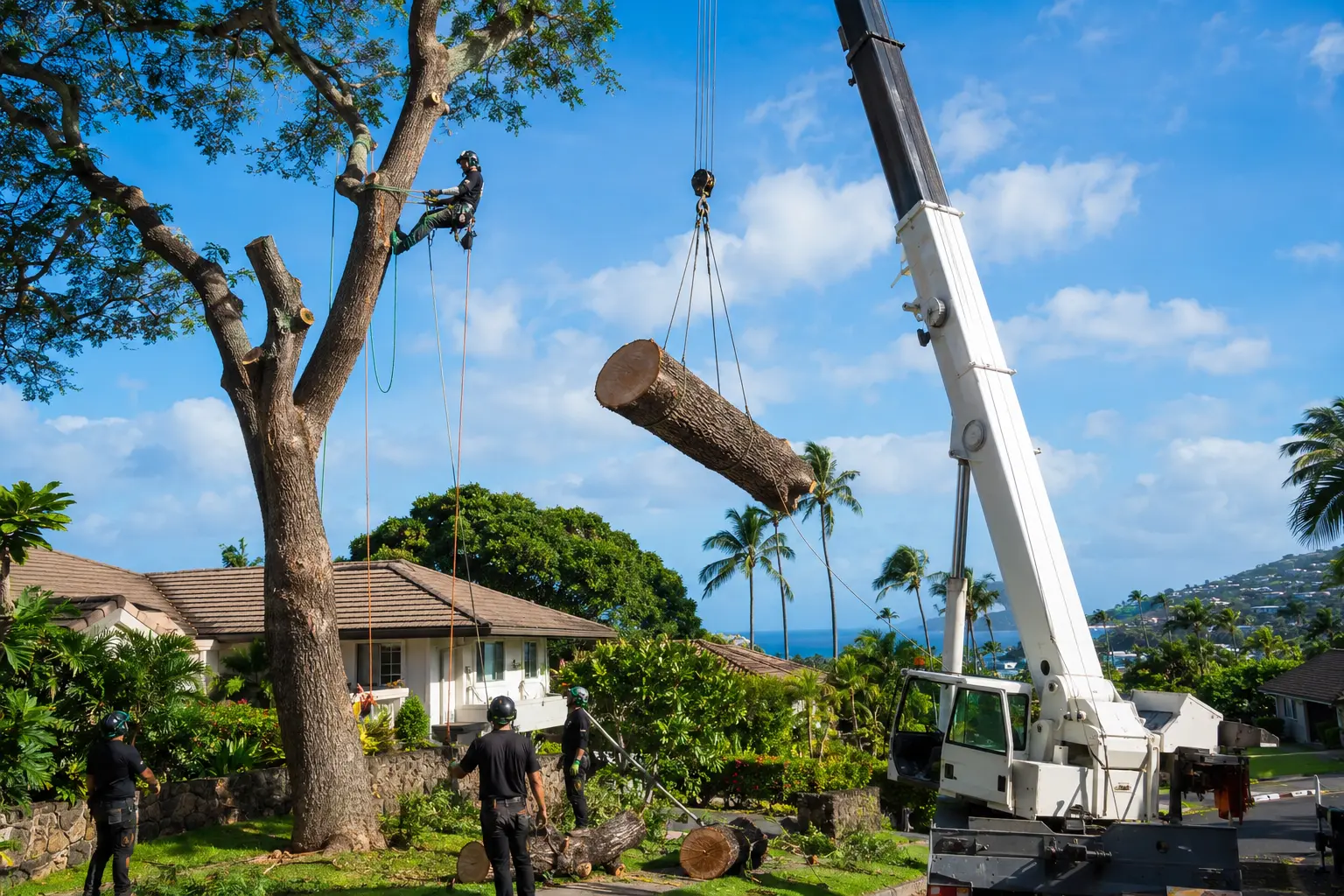
Height and access, more than the palm itself, are what decide whether a crane makes sense.
Rope-Rigged Removal
Shorter palms in open yards with clear ground access are typically climbed and removed with rope rigging alone, section by section from the top down.
Crane-Assisted Removal
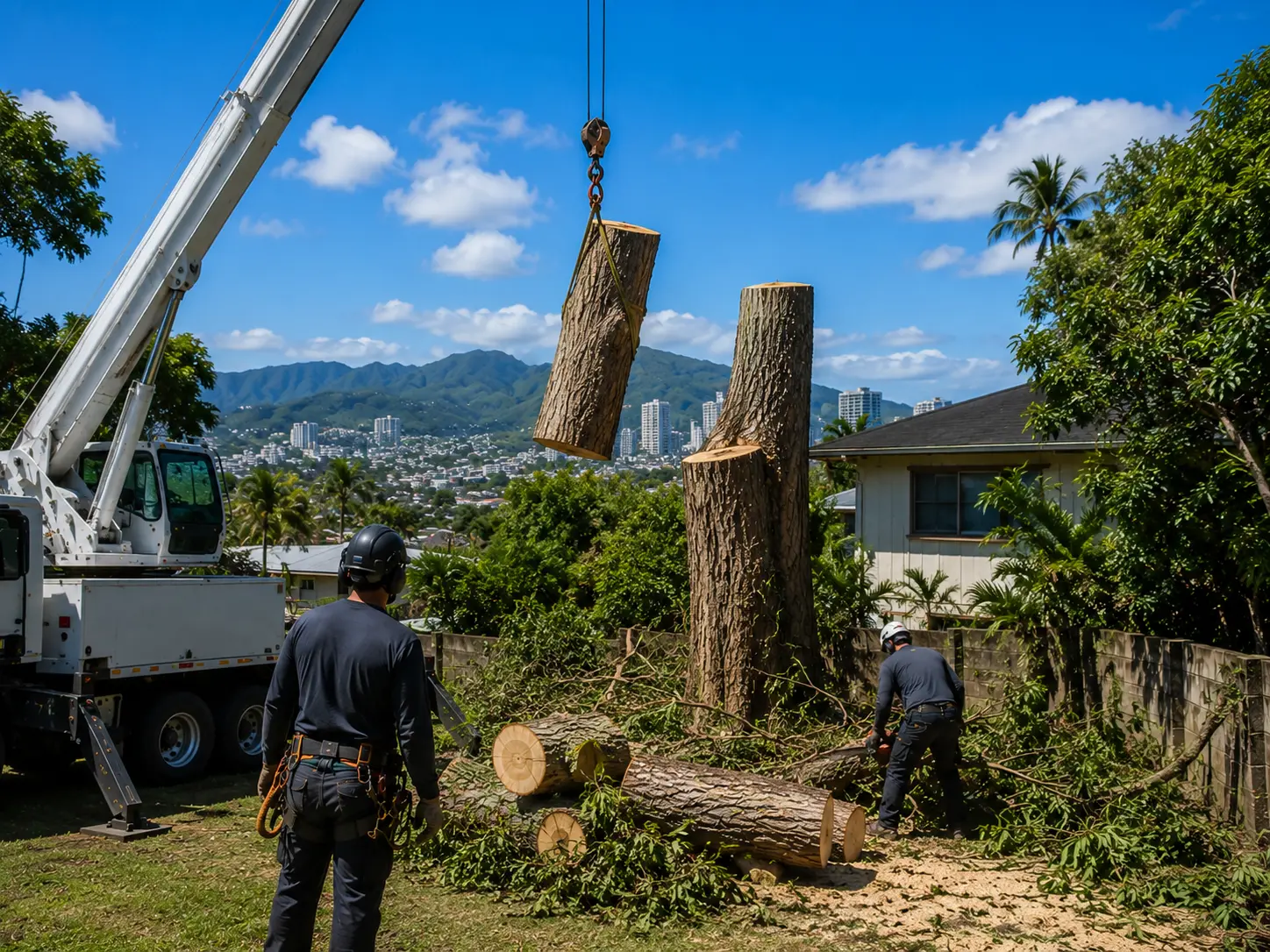
Tall specimen palms, or those close enough to a home, pool, or power line that a rope-lowered section can't clear the space safely, are lifted out by crane instead.
Tight-Access Situations
Palms in narrow side yards or courtyards often need a mix of both, rope-rigged upper sections and crane extraction for the largest, heaviest pieces near the base.
Palm removal near pools, patios & parked vehicles
Palms are often planted for exactly the areas that are hardest to protect during removal.
Removal Near Pools & Pool Decks
Palms are frequently planted right at the edge of a pool or lanai for shade and shape, which is exactly where debris, sections, and rigging lines need the most careful management. We protect pool equipment, decking, and water from falling material throughout the job, not just at the final cut.
Removal Near Driveways & Parked Cars
A palm overhanging a driveway or carport means vehicles are directly in the drop zone of any frond, coconut, or trunk section. We coordinate timing with you in advance so cars can be moved before work begins, rather than working around them.
Palm species we see most often on Oʻahu
Each species carries its own height, weight, and hazard profile, which changes both the plan and the timeline.
Coconut Palms
Tall, heavy-crowned, and fruit-bearing, coconut palms carry the most liability of any species we remove, given how far and how heavy a falling nut can be.
Royal Palms
Very tall, straight, smooth-trunked specimens common in landscaped and commercial properties, often requiring crane assistance given their height alone.
Areca & Fan Palms
Typically shorter, clustering, or single-trunk ornamentals that can usually be removed with rope rigging alone in a single, straightforward visit.
Date & Canary Island Palms
Broad, heavy crowns with dense, thorned frond bases that call for extra care during frond removal, particularly when working close to a structure or walkway.
Frond & seed pod clearing for palms that are staying
Not every palm needs to come down. Many just need the overhead hazard managed on a routine basis.
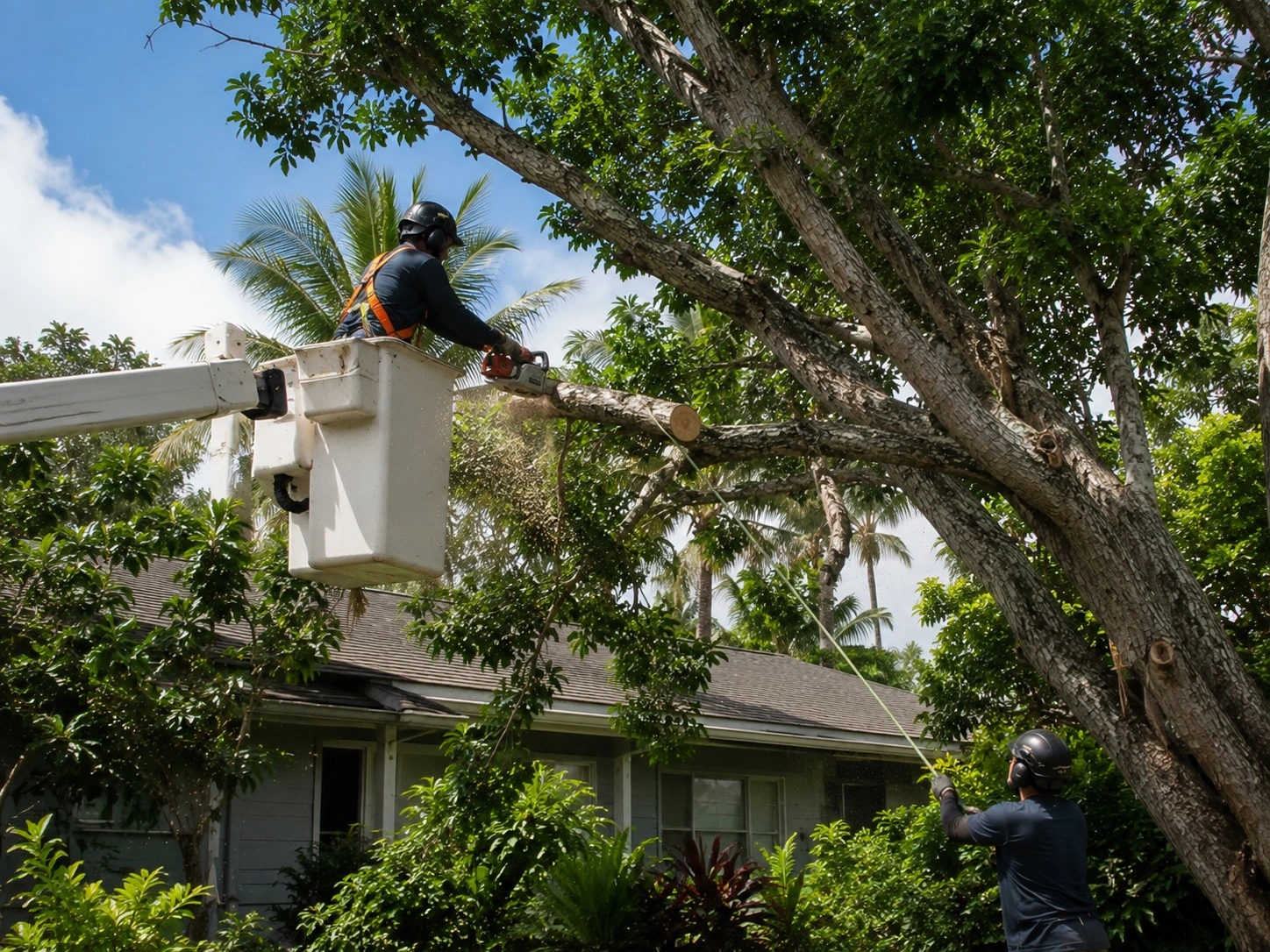
Clearing dead fronds and coconuts without removing the tree
A healthy palm that's simply grown tall enough to drop dead fronds or heavy fruit onto the areas below it doesn't need a full removal, it needs the crown maintained. We climb or use a bucket to clear dead and dying fronds, along with coconuts or seed pods, before they become a falling hazard rather than after.
This is a service worth scheduling on a recurring basis for coconut palms positioned over driveways, walkways, or parking areas, since the hazard returns every time a new frond dries out or a new bunch of coconuts matures.
Permits & insurance for palm removal
We confirm both before the first cut, so there are no surprises partway through the job.
Some mature palms may fall under protected tree rules
The City and County of Honolulu regulates removal of certain protected and exceptional trees, and depending on species, size, and location, this can extend to some mature palm specimens, not just hardwoods. We check this during your on-site assessment so it's confirmed before removal, not discovered mid-job.
Insurance coverage depends on your specific policy and the reason for removal. A palm that came down during a storm and damaged a covered structure is often eligible for a claim; see storm tree removal for how that documentation is handled. Routine removal of a declining or unwanted palm typically isn't a covered event on its own.
Our palm removal process
The same process applies whether it's a single backyard fan palm or a tall coconut palm requiring crane assistance.
Call or Request
Describe the palm's height, species if known, and what's nearby, by phone or through the estimate form.
On-Site Assessment
A crew evaluates the palm's height, condition, and access in person.
Written Estimate
A clear, itemized estimate is provided based on that assessment, including crane needs if applicable.
Section-by-Section Removal
Fronds and fruit come down first, then the trunk in controlled sections.
Cleanup & Grinding
Debris is cleared and the root mat is ground down if requested.
Honolulu's palm removal crew homeowners trust
Palms make up a real share of Oʻahu's canopy, and treating them the same as a hardwood is where inexperienced crews get into trouble.
Every crew member is trained, and every job is backed by full insurance coverage.
Crews trained on palm anatomy and rigging, not just hardwood removal applied to a different tree.
A written estimate after an on-site visit, with no hidden fees added later.
The same team behind Emergency Tree Removal Honolulu handles every palm call too.
Palm tree removal across Oʻahu
Palm removal and maintenance available throughout Honolulu and the surrounding communities. View all service areas →
Palm removal questions before you call
Why do palms need to be removed differently than other trees?
A palm has a single growing point at the top of the trunk and no branching structure to rig from, so climbers and crews can't use the same limb-by-limb rigging approach used on hardwoods. The fibrous root system also fails differently than a taproot, which changes how a leaning or declining palm is assessed and removed.
Are falling coconuts really a liability concern?
Yes. A mature coconut palm can drop nuts weighing several pounds from significant height with no warning, and this is a well-documented hazard for property owners in Hawaii, particularly for palms near driveways, walkways, pools, or parked cars. Coconut removal is commonly handled as routine maintenance between full removals for exactly this reason.
How can I tell if a palm is dying or declining?
Warning signs include a thinning or lopsided crown, fronds that brown and drop faster than new ones emerge, a soft or discolored area at the crown shaft, and any visible lean. Because a palm's single growing point means it can't recover the way a hardwood can regenerate a damaged limb, decline at the crown is often more serious than it looks.
Can a leaning palm be straightened instead of removed?
Occasionally a young palm with a minor, recent lean and an intact root system can be staked and monitored. A mature palm with a pronounced lean, especially one showing soil disturbance or root exposure at the base, usually cannot be corrected reliably and removal is the safer path.
Do you need a crane to remove a palm?
Not always. Shorter palms in open areas can often be climbed and removed in sections with rope alone. A crane becomes the better option for very tall specimen palms, palms in tight side yards, or palms close enough to a home, pool, or power line that ground-level rigging isn't practical.
Is it safe to remove coconuts or fronds from a palm myself?
Climbing a mature palm without the right equipment and training carries real fall risk, and cutting fronds or coconuts from the ground with a pole saw doesn't address the ones still overhead. Routine coconut and frond clearing is generally best left to a trained crew, especially on tall specimens.
What happens to a palm's root system after removal?
A palm's root system is fibrous and mat-like rather than a single deep taproot, so it's typically ground down along with the trunk base rather than extracted as a whole. This tends to be more straightforward than stump grinding a hardwood's root flare.
Do I need a permit to remove a palm tree in Honolulu?
The City and County of Honolulu regulates removal of certain protected and exceptional trees, which can include some mature palm specimens depending on species and location. We confirm requirements as part of the on-site assessment before any removal begins.
How much does palm tree removal cost in Honolulu?
Cost depends on the palm's height, whether crane assistance is needed, proximity to structures, pools, or power lines, and whether frond and coconut clearing is included. A written estimate after an on-site assessment is the only reliable way to know the cost for a specific palm.
Is palm removal covered by homeowners insurance?
Coverage depends on your specific policy and the reason for removal. A palm that fell during a storm and damaged a covered structure is often eligible for a claim, while routine removal of a declining or unwanted palm typically is not.
Request a free palm tree removal estimate
Tell us about the palm, its height, species if known, and what's nearby, and a crew will follow up to arrange an on-site assessment and written estimate. If the palm is actively leaning or damaged right now, call our Emergency Tree Removal Honolulu line instead.