Emergency Tree Removal Waikiki | Local, Fast, On Call
Waikiki's canopy shares the same narrow strip of land as its hotels, condo towers, and the busiest sidewalks on the island, which means every removal here is also a logistics problem: coordinating with property management, working around foot traffic, and rigging in spaces most crews never have to think about. We work this district regularly and plan every job around it.
Tell us the property and what's happening, and we'll advise on next steps and timing.
Prefer to write it out? Request a free estimateFrom the Kalakaua hotel zone to Kapiolani Park, the Ala Wai, and Gateway Waikiki.
Crews used to working without a yard, coordinating loading zones and building access instead.
We work directly with hotel staff, condo boards, and city park permitting where required.
Limbs, trunk sections, and green waste cleared before the crew leaves.
Written, no-obligation estimates after every on-site assessment.
Why tree work in Waikiki isn't like a residential job
Most of the trees we work on elsewhere in Honolulu stand in a yard, with room around them for equipment, rigging, and a clear drop zone. Waikiki rarely offers that. A tree along Kalakaua Avenue might rise directly out of a sidewalk planter box a few feet from valet parking and a hotel entrance, while one inside a condo courtyard has to be reached through a lobby or a shared parking structure rather than a driveway. Every job here starts with figuring out how a crew and equipment actually get to the tree before figuring out how to remove it.
The trees themselves add another layer. Waikiki is home to some of Oʻahu's most recognizable banyan trees, including specimens whose canopies have spread wide enough to shade entire courtyards and public spaces. A banyan's aerial roots can descend and thicken into secondary trunks over decades, turning a single tree into a connected structural system where removing one section can shift load somewhere else in ways that aren't obvious from the ground.
- No yard or driveway on most hotel, condo, and beachfront properties
- Coordination with property management, HOA boards, or city permitting before work begins
- Mature banyans with aerial root systems that function as one connected structure
- Constant pedestrian traffic along Kalakaua and Kuhio Avenues during any removal
If a tree is actively down or hazardous anywhere in Waikiki right now, see Emergency Tree Removal Honolulu for our fastest response option.
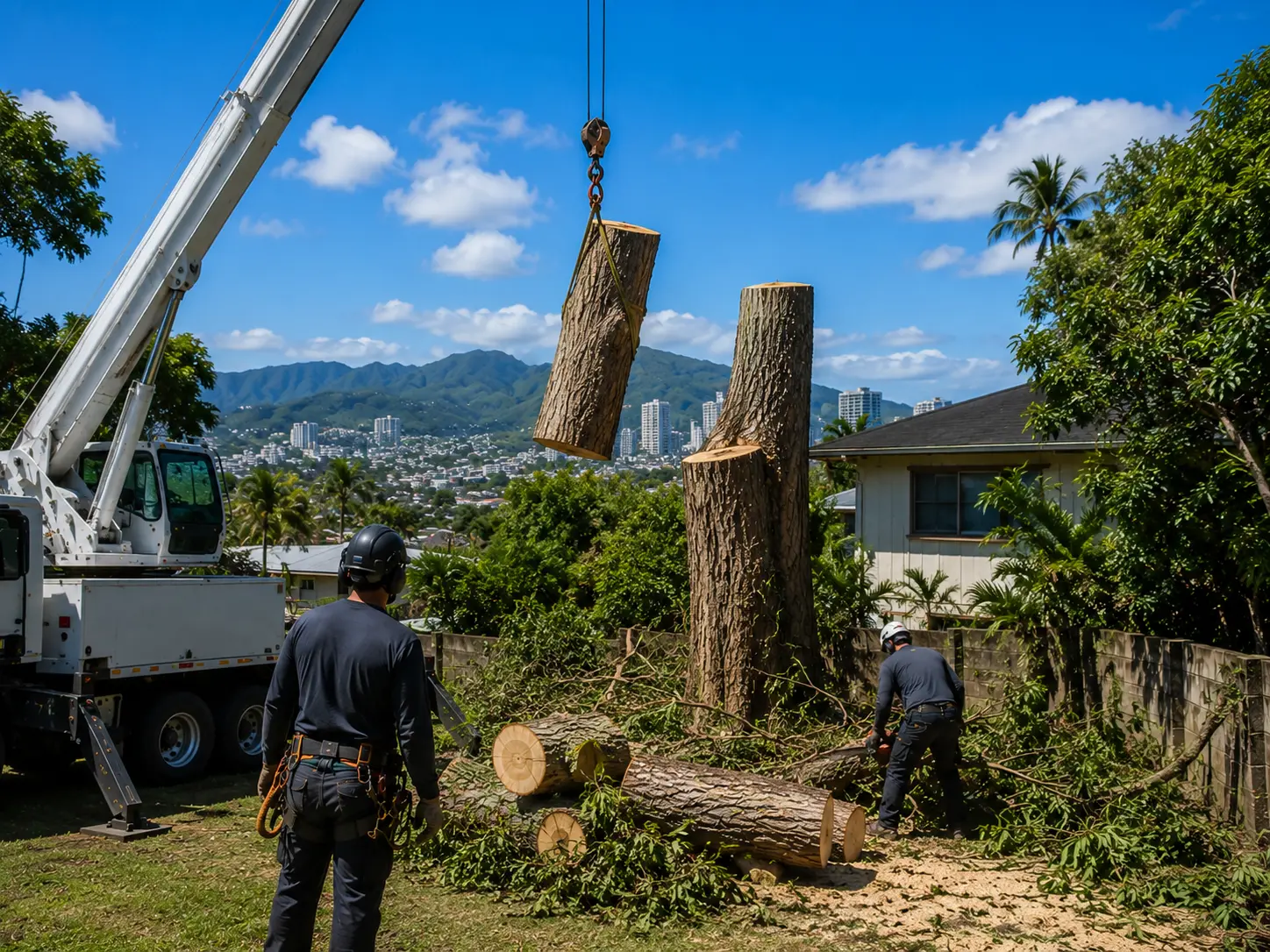
A district that changes block by block
Waikiki isn't one uniform strip. Each pocket has its own access constraints and canopy, and our crews plan accordingly.
The Kalakaua Hotel Zone
The dense strip of high-rise hotels fronting the beach, where mature shower trees, monkeypod, and banyans grow directly out of sidewalk planters just steps from valet stands and guest entrances.
Kuhio Avenue & the Condo Corridor
A block inland, lined with high-rise condominiums and mid-size hotels, where courtyard trees and street planters are typically managed through an HOA board or property management company.
Kapiolani Park
Waikiki's green space at the Diamond Head end, home to some of the district's largest banyan and monkeypod trees, where any removal typically involves coordination with the city as the landowner.
The Ala Wai Canal Side
The quieter, canal-facing edge of Waikiki, with older low-rise buildings and canal-adjacent soil that stays damper than the beachfront side of the district.
Diamond Head End & Queen's Surf
Where Waikiki tapers toward Diamond Head, mixing lower-density residential streets with beach park landscaping and mature coconut palms along the shoreline.
Gateway Waikiki
The Ewa-facing entrance to the district bordering Ala Moana, with newer high-rise construction and a mix of transplanted landscaping still establishing itself compared to the district's older canopy.
Common tree emergencies across Waikiki
Dense foot traffic, mature banyans, and beachfront salt exposure each raise different concerns, and knowing which one you're dealing with changes the response.
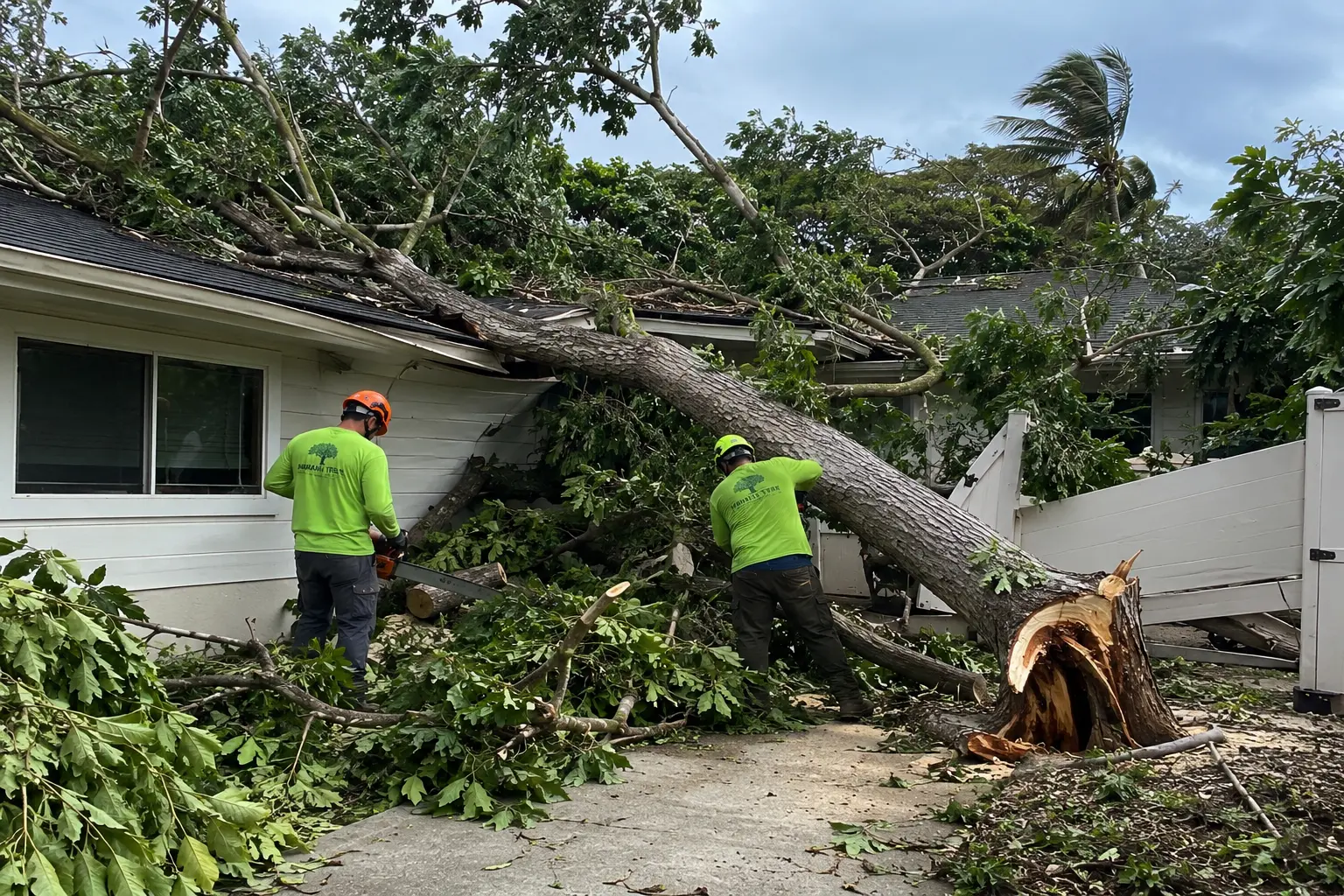
Trees Down Over Sidewalks or Roadways
A tree or major limb coming down over a sidewalk along Kalakaua or Kuhio Avenue is treated as a priority given how much foot and vehicle traffic passes through at any hour. See Fallen Tree Removal.
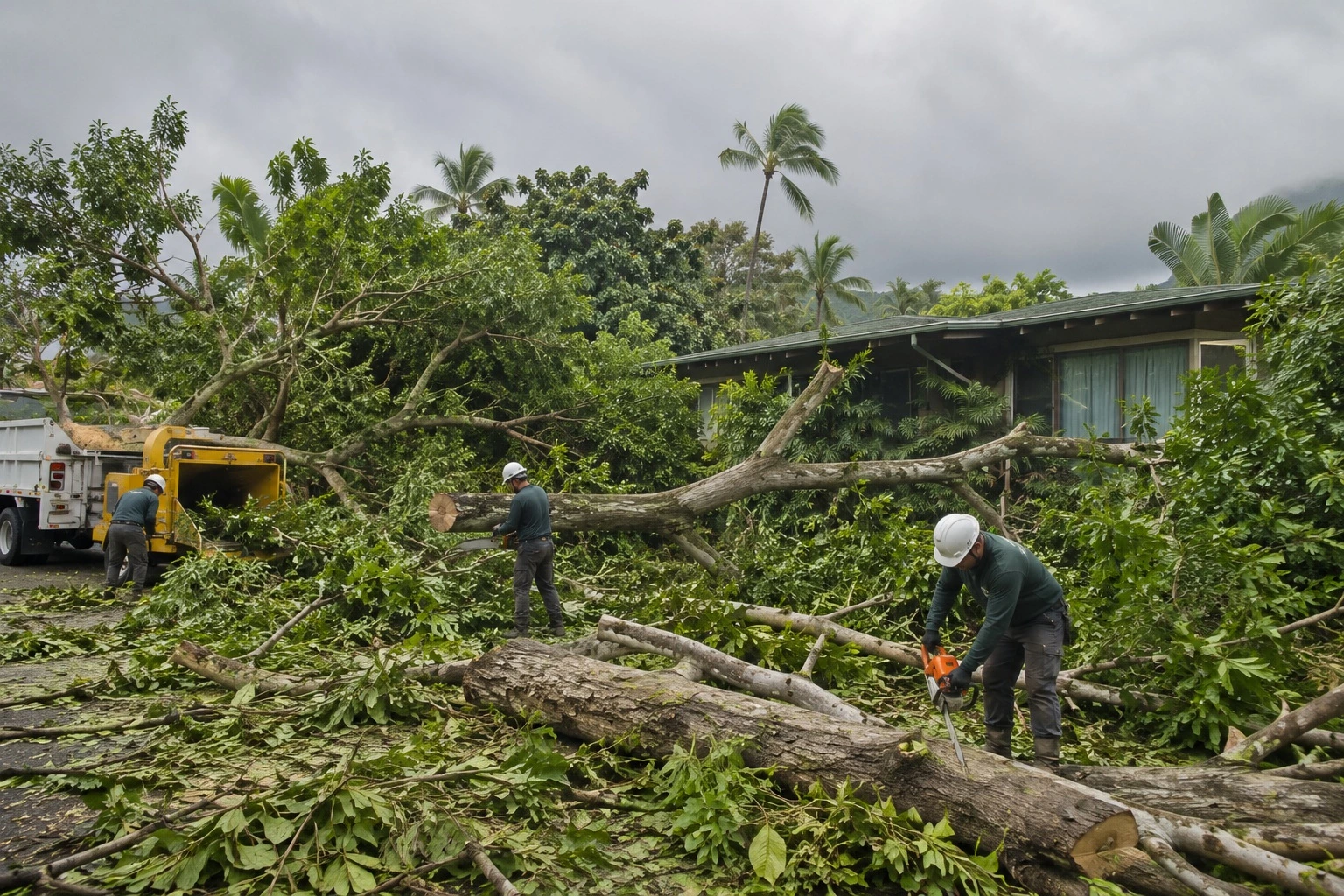
Storm-Damaged Beachfront Trees
Properties directly along the shoreline take the most direct wind exposure in Waikiki, and storm damage here often shows up before it does further inland toward the Ala Wai.
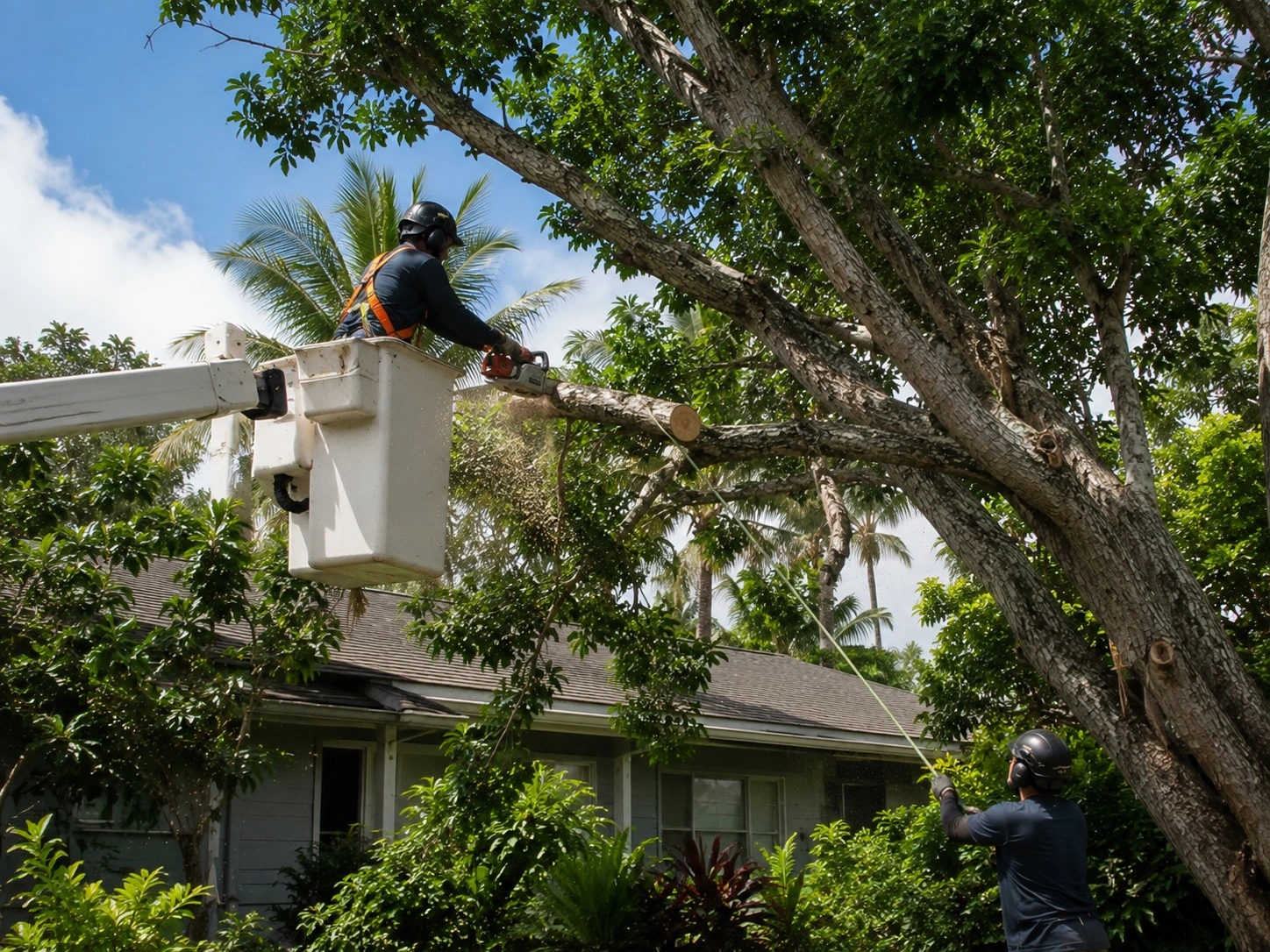
Hanging Limbs Near Entrances
A cracked limb caught above a hotel entrance, pool deck, or busy sidewalk gets flagged and cleared quickly given how many people pass beneath it. See Tree Limb Removal.
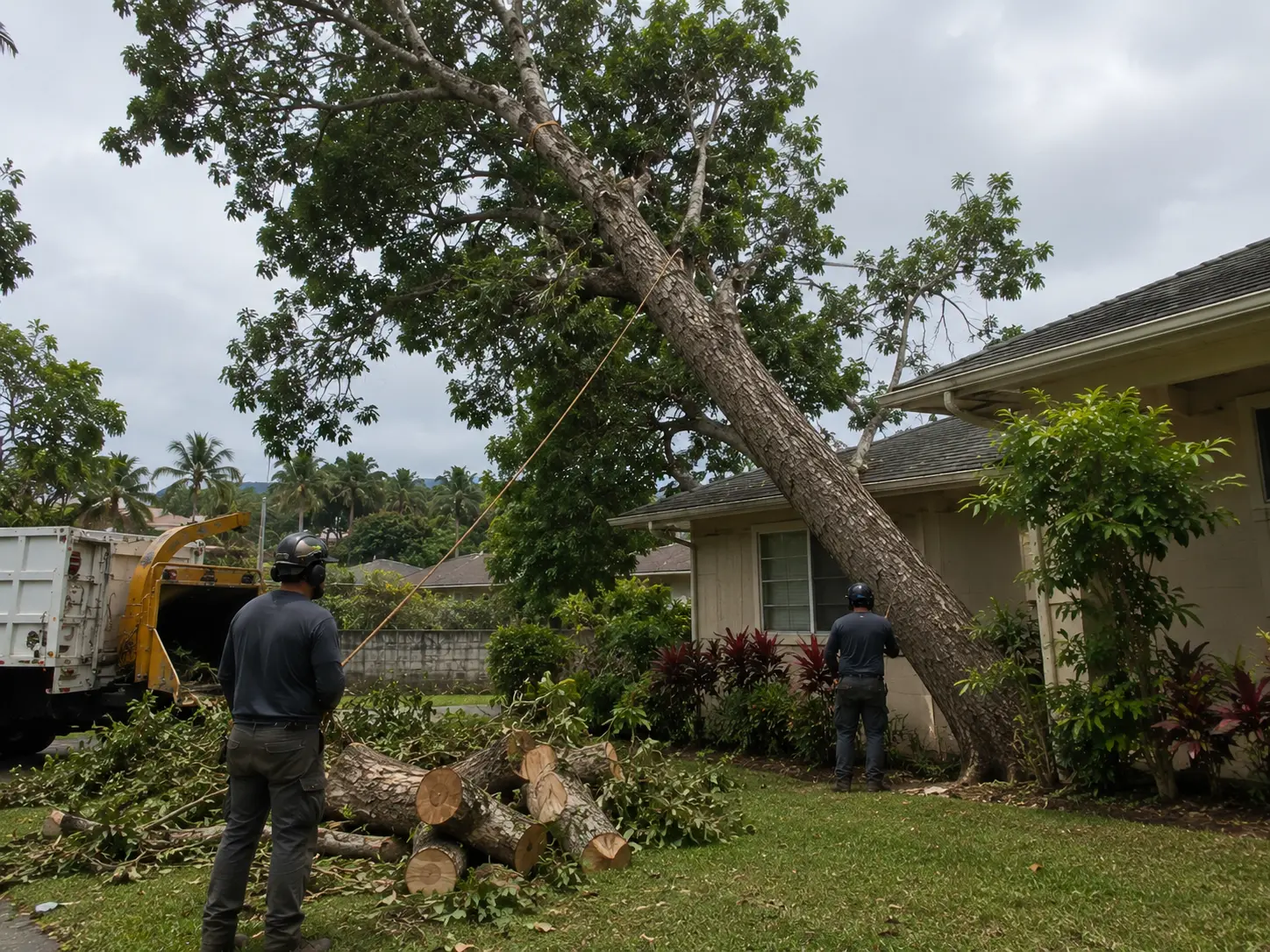
Leaning Trees in Tight Courtyards
A tree leaning in a confined condo courtyard or planter box has far less room to fail safely than one in an open yard, which raises the urgency even at a modest angle. See Leaning Tree Removal.
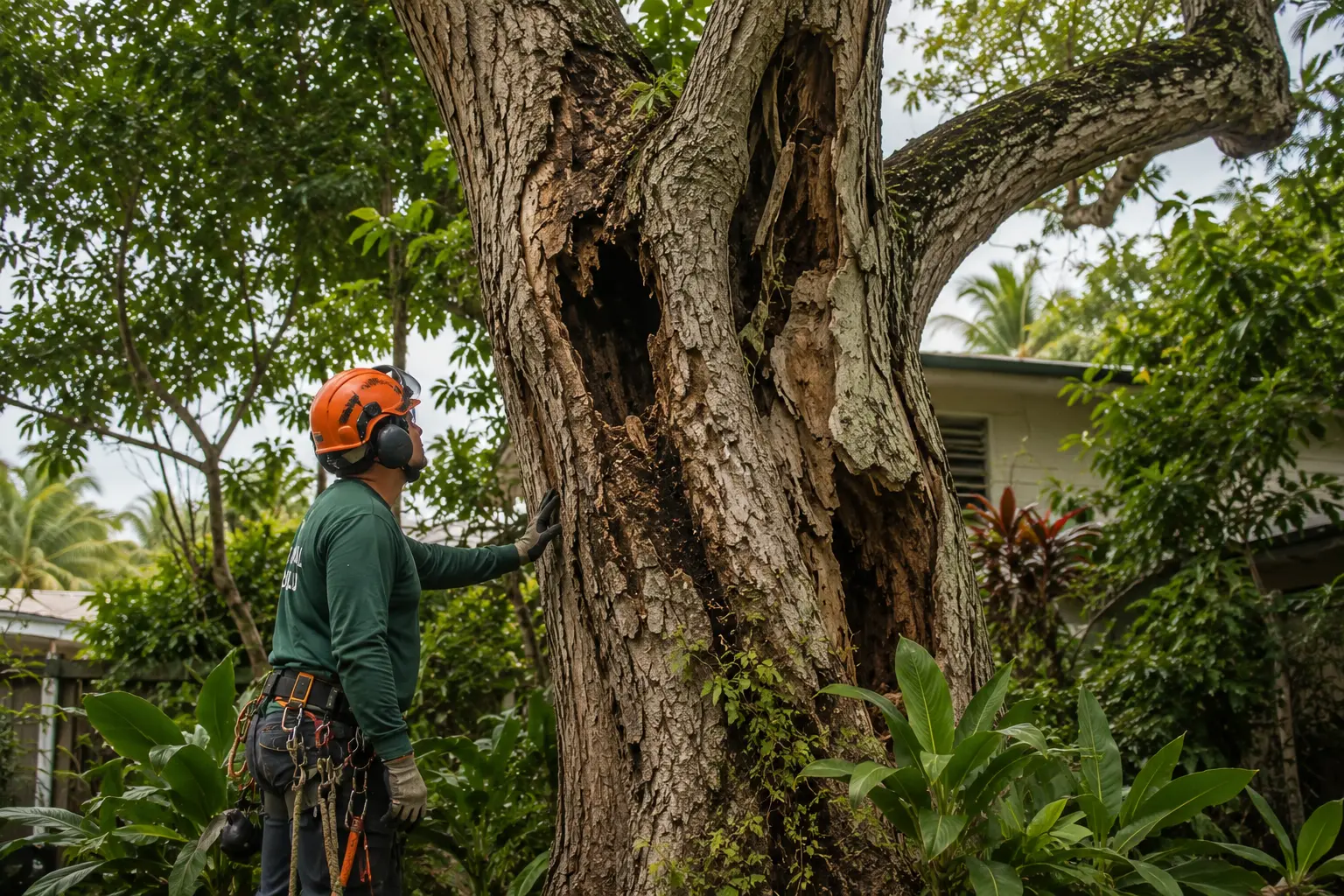
Aging Banyan & Monkeypod Canopy
Waikiki's oldest banyan and monkeypod trees can develop cavities or aerial root failure that isn't obvious from a passing glance. See Hazardous Tree Removal for how we assess these.
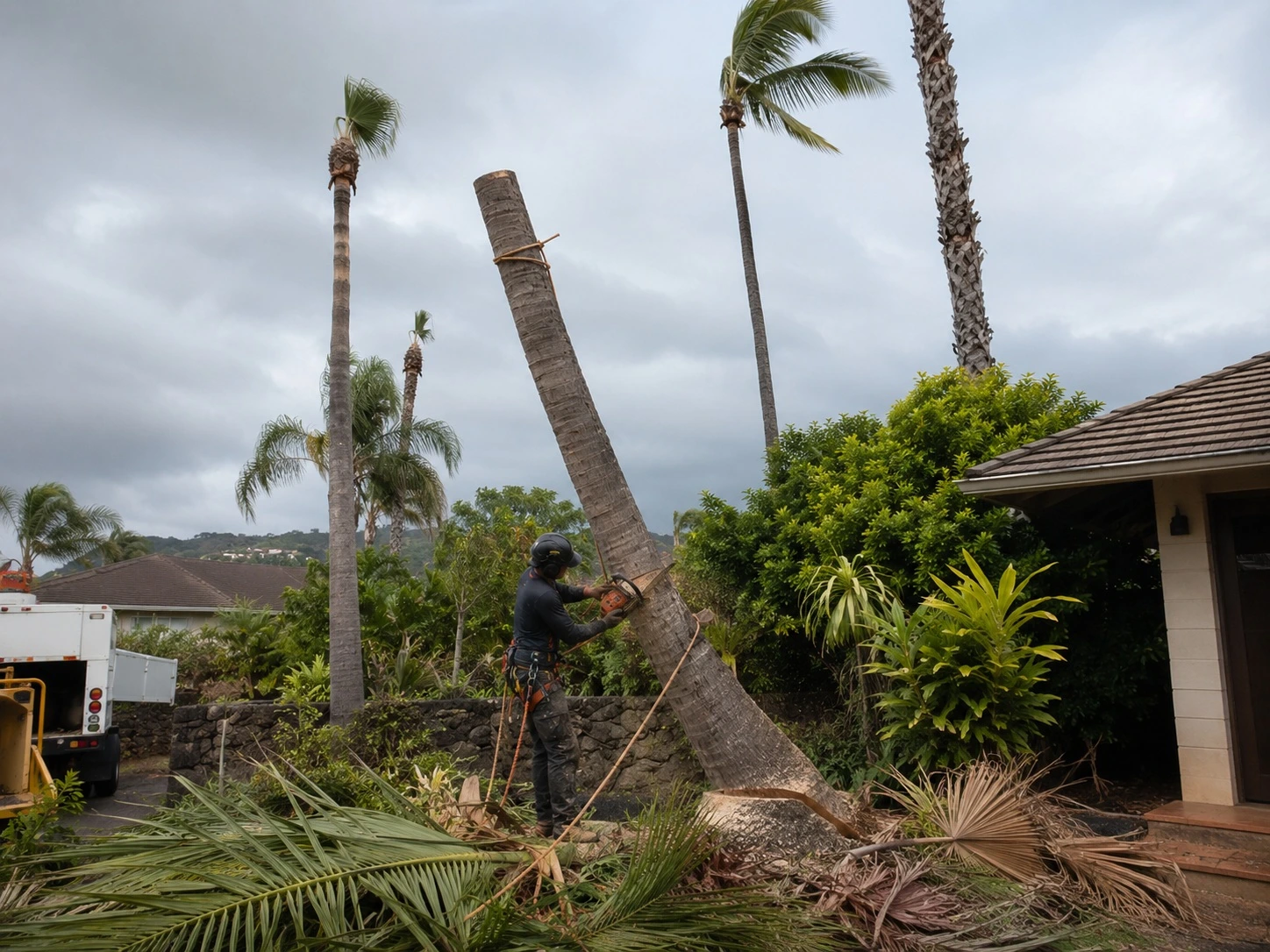
Palm Hazards Near the Beach
Coconut palms along the beachfront and Kapiolani Park can drop fronds or coconuts onto crowded walkways and beach chairs below. See Palm Tree Removal for routine and emergency handling.
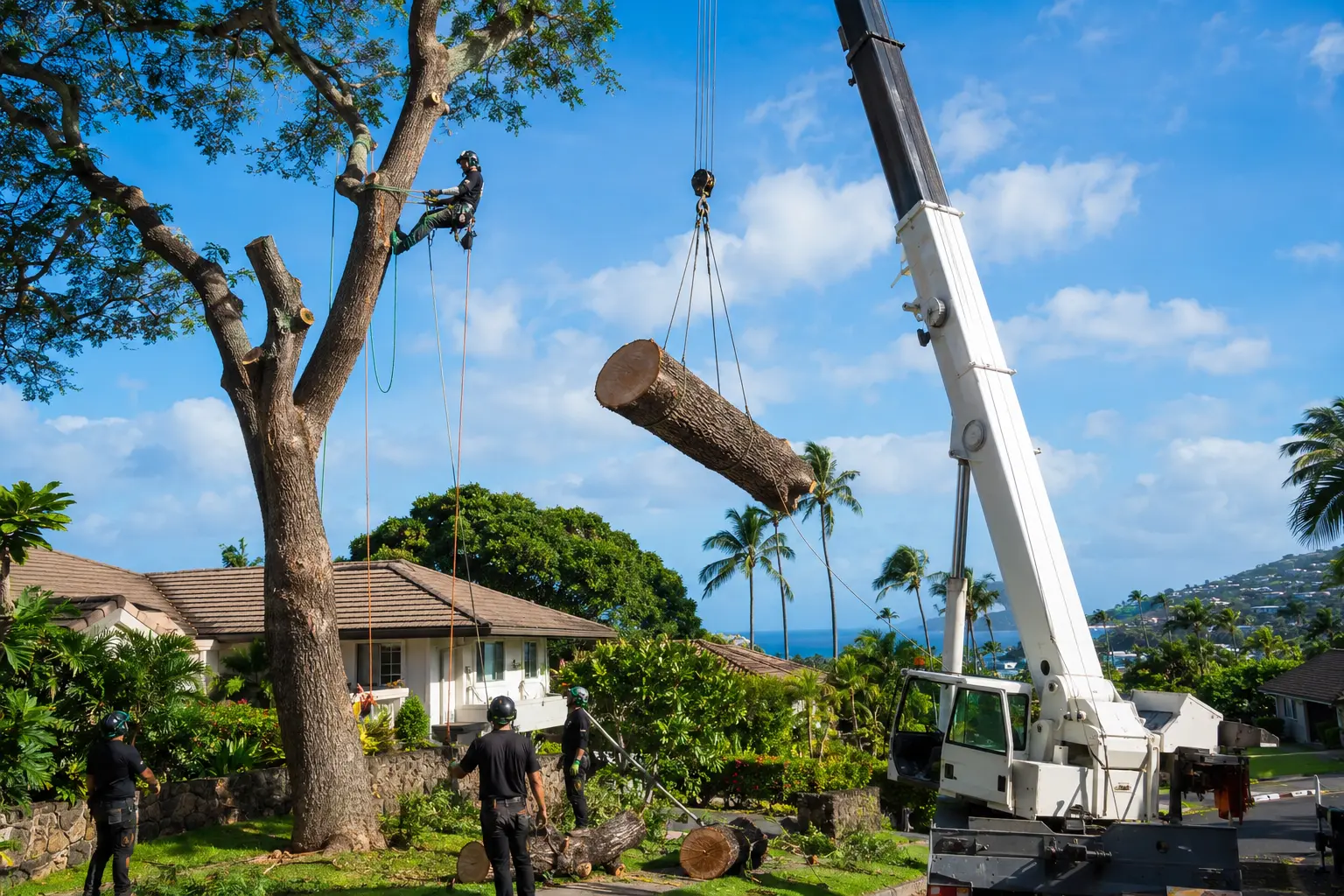
Working without a yard to stage in
A typical residential removal starts with a driveway to park in and open ground to drop sections onto. Waikiki rarely offers either. Equipment often has to be staged in a loading zone, a hotel's service entrance, or a shared parking structure, and every one of those requires coordinating timing with the property so guest access, valet, and deliveries aren't disrupted mid-job.
Rigging changes accordingly too. Sections are lowered directly rather than dropped, since there's rarely a clear landing area free of planters, signage, outdoor furniture, or pedestrians. For trees inside Kapiolani Park or along a public sidewalk, the City and County of Honolulu is generally involved as the landowner, and permitting is confirmed before any cutting begins. For a hotel or condo, that coordination runs through property management or the HOA board instead.
Species we see most often across Waikiki
Decades of landscaping around hotels, parks, and beachfront lots have left Waikiki with a distinct mix of species, each with its own failure pattern.
Banyan
Some of Waikiki's most iconic trees, with sprawling canopies and aerial roots that thicken into secondary trunks over time, requiring careful reading of the whole structure before any section comes down.
Monkeypod & Shower Trees
Common along Kalakaua Avenue and inside Kapiolani Park, prized for shade and seasonal color but capable of developing the same weak branch unions and cavities seen in monkeypod elsewhere on the island.
Coconut Palms
Lining much of the beachfront and Kapiolani Park, where routine frond and coconut cleanup is a standard part of maintaining public safety along the district's busiest walkways.
Working around Waikiki's mix of properties
A beachfront resort, a condo tower, and a city park all call for a different plan before a single cut is made.
Hotels & Resorts
Work is scheduled around guest activity, valet operations, and pool or event areas, with property management involved from the first call through final cleanup.
Condominium Associations
Courtyard and street-level trees typically fall under an HOA board's authority, so we coordinate scope and timing with the board or its managing agent before scheduling.
City Parks & Public Right-of-Way
Trees inside Kapiolani Park or growing from a public sidewalk generally involve the City and County of Honolulu as the landowner, with permitting confirmed before any removal.
Retail & Restaurant Frontages
Street-level trees outside shops and restaurants along Kalakaua often need work scheduled during low-traffic hours to avoid disrupting business at the sidewalk level.
Our response process in Waikiki
Hotel, condo, or park, the coordination changes, not the standard of care.
Call or Request
Tell us the property and what's happening, by phone or through the estimate form.
Access & Stakeholder Check
We confirm loading access, permitting, and who to coordinate with, whether that's a hotel, an HOA, or the city.
Written Estimate
A clear, itemized estimate based on the on-site assessment, before any work begins.
Careful Removal
Sections lowered directly, timed around foot traffic and building operations.
Cleanup
Debris cleared so sidewalks, entrances, and shared spaces are usable again.
A crew that already knows Waikiki's constraints
A hotel courtyard banyan and a beachfront coconut palm both get the same careful assessment before a single cut is made.
Every crew member is trained, and every job is backed by full insurance coverage.
Crews used to working with property management, HOA boards, and city permitting in Waikiki.
A written estimate after an on-site visit, with no hidden fees added later.
The same team behind Emergency Tree Removal Honolulu covers all of Waikiki.
We also serve the areas surrounding Waikiki
If your property is outside Waikiki, we cover the rest of Oʻahu as well. View all service areas →
Waikiki questions before you call
How do you remove a tree in Waikiki without street or sidewalk access?
Many Waikiki properties open directly onto a sidewalk with no yard or driveway to stage in, so equipment and drop zones are planned around the building's loading access, valet area, or a coordinated partial lane closure rather than a typical residential setup. This is confirmed with the property or hotel before a crew arrives.
Is it safe to trim or remove a banyan tree's aerial roots myself?
No. A mature banyan can drop aerial roots that are already partially load-bearing, and cutting the wrong one can shift weight elsewhere in the canopy unexpectedly. This work should be handled by a crew that understands how a banyan's root and branch structure functions as a connected system.
Who handles tree emergencies at a hotel or condo in Waikiki, the property or a tree company?
Most hotels and condo associations in Waikiki keep an outside tree crew on call for anything beyond routine landscaping, since building maintenance staff typically aren't equipped for removals involving rigging, cranes, or work near guest areas. We coordinate directly with property management or an HOA board on these jobs.
Does salt air affect trees differently along the Waikiki shoreline than further inland?
Yes. Properties directly along Kalakaua Avenue and the beachfront take steady salt spray that stresses foliage and can weaken bark over time, while trees a few blocks toward the Ala Wai Canal see less direct salt exposure but sit on damper, canal-adjacent soil instead.
What should I do about a large limb hanging over a busy Waikiki sidewalk?
Keep pedestrians clear of the area beneath it if it's safe to do so, and flag it to the property or building manager right away. A hanging limb over a high-foot-traffic sidewalk is treated as a priority call given how many people pass beneath it daily.
What trees cause the most emergency calls in Waikiki?
Mature banyan trees are behind a large share of calls, given their size and the aerial root systems that can shed unpredictably, along with monkeypod and shower trees along Kalakaua Avenue and coconut palms near the beachfront hotels and Kapiolani Park.
Is emergency tree service available throughout all of Waikiki?
Yes. Coverage extends across Waikiki, including the hotel zone along Kalakaua and Kuhio Avenues, Kapiolani Park, the Ala Wai Canal side, the Diamond Head end near Queen's Surf, and the Gateway area bordering Ala Moana.
Do you offer free estimates for Waikiki properties?
Yes. A free, no-obligation estimate can be requested through the form below or by phone, followed by an on-site assessment to confirm the scope of work and any building or permit coordination involved.
Request a free estimate in Waikiki
Tell us the property and what's happening, a fallen limb, storm damage, a hazardous banyan, or a palm near the beachfront, and a crew will follow up to confirm timing and, if needed, arrange an on-site assessment.