Emergency Tree Removal Kailua | Local, Fast, On Call
From the beach bungalows of Lanikai to the canal-front lots around Enchanted Lake and the rain-fed foothills of Maunawili, Kailua sits squarely on the windward side, where trade winds and rainfall hit harder than almost anywhere else on Oʻahu. We work this coast regularly and plan every job around it.
Tell us your neighborhood and what's happening, and we'll advise on next steps and timing.
Prefer to write it out? Request a free estimateFrom Lanikai and Kailua Beach to Enchanted Lake, Coconut Grove, Keolu Hills, and Maunawili.
Crews used to Kailua's heavier trade wind and rainfall exposure.
Trees near power lines are coordinated with the utility company before any work begins.
Limbs, trunk sections, and green waste cleared before the crew leaves.
Written, no-obligation estimates after every on-site assessment.
Why tree work in Kailua isn't like the town side of the island
Kailua faces the trade winds directly, with nothing between the neighborhood and the open Pacific to slow the wind down before it reaches shore. That same exposure pulls in far more rain than leeward Honolulu sees, especially where the Koolau range rises sharply behind Maunawili and the Kalaheo hillside, catching moisture off incoming trade winds and wringing it out as steady, sometimes heavy, rainfall.
The result is a canopy that grows fast and, in places, outgrows its footing just as quickly. Beachfront trees along Lanikai and the Kailua Beach strand deal with salt spray and shifting, sandy soil that never anchors quite as firmly as the clay-heavy ground further inland, while canal-front lots around Enchanted Lake and Kaelepulu sit on low, soft ground that saturates fast in sustained rain.
- Direct, largely unblocked trade wind exposure along the beach and shoreline
- Heavier, more frequent rainfall feeding down from the Koolau base near Maunawili
- Sandy, salt-exposed soil along Lanikai and the Kailua Beach strand
- Soft, low-lying ground around the Kaelepulu canal and Enchanted Lake
If a tree is actively down or hazardous anywhere in Kailua right now, see Emergency Tree Removal Honolulu for our fastest response option.
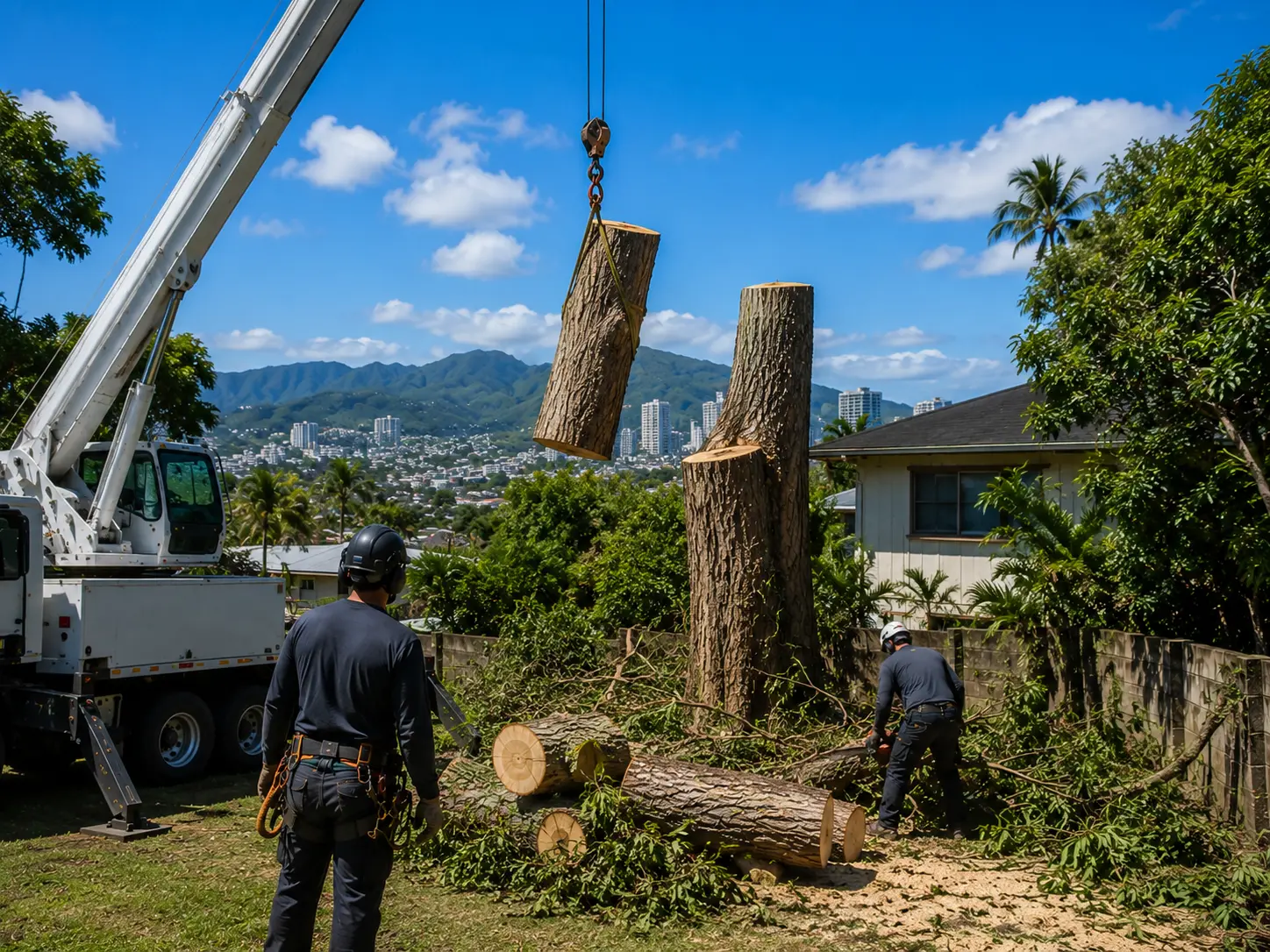
A neighborhood that changes from the sand to the foothills
Kailua isn't one uniform stretch of coastline. Each pocket has its own wind exposure, soil, and lot layout, and our crews plan accordingly.
Lanikai & Kailua Beach
Oceanfront and near-beach homes along this stretch take the most direct trade wind and salt exposure in Kailua, and shallow-rooted ironwood and coconut palms here are among the first to show stress after sustained wind.
Enchanted Lake & Kaelepulu
Canal-front and pond-adjacent lots here sit on soft, low-lying soil, where root anchoring near the water needs a different read than a tree rooted in higher, firmer ground.
Coconut Grove & Keolu Hills
Older, established residential streets with mature monkeypod and banyan canopy that have grown large enough to extend well over rooflines and shared property lines.
Kalaheo Hillside
Homes climbing the ridge toward Kalaheo catch heavier rainfall than the flats below, and steep, terraced yards here mean equipment access takes more planning than a flat coastal lot.
Maunawili
Set closest to the Koolau base, Maunawili sees the heaviest and most frequent rainfall in the Kailua area, with larger, greener lots where root saturation is the leading cause of lean.
Kailua Town
The commercial core and surrounding residential streets mix landscaped street trees with older single-family lots, where sidewalk and driveway proximity often drives the call.
Common tree emergencies across Kailua
Beachfront wind, canal-front soil, and foothill rainfall each fail differently, and knowing which one you're dealing with changes the response.
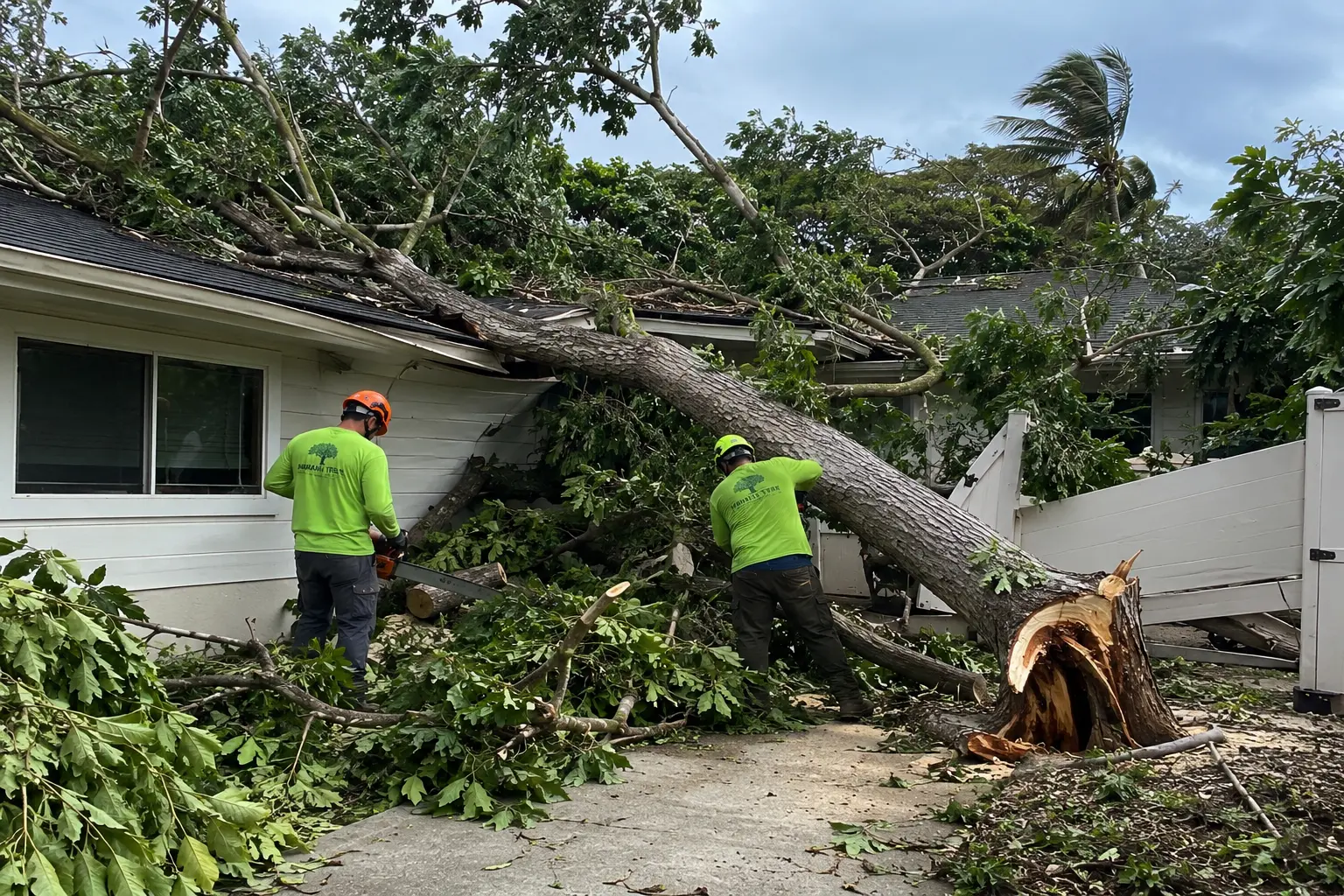
Trees Down Near the Beach
A tree that comes down along Lanikai or the Kailua Beach strand can land across a walkway, a fence, or a neighboring yard. See Fallen Tree Removal for how we sequence that kind of job.
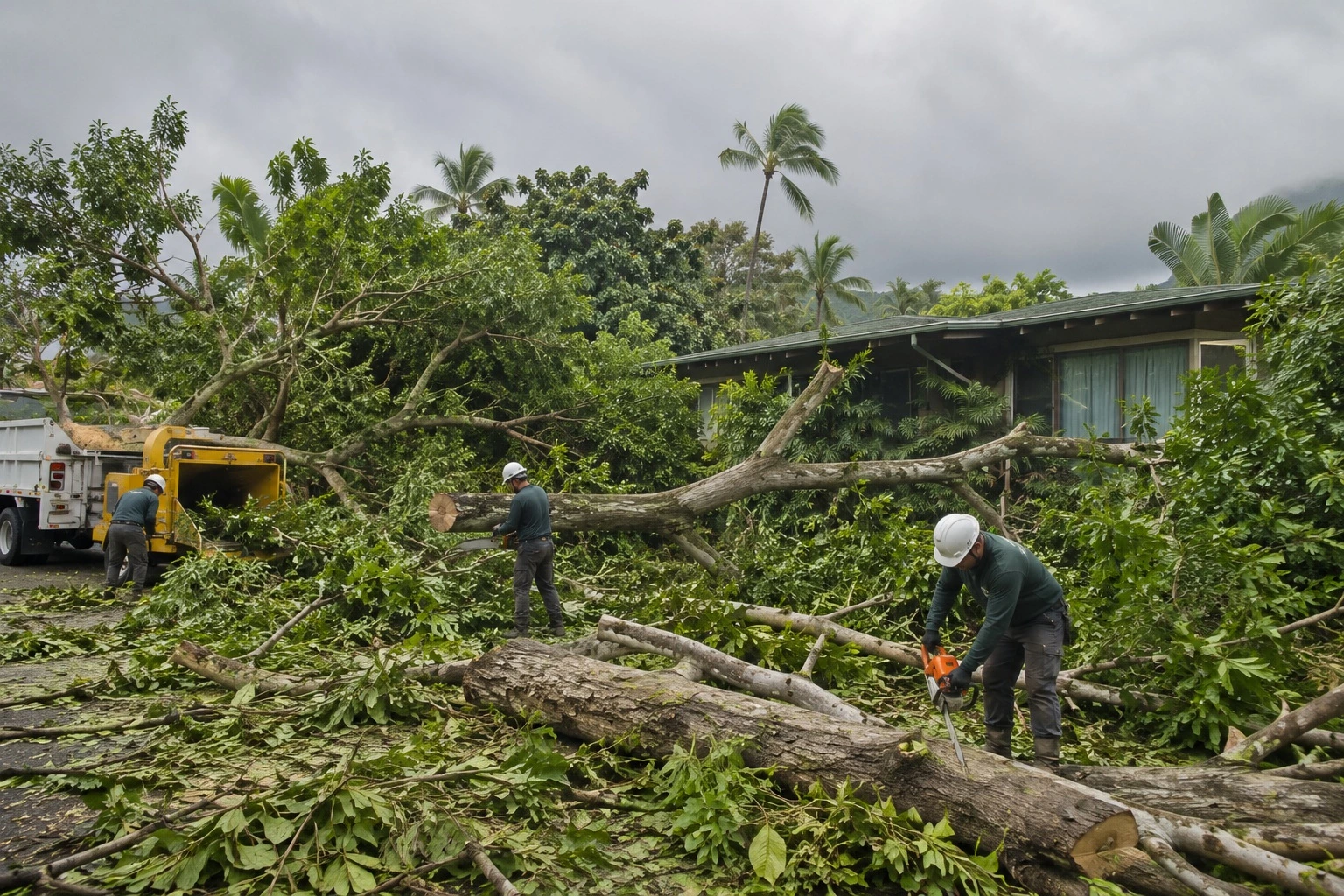
Wind-Damaged Coastal Trees
Lanikai and the open Kailua Beach shoreline take the brunt of any trade wind surge or Kona storm, often before the sheltered town side of the island feels it.
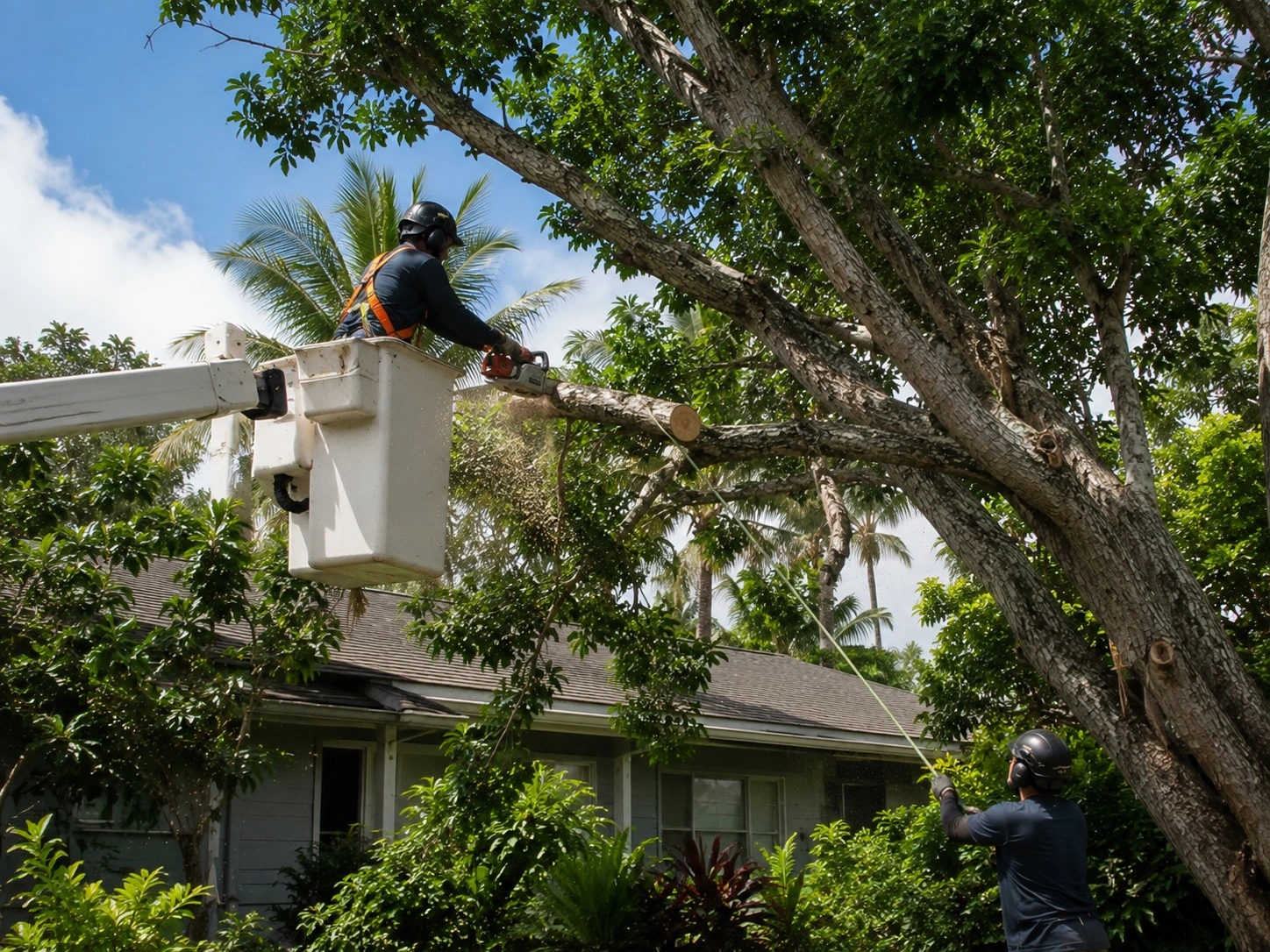
Hanging Limbs Over Driveways
A broken limb caught above a driveway on the Kalaheo hillside or in Keolu Hills can strand a household until it's cleared. See Tree Limb Removal for how these are handled.
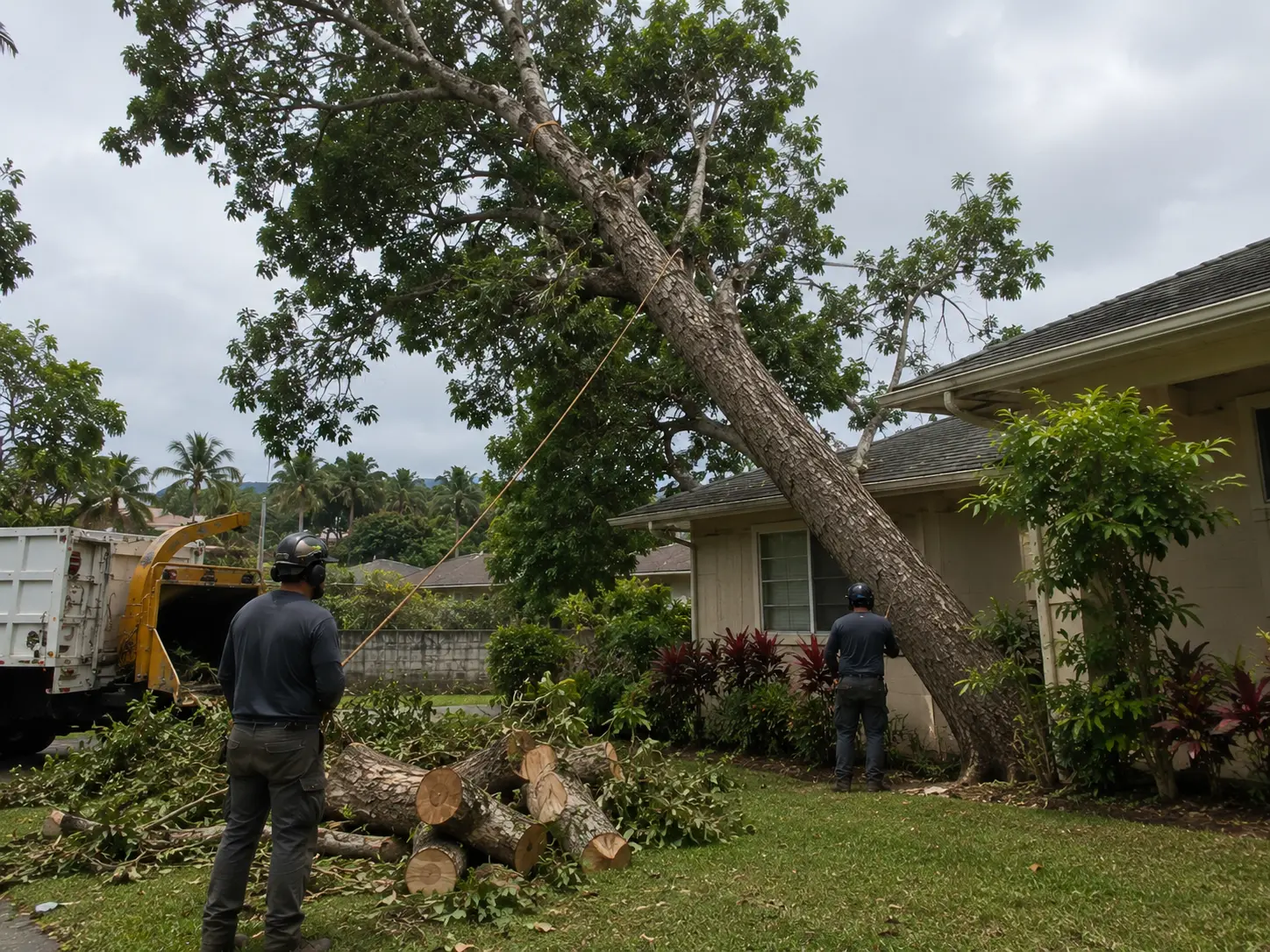
Leaning Trees After Heavy Rain
Saturated ground in Maunawili and along the Kalaheo hillside can loosen root systems after sustained rain, and a lean here carries different risk than one on a sandy beach lot. See Leaning Tree Removal.
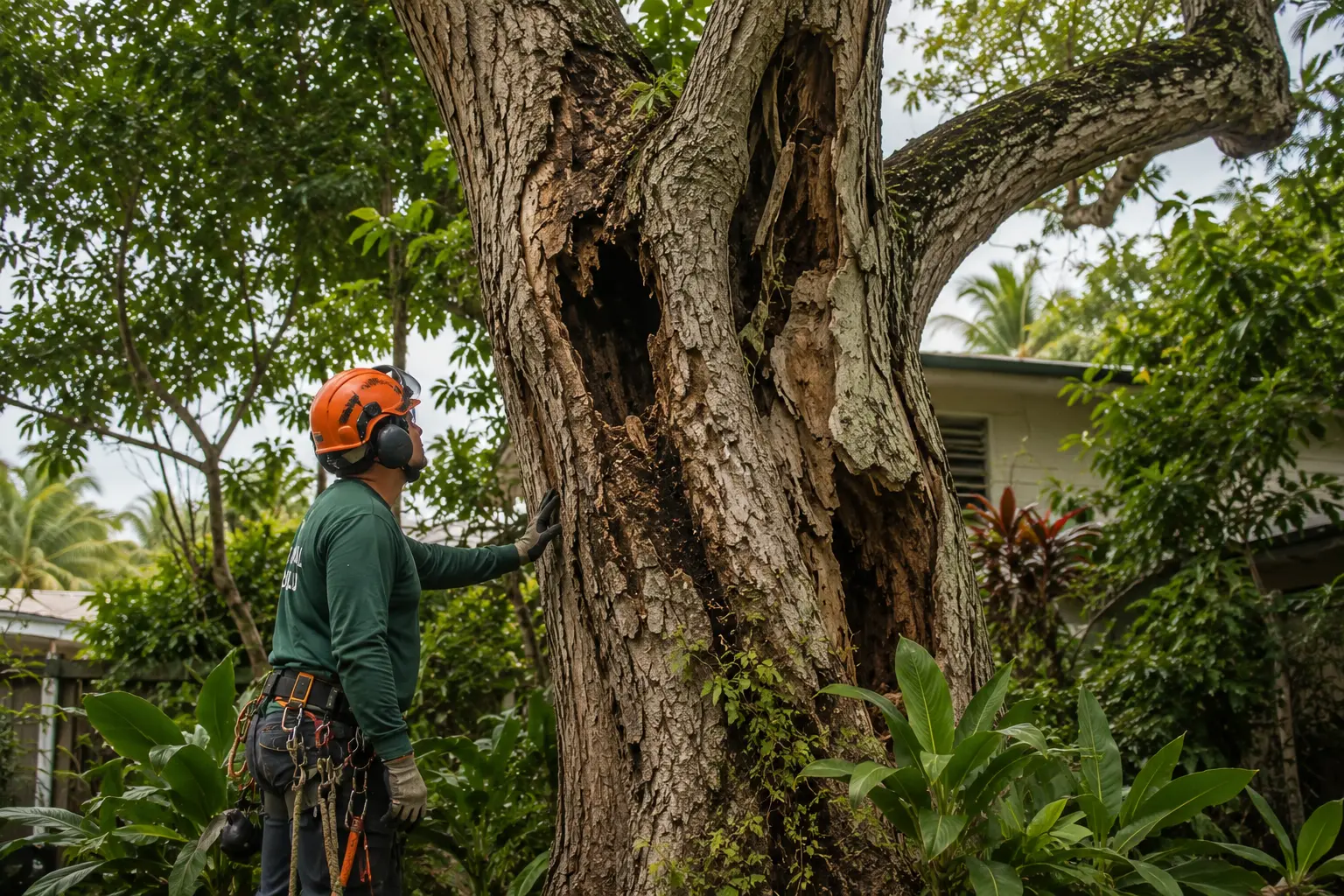
Aging Monkeypod & Banyan
Decades-old trees on Coconut Grove and Keolu Hills lots sometimes show trunk decay or root heaving that isn't obvious from the yard. See Hazardous Tree Removal for how we assess these.
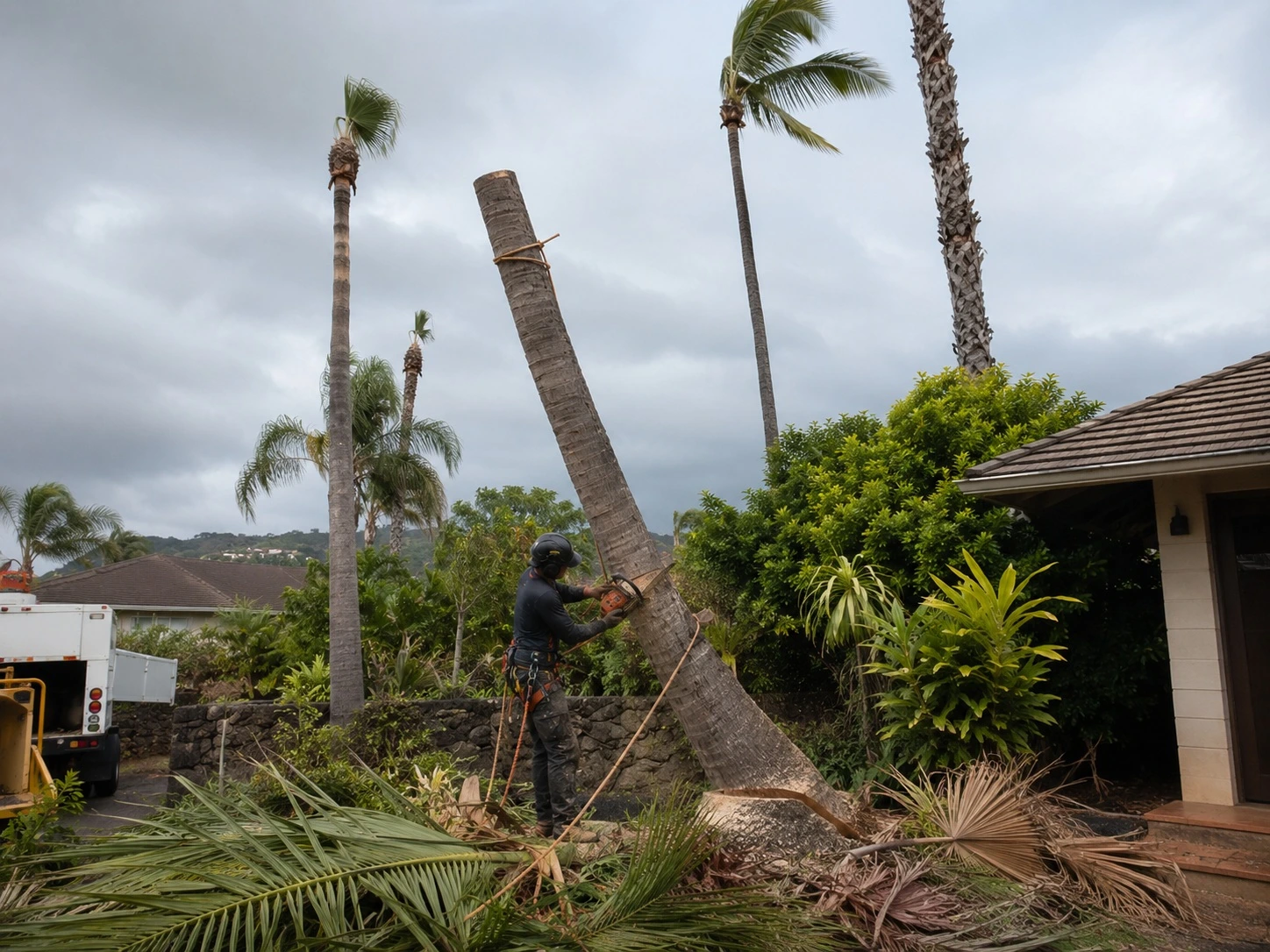
Palm & Coconut Hazards Near the Beach
Coconut palms along Kailua Beach and Lanikai can drop fronds or coconuts onto walkways, patios, and parked cars below. See Palm Tree Removal for routine and emergency handling.
How wind and weather move through Kailua
Sitting on the open windward coast, Kailua catches trade wind and rain patterns that behave very differently from the leeward town side of Honolulu.
Direct Trade Wind Exposure
With no ridgeline to buffer the coast, trade winds reach Lanikai and Kailua Beach at close to full strength, putting steady, long-term stress on beachfront canopy even outside of storm events.
Orographic Rainfall
As moist trade winds rise against the Koolau range behind Maunawili and Kalaheo, they cool and drop far more rain there than falls along the beach just a couple of miles away.
Kona Storm Reversals
Occasional Kona storms push wind from an unfamiliar direction for windward-facing trees, which is when trunk and root failures in Kailua's older canopy are most likely to show up.
Canal & Wetland Saturation
Kaelepulu and the wetland areas around Enchanted Lake hold water longer after heavy rain than the higher ground nearby, keeping root zones saturated well after a storm passes.
Species we see most often across Kailua
Decades of beachfront and valley planting have left Kailua with a distinct mix of species, and each comes with its own failure pattern.
Monkeypod & Banyan
Common legacy plantings across Coconut Grove and Keolu Hills, now large enough that broad canopies extend well over rooflines, and banyan roots that can lift walkways and low walls.
Ironwood (Casuarina)
Lining much of the Kailua Beach and Lanikai shoreline, ironwood's shallow, wide root system is built for sandy soil, not the saturated ground a heavy storm can leave behind.
Coconut Palms
A defining feature of the Kailua Beach and Lanikai coastline, coconut palms rarely uproot outright, but their fronds and coconuts become fast, unpredictable hazards in high wind.
Working around Kailua's mix of lots
Few streets in Kailua look like the ones on either side of them, and each property type changes how a job is planned.
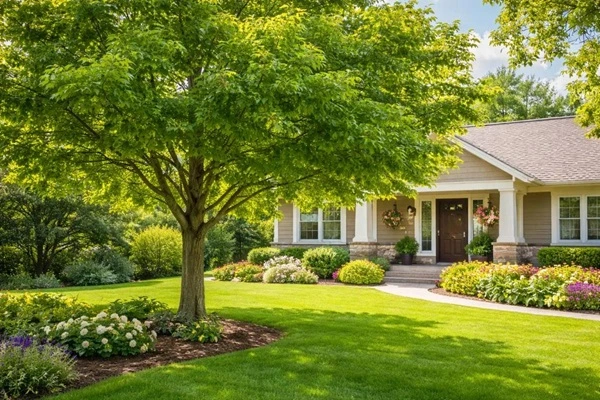
Beach bungalows, canal-front lots, and rain-fed valley homes
Beachfront homes along Lanikai and Kailua Beach deal with sandy soil, salt spray, and often tight lot lines close to the water, while canal-front properties around Enchanted Lake and Kaelepulu bring soft ground and dock or seawall access into the picture. Further inland, the larger lots of Coconut Grove, Keolu Hills, and Maunawili often carry a single mature legacy tree that's outgrown the yard it was planted in decades ago.
Whatever the property type, the same on-site assessment applies first: confirming access, checking the ground the tree is rooted in, and building a plan around that lot's specific constraints rather than a one-size approach. For a full property removal beyond an emergency situation, see tree removal.
Our response process in Kailua
Beach, canal, or foothill, the logistics change, not the standard of care.
Call or Request
Tell us your neighborhood and what's happening, by phone or through the estimate form.
Access & Hazard Check
We factor in sandy soil, canal access, and hillside driveways before a crew arrives.
Written Estimate
A clear, itemized estimate based on the on-site assessment, before any work begins.
Careful Removal
Rigging planned around close beachfront neighbors, canals, and shared property lines.
Cleanup
Debris cleared so driveways, walkways, and shared access are usable again.
A crew that already knows Kailua's beach and foothill conditions
A beachfront lot in Lanikai and a rain-soaked yard in Maunawili both get the same careful assessment before a single cut is made.
Every crew member is trained, and every job is backed by full insurance coverage.
Crews who already know the wind exposure, canal access, and hillside lots common across Kailua.
A written estimate after an on-site visit, with no hidden fees added later.
The same team behind Emergency Tree Removal Honolulu covers every Kailua neighborhood.
We also serve the areas surrounding Kailua
If your property is outside Kailua, we cover the rest of Oʻahu as well. View all service areas →
Kailua questions before you call
How quickly can a crew reach a property in Kailua?
Response depends on the hazard and where in Kailua the property sits, since the beach flats, the canal-front homes around Enchanted Lake, and the Maunawili foothills each have different access. Active emergencies like a tree on a structure or blocking a road are prioritized ahead of routine visits. Call to describe the situation and a crew will advise on realistic timing.
Why does Kailua get more rain and wind than town-side Honolulu?
Kailua sits directly on the windward side, facing the trade winds head-on as they come off the ocean and rise against the Koolau range behind Maunawili and Kalaheo, which brings both stronger sustained wind and considerably more rainfall than the leeward town side of the island.
Are beachfront trees in Lanikai and Kailua Beach at higher risk?
Salt spray and shifting sand along Lanikai and the Kailua Beach strand put steady stress on ironwood and coconut palms rooted close to the shoreline, and erosion at the base of a beachfront tree can undercut its anchoring well before any visible lean develops.
What should I do about a tree leaning near the Kaelepulu canal?
Avoid the area beneath it and don't attempt to secure or trim it yourself. Canal-front lots around Enchanted Lake often sit on soft, low-lying soil that saturates quickly, and a lean here can develop or worsen faster than on higher ground. Call to describe the location and a crew will assess it before recommending next steps.
Do Maunawili and the Kalaheo hillside see different tree risks than the flats?
Yes. Properties closer to the Koolau base in Maunawili and along the Kalaheo hillside catch heavier, more frequent rainfall and steeper runoff than the flatter neighborhoods near the beach, which makes root saturation and hillside lean more common there.
What trees cause the most emergency calls in Kailua?
Monkeypod, banyan, and ironwood are behind a large share of emergency calls here, whether from heavy monkeypod limbs failing over older Coconut Grove and Keolu Hills homes, banyan roots lifting pavement and walls, or shallow-rooted ironwood along the beach losing its footing in wet sand.
Is emergency tree service available throughout all of Kailua?
Yes. Coverage extends across Kailua's neighborhoods, including Kailua Beach, Lanikai, Enchanted Lake, Coconut Grove, Keolu Hills, the Kalaheo hillside, and Maunawili.
Do you offer free estimates for Kailua properties?
Yes. A free, no-obligation estimate can be requested through the form below or by phone, followed by an on-site assessment to confirm the scope of work.
Request a free estimate in Kailua
Tell us your neighborhood and what's happening, a fallen tree, a hanging limb, storm damage, or a hazardous palm, and a crew will follow up to confirm timing and, if needed, arrange an on-site assessment.